Letter From Key Mamou Witness – contradicting testimony?

“I’m glad you didn’t tell me shit about that cause I don’t wanna know shit, I feel better off that way.”

Letter written by Terrence Dodson to Charles Mamou, postmarked January, 1999.

Those were the words of Terrence Dodson, the prosecution’s ‘key’ witness, in a letter written to Charles Mamou while Mamou was incarcerated – and before Dodson testified to Mamou’s ‘confession’.  The jury never saw that letter.   

Terrence Dodson – an admitted drug  dealer who was involved in the planning and execution of a drug deal gone wrong in December of 1998, could not be considered a strong witness in the best of circumstances.   He was a drug dealer involved in a drug deal linked to Mary Carmouche’s murder, although it appears he was never charged with any crimes related to the incident after he testified.

In spite of his questionable background or possible motive for testifying, Harris County, Texas, prosecutors presented a case that weighed heavily on the only witness that tied Charles Mamou to the scene of the crime –Terrence Dodson.

Yet, all the while the trial was taking place in 1999 – there was a letter.  A letter that was never presented by the court appointed defense during the trial and one the jury never saw.   In that letter the key witness wrote to his cousin, Charles Mamou, who was at the time incarcerated, “I’m glad you didn’t tell me shit about that cause I don’t wanna know shit.”  Those words were written not long after Charles Mamou had supposedly confessed to him.  

The testimony of Terrence Dodson was a key piece of a case built against Charles Mamou that is riddled with more questions than answers.  There was no weapon.  There was no eye witness testimony.  There was no DNA.  During the sentencing phase of Mamou’s trial, victim impact statements were allowed from crimes that Mamou was never even charged with.

This all took place in Harris County, Texas – a county with a big reputation for sentencing people to death.  In 1999 Texas averaged nearly three executions a month.   According to Charles Mamou, the letter written by Terrence Dodson was in the possession of his defense attorney during his trial but it was ‘misplaced’ and not located until after the trial was concluded.

The letter has since been unaccounted for but became available this week and has since been forwarded to Charles Mamou’s current defense. 

Related Articles:   What Does It Take To Get On Texas Death Row;
Texas Death Sentence Clouded By Irrefutable Doubt;
Awaiting Execution – “Have You Ever Felt Like You Can Taste The Future?”;
Because They Can – Execution In Texas;
Testimony Worthy Of An Execution? The Mamou Transcripts Part I

Writing By Charles Mamou

Loading

To My Younger Self,

Hey, lil 11-year old self, it’s me.  I’m the 42-year old version of us.  I can see you there in the confusion – afraid of what our future holds. 
You are so handsome.  

Soon, you’ll feel she lied to us and broke her promise of forever. Your heart will be heavy, and you’ll stop believing in love.  Please – hold on.  Don’t let doubt consume us.  I’m with you. 

There’s something I need to tell you, and you need to be strong.  She is dying of cancer.  She won’t make it till our twelfth birthday.  But there’s something else. You hold a decision – one that will shape the rest of our lives.   

Ma’ma has a reason for not telling us.  You’ll understand some day.   She’s trying to protect us from the pain of knowing, and she can’t afford to spend the little time she has left trying to make us understand.  Lil self, she can’t look you in the eye and say she has to break her promise of forever.  She’ll never have the nerve.  But, she’ll love us until that day. 

Everything ma’ma ever said was true.  She loved us for her forever.  She loved us to her dying breath. 

After she is gone, you will lose your light and begin to doubt everything about love.  You’ll sink into a world of hurt.  I’m writing to warn you.  You have to be strong, even when you feel the world is against us and giving up is the only way.  Share the hurt with anyone who will listen, as often as possible. 

Stay respectful to our grandmother and be patient with our brother.  Stay focused in school and never stop learning.  Surround us with people who desire peace, love, education, freedom, friendship, home – and those who cherish the moment.  We must find out who God truly is and why we are here.  What is our purpose, and can we find it?

Lil self, I love you and need you to trust me about this pivotal moment.  Your decision is yours to make, but it will affect every version of us. I won’t tell you anymore about our life, other than what I have already said, but know this – no matter what you decide to do in that moment, I have always loved you and always will.

Sincerely,
Your Older Self…

ABOUT THE AUTHOR.  Bobbie George is not only a talented writer, he has also worked training service dogs during his incarceration.

He’s spent over two decades in prison, but still lives every day trying to be the ‘best version of himself’.   He can be contacted at:

Bobbie George #243589
Ionia Correctional Facility
1576 W. Bluewater Hwy.
Ionia, MI 48846

All posts by Bobbie George.

Loading

Selfie


I am a ponderer of life,
Contemplating the now and what’s to come.

I am my mother’s son,
And my father’s – sometimes.

My greatest flaw was being everyone’s perfect,
But never my own content. 

I am unintentionally hypocritical,
Though such awareness keeps me grounded. 

I am a race against time in an unjust system,
To prove I am of value.

I am strong because I am vulnerable,
My truths no longer weigh me down.

I was dressed up insecurities,
I’m now dressed down and confident.

I am stilled waters on a stormy night,
My faith survives the chaos.

A glimmer of light in a distant place
Is the beacon of my hopes.

I’m the best of failed intentions,
Self-doubt on the doorstep of promise.

I’m a believer in the healing of humanity,
Though it’s people that give me wonder.

Who am I, one may ask… 
I am who I need to be.

©Chanton

ABOUT THE AUTHOR:  Terry Robinson lives on Death Row and has always maintained his innocence.  He writes under the pen name ‘Chanton’, and it is a true privilege to share his work. He can be contacted at:
Terry Robinson #0349019
Central Prison
4285 Mail Service Center
Raleigh, NC 27699-4285

All Posts By Chanton

Loading

Because They Can – Execution In Texas

In 1999, the year Charles Mamou was sentenced to death, Texas performed 35 executions.  The following year, they performed 40.  The state was and is very practiced at executions – but has it become too easy to execute?

Tough on crime is one thing, execution quite another.  There is no do-over.  The system is not faultless.  Innocent people have been executed, and they will continue to be as long as there are executions.   Those mistakes are more likely in a state that gets too comfortable executing.  History has already proven that it sometimes doesn’t matter if the cases in question involve minorities or the poor or both.

As Charles Mamou’s execution inches closer, many who have looked closely at his case feel he won’t be executed because he is guilty of the crime for which he was sentenced.  Some feel he will be executed because – Texas can.

Charles Mamou was guilty of being a drug dealer.  But in the case of the murder he will die for – there were no eyewitnesses, no confessions, no DNA, and no physical evidence outside of a shell casing found near the body that cannot be definitively linked to anything – in spite of the prosecution’s arguments.

So, in a year in which Texas averaged about three executions a month, the testimony of a handful of drug dealers who had a lot to gain by pointing the finger away from themselves, sealed the fate of Charles Mamou.  They didn’t even have to testify to witnessing the crime.  They all had a lot to gain in a capital murder case with the death penalty on the table – and nothing to lose but their integrity.

The night of the drug deal that started it all, Kevin Walter, Dion Holley and Terrence Gibson had guns and planned to meet up with Charles Mamou and his friends to sell drugs – which actually were not drugs.  They had nothing to sell.  That is why they went to the meeting with guns.  Each of the men intended to come away with cash from a drug sale in which they did not have drugs to sell.  There is no doubt each of the three – Kevin Walter, Dion Holley and Terrence Gibson – intended to commit  crimes that night with loaded guns in tow.  They were willing to go to extreme lengths to commit their crimes.   They also knew Mary Carmouche was out of sight and in their backseat.  Mary would be found dead two days later.

The buyers were to be Terrence Dodson (not to be confused with Terrence Gibson), Samuel Johnson and Charles Mamou.   Those three men also traveled with loaded guns and had no cash to make their purchase.  It was a drug deal – a crime – in which all parties were planning to come out ahead, with little regard for the others involved.  They weren’t there for charitable purposes – and the actions of them all indicated that at that point in time – they were each willing to give up their integrity for personal gain.

Of the sellers that night, Terrence Gibson lost his life.  He had a loaded gun and no one was ever charged with his death, and if they had been, there would be a strong argument for self defense.

Dion Holley testified for the State at Charles Mamou’s trial, and it appears he was not charged with any crimes related to what happened that night.  The vehicle the sellers were driving belonged to Dion Holley’s mother, and of the scant amount of evidence in this case, Dion’s print was the only one later found in the vehicle.  And – it was Dion’s friend, Mary, who was hiding in the backseat of the car they arrived in.   Holley testified regarding hearing shots at the drug deal, running, getting shot in the arm, seeing Mamou get in his mom’s car and hearing both cars leaving the scene of the drug deal.

Kevin Walter also testified for the State.  It appears he was also not charged with any crimes related to what took place, although he testified regarding the plan he and his friends had to arrange a fake drug deal and rob Charles Mamou of $20,000.  Mr. Walter was clear about his understanding of the planned robbery and his participation in it.

Samual Johnson testified for the State.  It appears he was also not charged with any crimes related to what took place, although he testified regarding his own involvement in the plan to rob men of drugs and his connection to the crimes.  Samual Johnson was the driver of the car that Charles Mamou arrived at the scene in.  Charles Mamou was actually from Louisiana, and did not have a vehicle in Texas, nor was he as familiar with the area as the men he was working with.

Terrence Dodson testified for the State, although there was nothing he could testify to that would benefit the prosecution regarding what he had ‘seen’ that night, because he was not at the scene of the drug deal.  But, according to court documents, Terrence Dodson was very involved in the drug deal, and it appears he was not charged with any related crimes.  But, Terrence Dodson was instrumental in arranging the deal, and also intended to rob the dealers with a gun he had.  Terrence Dodson had good reason to be concerned about what he might be charged with for his involvement in the murder, although he was not in the car by the time the deal actually took place.  During the trial Dodson testified that Charles Mamou ‘confessed’ to him that he had committed the crime because the victim looked at him ‘funny’.  Mamou has steadfastly denied this confession took place.

That is what the State had.  That was the closest that they could get Charles Mamou to the actual murder through witness testimony – several young men who all had something to gain by working with the State, all involved in criminal activity, and all with questionable integrity going into the trial.  Even with their testimony, which Mamou’s current defense says is ‘riddled with inconsistency’, none of them witnessed anything connected to a murder.   Mamou has always maintained that after the drug deal gone wrong, he and Samual Johnson drove back to the apartment complex he was staying at.  He was distraught and several other people saw Mary and interacted with her.  That was the last night he ever saw her, and she was alive.

Some would say Charles Mamou doesn’t matter, because he was a drug dealer himself.  It is correct that Charles Mamou was a drug dealer twenty years ago.  Since that time he has spent all his days in a solitary cell on death row in the state of Texas.   He’s now in his forties.   The chance of him ever resuming a life of dealing drugs is near non-existent – and being a drug dealer is not a crime punishable with death in this country.  If it were, the State’s key witnesses would be in neighboring cells.

Logic alone would make one question why Charles Mamou would call up a drug dealer and tell him he murdered someone because they looked at him ‘funny’, when he has steadfastly maintained his innocence.

One might also wonder how Charles Mamou located a deserted home in which to murder a girl in a state he didn’t even live in.  The witnesses who testified against him would be more aware of the surrounding area and more capable of accomplishing that.

In the case of Charles Mamou an execution may allow Texas to close a chapter, but his death will not answer the question of who killed Mary Carmouche.  There isn’t enough evidence to prove who killed her, and Texas quit looking for the answers soon after the crime took place.

REFERENCE

IN THE UNITED STATES DISTRICT COURT FOR THE SOUTHERN DISTRICT OF TEXAS HOUSTON DIVISION. CHARLES MAMOU, JR., vs. WILLIAM STEPHENS, CASE No. 4:14-CV-00403, AMENDED PETITION FOR WRIT OF HABEAS CORPUS . 4 June 2015.

Related Articles:   What Does It Take To Get On Texas Death Row;
Texas Death Sentence Clouded By Irrefutable Doubt;
Awaiting Execution – “Have You Ever Felt Like You Can Taste The Future?”;
Letter From Key Mamou Witness Contradicting Testimony;
Testimony Worthy Of An Execution?  The Mamou Transcripts Part I

Writing By Charles Mamou

Loading

Loss – Serving Life Without Parole

I remember thinking, ‘When does a person adjust to this madness?  When will I feel whole again?’

I still don’t know.  What I do know is that being in here is like losing a part of yourself, or losing a loved one.  When does a person fully recover from that, or say they are ‘fine’?

Life has taught me that each of us is forced to face things we don’t want to face, learn things we don’t want to learn and experience things we don’t want to experience.   It takes time to acclimate to this new life.  It takes time to redefine being ‘fine’.  There are no timelines for it to happen, no countdowns, no circles on the calendar that say – This Is The Day!

After eighteen years under this spell, I have learned that for me it takes work, patience, perseverance and a few prayers – but even then things aren’t going to be ‘fine’.  Each morning there is an effort to work up the strength to face another day and the question, ‘Do I have enough hope left to sustain me for today?’  It’s not easy creating hope in a hopeless place.  It is a constant struggle to find meaning and purpose in this life.

It is often said that the best counsel for someone who has hit bottom is to simply tell them to take the next step.  But it is when we are hurting the most, we tend to forget the things that are most essential.  Sometimes just knowing someone is there, a human connection, has proven to be the most helpful.  At least that has been the case in my journey of healing – healing from a place that continues to eat holes in my soul.

Adversity tests our faith, character and resolve.  For the incarcerated serving life who will die in prison, loss is perennial, an unavoidable enemy and daily reminder of the consequence of a bad decision.  Death and its shadow linger overhead like vultures.

Death and loss touch all those who are living.  In my dark nights, through prayer I find comfort in a great exchange.  I give God my sorrow, fear, and despair and in return receive God’s joy, courage, faith, hope, love and grace for one more day.  The Psalmist said, “Yea, though I walk through the valley of the shadow of death, I will fear no evil because You are with me…”

ABOUT THE AUTHOR.  Darrell is a gifted and thoughtful writer serving a life sentence.  He can be contacted at:
Darrell Sharpe #W80709
P.O. Box 43
Norfolk, MA 02056

Other Writing by Darrell 

Loading

Fallen

It was December 5th, 1998, when I stepped outside of Jimmy’s nightclub at 2 a.m.  The strip was packed with inebriated club hoppers loitering on the sidewalks.  Cars blared their stereo systems, and the scent of ganja lingered in the night air.  With 15 grams of cocaine stashed in my jacket, I decided to head home.  I had no intention of being around when the cops showed. I popped on my headset and bopped to the lyrical testimonies of Tupac Shakur, “Come listen to my truest thoughts, my truest feelings, all my peers doin’ years behind drug dealing…”

Scanning the crowd, I readied for my departure when I spotted a familiar face. “Oh shit! That’s Crip.”

His lean, wiry frame was indistinguishable under baggy clothing with dangling dreadlocks that curtained his face, but I was convinced – the nerve of the guy to show his face.  He and I should not be in the same club scene, not after last week. Confrontation was inevitable. My only advantage was that I saw him first.

I slunk behind a group of people, then hurried across the street. Advancing alongside the building where Crip stood, I drew the 9mm handgun from my waist and chambered a live round. Intended as a last resort, I shoved the heavy steel into my back pocket, and rounded the corner.  There was Crip…

Our eyes locked in a silent exchange that revealed an awful truth – we were both bound by circumstances, and there was no turning back. I lowered my gaze and eased onward, careful not to alarm him. At precisely the moment we stood at arm’s length, I spun, fists clenched, and demanded, “What’s up mutha fucka? Which one of ya’ll niggas shot at me?”

His eyes widened with the shock of being accosted as he raised his shirt and pulled a .357 revolver.  I figured if I went for my own gun now, we would likely kill each other. Instead, I flashed my palms, stepped back, and hoped to dissuade him with an explanation. “What the fuck man? I was just…”

That’s as far as I got before my words were cut short by the sudden jerk of his hand. I turned and dashed for cover, yet there wasn’t any place to hide. Crip thrust the chrome tool at my chest and fired.  POW!

The deafening sound sent shock waves through my body as I stood frozen with fear. My impulse trumped all ability to reason, and I pulled out the 9mm. The Crip I saw now was different, as though he’d undergone a fiendish transformation. His lips were curled in a fierce snarl, and there was confidence in his eyes that pierced. Again his hand snaked forward in a lethal jab. I pointed my gun, desperate to stop him.

Joint blasts amplified the terror between us and sent bystanders scurrying to safety. My legs tore away with a mind of their own as another pop sounded behind me. I squeezed the trigger, but nothing happened. Two strides later, I crashed to the ground, the brutal impact smashing my watchcase and wrenching the 9mm free. My legs felt locked in a whirlwind, yet when I checked them, they were still.

Damn. I was shot.

I struggled to rise, but slipped back down to the crunch of scattered debris. The 9mm laid inches from my face with a spent shell casing lodged in the chamber. I reached for it but faltered, thwarted by sudden paralysis. Then the unexplainable happened.  I began to relive my entire life through a surge of memories and emotions. The sensation catapulted me through a space in time, nearly causing me to forget about Crip.

A swift search revealed that I’d fallen around the corner.  I didn’t know if Crip was even injured.  I expected him to step around the corner and kill me at any moment. Empowered by the urgency to prevent my death, I grasped the gun. With a violent shake, the casing sprang loose and tinged against the asphalt. I rolled and popped off a series of shots in the sky and waited for Crip to show.

As dozens of footsteps converged towards me, I was imbued with panic. I trained the gun on the first face that hovered, only to see it was a friend who’d rushed to help. At his request, I ceded the gun and watched as he bolted around the corner. More faces appeared, suspended above me, annoying me with their questions and concerns. My backside raged with pain as if being cauterized with a searing stake, while pressure penned my chest, causing my breathing to strain.  With each new face that happened into view, a fraction of the air was claimed, as my vision succumbed to a fierce swirl that distorted the surroundings.  Voices were reduced to murmurs over the thumping of my chest.

“I… can’t… breathe…” I whispered, my voice scraggly and feeble.  “Move them back, man, I can’t breathe.”

Pandemonium swelled as onlookers gathered and cast down stares of sympathy.  Then a voice emerged, booming in the distance, “Ya’ll git the fuck back!”

Although I was unable to see his face, his commanding ways consoled me.  “Stop panicking, Duck…,” I heard him say, “…if not, you’re gonna die.”

I closed my eyes, stilled myself, and relinquished my woeful struggles. I drew on a spiritual medium where inner calmness was fostered. Compelled by the notion to atone, I immersed myself in prayer, neither for forgiveness nor some half-hearted attempt to explain away my misdeeds, but a prayer of strength for my mother. I wanted her to know how much I loved her and thought she deserved better. Afterward, I wasn’t afraid anymore. I was ready for the final transition.

As I journeyed toward that terrible darkness to end my worldly suffering, I held on to the vision of my mother and let go of everything else…

©Chanton

ABOUT THE AUTHOR:  Chanton is a thoughtful and gifted writer as well as a frequent contributor.

All Posts By Chanton

Loading

The Unlimited Potential Of Kindness Behind Bars

Art by Wilmer A. Portillo

“Acts of kindness come few and far  between for me, but I’ve adopted a point of view that dictates – when an act of kindness is bestowed upon you, the most meaningful thing you can do in return is pay it forward.  And, so I shall.  So, however big or small the gesture turns out to be, together we will contribute to what I suppose could be considered the Universal Good.” – Wilmer Portillo

I am so grateful for the chance I have every day to work with the most appreciative people I know.  It’s a gift.  Kindness and compassion and love – change people and the world.   Vengeance in the form of the death penalty, solitary confinement and overly harsh sentences in inhuman conditions – don’t make us better.

“You’ve taken up the fight to save my life like no other has done – and I never asked you to do it.  You did this on your own, and that warms my heart.” – anonymous

Happy Thanksgiving!

NOTE:  Wilmer A Portillo is a gifted writer and the author of A Dreamer’s Story.  He can be contacted at:

Wilmer Portillo #01356973
McConnell
3001 South Emily Drive
Beeville, TX 78102

Loading

Awaiting Execution – “Have You Ever Felt Like You Can Taste The Future?”

‘Have you ever felt like you can taste the future?  Like you know what’s about to happen?  That’s how I feel.   Back a few years ago, a friend here broke away from the officers who were escorting him and walked towards me in the dayroom.  On instinct, I reached out through the bars and grabbed him.  Tears stained his face from crying for hours during his last visit.  I gave him a huge hug, and he kissed my cheek and whispered in my ear, “Roaddawg.  You have the best chance to get free.  Don’t let them win.  Go back home to your family.  Get free.  Promise me?”’

‘I did promise him at that moment before letting him go.  But – I failed.’

Facing the end of his appeals, which have been procedurally barred and left unheard, Charles Mamou’s future looks bleak.  Some would say he never had a chance – not a black man on trial for murder in Harris County, Texas, at that time in history.  It’s twenty years later, and with execution near, there are more questions than answers.  The only thing certain is that there can be no certainty of his guilt.  He has always maintained his innocence.

The most glaring problem with Mamou’s sentence came during the penalty phase of his trial, when victim impact statements were allowed in the Courtroom for crimes of which Mamou was never charged.   But the case itself was built on the testimony of a handful of people involved in a drug crime – who all stood to benefit from their testimony – and an unfired cartridge found near the victim’s body.

That cartridge – was the only physical evidence.   There wasn’t even DNA tying Mamou to the victim.

The prosecution brought in Robert Baldwin, an employee of the Houston Police Department, to testify that the unfired cartridge found near the victim’s body had been inside the magazine of a weapon used at a drug deal gone bad – where Charles Mamou had been involved.

So – what the jury heard, was unhindered ‘expert’ testimony from the prosecution. Mamou’s court appointed attorney did not bring in an expert to refute Robert Baldwin’ s testimony, in spite of its weakness, nor did he question the expertise, credentials, or methods of the ballistics ‘expert’ whose testimony was the basis for the prosecution’s case.

It was not pointed out to the jury that even in the best of circumstances the ‘science’ used to tie an unfired cartridge to a fired casing at a different location – is not a certainty.  Rather they listened to a lot of scientific jargon and were informed that Charles Mamou had been in possession of a gun that was at the same location as the victim.

It is not possible for that to be a certainty.

The prosecution’s expert had no weapon to test.

The prosecution’s expert did not produce any photos of his comparisons

The prosecution’s expert did not explain how many marks were compared in his study that was conducted without the ability to test a weapon.

The prosecution’s expert was vague in the details, but certain of the match.

In a case with the death penalty on the table, it is reasonable to think more should be expected as far as expert testimony, but again, Charles Mamou was a black man in Harris County, Texas, with a court appointed defense attorney who chose not to question those things.

Criminalist, Ronald Singer, later said in an affidavit regarding the Charles Mamou ballistics testimony:

“….The prosecutor also, in his final argument, presented to the jury his opinion that the match was a certainty.  Such opinions, however, are inherently probabilistic in nature.  The defense attorneys failed to address the flaw of ‘discernable uniqueness’ and allowed the prosecutor to present this to the jury.  Had they presented a competent ballistics expert at trial, that expert should have been able to inform the jury that such opinions are flawed as they ignore the inherently probabilistic nature of such comparisons.  This individualization fallacy was well known at the time of Mamou’s trial.”

Robert Baldwin also testified in the capital murder case of Nanon Williams where his testimony was the foundation for that prosecution’s case as well.  At one point Baldwin was asked, “Is there any way in the world based on your training, your expertise and the examinations that you made, that the bullet… was shot out of that Derringer?

Baldwin’s reply on the stand was, “No, sir.  It’s the wrong caliber.”

Baldwin testified with certainty that the bullet that took the victim’s life came from Nanon’s .25mm caliber handgun.

Not only did Robert Baldwin get it wrong in a case that sent Nanon to death row – the bullet taken from the victim actually did come from a .22 Derringer.  Baldwin never fired the Derringer during his ‘study’ of the evidence.  In other words – he did not test the only weapon available.  In the Nanon capital murder case – there was a gun to test.  Robert Baldwin, the ‘expert’ ballistics witness for the prosecution didn’t test the only available weapon and gave false testimony.

Charles Mamou’s defense counsel didn’t question Robert Baldwin’s credentials.  The defense did not ask for any data regarding the degree of similarity between the marks nor did they ask for any photos to show any microscopic comparisons.   Photos and data were not presented, and they were not asked for.

In closing statements, the prosecution used Baldwin’s testimony to falsely assure the jury,

“magazine mark…makes it identical to one of the casings that was in the magazine of the firearm that…was left at Lantern Point…;”

“what is important is…that this was placed in the same magazine that the fired bullets were placed in, and thus, fired through that same firearm…;”

“we know that the casing that has the magazine mark was fired in a weapon in the possession of this defendant, and that’s the same magazine that has this bullet in it that was found at the Lynchester address where Mary Carmouche was.”

We may never know why Mamou’s court appointed counsel did not bring in an expert to refute the ballistics testimony nor argue the testimony that was presented.  That counsel didn’t respond when I asked for his thoughts.

TO CONTACT CHARLES MAMOU:
Charles Mamou #999333
Polunsky Unit 12-CD-53
3872 South FM 350
Livingston, TX 77351

Related Articles:   What Does It Take To Get On Texas Death Row;
Texas Death Sentence Clouded By Irrefutable Doubt;
Letter From Key Mamou Witness Contradicting Testimony;
Testimony Worthy Of An Execution?  The Mamou Transcripts Part I

Writing By Charles Mamou

REFERENCE:  “Nanon Williams.” Houston Chronicle, Houston Chronicle, 1 Mar. 2005, www.chron.com/news/article/Nanon-Williams-1568704.php.

Loading

If These Bars Had A Voice

If these bars could talk,
The stories they might weave
Of the young and old
Who have lost their faith
To unyielding despair,
Left to rot in a steel and concrete box.
If these bars could talk,
Would they speak of the young men who have entered,
Only to get lost in indifference,
Becoming no more than a number?
What might they say
Of the old men fading away
Inside this concrete coffin,
Awaiting only Death’s embrace,
Forgotten by family too busy to recall an old man and his fate?
If these bars could talk,
Would they offer encouragement
To those trapped
In this cold, unforgiving tomb?
Or might they tease us
With offers of forgiveness, freedom
And a second chance at life?

ABOUT THE AUTHOR:  Jorge Garcia is a poet and currently working on his first book.  He can be contacted at:
Jorge Garcia #1372972
McConnell Unit
3001 S. Emily Drive
Beeville, TX  78102

Loading

Why I Write

I’ve spent almost half my life here.  During that time, I’ve done everything possible to return home – to leave this place and return to society.  I’ve abandoned fear, anger, bad feelings, all in search of the way – my own walk.
It’s not necessarily a religious or spiritual walk, although I believe in God and the Bible and wish I were more pious and connected.   I strive for that every day.  I realize that God is responsible for every single person in my life at this moment, and for that, I feel blessed.  I’ve never felt as connected to the world in which I hope to return some day.   I’ve made friends, and some are like family.

When I came to prison though, I lost everyone I ever cared about and loved.  I think that happens to a lot of people here.  It’s taken twenty-three years to build bridges back to my former life.  Those bridges may be fewer, but they are sturdier and more structurally sound than they were before.  I hope to walk across them some day.

I believe that is the point of incarceration.  There are a lot of things wrong here, but the time here has gotten me to this place.  It wasn’t just prison though.  I’ve had the help of advocacy groups.  Most of those are made up of individuals concerned about the welfare and treatment of prisoners, and they give and give and give until they cannot give any longer – and then they still give.

They want change.  They are tireless.  They don’t ask me or those they help to explain what they have done to get here.  We know what we have done to get here.   They show us how forgiveness can heal.  They help us forgive ourselves.  They help us see we have value and potential.  They let us know we are worthy of care.  They change our lives.   The good ones – they just care.   They care and expect nothing in return.  They walk beside us while we try to come to terms with what we have done to get here.   Or – for others – while they come to terms with being wrongly convicted or overly sentenced.

And when we do walk across the bridges we try to build while we are here, we do it with all those who helped us along the way.

Anybody who knows me, knows I don’t write to bring attention to myself.  I don’t consider myself an expert on anything except my own personal experiences.  I write to bring attention to the circumstances here, so others who aren’t able to write will be heard.  I write hoping to have a hand in ending their pain and suffering.

I don’t write to make a fortune.   I don’t write to be rich in wealth and prosperity.  I write to be rich in the comfort and well being of others.  I’ve taken a page from the book of those advocates who have spoken for me.

I live in a Texas prison where many say they send the old and sick inmates to die.   It’s what some might call a prison nursing home, but nothing like a free world nursing home.   It is for these folks I write.  I write for change.  I write for justice.  I write for love.

Not all advocacy groups are the same.  I’ve experienced that personally, but I’m grateful to those that have helped me get to this spot in my walk.

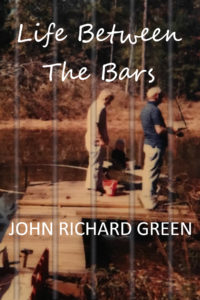
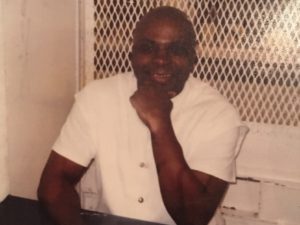
ABOUT THE  AUTHOR.  Shipwrecked and found.  John is currently doing a two-year set off, after 25 years of incarceration.  He is a frequent contributor as well as the author of Life Between The Bars, a unique and heartwarming memoir.  John can be contacted at:
John Green #671771
C.T. Terrell Unit A150
1300 FM655
Rosharon, TX 77583

Loading

Prison Writing and Expression