“Acts of kindness come few and far between for me, but I’ve adopted a point of view that dictates – when an act of kindness is bestowed upon you, the most meaningful thing you can do in return is pay it forward. And, so I shall. So, however big or small the gesture turns out to be, together we will contribute to what I suppose could be considered the Universal Good.” – Wilmer Portillo
I am so grateful for the chance I have every day to work with the most appreciative people I know. It’s a gift. Kindness and compassion and love – change people and the world. Vengeance in the form of the death penalty, solitary confinement and overly harsh sentences in inhuman conditions – don’t make us better.
“You’ve taken up the fight to save my life like no other has done – and I never asked you to do it. You did this on your own, and that warms my heart.” – anonymous
Happy Thanksgiving!
NOTE: Wilmer A Portillo is a gifted writer and the author of A Dreamer’s Story. He can be contacted at:
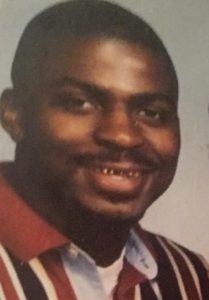
‘Have you ever felt like you can taste the future? Like you know what’s about to happen? That’s how I feel. Back a few years ago, a friend here broke away from the officers who were escorting him and walked towards me in the dayroom. On instinct, I reached out through the bars and grabbed him. Tears stained his face from crying for hours during his last visit. I gave him a huge hug, and he kissed my cheek and whispered in my ear, “Roaddawg. You have the best chance to get free. Don’t let them win. Go back home to your family. Get free. Promise me?”’
‘I did promise him at that moment before letting him go. But – I failed.’
Facing the end of his appeals, which have been procedurally barred and left unheard, Charles Mamou’s future looks bleak. Some would say he never had a chance – not a black man on trial for murder in Harris County, Texas, at that time in history. It’s twenty years later, and with execution near, there are more questions than answers. The only thing certain is that there can be no certainty of his guilt. He has always maintained his innocence.
The most glaring problem with Mamou’s sentence came during the penalty phase of his trial, when victim impact statements were allowed in the Courtroom for crimes of which Mamou was never charged. But the case itself was built on the testimony of a handful of people involved in a drug crime – who all stood to benefit from their testimony – and an unfired cartridge found near the victim’s body.
That cartridge – was the only physical evidence. There wasn’t even DNA tying Mamou to the victim.
The prosecution brought in Robert Baldwin, an employee of the Houston Police Department, to testify that the unfired cartridge found near the victim’s body had been inside the magazine of a weapon used at a drug deal gone bad – where Charles Mamou had been involved.
So – what the jury heard, was unhindered ‘expert’ testimony from the prosecution. Mamou’s court appointed attorney did not bring in an expert to refute Robert Baldwin’ s testimony, in spite of its weakness, nor did he question the expertise, credentials, or methods of the ballistics ‘expert’ whose testimony was the basis for the prosecution’s case.
It was not pointed out to the jury that even in the best of circumstances the ‘science’ used to tie an unfired cartridge to a fired casing at a different location – is not a certainty. Rather they listened to a lot of scientific jargon and were informed that Charles Mamou had been in possession of a gun that was at the same location as the victim.
It is not possible for that to be a certainty.
The prosecution’s expert had no weapon to test.
The prosecution’s expert didnot produce any photos of his comparisons.
The prosecution’s expert did not explain how many marks were compared in his study that was conducted without the ability to test a weapon.
The prosecution’s expert was vague in the details, but certain of the match.
In a case with the death penalty on the table, it is reasonable to think more should be expected as far as expert testimony, but again, Charles Mamou was a black man in Harris County, Texas, with a court appointed defense attorney who chose not to question those things.
Criminalist, Ronald Singer, later said in an affidavit regarding the Charles Mamou ballistics testimony:
“….The prosecutor also, in his final argument, presented to the jury his opinion that the match was a certainty. Such opinions, however, are inherently probabilistic in nature. The defense attorneys failed to address the flaw of ‘discernable uniqueness’ and allowed the prosecutor to present this to the jury. Had they presented a competent ballistics expert at trial, that expert should have been able to inform the jury that such opinions are flawed as they ignore the inherently probabilistic nature of such comparisons. This individualization fallacy was well known at the time of Mamou’s trial.”
Robert Baldwin also testified in the capital murder case of Nanon Williams where his testimony was the foundation for that prosecution’s case as well. At one point Baldwin was asked, “Is there any way in the world based on your training, your expertise and the examinations that you made, that the bullet… was shot out of that Derringer?
Baldwin’s reply on the stand was, “No, sir. It’s the wrong caliber.”
Baldwin testified with certainty that the bullet that took the victim’s life came from Nanon’s .25mm caliber handgun.
Not only did Robert Baldwin get it wrong in a case that sent Nanon to death row – the bullet taken from the victim actually did come from a .22 Derringer. Baldwin never fired the Derringer during his ‘study’ of the evidence. In other words – he did not test the only weapon available. In the Nanon capital murder case – there was a gun to test. Robert Baldwin, the ‘expert’ ballistics witness for the prosecution didn’t test the only available weapon and gave false testimony.
Charles Mamou’s defense counsel didn’t question Robert Baldwin’s credentials. The defense did not ask for any data regarding the degree of similarity between the marks nor did they ask for any photos to show any microscopic comparisons. Photos and data were not presented, and they were not asked for.
In closing statements, the prosecution used Baldwin’s testimony to falsely assure the jury,
“magazine mark…makes it identical to one of the casings that was in the magazine of the firearm that…was left at Lantern Point…;”
“what is important is…that this was placed in the same magazine that the fired bullets were placed in, and thus, fired through that same firearm…;”
“we know that the casing that has the magazine mark was fired in a weapon in the possession of this defendant, and that’s the same magazine that has this bullet in it that was found at the Lynchester address where Mary Carmouche was.”
We may never know why Mamou’s court appointed counsel did not bring in an expert to refute the ballistics testimony nor argue the testimony that was presented. That counsel didn’t respond when I asked for his thoughts.
TO CONTACT CHARLES MAMOU:
Charles Mamou #999333
Polunsky Unit 12-CD-53
3872 South FM 350
Livingston, TX 77351
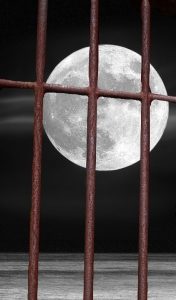
If these bars could talk,
The stories they might weave
Of the young and old
Who have lost their faith
To unyielding despair,
Left to rot in a steel and concrete box.
If these bars could talk,
Would they speak of the young men who have entered,
Only to get lost in indifference,
Becoming no more than a number?
What might they say
Of the old men fading away
Inside this concrete coffin,
Awaiting only Death’s embrace,
Forgotten by family too busy to recall an old man and his fate?
If these bars could talk,
Would they offer encouragement
To those trapped
In this cold, unforgiving tomb?
Or might they tease us
With offers of forgiveness, freedom
And a second chance at life?
ABOUT THE AUTHOR: Jorge Garcia is a poet and currently working on his first book. He can be contacted at:
Jorge Garcia #1372972
McConnell Unit
3001 S. Emily Drive
Beeville, TX 78102
I’ve spent almost half my life here. During that time, I’ve done everything possible to return home – to leave this place and return to society. I’ve abandoned fear, anger, bad feelings, all in search of the way – my own walk.
It’s not necessarily a religious or spiritual walk, although I believe in God and the Bible and wish I were more pious and connected. I strive for that every day. I realize that God is responsible for every single person in my life at this moment, and for that, I feel blessed. I’ve never felt as connected to the world in which I hope to return some day. I’ve made friends, and some are like family.
When I came to prison though, I lost everyone I ever cared about and loved. I think that happens to a lot of people here. It’s taken twenty-three years to build bridges back to my former life. Those bridges may be fewer, but they are sturdier and more structurally sound than they were before. I hope to walk across them some day.
I believe that is the point of incarceration. There are a lot of things wrong here, but the time here has gotten me to this place. It wasn’t just prison though. I’ve had the help of advocacy groups. Most of those are made up of individuals concerned about the welfare and treatment of prisoners, and they give and give and give until they cannot give any longer – and then they still give.
They want change. They are tireless. They don’t ask me or those they help to explain what they have done to get here. We know what we have done to get here. They show us how forgiveness can heal. They help us forgive ourselves. They help us see we have value and potential. They let us know we are worthy of care. They change our lives. The good ones – they just care. They care and expect nothing in return. They walk beside us while we try to come to terms with what we have done to get here. Or – for others – while they come to terms with being wrongly convicted or overly sentenced.
And when we do walk across the bridges we try to build while we are here, we do it with all those who helped us along the way.
Anybody who knows me, knows I don’t write to bring attention to myself. I don’t consider myself an expert on anything except my own personal experiences. I write to bring attention to the circumstances here, so others who aren’t able to write will be heard. I write hoping to have a hand in ending their pain and suffering.
I don’t write to make a fortune. I don’t write to be rich in wealth and prosperity. I write to be rich in the comfort and well being of others. I’ve taken a page from the book of those advocates who have spoken for me.
I live in a Texas prison where many say they send the old and sick inmates to die. It’s what some might call a prison nursing home, but nothing like a free world nursing home. It is for these folks I write. I write for change. I write for justice. I write for love.
Not all advocacy groups are the same. I’ve experienced that personally, but I’m grateful to those that have helped me get to this spot in my walk.
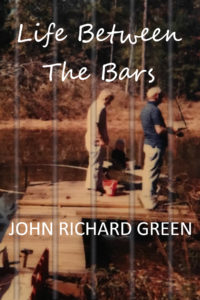
ABOUT THE AUTHOR. Shipwrecked and found. John is currently doing a two-year set off, after 25 years of incarceration. He is a frequent contributor as well as the author of Life Between The Bars, a unique and heartwarming memoir. John can be contacted at:
John Green #671771
C.T. Terrell Unit A150
1300 FM655
Rosharon, TX 77583
We want to have faith in the justice system. We may not understand the processes or the terminology, but we like to think that those that do will see to it that things are done properly – and fairly. To have faith – is to have belief beyond our own understanding.
But, can we? No matter a person’s stance on the death penalty – the importance of getting it right – with that there is no question. Too many times it appears our government doesn’t quite take that responsibility to heart.
That’s where a lot of those who oppose the death penalty get their argument – the courts don’t always get it right. They have a history of making errors. And – they have a history of not wanting to admit they have made an error when they clearly have.
Charles Mamou is a man on death row in Texas. He has maintained his innocence, and anyone who looks closely at the lack of evidence would admit that he very well might be – innocent. But, even more at issue is what actually happened during his sentencing. There is no argument there. What happened that day – goes without question. It happened in front of a room full of people and is documented.
During the penalty phase of Mamou’s trial, victim impact testimony was allowed from victims of crimes for which he was never charged.
Charles Mamou has only ever been charged and tried for the murder of Mary Carmouche. Regardless of how anyone wants to look at it or surmise or assume – Charles Mamou has never been on trial for any other murder. That is a fact.
Yet – the prosecutor argued, “And when he pulled the gun and he fired and killed Terrence and Anthony, he ripped those families apart. He devastated and destroyed. And that’s all he’s ever done, with his drugs, with his guns. And every time he pulled the trigger, he answered that first special issue yes, yes, yes, yes, yes. Seven times he answered it yes.”
It didn’t stop there. Not only was Charles Mamou given the guilt of those crimes without a trial – he was also given the blame for the hurt it caused those peoples’ families. As the prosecution described two other ‘victims’ – “Terrence Gibson. Anthony Williams. They were brothers. They were sons. They were dads.”
It wasn’t just the words of the prosecutor that the jury heard. According to court documents , during victim impact statements a family member of Anthony Williams’ testified regarding the “description of the hospital death of Mr. Williams; his sister’s identification of the body; the effect it had on his mother; heart-wrenching cemetery visits by Williams’ son; his crying as a result of the death of his father; and the health problems Williams’ death caused for his mother.”
Testimony regarding Terrence Gibson’s death included a family member “looking at baby pictures the day of his death.” The testimony was “so compelling that Hill himself had to give Gibson time to compose herself and ‘a chance to adjust’.”
When handing out the ultimate punishment – that of a person’s life – how can we have faith in any courtroom that would allow that to happen? More importantly – can Texas be big enough to admit its error before it’s too late? Or will Charles Mamou’s name go into the history books as one more death penalty case with so many lingering questions?
TO CONTACT CHARLES MAMOU:
Charles Mamou #999333
Polunsky Unit 12-CD-53
3872 South FM 350
Livingston, TX 77351
Once again, we meet at the end of my decisions.
Quick thinking turned into reactions
That place me back at the scene of the crime.
My head, this wall.
I rush into verbal combat,
Not looking to understand or be understood.
I focus only on the goal at hand, to conquer our exchange of words.
This game of tennis with the alphabet, I must be the victor.
You give me your thoughts, your years and experiences.
I counter with skilled precision and statistics,
Hoping to crush you, not the problem.
I have won, but nothing’s solved.
My head, this wall.
This feeling, this pain, this discomfort in my comfort.
I’m afraid to let go all I know.
Keeps me together while pulling me apart from everybody.
But I just. Can’t. Stop.
My head, this wall, my way, must have it.
I refuse to do anything different, but what I do does nothing for me.
So what do I do when I refuse to change?
My head, this wall.
Bang, bang, bang.
ABOUT THE AUTHOR. Brandon Stewart is a poet and performer of spoken word. He can be contacted at:
Brandon Stewart #231024
010-2-2L
Pendleton Correctional Facility
4490 West Reformatory Road
Pendleton, IN 46064
“This nigger’s slow as molasses,” the driver chuckles, followed by a chorus of giggles from the prisoners – some of them black – gathered at the top of the ramp as I finally reach the incline.
Now the real task – a Herculean one – figuring out how to walk up the incline while leaning back and carrying the heavy box, which now feels like its weight has doubled.
I cannot see the edge of the ramp, so I raise one foot slightly and feel for it with the toe of my shoe. The last thing I want is to clip the edge and tumble face first. With each movement, aided by the pressure I am forced to apply by pushing my hands upward from the bottom and chin downward from the top, the box burrows the handcuffs deeper into my wrists. I can feel the blood begin to trickle.
Please God, what did I do to deserve this? Please, help me.
I manage to get both feet on the ramp and begin the slow, arduous assent. The higher I climb, the more I must strain to maintain my equilibrium and steady the box, every muscle on fire. My mouth feels like it’s coated with sawdust, and I’m starting to feel faint, but I press on.
“Almost home, ain’t cha, boy?”
The misery I feel is what I would presume gave life to the phrase ‘Hell on Earth’. It is not just the physical agony, though it’s all I can focus on, the mental pain is lying beneath the inferno, awaiting its return to the surface.
By the grace of God, I make it to the top, only to peer into what appears to be a black hole – a corridor so long I can not see the end. This can’t be real. God, tell me it’s not real.
“Stay in the middle of the hallway,” commands Bob.
The prisoners who had climbed the ramp ahead of me stood in the back of the line for the chow hall, eyeing me as I try to adjust the box.
No longer can I conceal the pain wracking my body. Grimacing, I hobble down the hallway, handcuffed and defenseless, only a couple feet away from some of the most violent and dangerous men in the world. It would be like any other day if one of them produces a shank and stabs me. The guards won’t protect me, they’ll be first to run.
About a quarter of the way down the hallway, I lose my grip, and the box slips out of my hands, hitting the floor with a tremendous thud. Everything instantly halts, as if we’re suspended in time. I feel every eye on me as I stare down at the box and my pride that lay crushed beneath it, not daring to look up. Please! Somebody just stab me now. Let’s get it over with. Death, I welcome you. Right now!
Neither of the guards escorting me make a move to pick it up, but in my peripheral vision I see movement. Now I’m looking down at a prisoner as he picks up the box. Moving quickly, afraid the guards might chastise him or even worse, he places the box in my arms and returns to the line.
“Thank you.”
He nods acknowledgment.
“Come on, sweetheart. We ain’t got all day.”
I start forward, and I can already feel the box begin to slip. Because he had rushed to put it in my arms, I’m unable to get a better grip, and still have quite a ways to go. I know I won’t make it without losing hold.
Again, I drop it, but this time it was not so dramatic. Seeing that the other prisoner suffered no repercussions, someone immediately steps out of line and retrieves the box, taking his time to make sure I have a good grip.
“Got it?”
I adjust my hands, “Yeah. Thank you.”
He nods and steps back in line.
The kind acts of two prisoners assuages my trepidation, and with renewed vigor, I lug the box without further incident to ‘Times Square’, four intersecting hallways that serve as the prison’s main arteries.
When the escort guards approach the main control room, the driver says, “I heard ya’ll had a vacancy.”
The female guard looks up from her paperwork, then at me. Realizing I have on a death row uniform and that the guard was referring to the execution that had taken place the day before while I was being sentenced to die, she looks back at him and bursts into laughter. “Yeah, I guess we do,” then over her shoulder, “Vinny, we gotta gain.”
A guard enters the control room and unlocks the door of a tiny holding cage that sits directly across the hallway. “Come on. Step inside and have a seat.” He takes my box and drops it to the floor.
As instructed, I step inside and sit on a narrow bench. The guard bends down, raising my pant leg, and inserting a key in the shackle, causing me to tense up and wince in pain, before removing the manacle stained with my blood. Now the other one. Again, I tense and wince as he frees my ankle from the bloody contraption. He stands and backs out, slamming the door closed. “Stand up,” he orders, handing the leg irons to the transport guard. “Turn to the side.”
I comply. He reaches through a hole cut into the mesh and removes the lock that is holding the chain around my waist. Once that is done, I slowly turn back towards him so he can unhook the chain from the black box, a torturous device designed by an ex-prisoner, placed over the handcuffs to lock the wrists and hands in one position, preventing any movement.
He unhooks the chain and removes the black box. The transport guard takes them from him. “Stick your hands out the hole.”
I do so, tentatively, anticipating the agonizing pain that never comes – my wrists and hands are still quite numb. I watch as he peels the cuffs from the gashes in my wrists, slivers of my skin and blood cling to the metal.
“Turn around and put your hands behind your back.”
I turn, and he clamps another pair of handcuffs over the bloodied gashes. Grimacing, I throw my head back towards the heavens as the pain flashes red behind my eyelids. Argh!! Fuck! Man, are you serious?
“Have a seat,” he says.
As I open my eyes and turn to sit, the driver says, “Have fun,” laughing as he walks away.
I sit with my hands behind my back, wrists searing hot with pain, for almost three hours before the property room Sergeant rolls a dolly to the cage and throws my box on it. Opening the cage door he says, “Follow me.”
I follow him for about a half a football field to the property room. Thank God! I’m not carrying that box.
We enter and he dumps the box’s contents on a large table. Combing through my belongings, he documents the items I’m allowed to keep and places them back into the box. He throws the items I’m not allowed to keep into a large trashcan that sits next to the table.
After about twenty minutes, he places the box and a bedroll on the dolly. “Let’s go,” he demands, leading the way.
Back in the hallway we continue until we reach the end. There is a door in front of us that leads to the electric chair and a door to the left that leads to the death row housing unit. The Sergeant taps it with his keys, and a guard who looks like he should be just entering high school opens the door.
“A death row gain,” the Sergeant tells him, retrieving the box and sliding it inside the door. Before turning to leave, he hands the bedroll and paperwork to the guard.
Standing, frozen, outside of death’s door, I try to sort my emotions – fear, anger, confusion, doubt. I no longer feel the burning, ephemeral pain in my ankles and wrists. The hurt girding me now eclipses the physical. There is no lotion or ointment to soothe it.
“I think you’re goin’ to cell 7,” the young guard says, snapping me out of a daze. Then he steps aside, beckoning me to enter.
I turn and peer down the long corridor, swallow hard, and hesitantly cross the threshold. Once I enter, he closes and locks the door.
Another uniform appears, “Sarg, we got a gain. I believe he’s goin’ in 7.”
“You got his things?”
“Yes. Over there.”
“Okay. Grab ‘em and let’s go.” Then to me, “Follow me.”
I follow him to a door made of steel bars. He unlocks and opens it, and we step into a long, narrow hallway that has bars on the left and cells on the right. When we reach the seventh cell, the young guard steps into the darkness and deposits the box and bed roll. He exits, however, I don’t enter immediately.
“Well, wacha waitin’ for? Go on in.”
Reluctantly, I step inside. When the door slams behind me, it startles me, causing me to flinch.
“Back up a bit, so I can take them cuffs off.”
My wrists are raw and tender. At least this part of the agony will be over. Thank God.
After they leave, I look around for a light and spot a string in the corner dangling from the ceiling. I pull it, and a dim, 40-watt bulb comes to life. Roaches scurry everywhere.
I look around the filthy cage. Paint is peeling off the walls which are so close that I can stand in the middle of the floor, extend my arms, and touch both of them – and the ceiling. Dirt and dust bunnies cover the floor, mold and brown crud occupy the sink and toilet.
I flop down on the narrow steel bunk and look around at my new surroundings, trying to process everything – my innocence, conviction, sentence. How the hell did this happen, and where do I go from here?
Then I hear a voice. “Hi, neighbor. How’s it goin’?” I didn’t even consider that there were others – I didn’t look into any cells while walking down the hallway. “Name’s Locke. I’m over here, next to you, in six.”
“How’s it going, Locke? Just trying to get settled in.”
“Well, if you need anything, just give me a holler. You want some smokes?”
“Yeah, I would appreciate it,” I reply, even though I don’t smoke.
I don’t have the strength to clean, so I sit smoking until it turns dark outside. Tired of sitting, I turn off the light and lay in the dark, smoking and listening to critters scurry about, until I doze off to sleep.
I have a dream… unfettered, head held high, retracing my steps down the long corridors – I walk to freedom.
Epilogue
Still – 26 years later – sleep is my only freedom.
I had just kicked back for the night and began to relax – boots off, feet up – when I sensed movement off to my right. It was him – my boy was nearly four years old and had long blonde hair. He was motionless, staring, and I finally asked, “What is it?”
“There’s a monster,” he said, holding my steady gaze. He was serious about this, I could tell, appearing helpless and almost pleading.
Going into fatherhood, I had tried to look ahead as far as I could, with my primary objective to be the most unlike my parents I could be. I’d had to think long and hard about discipline. Could I ever lay a hand on my child in punishment? How might we achieve reconciliation and understanding? But – I hadn’t really anticipated the monster in the closet.
It’s been said I was born unafraid of the dark. As a tot I would climb out of bed at night to play with my toys. After a while my parents took to keeping my door cracked to see if I got back up. As one story goes, they heard something one night and, believing it was me, my dad rushed into the room screaming at the top of his lungs. It turned out I had been in my bed the entire time. I don’t recall these events, that’s just what I’ve been told. All I know is that, as a child, I suffered a terrible fear of what might be lurking behind doors in the night. Now my boy had a monster in his closet…
What to do? My parents would’ve forced me back into the room at threat of a beating. In those days, Mom and Dad were difficult for me to relate to.
“There’s not a monster in your closet,” I finally said, shaking my head. He stared back in silent disbelief. So I tried again, saying, “There can’t possibly be a monster in your closet.”
He was not seeming especially convinced, so I went on with more conviction, “There cannot be a monster in there because you see,” and I looked him sternly in the eye, “monsters are scared of me.”
Mind you, it was not easy to keep a straight face at that point. He was hanging on my every word. “The monsters are scared of me because they know if they try to hurt you,” a pause for emphasis, “I will kick their butts.”
In those days I was a timber jack in top condition, out in the sun every day, with hair past my shoulders and beard trimmed below the jaw. But, that night at home, I was wearing blue sleep pants, a red tank top, and leather strapped sandals. My son, known then as little bear, stood staring in wide-eyed silence.
“Is there a monster in your closet?” I fixed him with a firm gaze. He nodded slowly, so I pulled myself up on my feet. “Let’s go see him then.”
I pushed open the bedroom door and flipped on the light, hands fisted, arms slightly bent. Up to the closet I strode, noticing the door already slightly ajar. “Come out of there, monster!” I commanded.
There was no response. I glanced at my son, then back at the door. “Don’t make me come in there!” There was nothing left to do. I threw open the doors…
“See?” I rifled through the garments checking the corners. “There’s no monster in here.” I knelt down to his eye level, “and there won’t ever be, because they know I will get after them if they ever get close to you. Okay?”
A smile pulled at my boy’s face as he nodded.
I laid him back in bed with a kiss on the head. That monster never bothered us again, which was a real relief. After all, had I actually seen a monster in the closet that night, who knows what might’ve become of us?
No confession. On the contrary – Charles Mamou has never wavered regarding his innocence. That’s why he didn’t take a deal when he was offered one. He put his faith in the truth and Texas justice nearly two decades ago. That turned out to be a deadly mistake. His fate was left in the hands of Harris County, Texas – a community with a long and well documented history of condemning people to death.
And so Mamou’s trial began. The O.J. Simpson trial was still fairly fresh on peoples’ minds – and Charles was a black man in Texas. The words of the Judge set the tone from the beginning, as he referred to O.J.’s trial that ended in an acquittal, stating that was, “not going to happen here. This is the real world. It is not California.” The Judge also compared being a juror to, “being a pallbearer at a funeral.” This was followed up with, “the State is going to seek the appropriate punishment in this case; that is, their claim that it will be the appropriate punishment, punishment of death.”
The case against Charles Mamou revolved around the hearsay testimony of individuals who were all involved in criminal activity, and some very questionable ballistics testimony regarding a never recovered gun.
But, everyone agreed on where everything began. Five men met on Lantern Point Drive, near the Astrodome, for a drug deal that went terribly wrong. Charles Mamou and Sam Johnson arrived in one car. They were met by Deion Holly, Terrance Gibson, and Kevin Walter, who arrived in another vehicle. Unbeknownst to Mamou and Johnson – Mary Carmouche was in the backseat of the second car. Deion, Terrance and Kevin brought a seventeen year old girl to a drug deal they approached with loaded guns.
Things went wrong quickly, and the shooting began in both directions. Terrance Gibson was killed holding a loaded gun – a clear indication his death was the result of self-defense, in which no one was ever charged. The other two men with Gibson, Deion Holly and Kevin Walter were also shot, but survived.
At some point during the shooting, it appears Sam Johnson hopped in the car that he and Mamou arrived in, and drove down the street. Mamou thought his friend had left, although Sam was actually turning around and coming back for him. In that moment, Mamou made a life changing decision. Alone in that alley, he got in the other men’s car and drove away – with Mary in the backseat.
According to Mamou’s testimony, when he realized Mary was in the car – he stopped and asked her to get out, but she refused. He then met up with Sam Johnson and they drove to Howard Scott’s apartment.
There, Mamou got out of the car, asking Mary to get out as well. He was then met by Sam Johnson and Shawn England, another acquaintance. Mamou was crying and upset, and Shawn pulled him aside to say, “those guys got what they deserved.” Shawn and Mamou then went inside, leaving Sam Johnson and Mary outside.
Once inside, Mamou was provided with clean clothes, and Shawn England and Howard Scott went outside to search the car that Mamou had arrived in and wipe it down. Mary was still outside and talking to Sam. Eventually, another friend arrived on a bike – Kevin. They all talked for a little while longer before Sam Johnson, Kevin, and Mary left together.
Mamou left the apartment complex to make a call, and when he returned, he saw Kevin and Sam Johnson come back. Johnson went inside briefly before leaving again with Kevin.
Later that night, Sam Johnson and Kevin returned, and Kevin got on his bike and left. A cab came for Shawn England, who also left. Mamou spent the night in Howard Scott’s apartment.
According to Mamou, Shawn England had taken the gun from Mamou while at the apartment.
Mary Carmouch was later found dead with a gunshot wound to her chest.
The prosecution disagreed with Mamou’s version of events and centered a good portion of its case on an unfired cartridge that was found near Mary’s body. They claimed the unfired cartridge matched the fired casings at the scene of the drug deal gone bad. It was their theory that those casings had travelled through the same gun barrel. The science used to support such a theory is arguable even in the best of circumstances, but in this case – there was no weapon to test the theory out on. The weapon used in the drug deal shooting has never been recovered. So, there was ballistics evidence that is not a certainty in the best of circumstances, but in this situation there was even less certainty, as it was comparing used and unused casings from a weapon that couldn’t even be tested.
The prosecutor falsely argued the match was a certainty. He actually used the word ‘identical’ when comparing casings, and also stated as fact, “this was placed in the same magazine that the fired bullets were placed in, thus, fired through the same firearm.” He lied. The prosecutor simply lied to the jury.
The other ‘evidence’ the prosecutor had was the testimony of five men who were all involved in criminal activity and willing to testify and point their fingers at Charles Mamou. It was never investigated or made clear just how those men might have benefited from their testimony, although it is reasonable to assume they did benefit as they were incriminating themselves with their testimony. In addition to the very real possibility that they received personal benefit for their testimony, three of them were inconsistent and admitted lying and being untruthful with police. None of the men ever claimed they saw Charles murder Mary.
A good deal of the prosecution’s time was spent trying to paint a picture of Charles Mamou as a killer who had killed before, but the reality is – Charles Mamou was never tried for any other killing.
Charles Mamou’s defense attorney didn’t strongly defend his client, but rather seemed to flounder. At one point during the crucial ballistics testimony he stated, “not sure if I understand what that means.” In reference to magazine marks he said, “what is the word I’m looking for to describe what a magazine mark is?”
The total amount of time the defense spent ‘investigating’ Charles Mamou’s death penalty case was under ten hours. The total amount of time Mamou’s counsel spent meeting with ‘the investigator’ was 2.5 hours.
Although all of the testimony available to the defense during the sentencing phase of the trial wasn’t used, the words of those people who could have spoken describe Charles Mamou as kind, generous and respectful.
The thoughts of Claudia Milton, who knew Charles Mamou and his family, were never shared with the jury. “When Chucky was older he would often talk to my son about his problems. My son was on drugs and Chucky would try advise him to do better things with his life. I wanted my son to be more like Chucky. There was times when I went shopping and Chucky was in the grocery store, he would buy my groceries and never wanted any money back. There were many other people in town that Chucky would help buy groceries, pay rent or their electric bill. Chucky helped people.”
The defense also did not share the thoughts of Mark Benolt, who has said in an Affidavit, “To me, Chucky does not have a ‘rough bone’ in his body. I have witnessed him paying bills for friends, family members and other people in the community. Charles Jr. is a friend that everyone wishes to have once in their life.”
Oddly enough, even though all of the testimony that could have portrayed Charles Mamou in a positive light was not pursued by defense counsel, the prosecution was permitted to bring in victims of crimes Mamou was never even tried for, along with referencing these other deaths throughout the trial with misleading references to, “evidence that Mamou had killed two other people.” And in describing those deaths that Mamou has never been tried for, it was stated, “Terrence Gibson. Anthony Williams. They were brothers. They were sons. They were dads.”
Charles Mamou was never on trial for any other murders, yet victim impact statements were allowed from relatives of Terrence Gibson and Anthony Williams. Emotion filled testimony was given detailing how the loss of those men impacted their families. This was followed up by the prosecution, “And when he pulled the gun and he fired and killed Terrence and Anthony, he ripped those families apart. He devastated and destroyed. And that’s all he’s ever done, with his drugs, with his guns.”
During the penalty phase of the trial, the Judge also stated, “it’s no more different than it is when we’re raising kids. It’s just no more different. If we ever told a child not to do something once and the child does it again, we’re going to react one way. If we have told a child ten times in the last thirty minutes not to do something and they have done it for the tenth time, we’re going to react a different way.”
The U.S. Fifth Circuit Court of Appeals has denied Charles Mamou’s last appeal, and he is currently awaiting an execution date.
Regarding the denial of his final appeal and the knowledge that he will soon be executed by the state of Texas, Mamou recently expressed his frustration, “Nobody believes in me! I love me. America isn’t the land of equality. Never has been. Let’s not pretend. Let’s admit what it is. And before I take my last breath, the whole world will know they fucked me over. That will be the symbol of why I lived.”
If only we didn’t need a dead body to know that the trial of Charles Mamou wasn’t just.
TO CONTACT CHARLES MAMOU: Charles Mamou #999333 Polunsky Unit 12-CD-53 3872 South FM 350 Livingston, TX 77351
“Fuck your religion!” yelled an irate Polo, attempting to defend his stance in a one-sided debate with another inmate, Bob Cook, a professed Christian, though he never read the Bible. Not once. He never attempted to read it either. He possessed an NIV version that sat quietly on top of his rusted cell’s table, collecting dust. “All He was, was the original MGM magician – no better than David Copperfield!”
Polo was a celebrated and outspoken atheist and verbally strong-armed the one-sided debate about religion. Of course, Bob wouldn’t have anyone disrespecting his faith, his Jesus, whom he felt was God’s son, although he never totally understood the ‘how’ aspects within his beliefs. Bob was a typical, middle-aged, white Southerner with traditional Texan pride. He was short and round in stature, built in the mold of Barney Rubble from the Flintstones with hair as white as cotton and alopecia taking over the center of his head. He was a goodhearted guy and my neighbor for about three years. When you are held within the close quarters of Texas Death Row, in solitary cells 24 hours a day, you learn a lot about your neighbors. You get a better understanding of who they are.
I knew Bob well, perhaps better than anyone on the planet. He had a genuinely cuddly personality, always attentive to the needs of others more than his own. He was not one to argue and would often display dumbness when others were attempting to explain something asinine, just so the talker could get whatever it was they wanted to say off their chest.
He didn’t have much and lived on about 20 bucks a month. To put things in perspective, he didn’t have shit, but what he had – anyone who wanted it, could have. That was one of his flaws – he was too kind and an easy target to be taken advantage of. He was guilty of the crime that landed him on death row, though it could be contested that his crime did not fit the criteria for a death sentence. Nonetheless, he was riddled with remorse, often saying, “I’m going to hell.”
When I asked him why, he said the chaplain told him that the Bible said, “Thou shall not kill.” Texas death row chaplains carry no sway with me ever since one told me that my being executed was God’s will. I calmly told him, “Bullshit.”
I then took out my Bible and read several scriptures to Bob, leaning on my studies from when I was enrolled in theology classes. One reason why he never read the Bible was because he couldn’t. He was illiterate. I read to him about forgiveness, faith and salvation, which he appreciated, and in time he gained hope that he might have a chance to get to heaven.
Of course, ‘perfection’ has never been a Christian strong suit, Rome wasn’t built in a day and some dogs refuse to let go of old tricks. So when Bob had enough of Polo’s Christian diatribes, he declared “May Jesus Christ forgive me now for what I’m about to say. Fuck you, Polo!” and with that, he walked away from his cell’s door, steaming mad, and went to sit on his bunk.
Polo began to laugh at Bob’s parting cussing. His handsome and smooth caramel colored facial skin was shining like polished armor due to his overuse of commissary bought baby oil that he used daily. He liked the smell that reminded him of when he was a baby and being smothered with the loving hugs of his mother as he was held between her tender arms and her comfy bosom. He was thirty-two, and had been incarcerated more than he had been in the free world. He was arrested at the age of 15, held in the county jail until he was 17, and then sent to death row. He would be executed/murdered before the USSC’s decision to ban all executions of juvenile offenders. Like most youngsters who grew up around environmental dogma, he was rough around the edges, not cordial and trusted no one. He spoke in waves which often confused the listener as well as himself to some degree, because his ideologies were a perplexing mixed bag of black power, black militant-ism, Malcolm X-ism, Islamic beliefs that he adopted from others, and the scratch your head in utter disbelief performances he often acted out as he mimicked Bill Cosby’s Fat Albert show character with the line, “Hey, hey, hey, it’s Fat Albert!”
I often psychoanalyze people, trying to understand why they do the things they do. Polo, perhaps, still felt as if he was fifteen-years-old and living in a thirty-two-year-old body. Maturity never found an outlet within his mind in which to become liberated. His actions and attitude were a reflection of the way he thought – childlike. What else could you expect?
Polo stood alone in the middle of the section’s day room. No one stood at their cell’s door that he could argue with. Since arriving in the Polunsky Unit in 2000, group recreation, work programs, televisions, and any form of physical contact have been banned from the all-male branch of Texas Death Row. So he began the redundant activity that we all do when we find ourselves alone in the day room with no one to talk to – walking in circles. Consciously or unconsciously we lower our heads as if in shame and count in our minds the steps we take to make a full circle. One… two… three… four… five… It actually takes seventeen strides to complete a full circle in the dayroom. I watched Polo from a distance as I sat in my cell, counting along with him. It would be the last time I was to see Polo in the flesh – alive.
Texas death row inmates are housed in a building called Twelve Building. It’s encased inside electrical razor wired fencing. On some mornings you can see the dead carcass of a stray cat or dog that didn’t get the memo about not touching the fence. Did these creatures not see one of the several bright yellow postings that warn, ‘Electrical Shocking Fence. DO NOT TOUCH’? Mayhap the animals were illiterate too.
There are six pods within Twelve Building, each lettered either A, B, C, D, E or F. Within each pod are six sections, also lettered A, B, C, D, E or F. Each of the six sections can hold fourteen cells for fourteen inmates. Each man is alone, twenty four hours a day.
Inmates communicate by yelling loudly at the guy they are trying to have a civil conversation with. Though in a normal setting, yelling to obtain a civil conversation is indeed madness in nature. Ninety percent of the cells leak when it rains, some more than others. Black mold has run amuck within every cell on death row. The building was cheaply designed and constructed, and the infrastructure is weak and crumbling. Fighting spiders, mosquitoes and other critters is a daily chore.
The failures of the infrastructure are so timely and repetitive that one can’t help but assume there is a conspiracy going on, because nothing works as it should here. Every year during the summer, the water is going to get cut off for a day or two straight. There won’t be fresh water to drink, no water to shower with and no water to flush the accumulated shit and piss that will idly stew. And let me tell you, once the sun’s rays bake this concrete building’s back wall, the structure becomes an oven, causing any religion you thought you had to get temporarily thrown out the window due to the foul odor. If anyone asks us if we are comfortable or okay at that point – they are often greeted with the same aggravated, “Muther fucker, what do you think?”
ABOUT THE AUTHOR. Charles “Chucky” Mamou is living on Death Row in Texas. His last appeal has been denied and he maintains his innocence.
He can be contacted at:
Charles Mamou #999333
Polunsky Unit 12-CD-53
3872 South FM 350
Livingston, TX 77351


 ‘Have you ever felt like you can taste the future? Like you know what’s about to happen? That’s how I feel. Back a few years ago, a friend here broke away from the officers who were escorting him and walked towards me in the dayroom. On instinct, I reached out through the bars and grabbed him. Tears stained his face from crying for hours during his last visit. I gave him a huge hug, and he kissed my cheek and whispered in my ear, “Roaddawg. You have the best chance to get free. Don’t let them win. Go back home to your family. Get free. Promise me?”’
  If these bars could talk,
 I’ve spent almost half my life here. During that time, I’ve done everything possible to return home – to leave this place and return to society. I’ve abandoned fear, anger, bad feelings, all in search of the way – my own walk.
 ABOUT THE AUTHOR. Shipwrecked and found. John is currently doing a two-year set off, after 25 years of incarceration. He is a frequent contributor as well as the author of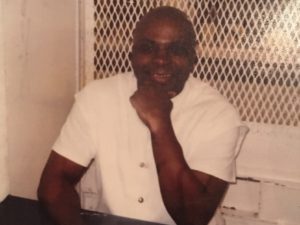

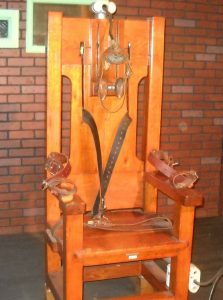 Back in the hallway we continue until we reach the end. There is a door in front of us that leads to the electric chair and a door to the left that leads to the death row housing unit. The Sergeant taps it with his keys, and a guard who looks like he should be just entering high school opens the door.
 After they leave, I look around for a light and spot a string in the corner dangling from the ceiling. I pull it, and a dim, 40-watt bulb comes to life. Roaches scurry everywhere.
 I had just kicked back for the night and began to relax – boots off, feet up – when I sensed movement off to my right. It was him – my boy was nearly four years old and had long blonde hair. He was motionless, staring, and I finally asked, “What is it?”
 “See?” I rifled through the garments checking the corners. “There’s no monster in here.” I knelt down to his eye level, “and there won’t ever be, because they know I will get after them if they ever get close to you. Okay?”
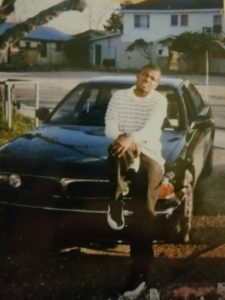 And so Mamou’s trial began. The O.J. Simpson trial was still fairly fresh on peoples’ minds – and Charles was a black man in Texas. The words of the Judge set the tone from the beginning, as he referred to O.J.’s trial that ended in an acquittal, stating that was, “not going to happen here. This is the real world. It is not California.” The Judge also compared being a juror to, “being a pallbearer at a funeral.” This was followed up with, “the State is going to seek the appropriate punishment in this case; that is, their claim that it will be the appropriate punishment, punishment of death.”
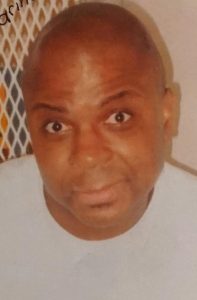 The U.S. Fifth Circuit Court of Appeals has denied Charles Mamou’s last appeal, and he is currently awaiting an execution date.