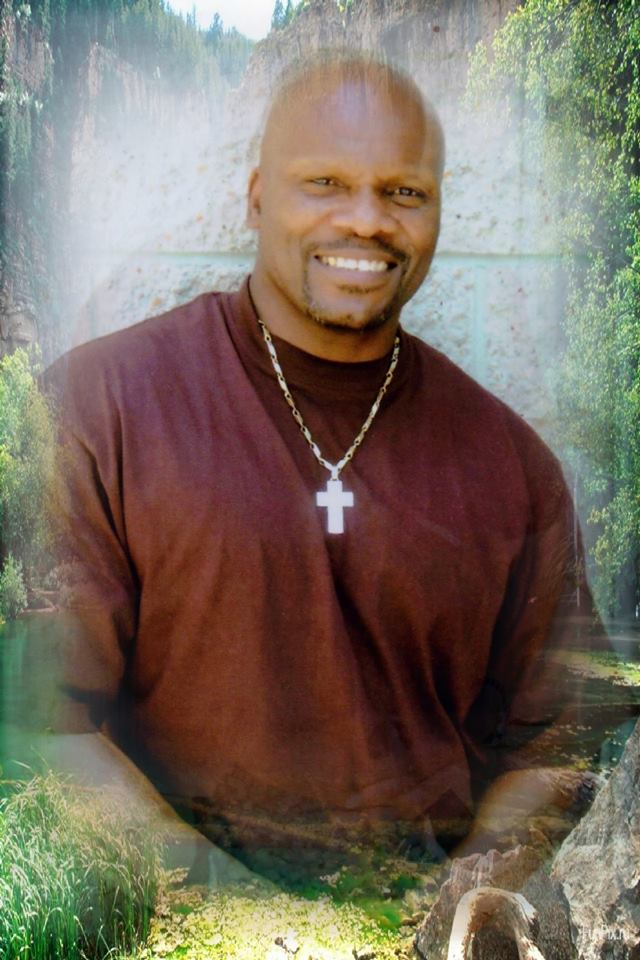
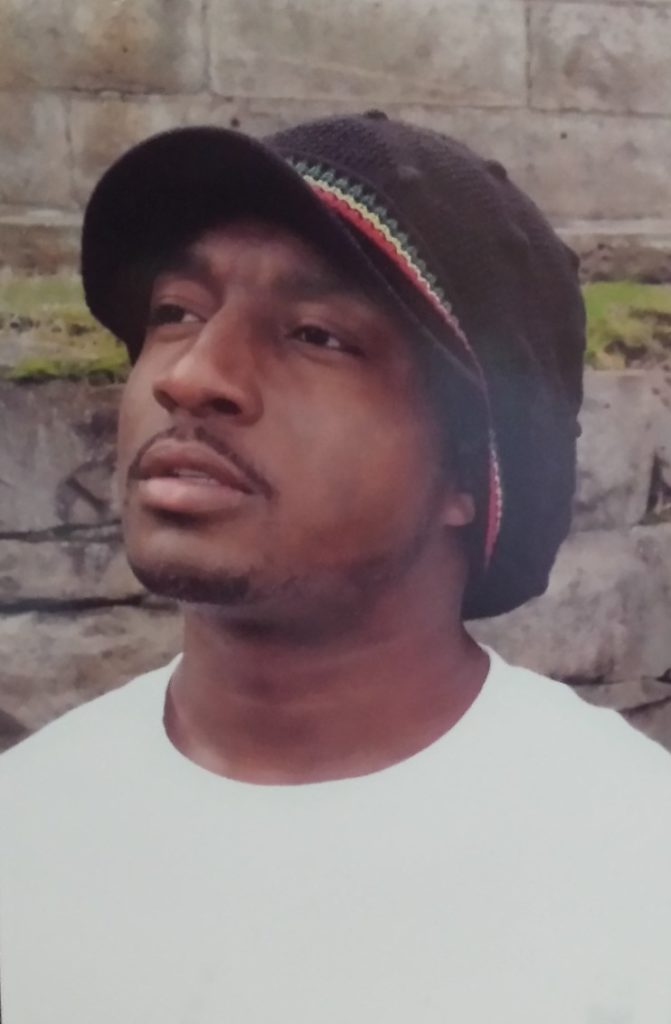
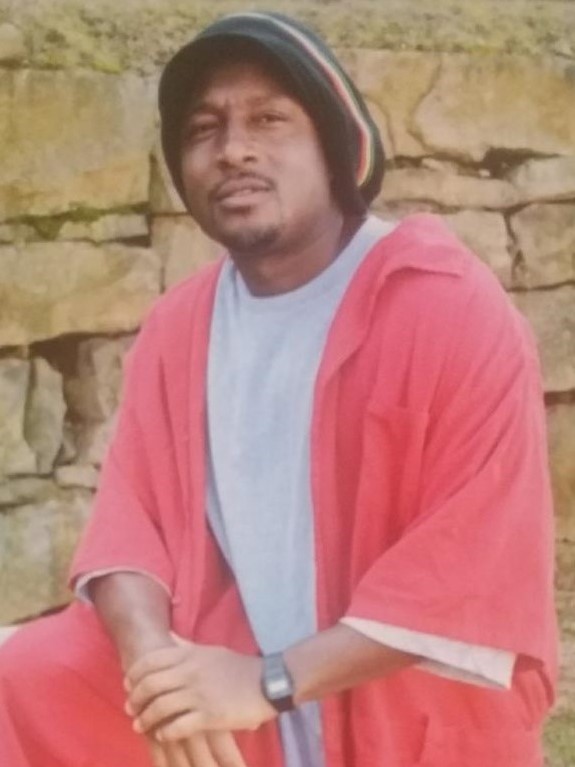
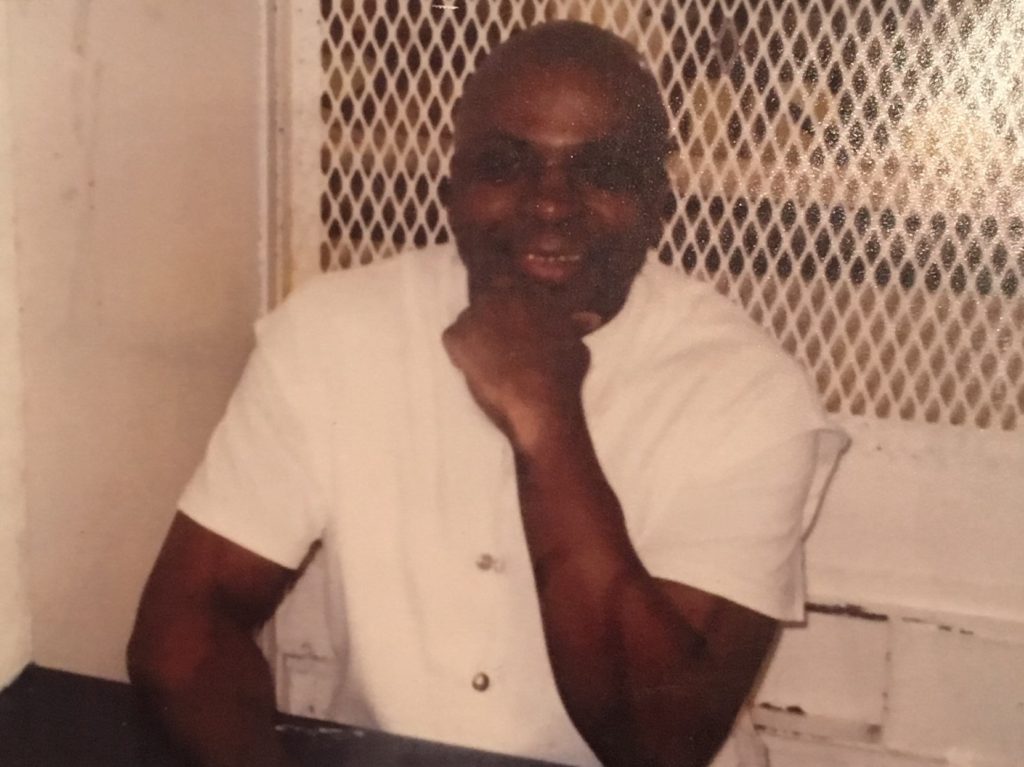
Robert Booker isn’t just any author of seven urban fiction novels. He’s bigger than that. He’s a symbol what can happen if we acknowledge the justice system is flawed, and we can do better.
I wrote about Booker in February, 2016, because he once had a life sentence with no possibility of parole – for a nonviolent crime. I sent him a copy of what I posted. He wrote back. The next thing I knew, he was publishing novels – six in the short time I’ve known him, with countless others yet to be published. He accomplished what many writers dream about with only a pencil and paper. And he did it, not expecting to get out any time soon.
Robert Booker isn’t an incarcerated author anymore. He’s a free author. He once inspired me to write about his unjust sentence – he now inspires me to write about what can happen when wrongs are made right. There is only one Robert Booker, as he would tell you, but there are others like him who deserve this same kind of chance.
Robert Booker went to prison June 29, 1994, but this week – he’s the picture of righting wrongs. He’s the picture of a man who is free thanks in good part to a commutation from President Obama and also the First Step Act.
I can’t wait to see what he does next, and I know I will return to this page often – just to watch this and remember what we’re doing right.
My Best Friends Are Behind Bars – that’s going to be the title of my book someday. And some of them are innocent…
I’m not naïve. I work
with a lot of people who have done a lot of bad things. They live with regret. Most of them did ‘something’. People get exonerated all the time though,
and statistically, it was bound to happen – I would find myself working with
some innocent people. What’s fascinating
– my innocent friends didn’t tell me
they were innocent. Our writing
relationships were the focus, but when my instincts tell me something doesn’t add
up, I want to know more.
This week I heard the federal government was going to resume
executing people. That news hurt my heart.
An attorney once told me during a discussion about the flaws in the
system, justice is like the highway.
People want to have highways even if they result in lives lost in auto
accidents. She explained it’s the same with
justice. People are willing to have our
system of control, even if we lose some people to the ‘mistakes’. Collateral damage.
I don’t see it that way – there’s no arguable need for the death
penalty. Every state, every country,
that executes – executes the innocent as well as the guilty. That’s just a fact. Is a ‘tough on crime’ stance worth the
mistakes when the mistakes are human lives?
One of my favorite writers, Terry Robinson, lives on Death Row. He’s never written about being innocent. After I came to realize he wasn’t capable of
what he was there for, I asked him why he didn’t openly speak of it. He told me he felt it would be disrespectful
to the victim of the crime he was incarcerated for to write about that. That’s the type of man he is. He has such a quiet dignity and respect for
others, I can think of no one who compares.
It’s because of that character I asked to see his transcripts. I got some clarity as I read. He was no angel, and he has never claimed to be. But the core of who he is was always there. The night of the crime, Mr. Robinson was ‘in the area’. He was black. Another individual who was arrested in connection to the murder said Mr. Robinson did it. That’s all it took. That individual is now living a free life.
When it came time for Mr. Robinson to present his defense, I was anxious to read that portion of the transcripts. I had read everything the prosecution laid out, and I thought there was a lot left unknown – not to mention DNA that wasn’t tied to anyone. I was anxious to hear what would be revealed during the next portion of the trial. I pictured myself, facing a death sentence, and how I would present everything possible, how I could call into question so many things that had been shared. He would surely tell of where he was and who he was with. He would contradict the key witness. After all – it was a trial that could result in a death sentence.
What I read next, stunned me. “Judge, we have consulted with the defendant,
and it’s his choice not to present evidence at this time.”
I had to reread it…
What?
The next time I spoke to Mr. Robinson, I asked, “So… You didn’t present any defense. Am I to understand that correctly? Why?”
He explained to me how his attorneys told him that if he
defended himself it would make him look guilty – so the defense presented
nothing.
What has me scratching my head in confusion will have him executed.
Terry Robinson was sentenced to death.
The individuals who had a hand in restarting the federal death machine would obtain the best legal representation available in a criminal case – because they have the means to do that. But – what about those who are a minority? What about those who are black and convicted in a southern state with all that we know goes hand in hand with that? What about those whose attorneys are appointed by the Court? There is an enormous difference between an attorney that is shopped for and one that is operating under a set fee by the courts while also carrying paying clients. If an attorney has paying clients – the court appointed cases go to the bottom of the stack. That’s reality.
Terry Robinson has so much character it can’t be covered up with a red Death Row jumpsuit. Mr. Robinson writes under the pen name Chanton. His essay, ‘Being Better’, which he wrote earlier this year, speaks of accidentally stealing forty dollars nearly two decades ago – and how he was driven to confess that mistake. ‘Duck’, Chanton, Terry, Mr. Robinson – is ‘collateral damage’.
It’s okay to say it – you are innocent. You have every right to say it. You are not the first person to be incarcerated for something you didn’t do. You are not the first person on Death Row to know you don’t belong there. There are other people who know you don’t belong there. Your previous mistakes in life don’t make you deserving of this. The loss that is the reason for this discussion is not diminished by you speaking truth. Truth is never a mistake. And the truth is – some innocent people live on death row, and may very well die there.
Mr. Robinson can be contacted at: Terry Robinson #0349019 Central Prison 4285 Mail Service Center Raleigh, NC 27699-4285
Anybody with information related to his case can contact me
at kimberleycarter@verizon.net. Anything you share with me will be
confidential.
My house is one of heartache, A place of steel and stone. A barren cell, a home of Hell, And here I stand alone. When I rage, I pace my cage That no man Wants to own. Memories of free life Chill me to the bone. I hear them sling their giant keys Which crank the iron locks. Booted feet upon concrete, Guards patrol the blocks. Criminal’s knives take human lives, No jungle holds more danger. Each day that comes my way, I meet a new stranger. I watch my back, because there’s lack Of those who can be trusted. In this world of steel and stone, Bars that are all rusted. Home of men who are downtrodden, The world I live in now, The world of the forgotten…
ABOUT THE WRITER. Tom Landers sent this poem into our spring writing contest. Although it didn’t quite match the writing prompt for the contest – we still enjoyed his work and wanted to share it. Mr. Landers can be contacted at: Thomas Landers #124529 Housing Unit E3-10A Idaho St. Correctional Center P.O. Box 70010 Boise, Idaho 83707
In Harris County, Texas, 1999, Charles Mamou was sentenced to death in a trial primarily focused on the testimony of a handful of drug dealers involved in the same drug deal, the strongest testimony coming from Mamou’s own cousin who testified Mamou confessed to him.
There were several factors the jury never heard regarding the
alleged ‘confession’.
When Terrence Dodson first heard police had contacted one of his relatives looking for him in connection to a capital murder case, he quickly told police his cousin, Chucky, had confessed to murdering and sexually assaulting the victim. Charles Mamou was arrested for kidnapping and murder.
Nearly a year later at trial, what the case lacked in physical evidence, it made up for in the ‘confession’, at times focusing on the sexual assault Terrence Dodson had described to police. The jury was never presented all the contradictions between Mr. Dodson’s original statement to police and his actual testimony at trial, including the location of Mamou when he supposedly confessed and also how he confessed. Those contradictions would have brought into question Dodson’s credibility and can be seen HERE.
The jury was also not shown the letter Dodson wrote to his cousin a month after he told police about the ‘confession’. In the letter Dodson said, “I’m glad you didn’t tell me shit about that cause I don’t wanna know shit, I feel better off that way.”
There was one more thing the jury never heard. Charles Mamou was never charged with rape, but it had a significant impact in his trial, so much so that several articles written about the crime indicate that Mamou raped or sexually assaulted the victim. The sexual assault was one facet of Terrence Dodson’s hour long video statement. Dodson described how Mamou confessed to a sexual assault several times and also testified to that during the trial. During Dodson’s testimony, Charles Mamou’s court appointed attorney and the prosecution never informed the jury that a rape kit was completed on the victim, including oral swabs.
When the prosecution was presenting their closing arguments, hoping to convince the jury of Mamou’s guilt and secure an execution, the jury was told, “He marches her to the back, and he makes her commit oral sodomy, makes her suck his penis. Imagine that, ladies and gentlemen.” At the time they made this argument, they were aware of Terrence Dodson’s questionable credibility. They also knew the results from the rape kit, which stated, “No semen was detected on any items analyzed.”
Mamou’s own attorney never mentioned the results of the rape kit to the jury that was to decide his client’s fate.
Harris County, Texas, has sentenced more people to death than anyplace else in the country. Charles Mamou is one of those people. He maintains his innocence and is out of appeals and awaiting an execution date.
Anyone with information regarding this case can contact me at kimberleycarter@verizon.net. Anything you share with me will be confidential.
TO CONTACT CHARLES MAMOU: Charles Mamou #999333 Polunsky Unit 12-CD-53 3872 South FM 350 Livingston, TX 77351
Editors Note: Previously published elsewhere and revised to fit this site’s length preference after submission by the author.
We are an estimated two million, yet the sound of a pin hitting the ground makes a louder noise than our four million teardrops, entombed as we are in a purgatory state of existence inside correctional facilities across the United States. It can be said that we deserve to be imprisoned – some of us for the rest of our lives – that we let people down. Can it also be said that we are human beings? We still bleed. We still breathe. Yet our presence is forgotten when the iron gates slam and the cell door closes.
No one can see or hear us anymore – much like an eyelash falling on your nose; hardly detectible and having no outside effect at all. I’ve been locked here for over a decade and still have not gotten used to the burning sensation of hell’s fire at my feet, never ceasing – not even in sleep.
Animals at the shelter are morbidly euthanized, a bitter
sweet luxury of quick escape from this nightmare. We, phantom souls, serving life without
parole sentences with no rehabilitation or educational reform available are
rotting in supermax prisons. Everyone
eventually leaves your side – scattering like cockroaches when the light turns
on. No more visits or collect calls
accepted. No more photos or letters or financial
assistance. No more anything – a phantom
soul cut off from its body and the hope of getting back to life and love.
That’s when mental illness, violence, murder and the suicide
rate increases. A phantom soul with no help,
no education, no vocational training and no rehabilitation has nothing to lose
and no hope for the future. It’s better
off dead. Actually, that’s what a
phantom soul truly is – a dead man walking.
It’s bone chilling to realize that.
When a phantom soul loses itself completely, it attaches to
the prison lifestyle and culture for survival, like a leech to flesh, thirsty
for blood. We do not live in here. We
survive in a cold isolated world of pain, loneliness, anger, confusion and
hate. It’s a menagerie where big dog
eats little dog. Kill or be killed.
Human snakes of all shapes and sizes roam with evil agendas, resorting to
convict ingenuity to get by and survive.
For many, pride is sealed with tattoos, for others they are shields. Respect, acceptance, loyalty, acknowledgement, reputation, honor and authority are earned by the degree of corrupt mercilessness displayed, and violent deeds against rival gangs, racial enemies and guards. The guards can sometimes be the most ruthless, deceitful, dangerous, conniving, lying and cheating gang in the prison.
Hate is the only way emotion is expressed inside this concrete
bed of barbed wire thorny roses that we reside in. Positive activities are only available to a
select few or non-existent, leaving the vast majority displaying acts of
treachery and hate against one another from boredom, and lack of mental, emotional
and physical stimulation and the absence of hope. People wonder why prisons become rampant with
gangs, violence, drug abuse, racism, hate and mass deterioration of what were once
good natured souls…
Men die in here, physically and mentally, and it’s
planned. Reckless prison administrations
and faulty judicial systems make the plans which provide laws, sentences,
stipulations, restrictions, and little true rehabilitation, education, therapy,
job training and recidivism prevention programs – creating the animals many of
us unfortunately become. The government
planned this horrendous thing that is the greatest unknown atrocity in America –
for not all men are created nor treated equal.
It’s a struggle being a ghost-like soul between hell and a
soulless cell. Some people say, “They
deserve it for what they’ve done.” I
feel sorry for those people, because their souls are more lost than ours. Compassion and understanding are gifts. There are minds of great intelligence in here
that could put an end to issues that are deteriorating our beautiful
world. Imagine what we could accomplish
with proper rehabilitative and educational reform provided to all of us while
incarcerated – at all levels.
This is not a poor me story. I deserve to be punished for my crimes that I take full responsibility for. I also need help to better myself. Most, if not all convicts, will not admit they need help, but there is no fault in that. It’s sometimes hard to admit you are human, because then all the emotions rush in and it can be too much to bear. Prison is not the answer for everything. Punishment with no reform and no proper educational rehabilitation is not the answer. Life without parole, hopelessness with nothing to lose or gain, is not the answer. Long term solitary confinement in draconian supermax prisons is not the answer.
Rehabilitation, love, education, understanding, hope and change are the answer. How can it be properly applied so that it is not taken advantage of? I don’t know, but I sure hope someone can find a solution to this problem before this phantom soul completely fades away…
ABOUT THE AUTHOR. Gerard is an artist and writer of essays and poetry serving a life sentence in Menard, Illinois. Although this piece was previously published on other sites, it has been revised here to fit our length preferences. Gerard can be contacted at: Gerard G. Schultz, Jr. #R55165 Menard C.C. P.O. Box 1000 Menard, Illinois 62259
I had a plethora of ‘special visits’ within the past week –
four visitation days filled with two different people, for a total of sixteen
hours. Had I not been awarded such
visits from caring friends, I would have spent those hours within a defeat
filled prison cell.
During those four hours of conversation, topics range from
favorite TV shows – they liked Mork & Mindy, I liked Punky Brewster – to cartoons
like the Smurfs, Care Bears, Voltron, and Underdog – a classic.
We talk about food, although my guests are all vegans. They talk about nuts and crackers, while I ask,
“Where’s the beef?” When they buy me snacks,
they refuse to eat in front of me. No
one likes getting food stuck in their teeth around me – what’s up with that?
We discuss politics, books read, family issues and
jobs. We talk about their dealings just
as much as mine, and we will cover a wide range of wild and mundane
topics. At some point the unavoidable
will arise, though I try to avoid it – my pending execution/murder. After all, it’s the reason we are ‘here’. It’s why our sailing ships crossed paths
within the massive sea of interactions.
My friend, Mary, is from England where they drive on the
wrong side of the road, though she begs to differ. It’s where they say ‘arse’ instead of
ass. Can you imagine Cardi B singing
about her ‘arse’? Just don’t sound
right. Mary comes from a land where Mary
Poppins isn’t a myth – rather a legend.
When she told her family and friends that she was coming to America to
visit a man on Texas death row they asked, “Have you gone mad (lost your mind)?”
People often ask me if I am mad. Bitter.
I’m not pretentious by nature, and what you see is exactly what you
get. So – in the tone of my cussing
pastor and actor, Samuel L. Jackson, “You damn right I get mad and bitter!” Even though hardly anyone ever sees that in
me.
“Chucky, I have one more question. I would like to know just as the people of
England would like to know – how do you stay so strong? How can you stay smiling and positive?”
It’s a fair question. One I’m often asked. And, bravado has it’s place – but not in my story. To put on a brave face would make a mockery of the struggle of being isolated all day for decades without the touch of another human being’s skin. It is written, ‘It is not good for man to be alone.’ I guess my oppressors didn’t get that memo. How do I stay strong? I pointed to her through the glass, to her surprise. “Me?”
“You and people like you.”
It’s not lost on me that it’s not easy entering a prison to
come visit me. I understand the money and time so freely given to afford me a
few hours of comfort. I’m always
grateful for it. We are all – literally –
strangers from different cultures, with different likes and different social
economic norms. The thought that strangers
come to my aid and show me what love is – is humbling. Without my friends, I would be nothing… Nothing.
I draw strength from the acts of others who display a
courage and unmanacled devotion on a scale that I can never fully
comprehend. I think about how busy their
lives are and how they still find the time to think about me and write me. They visit me knowing they are going to be made
uncomfortable by guards.
I think about my friend, Debbie, who was diagnosed with brain
cancer and lung cancer and has undergone multiple surgeries within the past
year. She has been a constant in my life since 2004. And when she was told I lost my final appeal she
argued with the doctor to discharge her so she could fly to see me and offer
comfort so I wouldn’t feel alone.
I think about my play-daughter and her mom and how they have
enriched my life by adopting me into their family. They are two of the greatest humanitarians my
eyes have ever witnessed – and they shed tears for me and the injustice that
has befallen me for two decades. Some
people have seen Gandhi, Mandela, Sojourner Truth, Dr. King and so on – to them,
they are heroes. My play-daughter and
her mother are my icons, my heros – my angels.
If I don’t live to see another day, I know I have been cared for by people
that are greater than this life.
Then there’s Mary.
She’s laughter. She’s Lucille
Ball funny and one of the most non-judgmental people there is. She’s a great religious orator and an advocate
for children who have been abused or suffer mental illness. She is a
fascinating person and a genuine friend, as well as her husband.
These people are the core of my support group and the source of the strength others see in me. If I’m strong, it’s because I have been shown and taught what strength looks like and feels like. I am strong because I have been loved freely by those who so freely love. That’s strength.
ABOUT THE AUTHOR. Charles “Chucky” Mamou is living on Death Row in Texas. He is out of appeals and has always maintained his innocence.
He can be contacted at: Charles Mamou #999333 Polunsky Unit 12-CD-53 3872 South FM 350 Livingston, TX 77351
This morning I woke up from a dream of being free – to the nightmare of being incarcerated.
As I went to the
community bathroom to take care of my hygiene like every morning, I walked past
a man named Morris Martin who has been incarcerated over forty years – forty-four
to be exact. I first met him twenty years ago when I came to prison. At the time I was nineteen and didn’t really
understand the reality of what it meant to have life without the possibility of
parole.
Morris did, because he
had been living it for twenty four years already. He took a liking to me and
started working with me on appealing my case as well as teaching me about
surviving in prison. Morris and I have
been together at several different facilities over the course of my twenty
years, and he is one of the men who has borne witness to my transformation from
a savage boy to a righteous man. While
he has seen my transformation, I have witnessed his physical deterioration.
This morning when I walked past Morris I saw the look of a man who is being tortured in the name of so called justice. I see how incarceration is slowly eating away at his soul. A once strong and vibrant man is now a feeble senior citizen. The thing I love most about Morris is, he is always in good spirits and still fighting for freedom. Not just his, but also the freedom of others.
As I looked at him, tears formed in my eyes because I saw him losing the fight to father time. The worst fear of every prisoner is dying in prison, but in reality most of us with life or long indeterminate sentences will do just that – die in prison. The saddest part is, after decades in prison, one isn’t a threat to society like the ones who profit off our enslavement would like you to believe.
Often times I find myself
questioning the real motive of this injustice system. At what point does this become torture? The daily
dehumanization of incarceration takes a toll on the strongest person’s mind, so
imagine what it does to those who are not mentally strong. Yes, it breaks them.
I see it every day as I walk the yard filled with prisoners on psychotropic
medication because the torture of incarceration has robbed them of their
sanity.
I refuse to let it be
me. My body may be locked up, but my
mind will forever be free. The days of me being mentally enslaved are over.
TAKE THE CHAINS OFF!!! I just hope that one day we can take the chains off the
minds of those in society who see death by incarceration as justice. There is
no justice in torturing a person to death. To all my brothers and sisters who
are trapped on these modern day slave plantations, I feel your pain. Keep fighting – better days are coming!
The race is not given to the swift nor the strong – but the one who can endure to the end. Peace.
ABOUT THE AUTHOR. Quentin Jones works with incarcerated writers. He strives to inspire minds and bring change to a flawed system – one designed to eat away at the heart and soul of society. “I will be happy if I can simply inspire someone to become a better person. As a society, we need to challenge ourselves to become better people. We need a lot more LOVE and a lot less HATE.”
Quentin can be contacted at: Quentin Jones #302373 Gus Harrison Correctional Facility 2727 East Beecher Street Adrian, MI 49221-3506
Death Row is a somberness that never quits and a psychological
dismay that never stales, offering fleeting hope in the distance, while an
unspeakable cruelty lurks from behind. It
is the veil of vengeance over the face of forgiveness and the dark that seldom
brightens. And it is a system designed to diminish one’s
spirit by decades of prolonged executions.
Enter Joe – a highly spirited, gentle soul and a bonafide hillbilly
(his words, not mine). Joe was amongst
several death row inmates whom I met upon arrival. Although he and I didn’t quite vibe at first,
eventually we became good friends. Our
divide was mainly due to our backgrounds which were astronomically worlds
apart. However, proximity and shared affliction pieced us together and our
friendship was a perfect fit.
Joe was an avid watcher of daytime soaps, bounding around the
pod enthusiastically while awaiting his favorite shows. I’d listen to him
zestfully recount weekly episodes until he finally piqued my interest. Before long I was bouncing alongside Joe; the
soaps were our escape.
Joe was a tinker also, an essential figure in every inner prison’s
workings. Tinkers improvise using commonplace items to effectively service
their inmate community. In need of a
coffee brewer? See Joe. Stogie roller? That was Joe too. From radio repairs to holiday greeting cards,
Joe lent a little of himself to everyone.
And when matters were somewhat trivial, still he was eager to help.
I became most endeared to Joe the day he tattooed my
forearm. We sat and chatted up one another as he tagged me with his
artistry. Joe opened up to me about his
spiritual ambitions and the difficulties in his past. It made me realize,
though our differences were superficial our adversities were much the same. I
watched as Joe embraced his vulnerability as a means to mend his spirit. It
taught me that my own woes were much deeper than death row; I suffered a
darkness within.
Afterwards, Joe became the bright spot to every waking
day. A stickler for cleanliness, he
swept and mopped the pod each morning before dawn. Joe then turned to cigarettes and coffee to
crank out his lively mood and for hours on end he would laugh and joke – and death
row never felt so good.
Joe was a jack-of-all trades, though hardly a master at
all. He was a joyful klutz at
basketball, yet the first to laugh at himself. At poker, he was a heavy better
and lost with his heart carefree. He was
deeply committed to the happiness of others – happiness gave Joe peace.
It was three years past when the news came down and Joe
faced a darkness of his own. The courts rejected the last of his appeals and
issued him an execution date. Suddenly there was aridness in the air that ached
with sympathy and despair. Well-wishers barely spoke above whispers as they internalized
with ‘what ifs’. Joe put troubled minds
at ease by insisting that he was fine – but on the day that his
executioners came, he said to me, “Man,
I don’t wanna die.”
In that moment, I was stumped for words. I had nothing to offer but sadness. I wanted so much to give Joe absolution and
shoo his killers away. I felt helpless and betrayed for the coming demise by an
evil which met no resistance. The terrible
truth was – my fears were also selfish. I
didn’t know how to be on Death Row without Joe.
Joe and I embraced for the last time, his cheeks slicked with
tears while his eyes held out hope for the governor’s stay.
He then bid goodbye to others as the party of white shirts escorted
him to Deathwatch where he faced his final adversity alone. Joe was executed by lethal injection. It was a harsh reality that pitched Death Row
into darkness.
Death Row is an immoral chasm filled with broken spirits. It is insubstantial highs and demoralizing lows in the fight to stay alive. However, having Joe around was like a break in the action. His kindness lit up the dark – and I’m grateful to have had his light shone on me, if only for a short while.
ABOUT THE AUTHOR: Terry Robinson writes under the pen name ‘Chanton’ and is the winner of Walk In Those Shoes’ first spring writing contest. He rose to the occasion, as did many. The goal of the contest was to share light people saw and experienced behind bars, and I think what has become apparent is that often times – it was the light in the writers’ themselves that was shared. Terry writes for us often, and he can be contacted at: Terry Robinson #0349019 Central Prison 4285 Mail Service Center Raleigh, NC 27699-4285
I always tell people if they’re capable of being the ‘glass
half full’ type, I would advise them to do so for as long as possible in here. It’s not so bad until you realize the
fullness of where you are and what has happened. But sooner or later, the bitter reality of
prison settles in and changes who you are fundamentally. You witness something so inhumane that when
the shock wears off you realize you aren’t the same and may never be. There is nothing more dreadful than to see a human’s
capacity for hate.
About a week ago a very young and impressionable young man
was almost beat to death by another impressionable young man at the direction
of a bunch of cowards. The last I knew
for sure was the victim of the savage beating was in the ICU on life support. I
have since heard that the young man died from his injuries, but that is only a
rumor, and I pray it remains so. The man
who committed this horrible act will be held accountable, of that I am sure. The cowards who directed the violence will
probably not be held accountable at all, but that’s the way the cookie
crumbles.
Since I was very young, I was told to take heart when I
witness this kind of injustice, for there is a God above who is just and will
visit His vengeance upon those who are due it. I find myself hoping that this
is true until I think about the fact that I too deserve God’s vengeance for my actions. Then I’m a little more inclined to advocate
for divine mercy.
Light in a dark place?
Maybe.
This is my eighteenth year in prison. I took an innocent life when I was young and impressionable.
There were no cowards to direct me to do
it. I was the coward to blame. I did the best I could to deal with the hurt I
caused. Ever hopeful, I have never
stopped looking for the silver lining in the black cloud I cultivated and actively
pull around with me, but I grow tired. I’ve
carried guilt and shame I never knew possible to carry and pray you never have
to. The lies, deflection and denial that I created out of desperation to
protect myself, ultimately infected me. They crawled under my skin and made a bed down
deep in my bones. When I ask them to
leave, they reason with me, “You can’t do this on your own. You wouldn’t throw out old friends would ya?”
“I would if I could,” I whisper.
“We can hear you… Be
careful, or we’ll expose you, coward!” they
cackle.
What are my choices?
I have to keep moving on. The
human spirit can be indomitable, and maybe that’s the light in a dark
place. If there is a God – and I really
pray there is because even if that means judgment at least I know it will be
righteous judgment – there’s a possibility for forgiveness… Someday.
Light in a dark place?
Why not?
Anything is possible, and maybe that’s what life is about. I’ve seen love in here. It’s fleeting, but I have seen it. Maybe all the love I can count on is the love
I show, and that’s both sad and hopeful at the same time. It’s like the Gandhi quote everyone rips off,
“Be the change you want to see in the
world.” Sometimes quotes help, like
at graduations and in presidential speeches, but they aren’t very inspirational
when you feel like you’re dying. That’s
kind of a quote, I guess.
What’s truly beautiful is the human capacity to love, and
there is nothing greater than that except the love of God, I guess. So, if I am looking for the light in a dark
place… why can’t it be me?
Light in a dark place? I hope
so.
I just heard the young man who was beaten mercilessly the other day may still be alive. I hope with all hope and pray with all my heart to a God whom I really need to hear me that he is alive and that he makes a full recovery. If he does make it, things will be a lot brighter for all of us.
ABOUT THE WRITER. Joshua King’s was the very last entry to arrive for the spring essay contest. Although he wasn’t the winner, he was one judge’s first choice, and everyone who read his entry was moved by it. I hope we hear from him again. Joshua can be contacted at: Joshua King #69192 ISCC-F1-44A P.O. Box 70010 Boise, Idaho 83707
Plucked from my comfort zone for the second time in two years, the state of Idaho once again practiced its ruthless punching power. Wrist-cuffed and ankle-shackled, the medium custody transporters drove me to my new home, I.M.S.I. – Idaho Maximum Security Institution. No forewarning – no explanation. I knew I’d done nothing to warrant the move – nevertheless, I was moved.
I’m an ‘old school lifer’ who has survived over three
decades in an ever changing institutional gambit. Old school lifer meaning – my mindset is that
of the traditional ‘convict code’ method of doing time with a life sentence.
The ‘convict code’ is holding oneself and others accountable without the assistance
of prison guard intervention.
I later learned my transfer was not based on any infraction. Rather, I was moved because of my exceptional behavior and work ethic and had been vetted by a certain Lieutenant. The Lieutenant found me a worthy bargaining chip for their modest worker program, and there were incentives in place to keep manageable inmates interested in staying in the high security environment. The inmate labor population was pretty small compared to the approximate five hundred captives held in the Maximum Security Facility.
My first work assignment at I.M.S.I. was in the kitchen as a
food tray server and emptier. We did the dishes after every meal, and for me,
it was my five hour Jane Fonda workout – six days out of the week. Our hours began
t 4:00 a.m. and ended when the job was complete, usually a six hour shift. I would have never done it if it weren’t for the
exercise, the money being a deterrent at thirty cents an hour.
I learned of ‘C’ Block, by way of our prison barber. Tucked away in the North end of ‘Max’ is what
they call the ‘Acute Mental Health Unit’.
The barber was also a ‘mentor’, and he expressed an interest in me
working and living with him on that unit. I fell for his recruiting spiel and became
one of his two enlistees. There was a pilot program in place that the prison
administration had designed for interested inmates to be hired as ‘mentors’ and
trained to work with the mental health inmates.
I was interviewed by the Mental Health Ward Committee which
was comprised of the warden, the unit case manager and a sergeant. The meeting reminded me of an interview one
undergoes in society. I was not at all nervous, nor did I expect not to be
hired. My intentions, faith, and
willingness to serve and learn were genuine.
Although I had never aspired to work in such a volatile environment,
there was something very intriguing about the mental health inmates I was about
to encounter. The challenge would be
worth every second I spent with them. I was hired that same day and moved that
evening.
The first thirty days of training was mostly cleaning detail. The extreme security was something I had never imagined. Cameras were scattered throughout the facility. There were so many radio strapped officers, staff members, and social workers to deal with, I felt like they may consider giving me one too! I soon learned, I was ill-prepared for the duties, responsibilities, and experiences I would endure while working with ‘cops’ and serving these particular prisoners. While every facet of the job was demanding, the adversities and challenges turned out to be a great honor and introduced me to who I managed to become.
While working in C Block, I met Melvin, a man in his early
seventies. He was a Vietnam vet who had
done much of the last two decades there.
Daily, Melvin would excrete on the cement floor under the sink in his
cell. I chose to clean it up, as he
refused to do so. In some strange way, it felt like it was a privilege as his
condition unraveled. He was highly unpredictable
with a multitude of behavior swings – angry, shaky, intimidating, and at times
somewhat evil, but we eventually saw eye to eye.
There were many mentally distraught prisoners there. The
most intriguing man I encountered was Mohamed, an immigrant gaining political asylum
from the middle-east. When I arrived, no
one could reason with him. He was exceedingly
disruptive in every way imaginable, and eventually he helped me find an inner-patience
I never thought I had. Mohamed was a
highly strung ex-military soldier, driven to the edge of insanity, while also intelligent
and manipulative. He continually
harassed guards and people he didn’t trust.
The stories Mohamed shared with me in his heavy middle-eastern
accent were of some of the most shocking atrocities I could have imagined – war
stories from Iraq and his family’s slaughter by Saddam Hussein. Not only did I believe him, but I witnessed firsthand
the cause and effect of human misery. He displayed constant irritation by ‘corrupt
authority’, and spoke often about being mentally and physically tortured. Fortunately, after many days of necessary
communication, we became friends.
Mentoring and serving the men on C Block brought my soul to
a place of genuine conformity. From their
experiences, I began to realize how fortunate I was to still have a sane mind
after thirty years in prison. I also felt
the immense capacity for compassion in my soul for those who struggle deeply
with emotional and mental difficulties. I began to feel pure benevolence toward others for the first time
in my life.
My experience in the Acute Mental Health Unit was the most rewarding and eye opening undertaking I’ve ever encountered. It gave me an opportunity to experience both hell and also my purpose on earth. Something very profound transformed inside of me, ending my search for a pearl of great price.
ABOUT THE WRITER. Samuel Pacheco submitted this entry for the spring writing contest. The winner of the contest was chosen based on a point system from two judges, but each of the two judges was also given an opportunity to award a ‘Judge’s Choice’ writer, and Mr. Pacheco was one of those two writers. I hope we hear from him again in the future. He can be contacted at:
SAMUEL M. PACHECO 56645 E3-36A Idaho St. Correctional Center P.O. Box 70010 Boise, Idaho 83707