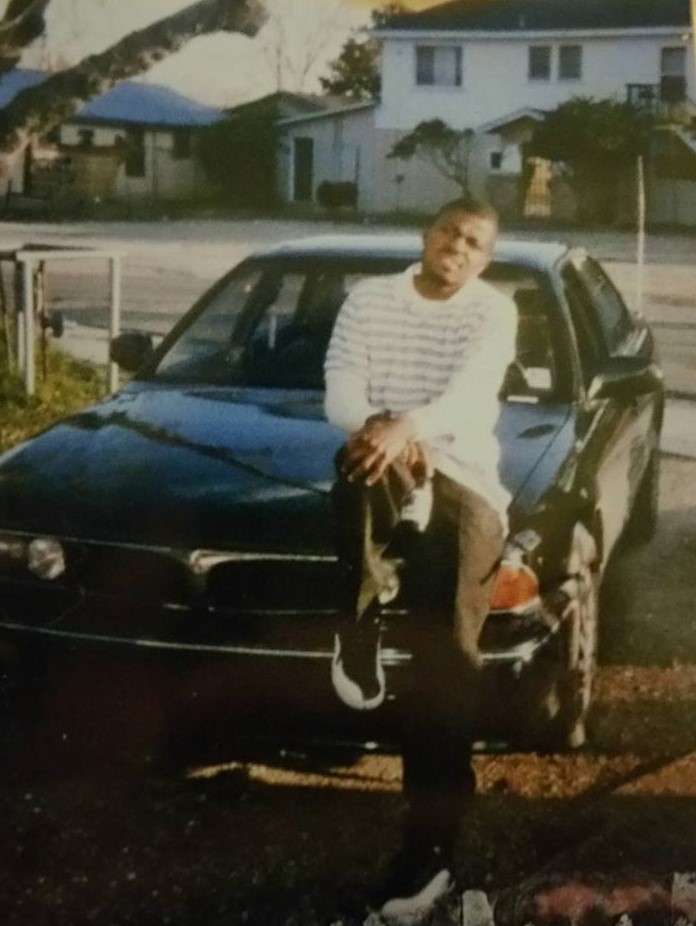
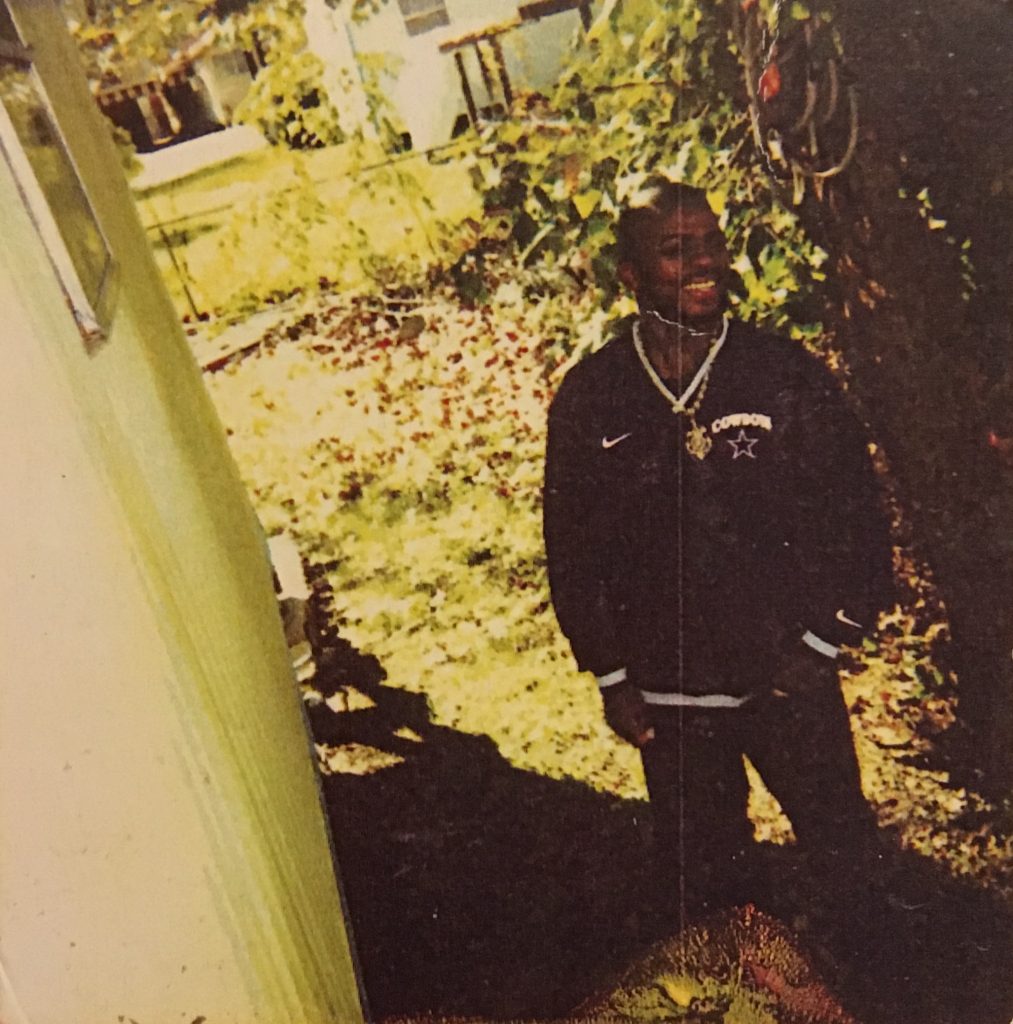
In June, 1993, I came home after serving 27 months in prison. While I was gone my mother had relocated from the projects where I grew up to an upscale community on the outskirts of town. I arrived home to a section of seemly brick homes, spacious yards and lush greenery in a neighborhood that was relatively safe – but boring.
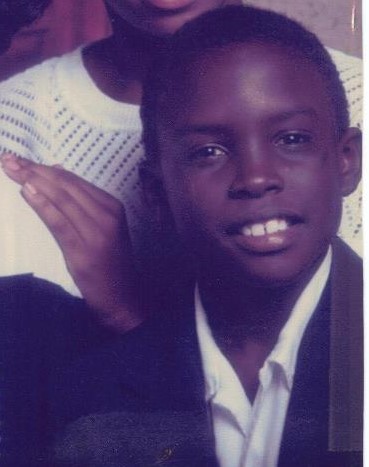
The morning after I arrived, I checked the mailbox at the end of our driveway and later strolled to the neighborhood store, noticing each time I left that I drew the attention of a young boy across the street. He had sunbaked hair, hazel eyes and skin the color of butterscotch, with a slender frame under clothes that were marked by rough play. In the yard were toys and other objects to which he showed no interest, seemingly content to sit and stare all day. When my mother returned from work, I inquired about the strange boy across the street.
She succinctly replied, “Oh, that’s Chad.”
In the following days Chad proved to be as normal as the other kids as they boisterously played throughout the day. Oftentimes he tussled with his dog or shot hoops in the backyard, other times he simply observed. He was around eight years old with two older siblings and a kid sister. Their mother worked two jobs, and their father frequently came and went. Their house wasn’t the most adult supervised one on the strip, but it was a crime-free neighborhood so there was little concern.
One day I set out to walk our dog and saw Chad headed my way
at a determined pace, his head held sharp and unwavering. He stepped to me and asked if he could walk
my dog. I didn’t have the heart to tell
him no. Before I knew it, I was strolling around the neighborhood with the most
inquisitive kid ever. Many of his questions had simple answers, though Chad
posed them in a difficult way. He had a
budding curiosity that was pleasant company and reminded me of myself at his
age.
Soon Chad found an excuse to come over almost every day,
whether to help with yard work or to show me something he had found. His attentiveness gave me such a feeling of
relevance that I looked forward to having him around. One time a friend of mine
spent the night. She went outside early
for the morning newspaper, and when she returned, she asked, “Who dat lil’ boy
sittin’ on ya’ll doorstep?”
I guessed safely and answered, “Oh, that’s Chad.”
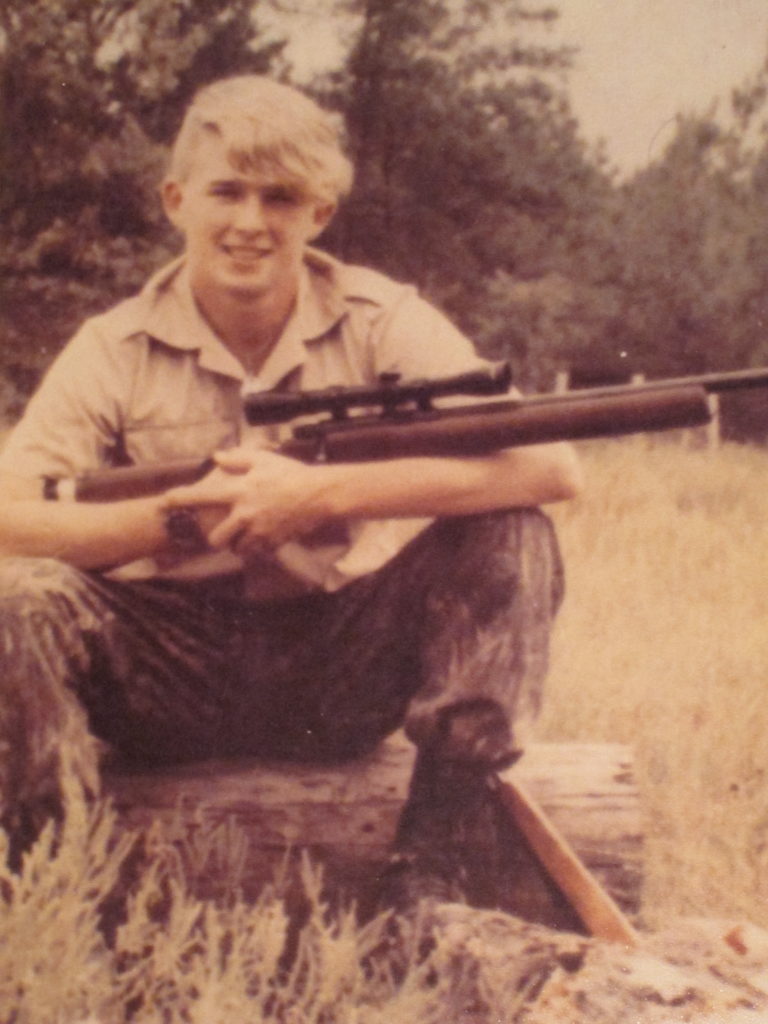
Chad and I often fished at the local pond or practiced
target-shooting with pellet guns. We washed cars, mowed lawns and played video
games all for the sake of filling the days. He was so willing to learn and committed to
work that he never once complained. And although
he could be incredibly annoying at times, he was still the best part of waking
up to a new day.
Two years would pass before trouble pierced our rural haven, and I wound up handcuffed in the back of a squad car. Chad looked on from the curb with confusion etched on his face. I sat in prison for 31 months for a crime I didn’t commit, and by the time of my release, I was a fragment of myself with little good to offer.
Chad was like a one-man welcoming party, exhilarated by my return. Just seeing him helped me to shuck some of the bitterness and appreciate the warmth of home. I would peep outside some days and see Chad sitting idly on his porch waiting for our front door to open. When it did, he would rush over just to say, “Hi.” He was the reason I stayed home many a day, though my vengeful heart kept me gone most nights.
I turned to drug dealing and petty crimes to validate my sense of self-worthlessness, carrying on destructively to mirror how I felt inside. I was caught between being a hooligan by night and a mentor to Chad by day, as I appropriated stories of my nighttime endeavors to preserve a wholesome image. Occasionally, Chad would ask if he could go with me to town, and I would come up with an excuse. Then I discovered that not only was he a curious bug, he was also quite persistent.
One night I arrived home around 2 a.m. to reup on drugs, not
the least bit surprised when Chad wondered over.
“What’s up, Duck? Are
you staying home?” he asked.
“Nope,” I answered while in a mad dash inside to grab the
dope supply and head back to the block.
When I returned, Chad was still there waiting in the chill
of night, determined to get a word. “Lemme
go wit’ chu, Duck. I’ve got money.”
“I’ve got sumpthin’ to do tonight, Chad.”
It was the scene that had played out countless times before
except this time the outcome was different as his shoulders collapsed and his
smile faded. He turned and started for
home.
“Hey, Chad….” I called out to him without giving it much thought because at that moment all that mattered was his happiness, “…C’mon, get in the car.”
Ecstatically, Chad bound over and jumped in the backseat as I dipped inside the house, removed all the illegals, and joined him in the taxi.
We were dropped off in the filthiest, most crime-infested area in the heart of the city’s drug market, where the unlikeliest shadows gave rise to dope fiends jonesing for a fix. Cars cruised surreptitiously along narrow side streets as dealers kept an eye out for trouble, and while many residents’ doors were closed and bolted for the night, others were just beginning to open.
The first spot we headed to was the bodega for knickknacks
and arcades. We then took in a spectacle of rambunctious trash-talkers over an
intense game of craps. With loads of money scattered on the ground and
vulgarities stirring, I thought it best that we split, and Chad didn’t have to
be told twice to move – he stayed close behind.
Next we walked a few blocks to the poolroom for chili cheese
fries and chicken wings, then we settled in a vacant park and scoffed down our
meals. While there, Chad delved up tons of
questions, some even provoking thought, and I could tell that he was having the
time of his life because I was too.
We finished off the night with a fast-food breakfast and
caught a taxi home at the cusp of dawn. Once there, Chad hopped out with a yawn
and said, “Thanks, Duck. I’ll see ya later, a-ight.”
I watched as he shuffled to his house across the street and disappeared
behind the door, not knowing that it was the last time I would ever see Chad.
Days later I was charged with murder and within a year I was
sentenced to death. I prayed that Chad would
get used to me not being around anymore.
Four years later, I learned through a visit with my mom that
Chad had been killed. It happened during a skirmish that he was fatally injured
and his body was recovered in the woods. I couldn’t believe it – Chad was gone and he
was only sixteen. I sat with the news
gnawing at my conscience, feeling crushed beneath a swell of guilt while
imagining the inquisitive kid I first met – not understanding why someone would
want to take his life. I blamed myself for not being there for Chad and prayed
to take his stead. He was a much better
person and deserving of life than I could ever be.
I have lived with the guilt of Chad’s death for over sixteen years with tomorrows still to come, wondering how our lives would’ve been had I not gone away. I try not to remember how Chad was taken – I remember how he lived, and I’ll forever keep the fond memory of our night on the town together.
ABOUT THE AUTHOR: Terry Robinson writes under the pen name ‘Chanton’ and lives on death row. He has always maintained his innocence for the crime he is incarcerated for, but often uses his writing to honestly confront the mistakes he’s made in his life. His honest revelations are an inspiration and a testament to who he is.
Mr. Robinson can be contacted at: Terry Robinson #0349019 Central Prison 4285 Mail Service Center Raleigh, NC 27699-4285
I’ve had an infection over my front right top tooth – #8 –
for two weeks. I tried cutting it open
myself with a razor blade and a needle.
Nothing worked, so I had to go to dental.
At dental I was told #8 had to either be extracted or a root
canal needed to be done. The co-pay was
a hundred dollars. I couldn’t afford to
have them taking money out of my account. I just cannot live on $10 a month. I felt so ashamed telling them, “No, I cannot
afford to have the debt.” I felt irresponsible
and ‘old me’.
It kept swelling. The longer the wait, the less likely the root canal would work. I went back to my cell and cried – HATING this life. HATING the choices remaining to me.
The dentist had looked at me like I was stupid, like, “Well,
what can you expect?”
It hurts. I’m NOT
what they see us all as. I’m NOT
irresponsible. I’m NOT stupid.
And, I don’t want to lose my front tooth! But if I wait and let it get so severely
infected that it’s considered ‘life threatening’, they’ll pull it for free… Am I pathetic for even considering this?
So. I refused
treatment. Maybe I can get an antibiotic
from another inmate. It will be intended
to treat something else, so might not work, but I’ll get them for a dollar or
two.
My life is pathetic.
ABOUT THE AUTHOR: Jeremy Robinson is author of The Monster Factory and is currently working on several projects. He can be contacted at: Jeremy Robinson #1313930 Polunsky Unit 3872 South FM 350 Livingston, TX 77351
My lower back feels the pain of twenty years of incarceration and sleeping on a thin piece of plastic the MDOC calls a mattress. The steel frame holds my 208 pound frame, and the darkness of my cement cage conceals the vulnerabilities I keep hidden from predators. Tears form in my eyes, but not even in the presence of myself can I cry. Not because it’s not manly – but because I’m numb to the pain.
I find myself replaying
an earlier conversation. I was talking
to a guy named Santana. I’ve known him
for twelve years now. I was eight and a
half years deep into my LWOP sentence when he first came. I took a liking to Santana from the start, so
I did the same thing the old heads did with me when I came. I shared with him some knowledge I felt would
help him on his journey. That was twelve years ago, and now Santana is knee
deep into his own LWOP sentence.
Today he literally shook
my foundation when he told me that he was ready for death. My first reaction
was one of concern, so I asked, “You’re not thinking about taking yourself out
of the game?”
He replied, “Naw,
big homie. I can’t do that, but I would
rather die than live out my days like this.”
I understood where he was coming from. I’ve often had that same thought over the course of my twenty years. I think everybody that is sentenced to death by incarceration has had that thought at one point. There are many nights one goes to sleep hoping not to wake up, only to waken to the reality of captivity. It wears on a person’s mind, body, and soul to wake up day after day in this dehumanizing environment.
It hurts to know I’ve served twenty years, four months, and fifteen days, but I’m no closer to physical freedom than I was twenty years, four months and fifteen days ago when I entered this system. Yes, times are changing, and I can see some light now, but it’s like looking up in the sky at night – I can see the stars, but they are so far away. I can see physical freedom, but it is so far away. Yet I keep pushing forward. I keep striving to be a better man. What other option do I have? I can’t fold. I can’t let them break me. I can’t give up. I have to be strong. I have to keep my head up. I have to be productive. I have to be positive because if I don’t, I will lose hope and the pain of LWOP will kill me. I guess then and only then will they consider justice to be served.
ABOUT THE AUTHOR. Quentin Jones works with incarcerated writers. He strives to inspire minds and bring change to a flawed system – one designed to eat away at the heart and soul of society. “I will be happy if I can simply inspire someone to become a better person. As a society, we need to challenge ourselves to become better people. We need a lot more LOVE and a lot less HATE.”
Quentin can be contacted at: Quentin Jones #302373 Gus Harrison Correctional Facility 2727 East Beecher Street Adrian, MI 49221-3506
The first time I ever struck my girlfriend, Renee, it was
due to a lapse in judgment. I begged her
forgiveness and vowed it would never happen again. At the time, I really meant it…
My second offense came when I shoved her to the ground and
cast the blame down with her. My woeful
sense of embarrassment made me deserving of pity, while the real victim
apologized to her aggressor.
By the third time, the abusiveness had become a force of
habit sparked by jealousy and anger. I
believed that if I didn’t hit her, then I would lose her, which made
undermining my integrity necessary.
Renee and I met on Halloween night, 1989. I was fifteen and hanging out at a friend’s house
when she appeared from next door to borrow sugar. Renee was barefooted with piercing brown
eyes, cropped cinnamon hair, and wearing thigh-high shorts and a fitted
tee. She was tiny but feisty, with a daring
personality and striking appeal. While
pranks and sweets were the order of the
day, the night was filled with promise as we sat cuddled up in a dark corner
getting to know one another.
The next night served a crushing blow to my ego when Renee
ran off with another guy. The two of
them disappeared into the night for hours while I was left to sort through my
suspicions. Snared by the thorns of her
charming whispers, I continued to pursue Renee, though nesting in the back of
my mind was a nagging skepticism.
Renee was thirteen with an infant son by a guy who
questioned the child’s paternity. He
showed up one day yelling obscenities and swore that he would never
return. After that, becoming a father
figure was the most exciting and important part of each day. No longer was I a kid who grappled with his
mom over curfews and academics. Fatherhood had given me purpose. I began to skip school to spend time with my
son and sat by his crib while he slept.
I chipped in for diapers and formula when I could afford it, other times
I stole. Being partly responsible for a
life other than my own made me feel as though I mattered, and I couldn’t give
that feeling up for anything in the world… so things had to work out between
myself and Renee.
Once, after being scolded by Renee’s dad, I decided to stay
away for a week. When I returned, I
discovered that Renee had moved on with some other guy. Emotionally wrecked, I walked away toward a
life without Renee until she started rattling off an explanation so earnestly
that before I knew it, I was staying.
Afterwards our relationship became brittle devotions laced with icy
disputes. Loving Renee was difficult at
times, but somehow, staying was easy.
Amidst continuous doubts of faithfulness, the violence of
our sordid union arose. Renee and I had
argued, our moods were tense and the dissension between us escalated. As usual Renee went into explanation mode,
but it was becoming redundant. Her
groveling and swift affection were no longer a remedy. I was getting out.
Agitated, Renee grabbed onto my clothes to prevent my
leaving. Then she cocked her fist and socked me in the nose. I doubled over, thinking, ‘What the hell just happened,’ as blood
and pride trickled to the ground. Even more confusing was her immediate
sympathy as she showered me in apologies and kisses. Her show of cold/hot affection left me
sifting through my head for answers and strangely enough, I felt loved. It was a critical turning point in our
relationship and the seed of a fantastic delusion as I rationalized – a love
that hurt was better than no love at all.
Some months passed before a guy popped up and claimed to be
Renee’s boyfriend. Apparently the two
were dating at school, and he had hoped to take things further. I was so furious with Renee for not denying
his claim that I tried to leave, but I couldn’t. My entire world had collapsed at my feet
while she stood blank-faced and busted. I demanded that she choose – either him
or me. She hesitated. I became so desperate to prove how much I
loved her, I lashed out and slapped Renee.
My palm flared with the sting of indignity as I watched her crumble at
my feet. I then turned my rage on the
schoolyard beau as he hurried on his way.
Appalled by my disgrace, I immediately deflected the
blame. It was all Renee’s fault, she
forced me to hit her, and I wept with self pity and a little self-loathing as
Renee accepted guilt. Even though I promised to never hit her again, I could
sense a drastic change. I was deep in
the throes of a twisted evolution, and the worst was yet to come.
Soon we were both cheating on love and committed to hurting
one another, like the time she pressed a razor blade to my neck or when I
clipped her across the head with a log.
Ironically, the abuse didn’t seem egregious, just something we expected,
typical behavior that was progressively volatile yet reinforced our love.
Renee and I did share wonderful moments together that made the
pain worthwhile. Oftentimes she was my best friend and the person I trusted most. It was only when the trust was questioned that
we tended to bicker and fight – except, Renee hadn’t thrown a punch in years…
the fighting was all me.
Then one night, the illusion shattered and all that remained was the truth. It happened during a cheating allegation that I found myself plotting revenge. I lured Renee to an area that was dark and secluded, then I rehashed an earlier dispute. Renee was flustered and caught off guard, her responses rather dodgy. I then drew back my fist with all the love that I could muster, and I punched her in the face. She stumbled back, horrified, and attempted to bolt, but I grabbed her and struck her again, slamming her to the ground. I insisted on the truth but the truth wasn’t what I was after, it was that fleeting moment of gratification by reciprocating the hurt. Renee scooted away crying and pleading as my vicious love closed in. Then she looked up at me with her mouth filled with blood and said, “Please don’t hurt me, Duck.”
I stopped abruptly, guilt ridden and dejected as my fist
fell limp at my side. I’d never
considered that Renee actually feared me and to see such a thing was unnerving.
I thought of our rambunctiousness as
roles we played to indicate our love for one another, yet to see someone you
love who’s afraid of you was utterly self defining.
I stood ruined, trying to recognize myself, but all I saw
was a monster who would mask the brokenness inside me by victimizing
Renee. I was caught in the cycle of
unethical madness that mistook love and perpetuated cruelty. I’d already witnessed a tragedy at four when
my uncle loved his wife with bullets. My daddy was known to love with his
hands, but my mother wanted something better.
And there I was, resorting to violence to salvage an aching love. I had become someone I detested, a man of
wavering integrity. I abused Renee not
because I loved her, but to scare her into loving me. It was a menacing tactic to manipulate her
feelings while empowering my own. But a
love that is fostered by fear and violence is hardly love at all, but simply
the substance of shame and dishonor that never quite goes away.
Suddenly, I realized that life had more to offer us both, though it was unlikely that we would find it together. But I did love Renee enough to know I would never hurt her again.
ABOUT THE AUTHOR: Terry Robinson writes under the pen name ‘Chanton’ and lives on death row. He has always maintained his innocence for the crime he is incarcerated for, but often uses his writing to honestly confront the mistakes he’s made. Mr. Robinson can be contacted at: Terry Robinson #0349019 Central Prison 4285 Mail Service Center Raleigh, NC 27699-4285
In 1999 Wayne Hill, Charles Mamou’s court appointed defense attorney, thanked Mamou’s mother, Angelice, when she handed him a letter he could use to defend his client. Mamou was facing the death penalty, in a case centered on a ‘confession’ to murder. A confession Mamou said never happened. His defense attorney held in his hands a letter written by the man claiming to have heard the ‘confession’, Terrence Dodson. In the letter written to Mamou, Dodson wrote, “I’m glad you didn’t tell me shit about that cause I don’t wanna know shit, I feel better off that way.”
In addition to the letter, Wayne Hill had access to Dodson’s video statement. Police paid Terrence Dodson a visit early in the investigation when they were looking at him for his involvement in the murder. At that time, he made a video statement claiming Mamou confessed to him. Hill had access to that video, and if he watched it, he would have known all the contradictions between Dodson’s statement and his actual testimony in court.
One of the most significant contradictions was how and when
the alleged ‘confession’ took place. According
to Dodson’s video statement, Mamou called him on Tuesday morning from Louisiana
– even though Mamou wasn’t even in Louisiana on Tuesday morning – and confessed
in a single telephone conversation. Yet
on the stand, Dodson said Mamou began the confession in Texas, face to face, on
Dodson’s sister’s porch. He then went on
to say that the confession continued over a ‘couple days’ in ‘several’ conversations. That wasn’t the only contradiction Dodson
made, there were several.
Wayne Hill, the defense attorney, never entered the letter
Dodson wrote as an exhibit for his client’s trial. He never mentioned the letter,
nor did he mention Terrence Dodson’s many contradictions of his own video statement.
Terrence Dodson is Charles Mamou’s cousin. The prosecution used that relationship to
solidify their argument of guilt, pointing out that Mamou must be guilty if his
own family would testify against him.
They wanted another cousin of Mamou’s to testify as well. That would make the ‘relative’ argument stronger. The only problem with the other cousin, Anthony Trail, was, he didn’t know anything about the night in question. He wasn’t there, and no one had told him anything about what had happened to the victim. He had no desire to get involved because he didn’t have any relevant information to add. The prosecution wanted him involved though. At one point, while being questioned, he had decided he would not testify. Then a man came into the room. According to Trail, he believed the man was the victim’s father, and that was the impression he was given. The man proceeded to persuade Trail to get involved and eventually Trail agreed to testify. We will probably never know if it was actually the victim’s father who persuaded him or someone that was just trying to give that impression. Trail’s testimony added nothing material to the trial because Trail had no knowledge of what happened that night nor had anyone shared with him a ‘confession’. The prosecution didn’t ask him those things on the stand, but rather used him as another ‘family member’ who testified against Mamou. They asked Trail about some sunglasses Mamou and he had picked up the day after the murder, leaving the impression the glasses were some type of evidence, but it was never pointed out for the jury by the prosecution – or defense – that the glasses they picked up were nearly five miles from the crime scene.
Throughout the Mamou trial a sexual assault was repeatedly referred
to for the majority female jury. Although
it was presented as important in the courtroom, outside of the courtroom there was
no urgency to find out if any sexual assault actually occurred that night. Dr. Joyce Carter ordered a rape kit to be done
when the body was found, to include oral swabs, fibers, clothing, fingernail
scrapings, etc. On December 11, 1998, those
items were picked up by an HPD officer and placed in the HPD property room
freezer. There they sat. The rape kit was not ordered to be processed
until long after Charles Mamou was in custody. Eight months after the crime, on July 8, 1999,
and shortly before Mamou’s trial the D.A.’s office requested the rape kit be
processed by the HPD crime lab. The
results – no semen was detected on any items analyzed.
Although the District Attorney’s office ordered the test processed and was given the results, graphic references to sexual assault were repeatedly used throughout the trial, in what appeared to be an effort to inflame the jury – although Mamou was never charged with sexual assault. There was never any evidence a sexual assault took place by anyone, according to the incident report.
Mamou’s defense team left the sexual assault accusations
without argument, never telling the jury that a rape kit was processed months
after the crime that turned up nothing.
Also of note, ‘hairs were collected from the t-shirt’ of the
victim. The hairs were never mentioned
by the prosecution or the defense. It appears they are still in the HPD property
room.
Charles Mamou always maintained his innocence, and the only
witness statements available support his account of his whereabouts that night,
although a couple statements appear to be currently missing as of an Open
Records Request done this year. What is
known is – the victim and Charles Mamou were both on Lantern Point Drive at
approximately 12:00 midnight on the night of December 6, 1998. On that point, all accounts are in
agreement. After a drug deal gone wrong, Mamou and Samuel
Johnson drove away in two separate cars, with the victim in the backseat of the
car Mamou was driving.
Charles Mamou says both men drove to an apartment complex on
Fondren where he was staying while he was in Houston – about a ten mile
drive. That is also the location where Johnson
lived.
A witness statement taken from the woman who lived at the apartment
where Mamou stayed that night indicates Mamou was back at her apartment at
approximately 12:45. In her statement
she spoke of waking up at “about 12:15 AM.”
She then says, “It seem like was around thirty minutes later I heard a
knock on the door.” She goes on to say, “I
asked my brother who was at the door. He
told me it was Chucky.”
That statement indicates that Mamou was exactly where he
said he was forty-five minutes later.
Unfortunately – the jury never knew that statement existed and that
information was never presented to them by Mamou’s defense team.
During the trial the woman’s husband, Howard Scott, testified
and when questioned he was shown his own statement, “when you say Mr. Mamou got
there, does reviewing that statement specifically refresh your memory that it
was 12:15 and 12:45?”
Scott’s answer, “Yes.”
Question, “Okay. So
you’re positive it couldn’t have been later than 12:45?”
And the answer, “No, sir.”
Two witnesses who had no reason to defend or support Charles
Mamou both supported exactly what Mamou said happened. The body of the victim was found on
Lynchester Drive, a location that was about thirty minutes from the Lantern
Point Drive location where the drug deal gone wrong took place. The prosecution’s version of a sexual assault,
murder, and dropping sunglasses at a location on Ashford Point Drive – couldn’t
have been done in 45 minutes. The time
constraints were never outlined for the jury.
There is something else very troubling about Howard Scott’s
testimony. The statement he was shown
while on the witness stand – is not in the case file as of the recent Records
Request.
Howard Scott made two statements to police – one on Tuesday, December 8, and one on Wednesday, December 9. The incident report, received through an Open Records Request only includes one statement. The Incident Report refers to the ‘missing’ statement on December 8, “It was then decided to bring Howard Scott to the homicide office to be interviewed there since there were some discrepancies between his story and Robin’s. Officer Hollins then transported Howard Scott to the homicide office where he was interviewed by Sergeant Novak.” This interview is not in the incident file that was received pursuant to the Open Records Request.
The missing interview is mentioned more than once. It is also referred to later in the incident
report, stating that at 9:45 on Wednesday, December 9, Sergeants Yanchak and
Ferguson went to pick up Robin and Howard Scott to be ‘re-interviewed’.
It is referred to again, “On this date, Sergeant Yanchack
and Sergeant Ferguson assisted Sergeant G.J. Novak and Officer H.F. Chisolm in
the follow up investigation into this offense.
Earlier this date, we had ‘re-interviewed’
two witnesses named Robin Marie Scott and her husband, Howard Scott.”
Even on Page 3 of Howard Scott’s statement taken on Wednesday, December 9, 1998, he refers to the interview the day before, on Tuesday, December 8, 1998, “Around 11:30 AM two detectives showed up and began asking me about Chucky. I told them that Chucky left earlier and gave them permission to search my house. I later came with them to the homicide division.”
But, Howard Scott’s first statement did at one time exist and was also referred to in the court transcripts when Wayne Hill asked Scott to look at it and refresh his memory. The second statement of Howard Scott’s makes no reference to when Mamou arrived back at his apartment, so the statement referred to in court is the one that is now currently missing from the file.
There are other things that appear to be missing from the
file, unless the detectives did not document their work. According to a News Release put out by the
Houston Police Department shortly after the crime, “A second suspect drove away
in what was initially described as a red Dodge Intreped. It has since been determined the vehicle was
an orange Dodge Concorde that was recovered
and inspected.” The news release
referred to the vehicle that Samuel Johnson was driving that night.
During the trial Johnson was specifically asked about that
car. “Did the police then examine your
car?”
Johnson, “They examined it a couple of days after I got out
of jail.”
Although there are photographs of the vehicle in the file,
there is no written report or documentation regarding what was found in the
vehicle.
According to Samuel Johnson, a resident of Houston as well
as an employee of Orkin at the time, he went home after the drug deal, drank a
soda, took a shower and went to bed, not even disturbing his wife to tell her
of his involvement in a shoot out on a dark alley. And
there is no documentation other than photographs of anything that was
discovered inside of the vehicle he was driving.
Other documentation not included in the file are any notes or statements made by other parties located at the apartment complex that night, including interviews of Shawn Eaglin. Eaglin was an integral part of introducing several of the parties according to statements, and the police spoke to him. But there are no statements or interview notes in the file regarding interviews of him. As with the vehicle documentation, there is no way to know if the detectives chose not to document their work or if the documents have been removed from the file. But, according to Robin Scott’s statement, she discussed with Eaglin the homicide division going to her home, Shawn’s home, and the employer of Shawn’s cousin, ‘Ced’.
According to Robin Scott’s and Howard Scott’s statements,
Eaglin was at the apartment complex on the night in question and it would be
expected that detectives spoke to him. Unfortunately, there is no record of those
conversations.
In addition to the impossibility of the 45 minute window of time – it is highly unlikely Mamou could have located the backyard of the house for sale on Lynchester Drive where the body was found. He was from Louisiana, and not a resident of Houston. In the Houston Police Department’s incident report, the location was described by a detectives as follows, “The 9200 block of Lynchester Street is located in the Keagan’s Woods sub-division located on the south side of the 14000 block of Bissonnet Street in Harris County. The Keegan’s Woods subdivision is best accessed by turning south onto Bering Wood Street and continuing south to Plantation Valley and then turning west on Plantation Valley. Lynchester Street intersects with Plantation Valley. Lynchester Street does not intersect with Bissonnet and is a difficult street to locate.” That is how a HPD detective described the location, and an investigator recently told me she had difficulty locating it, even with her GPS.
The ability of Charles Mamou, a resident of Louisiana, to
have found the location was never brought up by Mamou’s defense attorney for
the jury.
For whatever reason, Charles Mamou’s defense team did not present most of the above information. The jury wasn’t left with a lot to consider regarding Mamou’s innocence. As unusual as this may sound – they were given a lot more than in a typical trial. The jury was shown autopsy photos and heard painful, heart wrenching testimony from family members of victims of crimes Mamou was never charged with. As unbelievable as that may sound – it happened. Mamou’s mother, Angelice, was on the elevator with some jurors when she heard them discussing how they were going to decide. It was agreed by the jurors she overheard that they would, ‘vote with the majority’. Ms. Mamou reported what she overheard at the time it happened, but nothing came of it.
They say truth is stranger than fiction. Charles Mamou has been in prison for twenty
years, most of it in solitary confinement on death row. Blind faith in the courts is often
misplaced. According to the National
Registry of Exonerations, the number of exonerations is currently at
2,488. It would be a good bet that a
state such as Texas, that executes numerous people a year – has executed innocent
people. If the witnesses are to be
believed in the Mamou case, there will be one more when he is executed. He couldn’t have done the things he will die
for in the time allotted for him to do it.
There is not one shred of physical evidence putting him at the scene of
the crime. There is not a weapon to
test. There is not a footprint at the
scene. There is not a fingerprint at the
scene. The jury was shown photographs
and heard testimony from crimes Mamou was never charged with. Mamou was portrayed as having sexually
assaulted someone without a shred of evidence and his attorney did not point
that out. There was substantial evidence
to call into question the testimony of the key witness who said Mamou
confessed, that was never presented by the defense. There are ‘hairs’ that no one seems
concerned to follow up on. There was no
independent lab testing ever done by the defense. There is documentation that was either
never filed or is no longer accounted for – in addition to a statement that at
one time existed – but seems to have disappeared.
It reminds me of something I heard recently – close only counts in horseshoes and hand grenades. Can we add ‘or in a courtroom’ with a public defender, the wrong skin color, the wrong year, the wrong state…
Anyone with information regarding this case can contact me at kimberleycarter@verizon.net. Anything you share with me will be confidential.
TO CONTACT CHARLES MAMOU: Charles Mamou #999333 Polunsky Unit 12-CD-53 3872 South FM 350 Livingston, TX 77351
From the time I was a tyke until my early teens, my family
frequented a city park that sat on a hill overlooking the southeast region of
the city. The hill was a year round source of entertainment – in winter
months we would sled down it’s slopes, and in the summer we would glide down on
large sheets of cardboard scavenged from the dumpsters behind Safeway.
I would tag along with my mom to the malls on Saturday mornings unless my dad had a fishing trip or other excursion planned. It wasn’t that I enjoyed shopping so much, it was more about the perks that came along with shopping.
For one, we were away from home the entire day, which meant eating out at the fast food joint of my choice. In addition to lunch for being a ‘good boy’ while mom tried on what seemed like a million articles of clothing, I earned treats which could take many forms – anything from sweets at Dairy Queen to an after shopping activity like bowling, putt-putt, skating, a movie, or games at the arcade.
On one such Saturday, I chose to go cardboarding at the park after lunch. We went and got our boxes – the best ones were the toilet paper or paper towel boxes because they were quite large – and drove to the park. On that particular day we couldn’t find a close parking space near our favorite sliding spot, so we parked on the opposite side and had to walk.
We locked up the car and set off, lugging our cardboards. About halfway to our destination sat a couple of wooden park benches. At first I didn’t notice the lone woman sitting on one of them, but the closer we got, the harder it became not to notice her. She had a hanky or some tissue which she was dabbing at her eyes and nose as her shoulders shook. The closer we got, the louder her sobs became, and I began to feel awkwardly uncomfortable. I’m not sure if my discomfort was at the thought of walking past her as she sat in distress, or if I was embarrassed for her because I was seeing her cry.
The former didn’t matter because as soon as my mom realized the woman was crying, she quickened her pace and went to her aid. I, on the other hand, slowed my pace and crept to the bench beside them. I heard my mom ask her what was wrong. The woman leaned into my mom and mumbled something I couldn’t understand and then the dam burst, as she began crying uncontrollably. My mom wrapped an arm around her and commenced to consoling the woman in the motherly manner that mom’s do. Over the lady’s shoulder, she looked at me and said, “Go play,” pointing with her free hand at a spot a few feet behind me.
All I wanted to do was get away, so I grabbed my cardboard
and retreated, never contemplating how I was to ‘play’ with a piece of
cardboard on flat land. I just wanted to
get away from the embarrassment.
Some time later, mom came and said, “Let’s go.” I was dejected. I assumed she meant we were going home, but she turned and headed towards our sliding spot. Enthused, I snatched up my cardboard and ran after her. When I caught up, I asked, “What happened to that lady?”
“She went home.”
“No, I mean, why was she crying?”
“She was sad.”
“Did you know her?”
“No.”
“Then why did you help her?”
“Because people are supposed to help each other, that’s why. It doesn’t matter that I didn’t know her,” then she stopped. “What if I fell down right now and broke my leg and,” looking around, “that man, right there, came and lifted me and carried me to the hospital. How would you feel?”
“I’d be… happy,” I said as we continued on.
“So, don’t you think that lady’s little boy would be happy
that I helped his mom?”
“I think so,” I said, smiling up at her.
As we reached our spot she said, “Of course, he would. Now, who is going first?!”
That wouldn’t be the last time I witnessed my mom help a complete stranger. In fact, sometimes I found myself looking around for distressed individuals – because I saw what helping others did for my mom. That’s when I realized something I don’t think she ever did – not because she wasn’t capable, but because nothing she ever did was about her – she was healing by helping others.
ABOUT THE AUTHOR. Reshi Yenot is the pen name for a writer who lives on Death Row in Florida. He can be contacted at: Reshi Yenot P.O. Box 70092 Henrico, VA 23255
When a person comes up for parole in Alabama, they don’t get a chance to speak for themselves and aren’t present when their fate is decided. A lot is left out of the equation. Some of the reasons for Louis Singleton’s most recent denial – ‘Release will depreciate seriousness of offense or promote disrespect for the law’, ‘Severity of present offense is high’, ‘ORAS level is moderate risk of reoffending’.
What they
probably didn’t discuss…
On January
11, 1994, Louis Singleton was seventeen years old and still attending high
school when he shot three men in a McDonald’s parking lot, killing one, and
paralyzing another. He was sentenced to
life – with the possibility of
parole. He has since been denied parole
four times and has been incarcerated for a quarter century. The Parole Board will revisit his case in
January of 2023.
Prior to the
shooting, Singleton had been the sort of kid most parents would be proud
of. Boys will be boys, but his life was on
track and he had positive goals. He had
a speeding ticket once because he was driving too fast to get to summer
school. He also got in a fight when he
was sixteen.
The
neighborhood knew Louis as a ‘good kid’ who dreamed of football
superstardom. He might not have been the
most academically focused, but he had goals and maintaining some standard of
education was required, so he towed the line.
After his arrest he was evaluated by the Strickland Youth Center, who
determined he ‘did not appear to be a behavioral problem’. In the transcripts, he was described as
enjoying a ‘favorable reputation within his community’. Louis Singleton wasn’t known as a threat to
others then – and he hasn’t been known as a threat to others since his
incarceration. He did have a problem at the time though – a threat was pursuing
him.
One of
Singleton’s close friends, Derrick Conner, was dating another man’s
ex-girl. By association, Singleton
became a target of that man’s anger. Had
it happened today, things would most likely not have gotten as far as they did
twenty five years ago.
Over the many months prior to the shooting, Louis Singleton was shot at on several occasions by the ‘ex-boyfriend’, Kendrick Martin, and his friend, Nelson Tucker. On one occasion, Singleton was inside a car when Martin was beating the vehicle with a crow bar. Louis recalls one time when Martin pulled a gun from a book bag and pointed it at his head.
The violence and bullying were no secret. Louis Singleton tried to get it to stop by talking to parents, school officials and even the police. Nothing was resolved, and on that winter night in that parking lot when Louis ran into Kendrick Martin and his friends – no one will ever know exactly what happened, but the boy who had been shot at and pursued for months – shot at those who had been terrorizing him.
But for the months leading up to that night – it never would have happened. Louis Singleton would have continued living his normal, average life. The entire incident is tragic. It’s tragic for the man who died. It’s tragic for the man who will never walk again. And it’s tragic for the seventeen year old kid who didn’t know how to deal with something he should have never had to. The adults who were aware of what was going on not only let Singleton down – but the victims as well.
Louis Singleton has spent a quarter of a century in the brutal Alabama prison system. He lost all his dreams. He lost his youth. He lost his mother and has lived with the regret and memory of having to tell her what he did that night.
Some feel no
amount of time will suffice. Forgiveness
will never come for those. Remorse has
though.
Louis Singleton today.
Alabama prisons are barbaric. A typical prison is an inhumane warehouse of people, many dangerous, bodies packed in on top of one another in a sea of bunks, sheets hanging to try and give a semblance of privacy, a random individual laying on the floor at any given moment, having taken whatever they can get their hands on to escape the reality of their nonexistence, and there is not a moment that goes by you aren’t aware you have no value. Your life can be lost in the blink of an eye.
In the
southern heat, there is no air conditioning and very limited staff. As someone once told me – the inmates police
themselves. In spite of the place he
lives, Singleton has not had a disciplinary action that involved violence since
2010, when he got in trouble for ‘Fighting Without A Weapon’.
Before the
hearing this year, Singleton was hopeful.
The board doesn’t think he’s suffered enough yet though. One look in his eyes would tell them
different, but they will never see him.
He’s exists only on paper to them.
A couple years ago, Singleton shared what happened right after the
shooting.
“My mind was racing with thoughts that I couldn’t even grasp
mentally. I just went home and sat in the house with all the lights out,
scared to move, don’t know what to do nor to say. My mom was gone to a
choir convention in Mississippi during the time of the incident. While I
sat in our house quietly and somberly in the front room, my mother pulled up
with no clue of what just happened. When she came in the door,
turned to lock the door, I was sitting there in the dark room. I scared
her out of her wits. As a mother who knew her child, she instantly asked
me, ‘Boy, what’s wrong with you sitting in here with all the lights out?’
I was so discombobulated I honestly couldn’t speak, it seemed like somebody had
my soul…”
Those are the thoughts of a seventeen year old boy – who has suffered enough. The wrong will never be made right, and that seventeen year old boy no longer exists. He’s paid the price. Those who let it get that far never did – but Louis Singleton did. My heart goes out to those who have been touched by this tragedy. More suffering won’t heal that pain.
Would I even be writing this if Louis Singleton had been a promising white high school athlete? I doubt it. The school and authorities would have resolved the issues long before they got to that point.
Louis Singleton can be contacted at: Louis Singleton #179665 0-24 Donaldson CF 100 Warrior Lane Bessemer, AL 35023-7299
They take my kindness for weakness, My mean mug for a thug. My silence for speechless, Assuming I’m on drugs. They consider my uniqueness strange, While inflicting inhuman pain. Years of blood, sweat and tears, But still, I maintain. They call my language slang, My confidence conceited. My mistakes defeated, My anger parental mistreatment. To voice my concern is discontentment, When I stand up for myself, I’m defensive. I’m defiant if I don’t cooperate, I’m bombarded with modern day hate. My character under constant attack, They label me a maniac if I react or fight back. Who am I? A man, barefooted in black sand, Trying hard to be the best man I can…
ABOUT THE AUTHOR. Jayvon Bass submitted this piece for our spring contest, and although he did not win, we were impressed with his work, and hope he submits more. Jayvon can be contacted at: Jayvon Bass #1092697 Augusta Correctional Center 1821 Estaline Valley Road Craigsville, Virginia 24430
I’ve spent the last fifteen years in solitary confinement here in Texas. The ‘correctional model’ here is the punishment model. The school of thought being – by inflicting maximum suffering, maximum poverty, maximum humiliation, deprivation and pain, they can make the prison experience so shockingly traumatic and painful that the incarcerated individual will never want to return to this place and so alter their life to become an upright pillar of the community.
Rather – this correctional model creates monsters. Trust me – I know. This correctional model severely damages the weak
and vulnerable while exasperating mental illness. During my fifteen years in solitary,
I’ve seen numerous men lose their minds.
People who, when I met them, seemed relatively normal. A few years in the hole and they are ghosts –
shells of their former selves. There are those with such profound addiction
issues that they buy psych meds from prisoners who game the psych system and
consume them in toxic quantities to get ‘high’. After a few years of that, they are goners – never
the same again even if they quit the pills.
Meanwhile, the truly mentally ill, the schizophrenics who
are uncommunicative or simply talk to themselves, the manic depressives and
others, suffer in silence. As I write this, there is a schizophrenic a couple
cells away having an episode, shouting at apparitions, banging on the metal
table in his cell. It is 12:43 a.m. He takes no meds. The psych lady never visits him. Texas prisons are a wasteland for the mentally
ill. We’ve had three suicides in less than
three months in this building alone.
There exists a callous indifference to suffering here. Of
course, if you asked an official from the administrative side of things, they’d
lie to your face and tell you Texas doesn’t house mentally ill offenders in
solitary confinement. If you ask a guard
they’ll say, “Hell, they’re all crazy.”
Even inmates dismiss clear signs of mental illness, saying, “He ain’t crazy. If he’s got enough sense to get up for chow, he ain’t crazy.” Being hungry is a clear sign of sanity…
I once had a neighbor who smeared feces all over his hair – and worse. Trust me, you don’t want to know. We asked numerous times to have a psyche interview to get him out of here and to the psych unit. A lieutenant said, “He’ll just do the same thing there. What’s the difference?”
That kind of cynicism and indifference sums up many prison systems. Over the years I have come to believe that a large number of people are here as a result of either undiagnosed mental illness or poorly managed and self medicated mental illness. Some have behavioral, emotional or personality disorders that, while they don’t cross the threshold into mental illness, they nevertheless contribute to criminality.
The actual dynamic between mental illness and criminality is
a complex issue that is often fought over along ideological lines. It is made all the more complex by legal
issues, budget battles, a lack of political will, socio-cultural issues and a general
contempt for prisoners.
Each side of the conflict has valid positions, but what gets lost in the back and forth, I believe, is people’s humanity. As a long time prisoner with lots of time on my hands, I’ve thought of many ways prisons could be made into places of rehabilitation and healing. But the reality is daunting. People have to want to be rehabilitated and healed. They have to want to learn life skills, self reliance, and marketable job skills. They have to want to change for the better, while living in an environment that reinforces their belief that their life has no value. So… what do we do?
ABOUT THE AUTHOR. Dalton Collins lives in solitary confinement in a Texas prison. He only recently began submitting his work, and we are fortunate to be able to share his insight. Dalton can be contacted at: Dalton Collins #768733 Allred 2101 FM 369 N. Iowa Park, TX 76367
Friendships are pleasurable relationships that often stand the test of time. They are the sharing of ourselves and our innermost feelings with those whom we trust the most. Even cultivating them can be an everlasting treat, like a stroll down the candy aisle of life. However, just as sweets can be tasty yet terrible for our health, sometimes friends can do more harm than good.
It was a chilly Saturday morning in 1979 – I was five years old. The trailer we lived in was quiet, my mother buried beneath the covers after working a late shift. I poured a bowl of cereal and took my place before the television set, anticipating my favorite cartoons. Suddenly, familiar voices trickled in from outside – it was my older brother Ray, cousin Sam, and Kenny, a neighborhood friend. I dashed to the bedroom, slipped into some clothes and bolted out the door. The three of them were bunched together, walking steadily. Kenny spoke in a hushed tone while Sam and Ray listened. I eased into their group and kept quiet – they paid me little attention.
Their discussion was about the local tadpole pond, which
wasn’t much of a pond at all, but rather an abandoned foundation with busted
pipes that formed a humongous sinkhole.
We often passed by the vacant site on the way to the corner store, and
each time I guessed at the mysterious ripples in the water. Kenny let on that he and Sam were headed to
the pond to see a dog that drowned. Ray
was eight and impressionable – he would follow those two anywhere. After agreeing to join them, the trio set out
while I was tightly wound in their shadow.
We walked a short way before a voice called out and collared
me from behind, “Hey, ya’ll, wait up!”
It was Junior, a tubby, spirited kid from around the way who
had an enduring appetite for mischief. He
and I were friends, yet often turned rivals whenever my brother was around to
stir the competition. Only then did our
Big Wheel rides become fierce battles to the finish line or a game of marbles
end in a fight. Our spats never lasted long – Junior and I were usually back to
being pals before the turn of day. His
cheeks wobbled like cozy gelatin as he hustled to catch up to our party.
“Where ya’ll going?” he inquired.
“To the tadpole pond,” I answered.
We arrived at an enclosure and paused to take in the sights,
a quaint oasis of thriving vegetation at the edge of the trailer park. Incredibly dark waters swayed passively with the
morning breeze, glistening with the rising sun.
Kenny slipped through a breach in the fence, Sam and Ray soon followed. I was content to observe from beyond the
barrier until Junior squeezed through as well. I tucked my head and dipped past
the opening in the fence, fearful yet eerily excited.
We stood scattered around the water’s edge as the ever dreadful tadpole pond lay before us, polluted with trash and a sodden couch partially submerged at the center. Kenny pointed out a floating object that was fuzzy and swollen round. He then looked for something to fish out the carcass while Sam and Ray gathered rocks. Junior fixated on the water and began to inch forward – my curiosity willed me closer.
There were tadpole, tiny critters with long squirmy tails,
that flowed along the shallow end. I
squatted low until my reflection bounced back off the face of the water. It was the first time I’d ever seen a
tadpole.
“We need a can,” Junior proposed and disappeared behind me
to search for a container. Enthused by the idea of having a pet, I was toying around
with names when suddenly I was thrust forward and pitched into the water.
Like a phantom cutpurse, the chilling temperature stole my
breath away. I opened my mouth to yell,
but gurgled as the agony gushed in. My
head was a jumble of fear and confusion – frozen with the shocking reality that
I was cast beneath the mystery of the rippling pond – and I didn’t know how to
swim…
My jacket and denims became weighty with absorption, like
linen anchors wrapped around my limbs. Algae and other slush minerals surged down
my nostrils and set my lungs afire. I flailed about in a desperate fight against
the sinking madness until my wild kicks propelled me above the surface.
Water erupted from my mouth in a vicious spray as the scum fell away from my eyes. I saw my brother racing toward me.
“Help me, Ray!” I pleaded, splashing about to stay afloat until
the menacing hand of gravity pulled me under. I drew in a quick breath and held it tight
within as the world collapsed around me.
Slowly, I drifted down into the hazy unknown, kicking, screaming in my head for my mother. Again, my flapping elevated me, and I burst free from beneath the murky water. Ray shouted words, but they were lost in the frenzy. Kenny appeared and stretched out toward me.
“Ray!” I cried before my pleas were cut short by another
cruel descent into the black. Lashing
out in one final attempt to thwart my tragic end, I somehow grabbed a hold of
an object – it was a stick with Kenny holding the opposite end as he plucked me
from the horror.
I was drenched, shivering, and felt utterly defeated as I considered the dire possibilities. Sam peeled off my jacket and replaced it with his own while Kenny assured me that everything was okay. Ray held me tight, but said little as he busied himself with an explanation. And Junior – he was halfway up the block hightailing it for home.
Today, I saw Junior for the first time in twenty years. It was a thrilling moment to see how much he had changed, yet concerning for the troubles he faced. His thick, woolly dreadlocks dangled like tassels over eyes that drooped with sadness, while casting aside his ill-predicament to sympathize for my own. Junior’s trouble was life in prison, mine was the death penalty. It’s ironic how parallel our lives felt to that day at the tadpole pond. Still, the quiet agony was short lived and our jaded smiles reciprocated as we stared at one another through a Plexiglas divider and worked to repress our misery. I realized that Junior was my oldest of friends despite our childhood quarrels. It had been forty years since the tadpole pond, and even now we hurt for one another. For all the rivaling we did as kids, our friendship survived the chaos – even though he almost killed me, we’re friends all the same.
ABOUT THE AUTHOR: Terry Robinson writes under the pen name ‘Chanton’. Terry is a gifted and thoughtful writer who is currently working on two novels. He lives on Death Row but maintains his innocence. Mr. Robinson can be contacted at: Terry Robinson #0349019 Central Prison 4285 Mail Service Center Raleigh, NC 27699-4285