“To understand the flavor of wine, you must drink it. However, to understand its nature and the essence of wine itself, you must become a winemaker. You must grow grapes with care and attention and then you must stomp and dance upon them to press out the juice.” – David Spangler
In the Information Age more than any other time in history, the notion of ‘walking in the shoes’ of another is widely disseminated in conversation, in print, and throughout social media, while few people actually accomplish such a thing properly and many more don’t attempt to.
Why is the notion of ‘walking in the shoes’ of others so widespread, but rarely attempted?
While the internet makes the notion available, it may be impossible for a person to completely ‘walk in someone’s shoes’ – or put another way, to completely empathize and understand someone else’s experiences. It’s hard enough with family and friends, and the gap only widens between people of a different race, culture, gender, time period and class.
But, let’s try. Travel this path with me, try on these shoes.
 Imagine coming home from a hard day of work, kicking off your shoes, and dropping your coat and bag at the front door. You make your way through your own home, seeking the arms of your significant other. In warm anticipation you open your bedroom door, hoping to surprise your lover. But, when it swings open you are shocked to discover them making love to a stranger in your bed.
How would you feel if you came home one day to a strangely quiet home, the children’s toys freshly scattered about the living room floor, and the television displaying a colorful picture of a Dragon Ball Z cartoon?
The scent of burning turkey diverts your attention, and when you investigate, you find an unattended kitchen. You turn off the stove and pull the burnt turkey out of the oven. Smoke clouds the air, causing you to gag. This makes you drop the pan in the sink and retreat to the bathroom for fresh air. In the bathroom you notice your lover’s jewelry laid on the counter top next to an overflowing bathtub, with the water still pouring.
In deeply seated panic and confusion, you run throughout the home in search of your family, but you find no one. You call their cell phones and only get through to voice mail. This makes you yell their names from the pit of your stomach, only to hear the echo of your own voice yell back.
Picture being trapped on the top floor of a burning fifty story building with no escape from the horrors of the hellish flames. You make your peace with dying in such a painful way, and within seconds the fire engulfs your entire being, the pain indescribable.
However, a glimmer of hope soothes your mind when you see a firefighter within reach. He raises the fire hose toward your scorching body, only for the extinguisher to spray gasoline instead of water, incinerating your soul.
Imagine twelve individuals with ice picks for fingers who decide to point blame toward you and viciously poke your body from every angle. When you try to run away, you only end up in the arms of a mob. They start to beat you senseless with lead gavels.
Once the beating is done, you lie on the cold street, paralyzed and gasping for breath while drowning in your own blood. Your last recollections are of people relishing the moments of your mortal devastation.
How would you feel if you were screaming for help, but no sound came out of your mouth? You had a knife stabbed in your back and people walked past you, not noticing you slowly die on the side walk because you were invisible.
Picture being a baby trapped in the polluted womb of a drug addicted mother who feeds you amphetamines throughout the entire pregnancy, causing you to be born addicted to a toxic substance, forcing you to lie crying, craving the milk of death.
Imagine lying in a clear, glass casket for all to view while in a church at your own funeral, then watching loved ones and haters alike, slowly exit the church after your eulogy is read. What disturbs you most is the conviction on everyone’s face that you will never be seen again.
How would you feel when placed into an open grave, in that same glass casket, still breathing. The more you beg them to stop, the more dirt is shoveled in the hole, the darker it becomes. The dust starts to dry your throat and you experience a death silence, so silent you can hear the thumps of your own heart slowly stop.
The metaphoric and symbolic language I use are my attempts to make you an emotional pair of shoes, styled as closely as possible to the ones I presently wear on my feet.
These shoes belong to an African American man who has been incarcerated for a murder he did not commit. Yes. I am innocent. My sense of pain and loss due to twenty years of this continued experience cannot be fully described.
My reality is one of injustice. I believe real love and humanity is created when we attempt to understand others. We become inspired to act and prevent injustices such as the one I suffer.
Early in this incarceration, I became bitter and hateful against those who persecuted me, but it was too consuming to hold on to. Hope, faith and love fills my heart, but I’m sharing with you a glimpse of my pain, because you would not be able to appreciate my light without knowing my darkness. Some people won’t feel my pain, but I will try again to be understood.
I’m stabbed repeatedly
By the knife of misery,
I campaigned for many years
But the world ain’t hearing me.
My soul dying from its wounds,
But ya’ll ain’t feeling me,
The very hands of time
Is right here killing me.
Softly, I’m falling down
Like a brown autumn leaf,
I reach for the warm sun
But its light I don’t see.
To find my lost seeds
Leon and Koby,
To come and hug me
Before they slug me.
I don’t care what the world thinks
As long as ya’ll love me,
With that said,
How can I ever feel lonely?
But I feel dead
Then where in the hell is my dead homies?
Its too many smiley faces
From strangers who don’t love me.
So often, I’m isolated,
Like in a coffin for days,
My thoughts get lost
In my old hood like a maze.
To see yellow rain
Fall from the ceiling is strange,
Muthafuckas out there
Pissing on my grave.
 These shoes are too harsh for the average person to walk in for very long, especially when I’ve already worn the ‘soul’ out of them. I apologize for asking anyone to walk in them, nobody should have to. Help me get rid of ‘em, by throwing them on the highest telephone line and leaving them there as a symbol of shoes that no one will ever have to wear again. Imagine that…
Leon Benson #995256
PCF
4490 W. Reformatory Road
Pendleton, IN 46064
(Due to mailroom restrictions, any communication with Leon Benson is required to be written or typed on notebook lined paper. Unfortunately, he cannot receive printed correspondence.)

 The windows here at the MCI Norfolk Security Housing Unit extend from floor to ceiling, about eight feet high, and only five inches wide, impossible for anyone to escape through. The Plexiglas is clear. That surprised me, because most segregation units I’ve landed in have cell windows that are frosted over from the outside, making them impossible to look through. Here, there are trees and lots of wildlife. I see the occasional hawk looking for a bite to eat or a blue pickup truck driving ever so slowly along the perimeter fence. Here, we’ve got a view.
 About halfway up the window pane, he slipped and fell, dropping a few hundred of his own body lengths and smacking his tiny self against the sill. Yet, within a matter of seconds, he was back up and remounting the glass. The fall didn’t even daze him, though it would certainly have bruised the life out of me. Extremely interested now, I sat watching him scale the glass again, even cheering for him, as each attempt ended in disaster. He climbed, slipped, and his plunge ended, once again, on cold steel. I couldn’t help but smile at how stupid the little bug was. As I watched him try, yet again, my vision refocused onto a blue pickup truck driving by, past the electric barbed wired fence perimeter, driven by a prison guard making good money for driving in circles all day. Maybe we’re not so much better than the ant? At least he was trying. At least he was moving forward. Quitting wasn’t a part of his vocabulary, I realized, as I watched the blue pickup disappear from view. The idea of giving up wouldn’t make sense to the ant. He was programmed to always keep going, keep trying… How come we humans don’t share the ant’s drive to conquer the hurdles in our own lives?
 It didn’t make sense. He had fallen about a dozen times and reached the top twice since I ate. But he still kept on climbing. Shouldn’t he have, by now, figured out that there’s nothing up there for him? ‘Why does he keep climbing?’ I wondered. I stood looking at him, my face just inches from his. At one point he stopped moving and twittered his antennae at me. It was as if he were saying, ‘I just like to climb, buddy! It’s all about the climb!’
 So, the powers that be would come in and shake the dorm down for said contraband, usually finding extra underwear, rubber bands, and paper clips – no drugs, no weapons. Bring in the dogs!
 The blonde lab, who looked to be about three or four years old and about 75 pounds, walked up to my cubicle and stopped for a second before coming in, jumping on my bunk, and laying down with his head on my lap. His handler, an officer I had known for fourteen years and who had been promoted to the SERT team, asked the dog to step out.
 First, I must apologize for the picture I am about to share because of what it has done to me and what it will likely do to you. I’ve carefully searched through my stack of pictures to find the one that would vividly illustrate the loss that violence brings, but there were no photos to properly convey the gravity of what I’d like to share. So, I have no choice but to paint one, a picture painted in words.
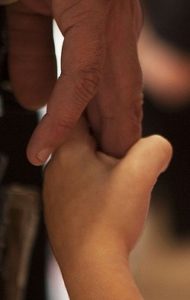 At a visit the other day
 Get ready for endless pasta. There are a variety of entrees involving elbow macaroni. All those dishes taste pretty much the same, except for the tuna casserole – coined ‘tuna massacre’. When that is on the menu, I avoid the unit dining hall at all costs. I also call this entre ‘Little Friskies’. The chow hall smells like a feral cat gang bang, and I haven’t liked tuna since they removed the dolphin.
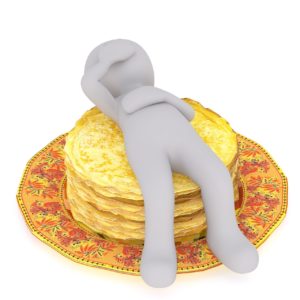 In the 9000 days I’ve been incarcerated, I’ve eaten a minimum of 8000 pancakes. Those not familiar with my problem with pancakes—I’m diabetic. Carbohydrates are not my friend, but I have to eat something. So I’m caught between high and low blood sugar. Another interesting fact about pancakes – if you fry them at 2 a.m., and put them in a warmer until 4:30 a.m. when they are served, they can almost stop a bullet.
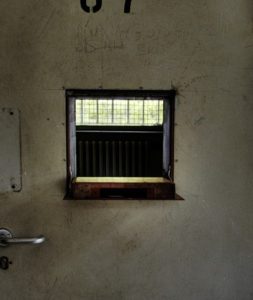 After walking away from a decade in solitary, I did not feel rehabilitated. I was and am frustrated at not really being able to understand the real damage done to my mind until I am released from prison all together. Who can predict the type of person or monster these isolation units will re-birth back into society? Is there a possibility that destructive behavior will be born out of being forced into an environment where an individual is purposely outcast, ‘misfitted’, and alienated through prolonged solitary confinement?
 But the reality of it is, that I do not know how damaged I really am, because I suffer underneath my soldier’s mask of strength and fortitude and sometimes whisper to myself in the mirror, “They got me fucked up…”