Out Of Isolation

I got outta solitary confinement – Yay!  They weren’t through with me though.  I expected nothing less…

On the 9th of May I was placed in a modified general population housing unit.  This means more privileges – limited, but a tad bit better than the barbaric isolation I endured for over 700 days.  I pray that my comrades back there are keeping the fight alive and manufacturing hope in a hopeless situation.

On Saturday, June 3rd, I received a fifteen minute phone call.  This was my second in less than thirty days, and I was ecstatic.  As you can imagine, we cherish this time no matter how short or long.  It’s a lifeline, a buoy that keeps us afloat in a sea of endless blue.  Without it, we feel hopeless and fall into despair because of the loneliness.  At least, I do.

The person on the other end of the line and I had some catching up to do.  I’m nearly deaf in my right ear, so I was holding the receiver to my left ear to hear over all the yelling in the wing.   I was on the phone no longer than ten minutes. I know it wasn’t near the end because after fourteen minutes we’re prompted by the operator to hurry up, “You have sixty seconds remaining.”

Mid-convo, I looked over my left shoulder because I felt as if my personal space was being invaded or I was being watched.  I stared into a face that was sun burnt, weathered and covered with liver spots.  “Wrap it up,” the face demanded, filling the small area between us with the acrid smell of a wet ashtray. 

I complied and hung up.  Mind you, well short of my fifteen minutes.  Yet, who cares?  I was elated to have heard my comrade’s voice and learn of his accomplishments. 

“You!” 

‘I have a name,’ I thought.

“Give me your I.D.”

 I handed him my identification card and went to my cell.  I was oblivious to why he needed my I.D.  The young guy that was walking back to our cages with me stated matter-of-factly, “He’s goin’ to write you up.”

‘For what?’  I thought.  ‘I didn’t do anything.’

A few hours later, my cellmate and I were in an intense battle for position.  I flanked, he thwarted. He sacrificed, I capitalized. I attacked, he parried.  Pop!  We nearly knocked the chess board over.

I peeked my head out of my door, and the loud speaker garbled something unintelligible. I was confused, so I looked to my cellmate for help, but he was still studying the board in confusion.

I struggled into my state issued orange jumpsuit that we have to wear in the unit. When I went to the bubble, I was told to go back and see the housing unit Sergeant.  The general population wings were open and in full swing. I was bombarded with questions, handshakes and hugs.  After nearly thirty days out of isolation, I was still catching up with people every day.  It felt good to still be celebrated and relevant after over two years in a box.

After forty-five minutes of waiting, I grew restless. I walked into the back and saw a conduct violation on the desk. I snuck a peek, ‘Refused to get off of the phone’.

‘What?’  I had to catch myself from saying or doing something uncalled for.  One thing I’ve learned is self-control.  I know impulsive decisions can have grave consequences, so I did the best thing possible. I exercised my right not to participate and walked back to my cell.  

But, my heart was beating rapidly, so hard that I felt it in my mouth and heard it in my ears.  In short, I was enraged.  Why did he lie on me?  Maybe it was a mistake.  He must have something against me or he’s making some type of weekly conduct violation quota.  And, YES, some do this more often than you would think. You can never be too hard on ‘us here pris’ners’.

After I calmed and accepted that I would be found guilty and stripped of all phone privileges for two to three weeks, I made a cup of steaming hot java – John Wayne style.  I had no sugar, creamer, or butterscotch candies, so I enjoyed every sip of the bitter fluid just the way it was. It distracted me for the time being. 

My cellmate knew what occurred.  We’ve all experienced the same bull.  We resumed our game. Of course, I took out my anger on the board. I probably shouldn’t have because I – ahem – caught  bloody murder in the middle of my cell floor.  On the board, of course! Checkmate!!!  Come on, you know me better than that, doncha?

On the 17th of June I knew I might get out on the general population yard on the 3rd day of July.  I began safeguarding myself by complaining to medical to obtain a ‘lay-in’.  If they aided me, it would stop them from giving me a conduct violation for something I couldn’t control – I was sleeping through institution counts. We should be standing, but again, I cannot hear.  Sorry, watchu say??? If I got a ‘lay-in’, they’d knock on my door or open it if they needed me. 

If medical knows that I suffer from hearing loss, why is it they don’t tell administration that I need to be prompted, and I’m not just being purposely defiant?  My apologies for rambling. This had to be expressed.   I live in a place that sees me only as a number.  Property.  Free labor.  Not human. 

They have a ‘dog program’ now.  I love puppies and kittens, no doubt about it.  But, the animals sent to be trained by incarcerated persons have more freedom and rights than the very men that nurture them and are advocates for their care.  Is this not odd?
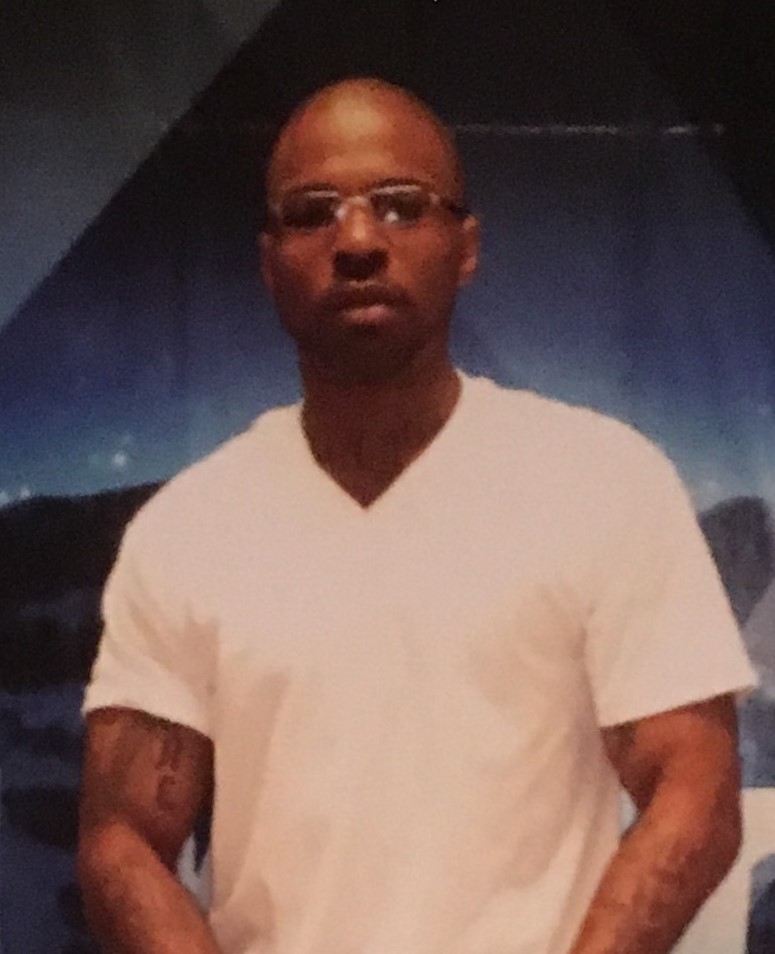
ABOUT THE AUTHOR: Dr. Tracy Edgar Greer, Jr., D.D.  is a writer, poet, spoken  word artist and qualified religious and spiritual counselor.  He can be contacted at:

Tracy E. Greer #1153032
SCCC-255 W. Hwy. 32
Licking, MO 65542
Email:  Jpay.com

ALL POSTS BY TRACY GREER.

Loading

Homer And Gracie

From 1983 to 1988, the year my dad passed away, I lived on a farm of sorts.  My dad’s property – forty acres in the middle of East Texas.  He called it The Pine Curtain.  He raised pigs, goats, chickens, pheasant and quail.  Geese and ducks lived on the pond.  I accused him of having a petting zoo, because it seemed like the animals considered themselves tenants – not a possible food source.

My dad would let them out, and they’d follow him around, like interns following the lead doctor in a hospital.  Most people would think it was an illusion or trick, but the animals just knew my dad loved them, even though some of them did eventually end up on the menu.

The goats didn’t think of themselves as goats.  They were guests. They were Nubian goats.  The female, Gracie, was black and white, and the male, Homer, was brown and orange.  When dad first brought them home, they were just kids. They’d follow him and eat the grass, meandering around like foreign tourists, “No, thank you, we’re just visiting.”

When they matured, they mated and had little goats.  Two at a time. The little ones would follow my son around when he was four or five, and if anything got near Mike, they’d chase them off.   It wasn’t unusual to see my son digging in the backyard, playing like little boys will, with two small goats standing guard like unpaid babysitters. 

When my dad passed away, my mom had me sell the larger animals, the pigs and goats, because she couldn’t handle the workload.  An older man down the road had goats on his farm and agreed to buy Homer and Gracie.  I warned him Homer was better suited to be penned in or tied so he didn’t cause any damage.  Even though Homer was a goat, he was like a bull in a china shop.

The man assured me that he’d been raising goats all his life and could handle anything Homer had up his sleeve (or hoof).

After about a week, I ran into the man at the local feed store.  He told me he was sorry he didn’t believe me.  He had let Homer roam the house grounds, unsupervised.  The goat had apparently climbed on top of his wife’s car and beat the hood up, kicking in the windshield and eating the vinyl roof.

I asked if he’d done anything to the goat, and he told me he tied Homer up.  He thought about shooting him but admitted that I had warned him, so he didn’t have the heart.

I made Homer’s bail! 

Goats are pretty smart if you raise them from babies, but once in a awhile you get one who is just plain ornery.  But much like people, even goats deserve a chance…

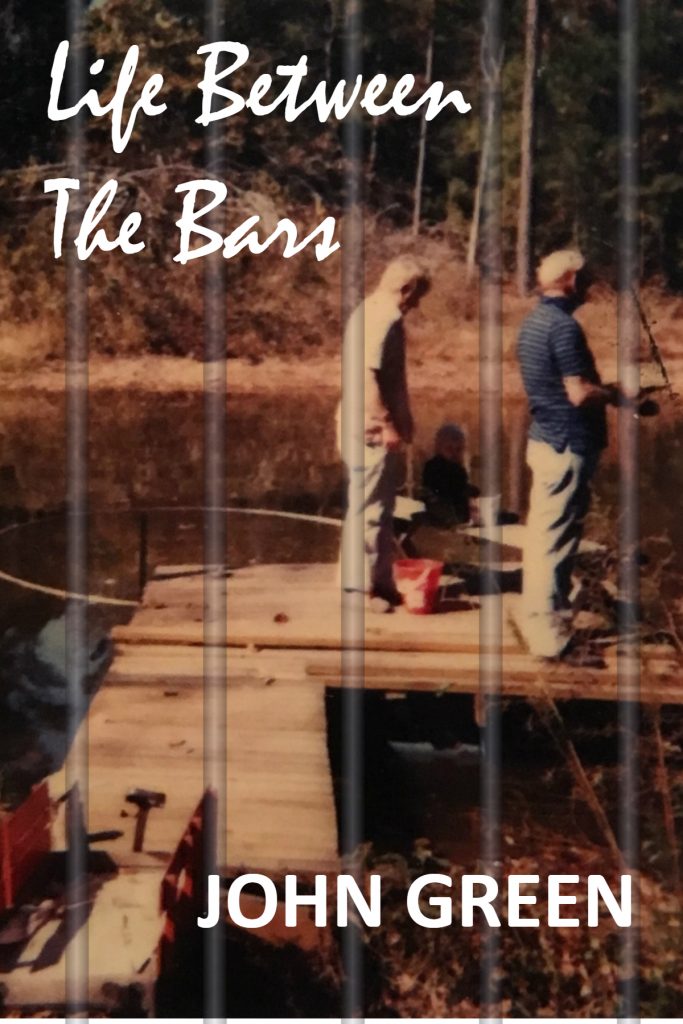
ABOUT THE  AUTHOR.  John is currently doing a two-year set off, after 25 years of incarceration.  He is a frequent contributor as well as author of Life Between The Bars, a unique and heartwarming memoir recognized by Terry LeClerc, “This book is so good because each chapter is short, has a point, doesn’t whine. It’s an excellent book.”  John can be contacted at:
John Green #671771
C.T. Terrell Unit A150
1300 FM655
Rosharon, TX 77583

All Posts By John Green.

Loading

Why Did I Testify? From Death Row, Charles Mamou

My attorneys told me we didn’t need to call any witnesses.  Those intelligent white jury members understand what happened.

I’m no killer, and I was and never will be a rapist.  I never physically hurt anyone who was innocent in my life.  When I refused a plea deal to help them convict the ones they felt were responsible, I became the Kunta – that would never be their Toby.  So they did what they needed to ‘teach me a lesson’.

A few days before my trial began, I sat in the courtroom before the Assistant D.A., Lyn McClellan, and my state-appointed trial attorney, Wayne Hill.   Lyn McClellan was good at sending people to death row and was friends with my attorney – I’ve heard rumor McClellan was the godfather of my attorney’s son.   I guess if it’s true, that makes them practically family.  It wouldn’t surprise me – that’s Harris County, Texas. On that day McClellan turned to me and said, “If it was up to me, I wouldn’t prosecute this case.  It’s clear what happened here.  But it’s not up to me.   My boss wants this case to go through.  I may even lose.”  McClellan’s boss was the legendary Johnny Holmes.

I was arrogantly naïve, thinking the truth would set me free – justice. 

There were subliminal messages being sent before the trial even started.  Referring to the famous O.J. Simpson case, the judge assured jurors that was, “not going to happen here.  This is the real world.  It is not California.”  He compared the job of a juror to, “being a pallbearer at a funeral.”  “And when a child acts out we must discipline that child.  We may not like it, but we have to do it.”  My trial hadn’t even started, and he was telling the jury I was already guilty.  There was no need to over think it.

The finality came during Dodson’s testimony though.  The moment he told the jury I ‘confessed to him’ that I sexually assaulted Mary – women on the jury began to cry and look at me with vengeance.  I had to turn away from one woman’s glare after she took off her glasses and wiped her eyes.  My character was castrated for an act that never happened. 

Before the trial when they questioned me, trying to get me to take a deal – they told me they had DNA.   So, why didn’t they use it?  If they had it, they didn’t use it because it wasn’t mine.  They said I sexually assaulted her – but there was no DNA presented at my trial.  Why? 

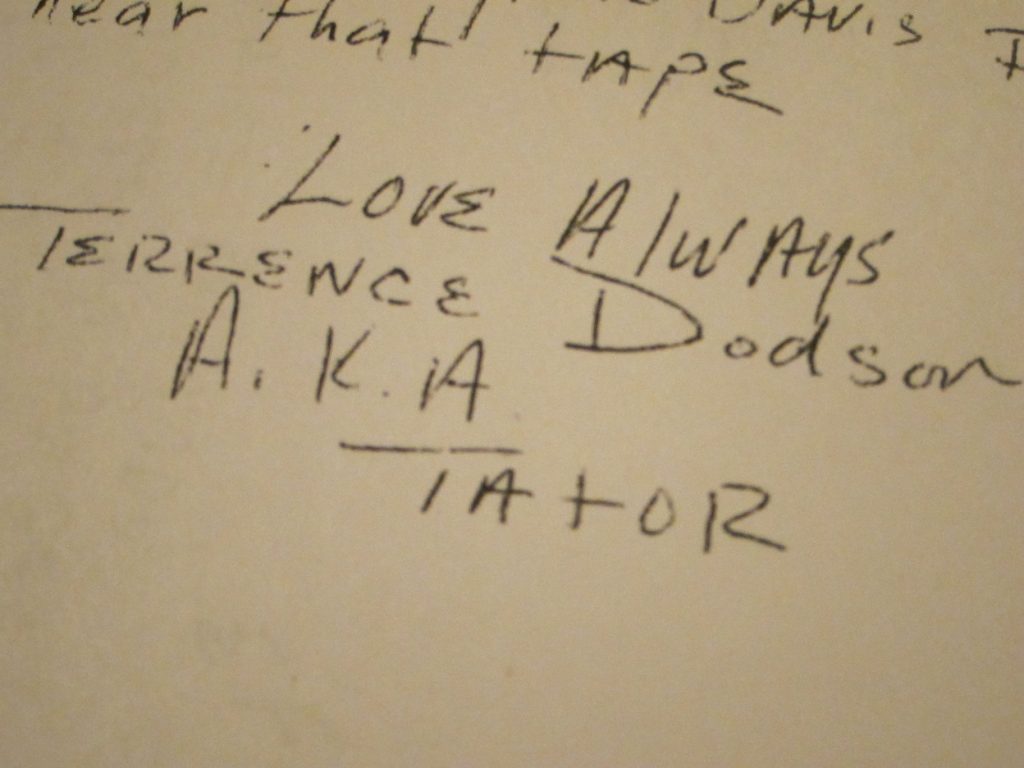
I had two defense lawyers.  One was hired a month before the trial began and knew nothing about the strategy or defense in my case.   The people representing me had a letter written by the ‘key’ witness – Dodson – and his initial interrogation video.  They had in their possession evidence to dispute the key witness’s testimony, but they never presented it.  They allegedly ‘misplaced’ that evidence during my trial.  They miraculously found it after I was found guilty.  Dodson said I confessed to him – the letter he wrote said he didn’t know shit.  The jury never saw it.

I didn’t kill Mary.  They had someone testify about me finding my sunglasses after Mary disappeared.   They presented the glasses testimony like a smoking gun.  If the glasses were near the body – I had to be the killer.  What the jury never heard was that the glasses were found nearly five miles away from the body.  I’d dropped them in the grass two days before I ever met Mary and nowhere near where she was found.  My attorneys didn’t tell the jury that either.  Nor were they told how many miles I would have had to have driven that night in a car with a flat tire in order to do what they said I did.  They just listened to the prosecution paint their picture.     

So, why did I testify?  I was damned if I did and damned if I didn’t, but after having the media portray me as a drug dealing rapist and murderer, just short of a serial killer, I was tormented so much that I knew if I ever had the chance to set things straight, I would.  If I was going out on lies– I wanted the record to show my mother I didn’t lie.

ABOUT THE AUTHOR.  Charles “Chucky” Mamou is living on Death Row in Texas.  He is out of appeals and has always maintained his innocence.

He can be contacted at:
Charles Mamou #999333
Polunsky Unit 12-CD-53
3872 South FM 350
Livingston, TX 77351

Writing By Charles Mamou

Loading

The Voice

A caged bird sings,
And a condemned man writes.
The only freedom to be had
In a tomb, sealed tight.
But no, not airtight,
Just enough to breathe.
See the mugginess that looms
In the dank lonely room?
Shall it bring you constant misery
For the wrong you have done.
Murderer!
You worthless monster!
The same grief you have caused
Should be exacted on your mama.
O’ but it has,
Just not enough.
Heathenish villain
Who deserves no forgiveness,
And for that we’re going to bring
Out the lethal stuff.
Undo what God has done,
Rid fathers of their sons,
As your souls erode in darkness
Till the day of judgment comes.
And when that day comes,
No tears, nor fears,
Nor uprising peers
Will hinder the injustice
Inflicted on you for years,
From way, way back
On the slave man’s back.
We are all black,
And the distinction of skin color
Is fallacy designed by the elitist
As a means to stay in power.
Watching the seconds tick
As it nears the twelfth hour,
Where preparations are made
And sympathy forbade;
Ain’t nothing
Going on here
But the necessary removal
Of a threat to society.
Placaters
Turned player haters,
Never losing an ounce
Of sleep at night
From knowing that death
Is just a business.
Torture chambers need hosts,
Tax payers foot the cost,
With endless sights of vigil lights
As advocates brave the cold,
Chanting, “No more deaths!”
“No more deaths!”
But there will always be deaths
Till by death there’s no one left,
But the supreme man
And him who understands
That classism
Is about one clan.
Not black, or white
Nor those with the will to fight.
And neither the caged bird that sings
Nor the condemned man that writes.

ABOUT THE AUTHOR:  Terry Robinson writes under the pen name ‘Chanton’. Terry is a thought provoking, inspirational writer and a frequent contributor. It’s a privilege to share his work. He can be contacted at:
Terry Robinson #0349019
Central Prison
4285 Mail Service Center
Raleigh, NC 27699-4285

All Posts By Chanton

Loading

Tarnished Prisoner

It’s been said a life is priceless,
But freedom is not.
You can purchase my life,
But my freedom I can not?

Is a life that is tarnished,
Still worth as much?
If freedom is taken,
Can a bunch be bought ba
ck?

Years of slavery,
The Constitution says facts.
We call them Amendments,
The fourteenth is exact.

Modern day slavery,
Combined with a life.
Means no more time,
For kids and a wife.

If my tarnished life
Were no longer priceless,
How much would it cost me,
When to you nearly worthless?

How can I pay you,
And still have mine?
Still have life
And still have time.

Could I be a soldier,
And pay my debt overseas?
Risk my life for my country,
And buy back the deed?

Bathe in the glory,
With sacrifice and pride.
Live through the nightmares
Of others who have died.

Wash off the tarnish,
And come back anew.
Knowing I paid with my life,
It’s what I want to do.

There is no honor
In dying a prisoner’s death.
No parades or salutes,
Praises in depth.

Only tears from a mother,
Or whomever may be left.
A cardboard box, a hole, and a number.
Maybe some rain, but hardly the thunder.

Let me die with some honor,
To further a cause.
I’m still one of the Nation,
And that’s under God
.

I can’t sleep at night,
Because I see a way,
For me to wager my life
At a price you can pay.

With nothing to lose
And all to gain.
You still will win,
Even if I get slain.

You say a life is priceless,
But freedom is not.
Then you purchase my life,
But my freedom I can not?

ABOUT THE AUTHOR: Terome Porter found inspiration for this poem in his proposal, “Project Reform” – a prisoner’s push for redemption. He can be contacted at:
Terome Porter #680067
Davis Correctional Facility
DCF-CCA
6888 East 133rd Road
Holdenville, OK 74848-9033

Loading

According to State’s Witness, Mamou – awaiting execution – didn’t have time to do it

Charles Mamou had a fifteen to forty-five minute window to do what the prosecution said he did, according to their witness, Howard Scott.  By everyone’s account, Mamou was on Lantern Point Drive at approximately midnight on December 6, 1998. Scott testified he was back at his apartment on Fondren between 12:15 and 12:45.   Could he have murdered the victim in forty-five minutes or less?

At midnight that evening, there was a drug deal on Lantern Point Drive in Houston that ended in gunfire.  The majority of the witnesses testified that Mamou’s driver, Samuel Johnson, pulled away when the shooting began, leaving Mamou behind.  Mamou then jumped in the running vehicle left behind by the individuals he’d just had a shoot out with. 

After that – the stories differ.  Mamou testified he realized Mary Carmouche was in the car after he fled the scene.  He also says he saw her for the last time after they both exited the car at the apartment on Fondren, where the vehicle was later found by police.  Mamou also said there were several other people at that location who had contact with Miss Carmouche.

The drug deal took place at approximately midnight.  The drive from Lantern Point Drive to Fondren is 9.3 miles and 18 minutes.  When the police later recovered the Lexis at the apartments, one of the tires was completely flat and partially off the rim.  Howard Scott testified that Mamou arrived at his apartment between 12:15 and 12:45 that evening.

The state presented a different version of events.  The prosecution claimed Mamou, who lived in Louisiana, left Lantern Point Drive after the shooting and drove to a deserted home on Lynchester Drive, located 17.9 miles away.  They say he then took Mary into the backyard, forced her to perform oral sex and shot her.  No explanation was offered as to how Mamou may have been able to locate an abandoned home on Lynchester. 

There was no evidence introduced in the courtroom regarding a sexual assault – not a hair, not a semen sample, no DNA.  After the shooting, Mamou would have had to drive from the house on Lynchester to the apartments on Fondren and park the car where it was found.  The drive from Lynchester to Fondren takes thirty minutes.

That scenario would have taken an hour and five minutes in driving time, not taking into account the condition of the tire, locating a deserted home, a sexual assault and murder.  The travel time to get to the crime scene was never addressed during the trial.

The Mamou case is riddled with questions. For many, it calls into question the concept of ‘innocent until proven guilty’.  Among the areas of concern:

Although the jury was told Mamou sexually assaulted the victim, he was never charged with sexual assault and there was no physical evidence to support that claim. 

Each of the parties involved in the drug transaction testified against Mamou, and it appears none were charged. 

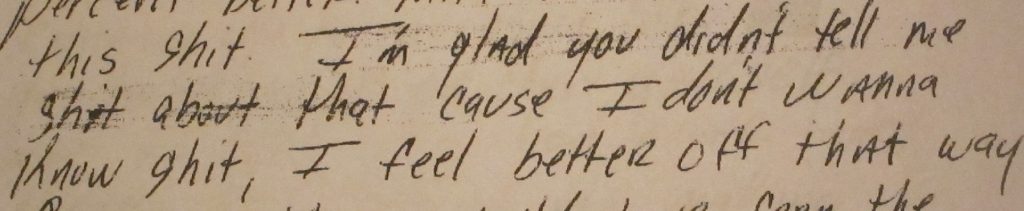
The only witness who came close to putting Mamou near the crime scene testified that Mamou confessed to him.  That same witness later wrote a letter to Mamou while he was incarcerated stating, “I’m glad you didn’t tell me shit about that cause I don’t wanna know shit, I feel better off that way.”  The jury never saw that letter.

The state’s witnesses all contradicted themselves and each other throughout the trial, as well as all testifying to lying at various points of the investigation. 

Mamou, who had no prior charges of violence, was described as ‘vicious’, ‘ruthless’ and ‘cold-blooded’ during closing statements.  He was also accused of murdering other individuals during the prosecution’s closing statements. 

Autopsy photos and testimony were presented to the jury, as well as victim impact statements from victims of crimes Charles Mamou was never charged with.

Charles Mamou was never charged with any crime connected to Anthony Williams who died months before.  The prosecution told the jury more than once, “And he murders Anthony Williams.”

Charles Mamou has maintained his innocence for over twenty years.

TO CONTACT CHARLES MAMOU:
Charles Mamou #999333
Polunsky Unit 12-CD-53
3872 South FM 350
Livingston, TX 77351

Related Articles:   What Does It Take To Get On Texas Death Row;
Texas Death Sentence Clouded By Irrefutable Doubt;
Awaiting Execution – “Have You Ever Felt Like You Can Taste The Future?”;
Because They Can – Execution In Texas;
Letter From Key Mamou Witness Contradicting Testimony;
Testimony Worthy Of An Execution? The Mamou Transcripts – Part I;
The Mamou Transcripts Part II;
The Mamou Transcripts Part III – Death Sentence Built On The Testimony Of Dealers;
The Mamou Transcripts IV;
The Mamou Trial – Was Race A Factor?;
Mamou’s Death Sentence Sealed With Graphic Testimony And Photos – Of Victims Of Crimes He Was Never Charged With

Writing By Charles Mamou

Source:

Harris County, Texas. Charles Mamou, Jr. Vs. The State Of Texas. Sept. 1999.

Loading

Tommy

I knew Tommy for over 20 years.  He was a friend – not as close as some, closer than others.  He was usually upbeat, always working and often watching and betting on sports – mostly football.   Like myself, he loved the Rockets, Texans and Astros.  His only flaw, from my viewpoint, was that when they were losing, he lost faith in his teams.  Maybe it was because he always bet his heart and not his head, causing him to take some losses, but we’d always laughed about it later.

I’d see him walking to work in the hallway and I’d call out, “Tommy!”

He’d answer, “How are you, John?”  When he asked how I was, I knew he was sincere – not just talking or going through the motions.  He really cared.

I think Tommy was a good guy who got caught up in the moment.  Whatever he did to get himself here, I never asked because whatever it was, it was long ago, and the person that did it didn’t exist anymore.

Tommy died of a sudden heart attack last night.  I don’t know his exact age, probably something close to mine.  What I do know is – I’m one friend short.

Rest in peace, brother.

ABOUT THE  AUTHOR.  John is currently doing a two-year set off, after 25 years of incarceration.  He is a frequent contributor as well as author of Life Between The Bars, a unique and heartwarming memoir recognized by Terry LeClerc, “This book is so good because each chapter is short, has a point, doesn’t whine. It’s an excellent book.”  John can be contacted at:
John Green #671771
C.T. Terrell Unit A150
1300 FM655
Rosharon, TX 77583

All Posts By John Green.

Loading

Mamou’s death Sentence sealed with graphic testimony and photos – of victims of crimes he was never charged with

During the penalty phase of Charles Mamou’s capital murder trial, detailed testimony was given regarding the autopsy of Anthony Williams, along with a variety of photographs taken during the process.  The imagery and description of the deceased’s wounds were shared in an effort to ensure the jury would come back with the ultimate punishment – death.

And the jury did. But Charles Mamou was never on trial for the murder of Anthony Williams.   Charles Mamou was on trial for an unrelated crime in which he has always maintained his innocence and in which there is actually no physical evidence tying him to the crime scene.  Not a fingerprint.  Not a footprint.  Not a hair.  No DNA.  No weapon.  No eyewitness. No confession.

As the country’s leader in sending people to death row, Harris County, Texas, is skilled at getting capital murder convictions.  In 1999, the year Charles Mamou was sentenced to death, the state executed 33 people.  The following year, that number was even higher.

During the Mamou trial, the state didn’t just present photos of Anthony William’s body.  They also went into great detail regarding the man’s death in September, 1998 – three months prior to the crime Mamou was on trial for.  After the graphic autopsy testimony, William’s older sister was brought in to testify regarding the impact the loss of her brother had on her family.  She spoke of Anthony as a baby and testified about the last time she saw her brother.  She also shared how her older brother cries over the loss of his baby brother.

Next, the mother of Terrence Gibson was brought in to testify regarding the loss of her son. Terrence Gibson was the man who got shot during the attempted robbery of Charles Mamou.  Mamou was never charged in the death of Terrence Gibson.  Ms. Gibson testified regarding memories of her son and the affect his loss had on her and her family. 

There was actually more testimony in the punishment phase of the trial regarding crimes Charles Mamou was never charged with than the crime he was tried for.  Two decades later, Charles Mamou remains on Death Row and is out of appeals, and Harris County keeps its place as a leader at ensuring executions.

TO CONTACT CHARLES MAMOU:
Charles Mamou #999333
Polunsky Unit 12-CD-53
3872 South FM 350
Livingston, TX 77351

Related Articles:   What Does It Take To Get On Texas Death Row;
Texas Death Sentence Clouded By Irrefutable Doubt;
Awaiting Execution – “Have You Ever Felt Like You Can Taste The Future?”;
Because They Can – Execution In Texas;
Letter From Key Mamou Witness Contradicting Testimony;
Testimony Worthy Of An Execution? The Mamou Transcripts – Part I;
The Mamou Transcripts Part II;
The Mamou Transcripts Part III – Death Sentence Built On The Testimony Of Dealers;
The Mamou Transcripts IV;
The Mamou Trial – Was Race A Factor?

Writing By Charles Mamou

Source:

Harris County, Texas. Charles Mamou, Jr. Vs. The State Of Texas. Sept. 1999.

Loading

Being Better

Cruel.   Heartless.   Malicious and cold.  That’s how the prosecutor described me to a jury during his pitch for a verdict of death.  He argued that I was, “…just mean and unfit to live.”  In the end, the jury agreed.

Four months after my arrival on Death Row, I stole money from an officer.  Though inadvertent, it was theft nonetheless.  It happened one morning during weekly ‘draw’, while one officer was training another.  At that time, available funds withdrawn from inmate accounts were counted and stapled together. 

The new guy – or Newbie – handed me a stack of bills in fives and ones meant to total forty dollars.  With no prior incidents or errors, I tucked the bills in my pocket and walked away.  Within moments, a commotion stirred as one inmate started shouting over missing funds.  Others became disgruntled and offered up chide remarks about the unfairness of the system.  The senior officer tried to de-escalate the ruckus, while the new guy searched frantically through the money bag.  I sympathized with the perplexity strewn on Newbie’s face.  It was his first day on the job.

After reassuring compensation, both officers exited the pod, as the ire amongst protesting inmates increased.   With a prickly notion to count the money, I collected the bills from my pocket and discovered it wasn’t one stack, but two.  The staples in each stack had snagged one another and pieced the money together.  I called over the guy to which the funds belonged, explained the mix-up and offered him the money. 

“Keep it,” he said, “Let the State pay for it, since they’re trying to kill us, anyway.”  Tempers flared over systemic oppression, as the other inmates egged each other on.   Reluctantly, I passed the money off to a friend – I was striking a blow to ‘the State’.

Not only was the meager blow ineffective to the State, it was utterly deflected.  I later found out the replacement funds were deducted from Newbie’s salary.  What a terrible feeling to know I was responsible for a mark on his work record.  And by involving another party, I couldn’t return the money, though keeping it cost me peace of mind.

Over the years, Newbie has gone on to become a well respected officer.  With an 18 year tenure of working on Death Row, he has seniority over all other staff.  He’s shown cordialness and consideration when enforcing policy, while effectively performing his duties.   A kind, hard working man, who seldom speaks, but is eager to flash a grin.  As I’ve come to admire his professionalism, I’m reminded of my offense.  Such a fine person deserves better from me – I deserve better from myself. 

Recently, I was among several Death Row inmates selected for a random urinalysis.  I arrived to find Newbie overseeing the process, as he went about his task with a grin.  I’d often experienced discomfort whenever he was present – a nagging guilt that pecked at my conscience and impeded the wholeness of reform.  Tonight’s discomfort was more salient and intense, as I struggled with the idea of possible outcomes.  What if Newbie had lost his job, or been accused of theft and criminally charged?  I squeezed my eyes tightly as my inner voice gathered.  Newbie deserved better.  So did I.

Some idle chat was used to generate dialogue on self-reform.   Then, with no one else around, my words spilled forth, “Yeah, man… many of us want to be better, but to do better, we have to own our truths.  Just like the time when that forty dollar draw come up missing…”  At that point, I had Newbie’s undivided attention.  While confessing my role in the missing funds, I felt embarrassed, but liberated.  I searched his eyes for a hint of anger.  They stayed steady and unrevealing.  I expressed my sincerity to return the funds and the difficulty of having involved another.  His fixed look filled me with shame – a shame I well deserved.

Finally, Newbie settled his thoughts and said, “Thank you for telling me that.”  For eighteen years Newbie had been puzzled by the events of that day.  He was certain about the money count and grateful to finally know what happened.  I was moved to witness such genuine forgiveness, given instantly and without effort.  I expected reprimand for my wrong-doing, instead, Newbie seemed relieved.  His forgiveness was validation in the courage to right our wrongs.  It was more than I deserved – it was a lesson in the goodness of humanity. 

©Chanton

ABOUT THE AUTHOR:  Terry Robinson writes under the pen name ‘Chanton’. Terry is a thought provoking, inspirational writer and a frequent contributor. It’s a privilege to share his work. He can be contacted at:
Terry Robinson #0349019
Central Prison
4285 Mail Service Center
Raleigh, NC 27699-4285

All Posts By Chanton

Loading

The Mamou Trial – was race a factor?

Someone familiar with the Mamou case recently said to me, “He’s on death row because he’s black and it was Harris County.”  One has to wonder, in a capital case with no evidence and the state’s own witnesses contradicting their theory…

To pretend ‘black’ and ‘white’ doesn’t and hasn’t influenced the outcome of a lot of our history, would be irrational.  It’s more comfortable not to talk about, but when a person is going to get executed in a case that was built on the contradictory testimony of a handful of people who all benefited from their testimony – maybe it’s time to talk about ‘it’.

It is possible ‘it’ played a part in the story of Charles Mamou, who was sentenced to death twenty years ago.  We aren’t where we need to be today, and to pretend we were two decades ago would not be reality.

So, twenty years ago in Harris County, Texas, putting a black man on death row might not have required as much as it would today.  To make matters worse, Mamou’s case has never been heard on appeal, so the events have not been touched by any progress that may have been made.  When Mamou’s execution day comes, Texas will be able to put it behind them, without ever having to take a second look.  The press will then share a distorted story, as they have on more than one occasion in this case. 

Charles Mamou has always maintained his innocence, but the State’s actual charge against him, in contrast to what has been reported by well respected publications, was the kidnapping and murder of one victim.

Yet, to this day, journalists rarely report that accurately, making it easier for Mamou’s case to fade into history and never be looked at again.  As recently as 2018, The Houston Chronicle falsely reported, “Charles Mamou Jr. has long declared his innocence in the 1998 crime, a botched cocaine deal that ended with three slayings along a side street near the Astrodome and the kidnap and murder of 17-year-old Mary Carmouche.”

Many would read that and think that Mamou was charged with slaying three people on a side street and then killing Mary Carmouche. 

ABC News Amarillo also reported this misinformation in 2018, “A former drug dealer from Louisiana on Texas death row for the abduction, rape and slaying of a 17-year-old girl during an apparent botched drug deal twenty years ago in Houston has lost a federal court appeal, moving him a step closer to execution.”

US News and World Report also shared that same story on July 19, 2018.

Charles Mamou was never charged with rape or any form of sexual assault.  According to the state’s witness, the autopsy revealed that the victim’s body was not bruised.  She was found to have had a ‘scrape’ on one arm, which actually supports Charles Mamou’s version of events regarding what he said happened that night.   There was not any trace evidence or DNA that tied Charles Mamou to the victim.   The prosecution never even asked their witness if the victim was sexually assaulted, because they knew she wasn’t. 

But, the prosecution needed to argue that Charles Mamou had ‘kidnapped’ Mary in order to have Mamou sentenced to death.   Their goal, as said in their opening statement, was to prove that, “Charles Mamou gets in the car still occupied by Mary Carmouche in the backseat and drives away, followed by the car driven by Samuel Johnson.” 

That’s what they needed.   That’s not what their own witnesses said though.   Kevin Martin, the state’s first witness, supported what Charles Mamou said took place.  There was a shootout at a drug deal.  Charles Mamou was left behind by his partner in crime – who drove away leaving Mamou on a dark alley with the individuals there to rob him.  He jumped in the running car that he was standing next to and sped away.

So, Kevin Martin testified that Charles Mamou’s driver left him behind.

Dion Holley – another of the state’s witnesses – stated, “I saw the red car backing up and turned around in the street, and I saw the blue car leaving off.”  Once again, their own witness corroborated Charles Mamou’s version of events, indicating that the car he was driven to the drug deal in left him behind.  He then jumped into the running car left behind by those who were trying to rob him and took off. 

Holley replied, “That’s correct,” when asked if the red car was trying to get out of there real quick. 

Then asked, “And then that vehicle was followed by your mom’s Lexus?”

“That’s correct.”

Charles Mamou also testified that his driver sped off without him. 

It was a dark alley, a shootout had just occurred, and Mamou – who was now alone – jumped in the running car he was standing next to, and got away from the scene.  It’s reasonable to think he was in fear for his life and trying to get as far away from people who had come to that location with the intention to rob him at gunpoint, regardless of what his intentions were during the drug deal.  The survivors both testified that they were there to rob Charles Mamou by force.    

Charles Mamou denies all of the charges, but the state’s own witnesses testified that they were there to rob him on that dark alley and Mamou’s driver sped off without him.  Most people – regardless of the poor judgment that placed them in that situation, would have jumped in that car and driven away in an effort to get as far away from people robbing them at gunpoint as possible.   A reasonable person would be in fear for their life at that point.

The state presented a case showing that three men were planning on robbing Charles Mamou by force on December 6, 1998.  When the shooting started – everyone scattered in fear of their lives, motivated by self preservation.   

Charles Mamou, driving away in fear for his life, would not be ‘kidnapping’ Mary, who was most likely tucked down as far as she could be in the back seat when the shooting started.  Charles Mamou didn’t bring her to the drug deal down a back alley, and according to his testimony she later got out of the car on her own. 

‘Kidnapping’ had to be a part of the case, though, in order to achieve an execution.  So regardless of the prosecution’s own witnesses contradicting their theory – Charles Mamou received the death penalty. 

Charles Mamou has steadfastly denied all charges against him.

TO CONTACT CHARLES MAMOU:
Charles Mamou #999333
Polunsky Unit 12-CD-53
3872 South FM 350
Livingston, TX 77351

Related Articles:   What Does It Take To Get On Texas Death Row;
Texas Death Sentence Clouded By Irrefutable Doubt;
Awaiting Execution – “Have You Ever Felt Like You Can Taste The Future?”;
Because They Can – Execution In Texas;
Letter From Key Mamou Witness Contradicting Testimony;
Testimony Worthy Of An Execution? The Mamou Transcripts – Part I;
The Mamou Transcripts Part II;
The Mamou Transcripts Part III – Death Sentence Built On The Testimony Of Dealers;
The Mamou Transcripts IV

Writing By Charles Mamou

Sources

Associated Press. “Drug Dealer from Louisiana on Texas Death Row Loses Appeal.” KVII, abc7amarillo.com/news/local/drug-dealer-from-louisiana-on-texas-death-row-loses-appeal.

Blakinger, Keri. “Drug Dealer on Death Row Loses Federal Appeal in 1998 Houston Murder of Teenage Girl.” Houston Chronicle, Houston Chronicle, 20 July 2018, www.chron.com/news/houston-texas/article/Drug-dealer-on-death-row-loses-federal-appeal-in-13090103.php.

“Drug Dealer From Louisiana on Texas Death Row Loses Appeal.” U.S. News & World Report, U.S. News & World Report, www.usnews.com/news/best-states/louisiana/articles/2018-07-19/drug-dealer-from-louisiana-on-texas-death-row-loses-appeal.

Harris County, Texas. Charles Mamou, Jr. Vs. The State Of Texas. Sept. 1999.

Loading

Prison Writing and Expression