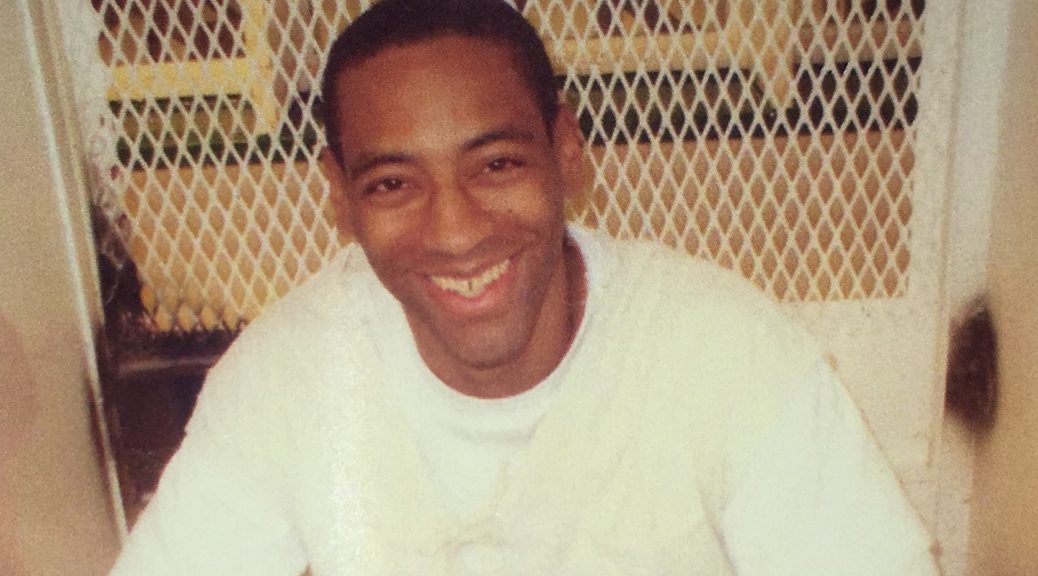
I should say, ‘All we
got for Christmas,’ because it was actually for every TDCJ prisoner. The new medical and dental copay is now $13.55
per visit. That is an enormous savings
for us, actually manageable. Many prisoners
who couldn’t, will now seek treatment.
The copay used to be $100 and forced prisoners to choose
between medical care and having money to purchase necessities. A prisoner that received $30 a month would
have to pay that entire $30 towards the $100 the day of a doctor visit, and
every month thereafter, TDCJ would take half of the prisoner’s monthly $30
until the $100 copay was paid off. This would leave the prisoner $15 towards
his monthly necessities. Consider this list of supplies:
1 x Colgate toothpaste $2.75
1 x deodorant $2.50
15 x small bars Dial soap $3.00
1 x writing paper $2.00
10 x postage stamps $5.50
20 x envelopes $.60
Total is $16.35 – too much!!
The prisoner would be forced to remove some vital item(s) to get the
list under $15.00, and forget about food to supplement the meager TDCJ
meals. No coffee. No Christmas cards for loved ones. All because they had to pay a $100 copay after
they caught the flu or got bit by a spider (which happens with disturbing
frequency).
A $13.55 copay! A
gift from the Texas legislature, but really from the public and the friends and
families of prisoners. Those are the ones that pressured the legislature. So, thank you all for your effort. The next
time I need medical care I can get it without ruining any chance I have of
keeping my head above water.
Merry Christmas!
ABOUT THE AUTHOR: Jeremy Robinson is author of The Monster Factory, which he is currently revising. Mr. Robinson lives in a Texas prison and can be contacted at: Jeremy Robinson #1313930 Polunsky Unit 3872 South FM 350 Livingston, TX 77351
Sentenced to die, Charles Mamou has always maintained his innocence. The prosecution presented an elaborate story of a man who went on a shooting rampage that included a sexual assault. That story was then shared by the media.
What took place on December 6, 1998, according to witness testimony and actual evidence, began with an attempted robbery. The prosecution’s witness, Kevin Walter, helped arrange the sham ‘drug deal’ through a cousin from Sunset, Louisiana. Walter testified during the trial regarding the robbery of Charles Mamou.
Volume 16 of the
Reporter’s Record at page 95:
Q. You didn’t have
any guns?
A. One.
Q. One gun?
A. Exact.
Q. Terrence Gibson?
A. Yes.
Q. And that was going
to take care of whatever was necessary in terms of getting the $20,000 from
Chucky Mamou, correct?
A. Correct.
Volume 16 of the
Reporter’s Record at page 96:
Q. Let’s back up for
a second. Tell me – describe to the
members of the jury, what was your plan?
Just tell them in your own words, what was the plan to get the
money? Let them know.
A. See the money,
count the money, and see can I walk away with the money. That was my plan.
Volume 16 of the
Reporter’s Record at page 101:
Q. So if the police
weren’t there, you would do whatever it takes to take the money? Fair statement? This is all about you getting twenty grand,
right?
A. Right.
Q. I believe your
testimony when Mr. McClellan was talking to you was the plan was to rob the
defendant, Charles Mamou, correct?
A. Correct.
Volume 16 of the
Reporter’s Record at page 102:
Q. So, you’re feeling
comfortable that’s where you’re going to rob him, at that store over there?
A. Yeah, I feel more
comfortable off Cavalcade.
Volume 16 of the
Reporter’s Record at page 105:
Q. You never had any
intention of giving him any dope?
A. Right.
Q. From start to
finish, your plan is to rip him off?
A. Right.
Q. At some point,
when it’s obvious to you that twenty thousand is no longer an issue, according
to your testimony, and it’s only forty-five hundred, you’re still wanting to
rip him off even for the forty-five hundred?
A. Yeah.
Volume 16 of the
Reporter’s Record at page 112:
Q. But you had
already planned for everybody that was going to meet after you had ripped off
Chucky Mamou of his money?
A. Yes.
After testifying to picking up Mary Carmouche, Kevin Walter
continues to describe the plan.
Volume 16 of the
Reporter’s Record at page 118:
Q. So you drive all
the way from the northeast side of town down to the Bennigan’s, and Miss
Carmouche is with you at that time?
A. Yes.
Q. What is your plan
at that point when you’re going to the Bennigan’s? Can you still see the money, count the money,
take the money?
A. Exactly.
Q. So you know, when
you get to that location, all four of you, that your plan is still to rip him
off. Now at this point, do you believe there is still $20,000 at stake?
A. Yes.
Q. Okay. So before you go to Bennigan’s you’re still
thinking, twenty grand is what I’m going to be able to walk away from if I pull
this off?
A. Yes.
Volume 16 of the
Reporter’s Record at page 120:
Q. Were you thinking
at that point that you’re still going to pull this off, the plot to take his
money?
A. Yes.
Q. Your thing at that
point, as you’re sitting there at the Bennigan’s, is getting closer and closer;
we’re finally going to be able to pull this off?
A. Right, once we
count the money.
Volume 16 of the
Reporter’s Record at page 121:
Q. You were just
going to rip him off?
A. That’s what –
yeah.
Volume 16 of the
Reporter’s Record at page 125:
Q. You weren’t going
to try and rob Mr. Mamou in the middle of the Fiesta store parking lot, were
you?
A. Yes. If he would have counted the money there, we
would have took it.
Volume 16 of the
Reporter’s Record at page 126:
Q. So now we’ve been
through several failed attempts to be able to rip him off, correct?
A. Yeah.
Volume 16 of the
Reporter’s Record at page 127:
Q. That is, now your
plan is to go wherever Chucky Mamou drives, and that’s where you’re going to
rip him off?
A. If we followed
him, yes.
Volume 16 of the
Reporter’s Record at page 141:
Q. Now, was there a
point in time when you decided that it was okay to tell the police what had
happened once you realized you weren’t going to be prosecuted for anything,
correct?
A. Correct.
Q. Is that what
caused you to then come forward and say, here’s how – what I was going to
do. Once some police detective shows
you, tells you about how we’re not worried about you and this dope case; we’re
interested in prosecuting this guy, and that’s the first time you’ve
come forward with information, and you had basically explained what you
testified to on direct examination?
A. Right.
Volume 16 of the
Reporter’s Record at page 161:
Q. How were you going
to get him to give you the money?
A. Once we count the
money, then we take the money.
Q. Just going to jump
in the car and run?
A. No. It was at gunpoint, of course, but it wasn’t
no plan.
Q. Pardon?
A. If it was going to
be at gunpoint, yes, of course, once we count the money.
Volume 16 of the
Reporter’s Record at page 164:
Q. Your testimony was
that if it was necessary at some point to have a gunpoint to force the money,
you said that was okay, isn’t it?
A. Yes.
Q. If the plan came
to that, that was okay with you?
A. No, it was no
plan.
Q. But if it came to
that, that was going to be all right, if it meant you getting the $20,000,
right?
A. Yes.
Volume 16 of the
Reporter’s Record at page 166:
Q. You don’t – after
it’s obvious that you’re going to be going to Bennigan’s, right, you don’t let
Mary Carmouche off; you don’t take her home, do you, before going there?
A. No.
Volume 16 of the
Reporter’s Record at page 167:
Q. When did you see
Terrence Gibson with a gun?
A. Early.
Volume 16 of the
Reporter’s Record at page 168:
Q. But you knew he
had a gun?
A. Yes.
Q. And you knew that if it came to gunpoint, then so be it, in terms of getting the $20,000 from Chucky Mamou?
A. Yes.
According to the testimony of Kevin Walter, he and his friends intended to rob Charles Mamou on December 6, 1998. As earlier posted, Kevin Walter also testified that Samuel Johnson, Mamou’s partner in the drug deal, drove away and left Mamou behind once that attempted robbery took place. According to the only witnesses at the scene, Mamou then fled in the Lexus.
Charles Mamou is out of appeals and waiting for an execution
date.
Anyone with information related to this case can contact me at kimberleycarter@verizon.net. There is also a facebook page dedicated to sharing the truth.
TO CONTACT CHARLES MAMOU: Charles Mamou #999333 Polunsky Unit 12-CD-53 3872 South FM 350 Livingston, TX 77351
I don’t know this Mr. Defeat Of whom you speak. Chances are me and dude, We will never meet. My enemies lie and cheat To compete with my truth. You are certainly right, You don’t know me, And I don’t know you. But fact are facts And real is real. Yeah, I sold drugs, But I never robbed or killed. You say you feel my pain, How could you When it’s even too extreme For me to explain Without feeling strange. I mean… Imagine being buried alive Not inside oak or pine. This is concrete and iron, Sometimes the sun doesn’t shine – Hold on! Wait! Look at me when I am talking to you! I could easily be YOU!
ABOUT THE AUTHOR. Rogers LaCaze once lived on Death Row, but was resentenced to life this past week for a crime committed in 1995. He maintains his innocence. Mr. LaCaze can be contacted at: Rogers LaCaze, Sr. #356705 CBB L/L L.S.P. Angola, La. 70712
Things were different in Harris County, Texas, two decades ago. It could be said there was a thirst for blood that is less pronounced now. Charles Mamou will most likely get an execution date in the near future for a case that was prosecuted when securing a death penalty was a badge of honor, celebrated even. It was more acceptable in the halls of justice at that time to jam the pieces of the puzzle into place if investigators or a prosecutor ‘wanted’ a particular someone for a crime – or throw the pieces out if need be. Hopefully, things are different now. Mamou will pay with his life for the climate of the late 90’s, but it’s not too late to share what the prosecution knew when they tried the case. And what they know today for that matter. There was little interest in finding out what happened back when they could have, and a lot of interest in making a guilty verdict stick – which took some doing with no evidence.
Charles Mamou first wrote for this site in March, 2018. Out of curiosity, I looked up some articles about him after the first few pieces he submitted. Two things stood out – allegations of sexual assault, some articles saying he was charged with that crime, and a pair of his sunglasses that were reported to have been left near the body. It had to be true if he left his sunglasses, right? I envisioned the location to be an abandoned house on a block of old abandoned houses. It wasn’t until I started reading Mamou’s case file I learned the sunglasses were miles from the body that was found in a residential neighborhood – and the sexual assault? There is a lot more to that story as well.
Charles Mamou, Jr., was born and raised in Sunset, Louisiana, and early on he began taking care of his family and broke the law to do it. Like many before him and since, some of his most successful role models were drug dealers. And so began his life of crime. He wasn’t a choir boy, but he had a reputation for helping people out.
Houston, Texas, wasn’t Mamou’s stomping ground. He didn’t know the area like the back of his hand, but his dad lived there, as well as a couple cousins. He would travel to the area for ‘business’, if you can call it that. That is why he was there in December, 1998. He was involved in a transaction that included several other individuals, all of whom were residents of Houston. He wasn’t even driving his own car on that trip. He was staying with a couple in their apartment and was being driven by others tied to the same anticipated business transaction.
The evening of December 6, 1998, was mild and dry. Lantern Point Drive, where the ‘drug deal’ and attempted robbery eventually took place, had no lights, and according to police, it was a cloudy night. Samuel Johnson was driving the car Mamou was in. Terrence Dodson had been a participant in the transaction earlier in the day, but had since gone home. The car they met on the dark street where it all took place carried four passengers, including Mary Carmouche.
All surviving parties later admitted to their involvement in a drug deal gone wrong, although no one was ever charged with anything involved in that incident other than Charles Mamou, who was charged with kidnapping when he fled the scene after gunfire erupted and his partner drove away without him. The deceased individual had a loaded gun next to his body, leaving a good argument for self-defense. Mary Carmouche was driven to the location by three men who were there to rob Mamou, and she was in the back seat of the car he sped away in.
When security guards arrived shortly after the shooting,
which took place around midnight, one man was dead and two were injured. Both vehicles were gone.
The two surviving men both testified in court that the vehicle
Samuel Johnson was driving drove off first – leaving Charles Mamou behind. Mamou then jumped into the blue Lexus and
fled the scene.
According to the testimony of Kevin Walter, (Volume 16, of the
Reporter’s Record at page 137):
Q.
All right. Then where was the blue Lexus at the point you picked up the
gun?
A.
Taking off.
Q.
Where was the red car?
A.
Done took off.
Q.
It had taken off before the blue car?
A.
Yes.
Kevin Walter had no reason to lie
about which car took off first, and according to his testimony, Samuel Johnson
drove away first in the red car – leaving Charles Mamou, who then jumped in the
blue Lexus and drove away.
Dion Holley was the other
individual who was shot at the scene. His
testimony (Volume 18, of the Reporter’s Record at page 115) was as follows:
Q. All right. And what did you see?
A. I saw the red car backing up and turned
around in the street, and I saw the blue car leaving off.
Q. When you say you saw the red car backing up
and turning around, how did they make – if they’re going backwards, how did
they turn around and go the other way?
Is it like a three point turn where they stop, back up, and pull around;
or is it like a scene on shows where they’re able to hit the brakes and the car
spins around?
A. That’s pretty much how it was.
Q. So, it was a very quick thing?
A. Yes.
Q. Did it appear to you that the red car was
trying to get out of there really quick?
A. That’s correct.
Q. And then that vehicle was followed by your
mom’s Lexus?
A. That’s
correct.
Samuel Johnson, the driver of the red car and Mamou’s associate in the deal, later became a suspect in this case. Although his version of events contradicted all of the witnesses’ testimony, the prosecution went with his description of what took place. According to Samuel Johnson’s statement to police, he was not concerned about Charles Mamou or the car that could have held the drugs he was there to buy that night. He was not concerned about the shooting he had been involved in or the girl whose whereabouts he supposedly knew nothing about. The following is Johnson’s testimony regarding what happened next (Volume 19, of the Reporter’s Record at page 115):
Q.
You go directly home?
A.
Yeah.
Q.
Tell your wife what happened?
A.
No, she was asleep at the time
Q.
Pretty exciting events in our life, isn’t it?
A.
Very exciting.
Q.
You just get in bed and go to sleep?
A.
No, I took a shower.
Q.
Took a shower, and then got in bed and went to sleep?
A.
No, opened me a can of soda and went to bed.
Q.
Talk to anybody that night?
A.
No
The next morning Samuel Johnson got up in his usual fashion
and headed to work – where he was employed as an Orkin man, treating homes in the
Houston area.
Charles Mamou has always maintained that he followed Samuel Johnson back to the apartments, with Mary Carmouche in the car. According to Mamou there were other individuals present in the parking lot of the apartments when they arrived, along with himself, the victim and Johnson. Twenty years later, there are witnesses that support that.
Until his execution, I will be sharing everything I have learned over the last eighteen months. All of the information will be on a facebook page, Charles Mamou – How Wrongful Convictions Are Made, where I hope to share what the prosecution knew and what the defense failed to share. There will also be a catagory on this site, ‘Charles Mamou’, where every blog post will be kept.
Anyone with information regarding what took place in
December of 1998, please contact me at kimberleycarter@verizon.net.
Human
beings that can, at times, be so caring and helpful, thoughtful and graceful,
can at other times be so very ugly. When
you place a man amongst a group of men that do not possess the saving graces… a group of men that is nothing but ugly,
things can go very bad.
I
often hear on my FM radio snippets of humor.
Or a commercial. Maybe a child
speaking candidly, which is humorous or touching. I hear a thirty second piece of humanity – a piece
of the real world.
I have lost the laughter of children. Lost a million tiny human interactions that create warm, happy, positive feelings. I have gained violence, anger and willful ignorance. I have gained mean spirited humor and more forms of discrimination than I can name properly. I have gained a million negative pieces to replace the million positive pieces… and I despair.
ABOUT THE AUTHOR: The above is an excerpt from Jeremy Robinson’s, The Monster Factory, which he is currently revising. Jeremy lives in a Texas prison and can be contacted at: Jeremy Robinson #1313930 Polunsky Unit 3872 South FM 350 Livingston, TX 77351
“With time moving so fast and this date looming, I wanted to
make sure to let you know…”
That was part of a letter I got this weekend – a goodbye letter. Travis Runnels is a very private person and would be very disappointed in me if he knew I shared even that. He probably won’t find out though, and if it gets one person to call the governor on his behalf or sign his petition – I’ll take the chance.
I tried to imagine what he must feel like, living alone in a box and knowing he will likely be killed before Christmas. I panicked and became overwhelmed by a feeling of claustrophobia. I had to shake it off and clear my head. What I can’t possibly imagine is having to live in that knowledge as the minutes count down. Why would we do that to anybody? Whatever twisted emotion takes a hold of someone who intentionally takes a life – is no less twisted because an intentional murder takes place in a sterile environment by trained staff. It’s no less of a killing. If anything it’s even sicker. It’s not brought on by a storm of emotion. It’s planned, well thought out, costly – and includes an audience.
Travis Runnels killed someone and those that thrive on
vengeance will rev their engines and cheer at his passing, feeling justified. I know because I’ve gotten the hate mail. I can’t help those people.
For the rest of us – please call the Governor of Texas at 512-463-2000 and ask for mercy and this execution not to take place. Please make your feelings known. We have to be just as tireless as those that have the energy for vengeance – and in doing so, we will overcome.
There is also a Petition that was started by a very close friend of Travis’, hoping to commute the death sentence to a life sentence. Please sign it.
Words from Death Row…
“’You know, in my day your kind would’ve never gotten so much generous attention. We simply would’ve brought you out yonder, found a good ole tree to hang ya from. Just one less…’ he was saying just before he cut himself off.” – Charles ‘Chucky’ Mamou, Death Row – out of appeals
“It’s baffling that people can actually believe justice is being served by watching a man being strapped to a table and having an IV inserted into his arm to be filled with poison until it kills him. Justice…” – Travis Runnels, Death Row – scheduled to be executed December 11, 2019
I just heard on the radio they put him to death, And his last words were, “I can finally rest.” I feel ya bro, no more pain and misery, Rest in peace my friend, you’re finally free. – Troy Clark, executed by Texas, September 26, 1998
I’d been labeled a murderer by all those that mattered. There’d be no more tedious claims of innocence for doubters to discredit. There’d be no salvation for people like me as long as there are people like them. And there’d be no hope of a better tomorrow when my tomorrow was upon me today. – Chanton, Death Row
I seen Lil Jack get in that van. I seen Big Buck get in that van. I seen Thread get in that van. I seen Smoke get in that van. I seen Chester get in that van. I seen Ross get in that van. I seen Tick get in that van. I seen Savage get in that van. I seen Bones get in that van. I seen Diaz get in that van. They won’t get me, ‘cause I have a plan. I don’t want to kill myself, I don’t want to kill myself. – Pete Russell, Death Row
There is no valid argument for the premeditated taking of a life.
Terry Robinson has quietly maintained his innocence for two decades, and many would prefer it remain that way – quiet. It’s easier. For Robinson to be innocent, someone has to be guilty. When a death sentence weighs heavily on the word of family or close friends – there is typically silence. I’ve heard it described as ‘the dark time’ by different families from different parts of the country. Time marches on, no one talks, families break apart. To defend the one accused – is to imply the accuser did the unthinkable.
This is some of what happened twenty years ago.
A man was killed in 1999, and a family lost him forever at
the hands of someone. Mary Hoskins, Terry Robinson’s mother, also
lost her son. And so began the dark time,
and I imagine she wasn’t able to grieve openly, the way a mother should. No one
talks. No one compares statements. No
one reads the testimony. As the saying
goes – let sleeping dogs lie. Sometimes
the truth gets buried in the silence.
Mary Hoskins could have concocted an alibi for her son when
she was interviewed by police, but she didn’t.
Out of all the interviews and statements, hers had to be the most
difficult and because of that, probably the most accurate. She knew what she said could impact her son –
for better or worse. As hard as it was,
she didn’t give Robinson an ‘out’ for the time of the crime – she told what she
knew. That very fact, speaks to her
integrity. And when she became aware
police were looking for her son – she tried her best to give them information
on where they might find him. She didn’t
want him hurt in the search. Following
is the interview of Mary Hoskins:
Mrs. Hoskins stated
that she is the mother of Terry Robinson, and that back on the Sunday that this
incident happened, she stated that she had got off of work around 3:30 PM. She stated that she works at the N.C. Special
Care Center, and that when she got home, that Terry and his girlfriend,
Shahara, were there. She stated that
she’s not sure of what time they left, but that it was still light
outside. She stated that Montreal
Bullock who lives next door to them came over, and she thinks that Terry and Shahara
left with him. Mrs. Hoskins stated that
she didn’t see Terry again until the next night. She stated that Shahara told
her that they went to her mother’s house, and her mother brought them back out
to her house and they stayed in the barn that Sunday night.
The defense didn’t call any witnesses, so although Mary
Hoskin’s interview could have called into question the credibility of Ronald
Bullock and Jesse Hill – Mary wasn’t given that opportunity. No defense was presented.
Sophia Hoskins, Robinson’s sister, was also interviewed by police. She didn’t give her brother an alibi or say what she thought might help defend him. She gave a brief, credible interview.
Sophia stated that
Terry is her brother, and that on Sunday afternoon that Terry and Shahara were
at the house. She stated that she left to go to work at Harris Teeter around
4:30 P.M. and that she got off work that night around 9:30 P.M. She stated that when she got home, that she
went to the bathroom, and then to her bedroom. She stated that she didn’t see
Terry or Shahara after she got back from work.
Again, the defense chose not to call Sophia Hoskins to the
stand, although her interview contradicts the trial testimony of Ronald Bullock
and Jesse Hill, who both told police that Robinson was with Ronald Bullock organizing
a robbery on Sunday afternoon and not with his girlfriend. Jesse Hill was interviewed by police and said
that Ronald Bullock and Terry Robinson were at his house at 3:00 discussing the
plans and asking him to participate.
The jury never heard anything regarding the interviews of
Mary Hoskins or Sophia Hoskins, nor did the defense call them to testify. Nor was the jury given the opportunity to hear
from the girlfriend who was said to have spent time with Robinson for a good
part of that day – although it appears investigators didn’t even interview her,
as I see nothing regarding that in the case file.
Instead they heard from Jesse Hill, Terry Robinson’s cousin,
whose interview with police contradicted both Mary and Sophia.
Mr. Hill stated that
yesterday around 3:00 P.M. while he was on Kincaid Avenue, his two cousins,
Terry Robinson and Montreal Bullock came over in a gray four door car. He stated that they told him that they needed
some money, and that they were going to rob the Pizza Inn. Mr. Hill stated that he told them they were
crazy. Mr. Hill stated that they then
took him over to his mother’s house on Stantonsbury Road and dropped him
off. He stated that later that night he
asked his sister to take him back over on Kincaid Avenue.
The above interview goes on and contradicts Mr. Hill’s own
trial testimony on some points, as well as contradicting Mr. Bullock’s trial
testimony, the other individual who testified Terry Robinson committed murder. While stating that Terry Robinson was
planning a robbery, in contrast to the information Robinson’s mother and sister
had both given to the police – Jesse Hill also gave himself a solid alibi for
the evening, stating he was at his mother’s house.
If the police questioned Mr. Hill’s mother, I have not been
able to find those records.
Without a defense, the prosecution didn’t have to deal with any of the contradictions. But the reality is, Terry Robinson couldn’t have been planning a robbery with Bullock and Hill at 3:00 that afternoon if he was at his mother’s home with his girlfriend. The jury didn’t get the opportunity to decide who they believed because they were never presented any of that information.
Terry Robinson was sentenced to death two decades ago and
has spent every day since then on death row.
If anybody has any information regarding the whereabouts of Terry Robinson
or his accusers on any part of Sunday, May 16, 1999, please contact me. kimberleycarter@verizon.net
Whether you support the death penalty or not, most can agree the ultimate punishment should require impeccable integrity and absolute proof. Everyone from the detectives, to the defense attorneys, to the prosecutors, to the jury, to the judge and even the witnesses, who are sometimes involved in the crime – all need to have unquestionable integrity and lack all prejudice. That’s the only way it could work.
That level of blanket integrity and lack of prejudice doesn’t exist. We don’t have the ability to judge the moral character and integrity levels of all the individuals involved. Knowing that, incorporating a death penalty in our system results in innocent people living on death row and some being executed.
Terry Robinson has been on death row for twenty years and
has always maintained his innocence.
This post will begin a new catagory on this site and will be dedicated to taking a closer look at why Terry Robinson was sentenced to death. Comments and private messages are welcome and highly encouraged. Unfortunately, once someone hears a person is sentenced to death – they assume something happened in court to prove that, and the public never hears what actually took place in the courtroom. In Mr. Robinson’s situation the prosecution presented a case, and the defense rested.
In this country, we are innocent until ‘proven’ guilty. Terry Robinson has always maintained his innocence, inluding having no knowledge of what happened at the Pizza Inn on May 16, 1999, in Wilson, NC.
Following is the voluntary statement of Ronald Bullock, the
man who said Terry Robinson committed murder, given at 1:35 a.m. on May 18,
1999:
Mr. Bullock states
that he and Duck walked to the Pizza Inn last night. Mr. Bullock states that he had a .380 automatic,
chrome in color. Mr. Bullock states that
they went there to rob the place. Mr. Bullock states that they ran in the place
and he stopped at the drive-thru cash register.
Mr. Bullock states that Duck ran out of his sight. He heard one shot. Mr. Bullock states that he ran to the back of
the woods and he changed clothes. Mr. Bullock stated he then went one way, and
Duck went the other. Mr. Bullock states
that he lost his gun. Mr. Bullock states
that the gun had some bullets in the magazine but not in the chamber or head.
And so began Terry Robinson’s journey to death row. He recently told me going to prison might have saved his life, as he wasn’t living the life he should have been at the time. He also expressed that he viewed the man who made the above statement as a son and still does in some ways.
I tried to contact Mr. Bullock repeatedly before I began this project, hoping to learn more about what happened that night, to no avail.
There wasn’t a lot presented during the trial, but it will all be looked at here.
During the trial, Mr. Bullock had a lot more to say about the events that took place that entire day, and went into detail regarding Terry Robinson and his activities on the day of the crime, Sunday, May 16, 1999 – activities Terry Robinson denies. If anybody remembers seeing Terry Robinson or Ronald Bullock at any time on Sunday, May 16, 1999, please contact me.
I didn’t realize my ‘normal’ wasn’t normal until I got transferred to a less restricted housing unit. Before that, my normal was trying to sleep through the yelling and banging, being forced to show my genitals, including bending over and spreading my cheeks, every time I left my cell – hands cuffed behind my back once I did.
The ‘normal’ I was being subjected to was making it less and less likely that once released – I would be able to function around ‘normal’ people.
I just hope my new normal will undo the damage my old normal caused…
ABOUT THE WRITER: Mr. Reaves is a new writer to our site, and I hope we see more from him. He said a lot in four sentences – I’m excited to see what he sends in next. Mr. Reaves can be contacted at: