Hey, lil 11-year old self, it’s me. I’m the 42-year old version of us. I can see you there in the confusion – afraid of what our future holds. You are so handsome.
Soon, you’ll feel she lied to us and broke her promise of forever. Your heart will be heavy, and you’ll stop believing in love. Please – hold on. Don’t let doubt consume us. I’m with you.
There’s something I need to tell you, and you need to be strong. She is dying of cancer. She won’t make it till our twelfth birthday. But there’s something else. You hold a decision – one that will shape the rest of our lives.
Ma’ma has a reason for not telling us. You’ll understand some day. She’s trying to protect us from the pain of knowing, and she can’t afford to spend the little time she has left trying to make us understand. Lil self, she can’t look you in the eye and say she has to break her promise of forever. She’ll never have the nerve. But, she’ll love us until that day.
Everything ma’ma ever said was true. She loved us for her forever. She loved us to her dying breath.
After she is gone, you will lose your light and begin to doubt everything about love. You’ll sink into a world of hurt. I’m writing to warn you. You have to be strong, even when you feel the world is against us and giving up is the only way. Share the hurt with anyone who will listen, as often as possible.
Stay respectful to our grandmother and be patient with our brother. Stay focused in school and never stop learning. Surround us with people who desire peace, love, education, freedom, friendship, home – and those who cherish the moment. We must find out who God truly is and why we are here. What is our purpose, and can we find it?
Lil self, I love you and need you to trust me about this pivotal moment. Your decision is yours to make, but it will affect every version of us. I won’t tell you anymore about our life, other than what I have already said, but know this – no matter what you decide to do in that moment, I have always loved you and always will.
Sincerely, Your Older Self…
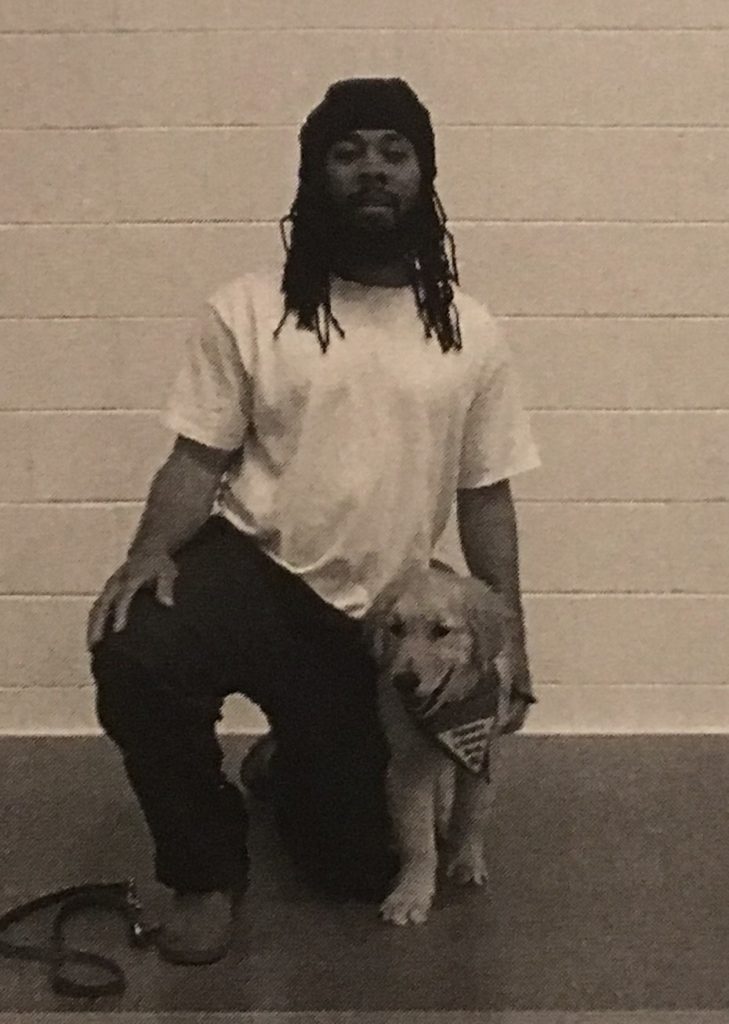
ABOUT THE AUTHOR. Bobbie George is not only a talented writer, he has also worked training service dogs during his incarceration.
He’s spent over two decades in prison, but still lives every day trying to be the ‘best version of himself’. He can be contacted at:
Bobbie George #243589 Ionia Correctional Facility 1576 W. Bluewater Hwy. Ionia, MI 48846
I remember thinking, ‘When does a person adjust to this madness? When will I feel whole again?’
I still don’t know. What I do know is that being in here is like losing a part of yourself, or losing a loved one. When does a person fully recover from that, or say they are ‘fine’?
Life has taught me that each of us is forced to face things we don’t want to face, learn things we don’t want to learn and experience things we don’t want to experience. It takes time to acclimate to this new life. It takes time to redefine being ‘fine’. There are no timelines for it to happen, no countdowns, no circles on the calendar that say – This Is The Day!
After eighteen years under this spell, I have learned that for me it takes work, patience, perseverance and a few prayers – but even then things aren’t going to be ‘fine’. Each morning there is an effort to work up the strength to face another day and the question, ‘Do I have enough hope left to sustain me for today?’ It’s not easy creating hope in a hopeless place. It is a constant struggle to find meaning and purpose in this life.
It is often said that the best counsel for someone who has hit bottom is to simply tell them to take the next step. But it is when we are hurting the most, we tend to forget the things that are most essential. Sometimes just knowing someone is there, a human connection, has proven to be the most helpful. At least that has been the case in my journey of healing – healing from a place that continues to eat holes in my soul.
Adversity tests our faith, character and resolve. For the incarcerated serving life who will die in prison, loss is perennial, an unavoidable enemy and daily reminder of the consequence of a bad decision. Death and its shadow linger overhead like vultures.
Death and loss touch all those who are living. In my dark nights, through prayer I find comfort in a great exchange. I give God my sorrow, fear, and despair and in return receive God’s joy, courage, faith, hope, love and grace for one more day. The Psalmist said, “Yea, though I walk through the valley of the shadow of death, I will fear no evil because You are with me…”
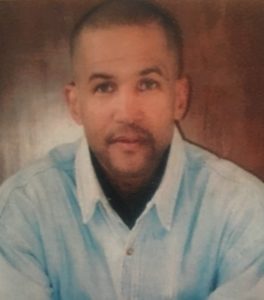
ABOUT THE AUTHOR. Darrell is a gifted and thoughtful writer serving a life sentence. He can be contacted at:
Darrell Sharpe #W80709
P.O. Box 43
Norfolk, MA 02056
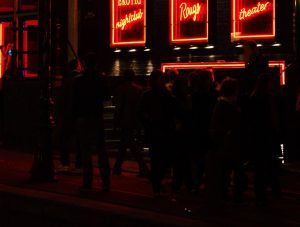
It was December 5th, 1998, when I stepped outside of Jimmy’s nightclub at 2 a.m. The strip was packed with inebriated club hoppers loitering on the sidewalks. Cars blared their stereo systems, and the scent of ganja lingered in the night air. With 15 grams of cocaine stashed in my jacket, I decided to head home. I had no intention of being around when the cops showed. I popped on my headset and bopped to the lyrical testimonies of Tupac Shakur, “Come listen to my truest thoughts, my truest feelings, all my peers doin’ years behind drug dealing…”
Scanning the crowd, I readied for my departure when I spotted a familiar face. “Oh shit! That’s Crip.”
His lean, wiry frame was indistinguishable under baggy clothing with dangling dreadlocks that curtained his face, but I was convinced – the nerve of the guy to show his face. He and I should not be in the same club scene, not after last week. Confrontation was inevitable. My only advantage was that I saw him first.
I slunk behind a group of people, then hurried across the street. Advancing alongside the building where Crip stood, I drew the 9mm handgun from my waist and chambered a live round. Intended as a last resort, I shoved the heavy steel into my back pocket, and rounded the corner. There was Crip…
Our eyes locked in a silent exchange that revealed an awful truth – we were both bound by circumstances, and there was no turning back. I lowered my gaze and eased onward, careful not to alarm him. At precisely the moment we stood at arm’s length, I spun, fists clenched, and demanded, “What’s up mutha fucka? Which one of ya’ll niggas shot at me?”
His eyes widened with the shock of being accosted as he raised his shirt and pulled a .357 revolver. I figured if I went for my own gun now, we would likely kill each other. Instead, I flashed my palms, stepped back, and hoped to dissuade him with an explanation. “What the fuck man? I was just…”
That’s as far as I got before my words were cut short by the sudden jerk of his hand. I turned and dashed for cover, yet there wasn’t any place to hide. Crip thrust the chrome tool at my chest and fired. POW!
The deafening sound sent shock waves through my body as I stood frozen with fear. My impulse trumped all ability to reason, and I pulled out the 9mm. The Crip I saw now was different, as though he’d undergone a fiendish transformation. His lips were curled in a fierce snarl, and there was confidence in his eyes that pierced. Again his hand snaked forward in a lethal jab. I pointed my gun, desperate to stop him.
Joint blasts amplified the terror between us and sent bystanders scurrying to safety. My legs tore away with a mind of their own as another pop sounded behind me. I squeezed the trigger, but nothing happened. Two strides later, I crashed to the ground, the brutal impact smashing my watchcase and wrenching the 9mm free. My legs felt locked in a whirlwind, yet when I checked them, they were still.
Damn. I was shot.
I struggled to rise, but slipped back down to the crunch of scattered debris. The 9mm laid inches from my face with a spent shell casing lodged in the chamber. I reached for it but faltered, thwarted by sudden paralysis. Then the unexplainable happened. I began to relive my entire life through a surge of memories and emotions. The sensation catapulted me through a space in time, nearly causing me to forget about Crip.
A swift search revealed that I’d fallen around the corner. I didn’t know if Crip was even injured. I expected him to step around the corner and kill me at any moment. Empowered by the urgency to prevent my death, I grasped the gun. With a violent shake, the casing sprang loose and tinged against the asphalt. I rolled and popped off a series of shots in the sky and waited for Crip to show.
As dozens of footsteps converged towards me, I was imbued with panic. I trained the gun on the first face that hovered, only to see it was a friend who’d rushed to help. At his request, I ceded the gun and watched as he bolted around the corner. More faces appeared, suspended above me, annoying me with their questions and concerns. My backside raged with pain as if being cauterized with a searing stake, while pressure penned my chest, causing my breathing to strain. With each new face that happened into view, a fraction of the air was claimed, as my vision succumbed to a fierce swirl that distorted the surroundings. Voices were reduced to murmurs over the thumping of my chest.
“I… can’t… breathe…” I whispered, my voice scraggly and feeble. “Move them back, man, I can’t breathe.”
Pandemonium swelled as onlookers gathered and cast down stares of sympathy. Then a voice emerged, booming in the distance, “Ya’ll git the fuck back!”
Although I was unable to see his face, his commanding ways consoled me. “Stop panicking, Duck…,” I heard him say, “…if not, you’re gonna die.”
I closed my eyes, stilled myself, and relinquished my woeful struggles. I drew on a spiritual medium where inner calmness was fostered. Compelled by the notion to atone, I immersed myself in prayer, neither for forgiveness nor some half-hearted attempt to explain away my misdeeds, but a prayer of strength for my mother. I wanted her to know how much I loved her and thought she deserved better. Afterward, I wasn’t afraid anymore. I was ready for the final transition.
As I journeyed toward that terrible darkness to end my worldly suffering, I held on to the vision of my mother and let go of everything else…
If these bars could talk,
The stories they might weave
Of the young and old
Who have lost their faith
To unyielding despair,
Left to rot in a steel and concrete box.
If these bars could talk,
Would they speak of the young men who have entered,
Only to get lost in indifference,
Becoming no more than a number?
What might they say
Of the old men fading away
Inside this concrete coffin,
Awaiting only Death’s embrace,
Forgotten by family too busy to recall an old man and his fate?
If these bars could talk,
Would they offer encouragement
To those trapped
In this cold, unforgiving tomb?
Or might they tease us
With offers of forgiveness, freedom
And a second chance at life?
ABOUT THE AUTHOR: Jorge Garcia is a poet and currently working on his first book. He can be contacted at:
Jorge Garcia #1372972
McConnell Unit
3001 S. Emily Drive
Beeville, TX 78102
I’ve spent almost half my life here. During that time, I’ve done everything possible to return home – to leave this place and return to society. I’ve abandoned fear, anger, bad feelings, all in search of the way – my own walk.
It’s not necessarily a religious or spiritual walk, although I believe in God and the Bible and wish I were more pious and connected. I strive for that every day. I realize that God is responsible for every single person in my life at this moment, and for that, I feel blessed. I’ve never felt as connected to the world in which I hope to return some day. I’ve made friends, and some are like family.
When I came to prison though, I lost everyone I ever cared about and loved. I think that happens to a lot of people here. It’s taken twenty-three years to build bridges back to my former life. Those bridges may be fewer, but they are sturdier and more structurally sound than they were before. I hope to walk across them some day.
I believe that is the point of incarceration. There are a lot of things wrong here, but the time here has gotten me to this place. It wasn’t just prison though. I’ve had the help of advocacy groups. Most of those are made up of individuals concerned about the welfare and treatment of prisoners, and they give and give and give until they cannot give any longer – and then they still give.
They want change. They are tireless. They don’t ask me or those they help to explain what they have done to get here. We know what we have done to get here. They show us how forgiveness can heal. They help us forgive ourselves. They help us see we have value and potential. They let us know we are worthy of care. They change our lives. The good ones – they just care. They care and expect nothing in return. They walk beside us while we try to come to terms with what we have done to get here. Or – for others – while they come to terms with being wrongly convicted or overly sentenced.
And when we do walk across the bridges we try to build while we are here, we do it with all those who helped us along the way.
Anybody who knows me, knows I don’t write to bring attention to myself. I don’t consider myself an expert on anything except my own personal experiences. I write to bring attention to the circumstances here, so others who aren’t able to write will be heard. I write hoping to have a hand in ending their pain and suffering.
I don’t write to make a fortune. I don’t write to be rich in wealth and prosperity. I write to be rich in the comfort and well being of others. I’ve taken a page from the book of those advocates who have spoken for me.
I live in a Texas prison where many say they send the old and sick inmates to die. It’s what some might call a prison nursing home, but nothing like a free world nursing home. It is for these folks I write. I write for change. I write for justice. I write for love.
Not all advocacy groups are the same. I’ve experienced that personally, but I’m grateful to those that have helped me get to this spot in my walk.
ABOUT THE AUTHOR. Shipwrecked and found. John is currently doing a two-year set off, after 25 years of incarceration. He is a frequent contributor as well as the author of Life Between The Bars, a unique and heartwarming memoir. John can be contacted at:
John Green #671771
C.T. Terrell Unit A150
1300 FM655
Rosharon, TX 77583
Once again, we meet at the end of my decisions.
Quick thinking turned into reactions
That place me back at the scene of the crime.
My head, this wall.
I rush into verbal combat,
Not looking to understand or be understood.
I focus only on the goal at hand, to conquer our exchange of words.
This game of tennis with the alphabet, I must be the victor.
You give me your thoughts, your years and experiences.
I counter with skilled precision and statistics,
Hoping to crush you, not the problem.
I have won, but nothing’s solved.
My head, this wall.
This feeling, this pain, this discomfort in my comfort.
I’m afraid to let go all I know.
Keeps me together while pulling me apart from everybody.
But I just. Can’t. Stop.
My head, this wall, my way, must have it.
I refuse to do anything different, but what I do does nothing for me.
So what do I do when I refuse to change?
My head, this wall.
Bang, bang, bang.
ABOUT THE AUTHOR. Brandon Stewart is a poet and performer of spoken word. He can be contacted at:
Brandon Stewart #231024
010-2-2L
Pendleton Correctional Facility
4490 West Reformatory Road
Pendleton, IN 46064
“This nigger’s slow as molasses,” the driver chuckles, followed by a chorus of giggles from the prisoners – some of them black – gathered at the top of the ramp as I finally reach the incline.
Now the real task – a Herculean one – figuring out how to walk up the incline while leaning back and carrying the heavy box, which now feels like its weight has doubled.
I cannot see the edge of the ramp, so I raise one foot slightly and feel for it with the toe of my shoe. The last thing I want is to clip the edge and tumble face first. With each movement, aided by the pressure I am forced to apply by pushing my hands upward from the bottom and chin downward from the top, the box burrows the handcuffs deeper into my wrists. I can feel the blood begin to trickle.
Please God, what did I do to deserve this? Please, help me.
I manage to get both feet on the ramp and begin the slow, arduous assent. The higher I climb, the more I must strain to maintain my equilibrium and steady the box, every muscle on fire. My mouth feels like it’s coated with sawdust, and I’m starting to feel faint, but I press on.
“Almost home, ain’t cha, boy?”
The misery I feel is what I would presume gave life to the phrase ‘Hell on Earth’. It is not just the physical agony, though it’s all I can focus on, the mental pain is lying beneath the inferno, awaiting its return to the surface.
By the grace of God, I make it to the top, only to peer into what appears to be a black hole – a corridor so long I can not see the end. This can’t be real. God, tell me it’s not real.
“Stay in the middle of the hallway,” commands Bob.
The prisoners who had climbed the ramp ahead of me stood in the back of the line for the chow hall, eyeing me as I try to adjust the box.
No longer can I conceal the pain wracking my body. Grimacing, I hobble down the hallway, handcuffed and defenseless, only a couple feet away from some of the most violent and dangerous men in the world. It would be like any other day if one of them produces a shank and stabs me. The guards won’t protect me, they’ll be first to run.
About a quarter of the way down the hallway, I lose my grip, and the box slips out of my hands, hitting the floor with a tremendous thud. Everything instantly halts, as if we’re suspended in time. I feel every eye on me as I stare down at the box and my pride that lay crushed beneath it, not daring to look up. Please! Somebody just stab me now. Let’s get it over with. Death, I welcome you. Right now!
Neither of the guards escorting me make a move to pick it up, but in my peripheral vision I see movement. Now I’m looking down at a prisoner as he picks up the box. Moving quickly, afraid the guards might chastise him or even worse, he places the box in my arms and returns to the line.
“Thank you.”
He nods acknowledgment.
“Come on, sweetheart. We ain’t got all day.”
I start forward, and I can already feel the box begin to slip. Because he had rushed to put it in my arms, I’m unable to get a better grip, and still have quite a ways to go. I know I won’t make it without losing hold.
Again, I drop it, but this time it was not so dramatic. Seeing that the other prisoner suffered no repercussions, someone immediately steps out of line and retrieves the box, taking his time to make sure I have a good grip.
“Got it?”
I adjust my hands, “Yeah. Thank you.”
He nods and steps back in line.
The kind acts of two prisoners assuages my trepidation, and with renewed vigor, I lug the box without further incident to ‘Times Square’, four intersecting hallways that serve as the prison’s main arteries.
When the escort guards approach the main control room, the driver says, “I heard ya’ll had a vacancy.”
The female guard looks up from her paperwork, then at me. Realizing I have on a death row uniform and that the guard was referring to the execution that had taken place the day before while I was being sentenced to die, she looks back at him and bursts into laughter. “Yeah, I guess we do,” then over her shoulder, “Vinny, we gotta gain.”
A guard enters the control room and unlocks the door of a tiny holding cage that sits directly across the hallway. “Come on. Step inside and have a seat.” He takes my box and drops it to the floor.
As instructed, I step inside and sit on a narrow bench. The guard bends down, raising my pant leg, and inserting a key in the shackle, causing me to tense up and wince in pain, before removing the manacle stained with my blood. Now the other one. Again, I tense and wince as he frees my ankle from the bloody contraption. He stands and backs out, slamming the door closed. “Stand up,” he orders, handing the leg irons to the transport guard. “Turn to the side.”
I comply. He reaches through a hole cut into the mesh and removes the lock that is holding the chain around my waist. Once that is done, I slowly turn back towards him so he can unhook the chain from the black box, a torturous device designed by an ex-prisoner, placed over the handcuffs to lock the wrists and hands in one position, preventing any movement.
He unhooks the chain and removes the black box. The transport guard takes them from him. “Stick your hands out the hole.”
I do so, tentatively, anticipating the agonizing pain that never comes – my wrists and hands are still quite numb. I watch as he peels the cuffs from the gashes in my wrists, slivers of my skin and blood cling to the metal.
“Turn around and put your hands behind your back.”
I turn, and he clamps another pair of handcuffs over the bloodied gashes. Grimacing, I throw my head back towards the heavens as the pain flashes red behind my eyelids. Argh!! Fuck! Man, are you serious?
“Have a seat,” he says.
As I open my eyes and turn to sit, the driver says, “Have fun,” laughing as he walks away.
I sit with my hands behind my back, wrists searing hot with pain, for almost three hours before the property room Sergeant rolls a dolly to the cage and throws my box on it. Opening the cage door he says, “Follow me.”
I follow him for about a half a football field to the property room. Thank God! I’m not carrying that box.
We enter and he dumps the box’s contents on a large table. Combing through my belongings, he documents the items I’m allowed to keep and places them back into the box. He throws the items I’m not allowed to keep into a large trashcan that sits next to the table.
After about twenty minutes, he places the box and a bedroll on the dolly. “Let’s go,” he demands, leading the way.
Back in the hallway we continue until we reach the end. There is a door in front of us that leads to the electric chair and a door to the left that leads to the death row housing unit. The Sergeant taps it with his keys, and a guard who looks like he should be just entering high school opens the door.
“A death row gain,” the Sergeant tells him, retrieving the box and sliding it inside the door. Before turning to leave, he hands the bedroll and paperwork to the guard.
Standing, frozen, outside of death’s door, I try to sort my emotions – fear, anger, confusion, doubt. I no longer feel the burning, ephemeral pain in my ankles and wrists. The hurt girding me now eclipses the physical. There is no lotion or ointment to soothe it.
“I think you’re goin’ to cell 7,” the young guard says, snapping me out of a daze. Then he steps aside, beckoning me to enter.
I turn and peer down the long corridor, swallow hard, and hesitantly cross the threshold. Once I enter, he closes and locks the door.
Another uniform appears, “Sarg, we got a gain. I believe he’s goin’ in 7.”
“You got his things?”
“Yes. Over there.”
“Okay. Grab ‘em and let’s go.” Then to me, “Follow me.”
I follow him to a door made of steel bars. He unlocks and opens it, and we step into a long, narrow hallway that has bars on the left and cells on the right. When we reach the seventh cell, the young guard steps into the darkness and deposits the box and bed roll. He exits, however, I don’t enter immediately.
“Well, wacha waitin’ for? Go on in.”
Reluctantly, I step inside. When the door slams behind me, it startles me, causing me to flinch.
“Back up a bit, so I can take them cuffs off.”
My wrists are raw and tender. At least this part of the agony will be over. Thank God.
After they leave, I look around for a light and spot a string in the corner dangling from the ceiling. I pull it, and a dim, 40-watt bulb comes to life. Roaches scurry everywhere.
I look around the filthy cage. Paint is peeling off the walls which are so close that I can stand in the middle of the floor, extend my arms, and touch both of them – and the ceiling. Dirt and dust bunnies cover the floor, mold and brown crud occupy the sink and toilet.
I flop down on the narrow steel bunk and look around at my new surroundings, trying to process everything – my innocence, conviction, sentence. How the hell did this happen, and where do I go from here?
Then I hear a voice. “Hi, neighbor. How’s it goin’?” I didn’t even consider that there were others – I didn’t look into any cells while walking down the hallway. “Name’s Locke. I’m over here, next to you, in six.”
“How’s it going, Locke? Just trying to get settled in.”
“Well, if you need anything, just give me a holler. You want some smokes?”
“Yeah, I would appreciate it,” I reply, even though I don’t smoke.
I don’t have the strength to clean, so I sit smoking until it turns dark outside. Tired of sitting, I turn off the light and lay in the dark, smoking and listening to critters scurry about, until I doze off to sleep.
I have a dream… unfettered, head held high, retracing my steps down the long corridors – I walk to freedom.
Epilogue
Still – 26 years later – sleep is my only freedom.
I had just kicked back for the night and began to relax – boots off, feet up – when I sensed movement off to my right. It was him – my boy was nearly four years old and had long blonde hair. He was motionless, staring, and I finally asked, “What is it?”
“There’s a monster,” he said, holding my steady gaze. He was serious about this, I could tell, appearing helpless and almost pleading.
Going into fatherhood, I had tried to look ahead as far as I could, with my primary objective to be the most unlike my parents I could be. I’d had to think long and hard about discipline. Could I ever lay a hand on my child in punishment? How might we achieve reconciliation and understanding? But – I hadn’t really anticipated the monster in the closet.
It’s been said I was born unafraid of the dark. As a tot I would climb out of bed at night to play with my toys. After a while my parents took to keeping my door cracked to see if I got back up. As one story goes, they heard something one night and, believing it was me, my dad rushed into the room screaming at the top of his lungs. It turned out I had been in my bed the entire time. I don’t recall these events, that’s just what I’ve been told. All I know is that, as a child, I suffered a terrible fear of what might be lurking behind doors in the night. Now my boy had a monster in his closet…
What to do? My parents would’ve forced me back into the room at threat of a beating. In those days, Mom and Dad were difficult for me to relate to.
“There’s not a monster in your closet,” I finally said, shaking my head. He stared back in silent disbelief. So I tried again, saying, “There can’t possibly be a monster in your closet.”
He was not seeming especially convinced, so I went on with more conviction, “There cannot be a monster in there because you see,” and I looked him sternly in the eye, “monsters are scared of me.”
Mind you, it was not easy to keep a straight face at that point. He was hanging on my every word. “The monsters are scared of me because they know if they try to hurt you,” a pause for emphasis, “I will kick their butts.”
In those days I was a timber jack in top condition, out in the sun every day, with hair past my shoulders and beard trimmed below the jaw. But, that night at home, I was wearing blue sleep pants, a red tank top, and leather strapped sandals. My son, known then as little bear, stood staring in wide-eyed silence.
“Is there a monster in your closet?” I fixed him with a firm gaze. He nodded slowly, so I pulled myself up on my feet. “Let’s go see him then.”
I pushed open the bedroom door and flipped on the light, hands fisted, arms slightly bent. Up to the closet I strode, noticing the door already slightly ajar. “Come out of there, monster!” I commanded.
There was no response. I glanced at my son, then back at the door. “Don’t make me come in there!” There was nothing left to do. I threw open the doors…
“See?” I rifled through the garments checking the corners. “There’s no monster in here.” I knelt down to his eye level, “and there won’t ever be, because they know I will get after them if they ever get close to you. Okay?”
A smile pulled at my boy’s face as he nodded.
I laid him back in bed with a kiss on the head. That monster never bothered us again, which was a real relief. After all, had I actually seen a monster in the closet that night, who knows what might’ve become of us?
“Fuck your religion!” yelled an irate Polo, attempting to defend his stance in a one-sided debate with another inmate, Bob Cook, a professed Christian, though he never read the Bible. Not once. He never attempted to read it either. He possessed an NIV version that sat quietly on top of his rusted cell’s table, collecting dust. “All He was, was the original MGM magician – no better than David Copperfield!”
Polo was a celebrated and outspoken atheist and verbally strong-armed the one-sided debate about religion. Of course, Bob wouldn’t have anyone disrespecting his faith, his Jesus, whom he felt was God’s son, although he never totally understood the ‘how’ aspects within his beliefs. Bob was a typical, middle-aged, white Southerner with traditional Texan pride. He was short and round in stature, built in the mold of Barney Rubble from the Flintstones with hair as white as cotton and alopecia taking over the center of his head. He was a goodhearted guy and my neighbor for about three years. When you are held within the close quarters of Texas Death Row, in solitary cells 24 hours a day, you learn a lot about your neighbors. You get a better understanding of who they are.
I knew Bob well, perhaps better than anyone on the planet. He had a genuinely cuddly personality, always attentive to the needs of others more than his own. He was not one to argue and would often display dumbness when others were attempting to explain something asinine, just so the talker could get whatever it was they wanted to say off their chest.
He didn’t have much and lived on about 20 bucks a month. To put things in perspective, he didn’t have shit, but what he had – anyone who wanted it, could have. That was one of his flaws – he was too kind and an easy target to be taken advantage of. He was guilty of the crime that landed him on death row, though it could be contested that his crime did not fit the criteria for a death sentence. Nonetheless, he was riddled with remorse, often saying, “I’m going to hell.”
When I asked him why, he said the chaplain told him that the Bible said, “Thou shall not kill.” Texas death row chaplains carry no sway with me ever since one told me that my being executed was God’s will. I calmly told him, “Bullshit.”
I then took out my Bible and read several scriptures to Bob, leaning on my studies from when I was enrolled in theology classes. One reason why he never read the Bible was because he couldn’t. He was illiterate. I read to him about forgiveness, faith and salvation, which he appreciated, and in time he gained hope that he might have a chance to get to heaven.
Of course, ‘perfection’ has never been a Christian strong suit, Rome wasn’t built in a day and some dogs refuse to let go of old tricks. So when Bob had enough of Polo’s Christian diatribes, he declared “May Jesus Christ forgive me now for what I’m about to say. Fuck you, Polo!” and with that, he walked away from his cell’s door, steaming mad, and went to sit on his bunk.
Polo began to laugh at Bob’s parting cussing. His handsome and smooth caramel colored facial skin was shining like polished armor due to his overuse of commissary bought baby oil that he used daily. He liked the smell that reminded him of when he was a baby and being smothered with the loving hugs of his mother as he was held between her tender arms and her comfy bosom. He was thirty-two, and had been incarcerated more than he had been in the free world. He was arrested at the age of 15, held in the county jail until he was 17, and then sent to death row. He would be executed/murdered before the USSC’s decision to ban all executions of juvenile offenders. Like most youngsters who grew up around environmental dogma, he was rough around the edges, not cordial and trusted no one. He spoke in waves which often confused the listener as well as himself to some degree, because his ideologies were a perplexing mixed bag of black power, black militant-ism, Malcolm X-ism, Islamic beliefs that he adopted from others, and the scratch your head in utter disbelief performances he often acted out as he mimicked Bill Cosby’s Fat Albert show character with the line, “Hey, hey, hey, it’s Fat Albert!”
I often psychoanalyze people, trying to understand why they do the things they do. Polo, perhaps, still felt as if he was fifteen-years-old and living in a thirty-two-year-old body. Maturity never found an outlet within his mind in which to become liberated. His actions and attitude were a reflection of the way he thought – childlike. What else could you expect?
Polo stood alone in the middle of the section’s day room. No one stood at their cell’s door that he could argue with. Since arriving in the Polunsky Unit in 2000, group recreation, work programs, televisions, and any form of physical contact have been banned from the all-male branch of Texas Death Row. So he began the redundant activity that we all do when we find ourselves alone in the day room with no one to talk to – walking in circles. Consciously or unconsciously we lower our heads as if in shame and count in our minds the steps we take to make a full circle. One… two… three… four… five… It actually takes seventeen strides to complete a full circle in the dayroom. I watched Polo from a distance as I sat in my cell, counting along with him. It would be the last time I was to see Polo in the flesh – alive.
Texas death row inmates are housed in a building called Twelve Building. It’s encased inside electrical razor wired fencing. On some mornings you can see the dead carcass of a stray cat or dog that didn’t get the memo about not touching the fence. Did these creatures not see one of the several bright yellow postings that warn, ‘Electrical Shocking Fence. DO NOT TOUCH’? Mayhap the animals were illiterate too.
There are six pods within Twelve Building, each lettered either A, B, C, D, E or F. Within each pod are six sections, also lettered A, B, C, D, E or F. Each of the six sections can hold fourteen cells for fourteen inmates. Each man is alone, twenty four hours a day.
Inmates communicate by yelling loudly at the guy they are trying to have a civil conversation with. Though in a normal setting, yelling to obtain a civil conversation is indeed madness in nature. Ninety percent of the cells leak when it rains, some more than others. Black mold has run amuck within every cell on death row. The building was cheaply designed and constructed, and the infrastructure is weak and crumbling. Fighting spiders, mosquitoes and other critters is a daily chore.
The failures of the infrastructure are so timely and repetitive that one can’t help but assume there is a conspiracy going on, because nothing works as it should here. Every year during the summer, the water is going to get cut off for a day or two straight. There won’t be fresh water to drink, no water to shower with and no water to flush the accumulated shit and piss that will idly stew. And let me tell you, once the sun’s rays bake this concrete building’s back wall, the structure becomes an oven, causing any religion you thought you had to get temporarily thrown out the window due to the foul odor. If anyone asks us if we are comfortable or okay at that point – they are often greeted with the same aggravated, “Muther fucker, what do you think?”
ABOUT THE AUTHOR. Charles “Chucky” Mamou is living on Death Row in Texas. His last appeal has been denied and he maintains his innocence.
He can be contacted at:
Charles Mamou #999333
Polunsky Unit 12-CD-53
3872 South FM 350
Livingston, TX 77351
It was noon when she arrived. I hadn’t seen her for weeks – a single, female cat, just seeking a little companionship.
The prison recently sealed all the screens, so she must have found a way to circumvent security, and she made her way to my casa. Animals somehow know to seek me out. I fixed her some mackerel and warm milk, and eventually, she left the way she came, whatever way that was. Her name is Rae, if you see her. She’s a ginger colored tabby, with low mileage and good tires.
It wasn’t thirty minutes later before Rae’s adopted son strolled in – a black as coal Tom with paws I hope he never grows into because he may be mistaken for a panther. I was out of mackerel, so we shared a package of vienna sausages and the rest of the milk. He thanked me for the meal and was on his way.
I was feeling content at that point and decided to take a nap. It had just stopped sprinkling, and the weather had cooled to about 85 degrees, a lot better that the 95 it had been. I fell asleep easily, listening to Jonny Lang, and slept the sleep of someone with a clear conscience. It was around 1:30, and I had a little time before dinner and the next insulin shot.
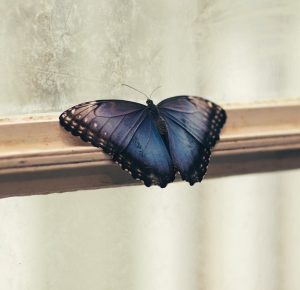
When I woke, what I saw on my window took me by surprise. There were about five or six blue and black butterflies, not swallowtails, but with rounded wings and light blue markings on the edges. Like monarchs, but not. They were looking in at me. The visiting butterflies wouldn’t be so unusual, but I had just dreamed about those same butterflies. They were an omen.
And, then it was Saturday. At around 2:30 p.m., I look out the window and saw my next visitor. It was in the alley between the buildings, crawling through the little bit of water left behind by the showers – a turtle. It was about the size of my hand and making his way to an important turtle meeting. Or maybe he was in a race against a rabbit that can’t possibly win – turtles never lose a race.
I’m grateful I’m alive. I wish I were home with all my heart, but in the meantime, I’ll wait faithfully for my Father to deliver me there. I am loved, wanted and entertained, all in the same breath. No one could ask for more. But I will…
ABOUT THE AUTHOR. Shipwrecked and found. John is currently doing a two-year set off, after 25 years of incarceration. He is a frequent contributor as well as the author of Life Between The Bars, a unique and heartwarming memoir. John can be contacted at:
John Green #671771
C.T. Terrell Unit A150
1300 FM655
Rosharon, TX 77583

 Death and loss touch all those who are living. In my dark nights, through prayer I find comfort in a great exchange. I give God my sorrow, fear, and despair and in return receive God’s joy, courage, faith, hope, love and grace for one more day. The Psalmist said, “Yea, though I walk through the valley of the shadow of death, I will fear no evil because You are with me…”
 ABOUT THE AUTHOR. Darrell is a gifted and thoughtful writer serving a life sentence. He can be contacted at:
 It was December 5th, 1998, when I stepped outside of Jimmy’s nightclub at 2 a.m. The strip was packed with inebriated club hoppers loitering on the sidewalks. Cars blared their stereo systems, and the scent of ganja lingered in the night air. With 15 grams of cocaine stashed in my jacket, I decided to head home. I had no intention of being around when the cops showed. I popped on my headset and bopped to the lyrical testimonies of Tupac Shakur, “Come listen to my truest thoughts, my truest feelings, all my peers doin’ years behind drug dealing…”
 As dozens of footsteps converged towards me, I was imbued with panic. I trained the gun on the first face that hovered, only to see it was a friend who’d rushed to help. At his request, I ceded the gun and watched as he bolted around the corner. More faces appeared, suspended above me, annoying me with their questions and concerns. My backside raged with pain as if being cauterized with a searing stake, while pressure penned my chest, causing my breathing to strain. With each new face that happened into view, a fraction of the air was claimed, as my vision succumbed to a fierce swirl that distorted the surroundings. Voices were reduced to murmurs over the thumping of my chest.
 I closed my eyes, stilled myself, and relinquished my woeful struggles. I drew on a spiritual medium where inner calmness was fostered. Compelled by the notion to atone, I immersed myself in prayer, neither for forgiveness nor some half-hearted attempt to explain away my misdeeds, but a prayer of strength for my mother. I wanted her to know how much I loved her and thought she deserved better. Afterward, I wasn’t afraid anymore. I was ready for the final transition.
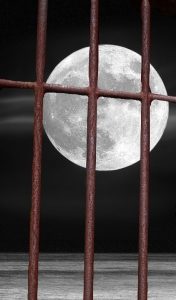 If these bars could talk,
 I’ve spent almost half my life here. During that time, I’ve done everything possible to return home – to leave this place and return to society. I’ve abandoned fear, anger, bad feelings, all in search of the way – my own walk.
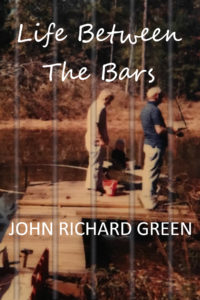 ABOUT THE AUTHOR. Shipwrecked and found. John is currently doing a two-year set off, after 25 years of incarceration. He is a frequent contributor as well as the author of
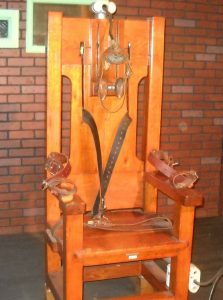 Back in the hallway we continue until we reach the end. There is a door in front of us that leads to the electric chair and a door to the left that leads to the death row housing unit. The Sergeant taps it with his keys, and a guard who looks like he should be just entering high school opens the door.
 After they leave, I look around for a light and spot a string in the corner dangling from the ceiling. I pull it, and a dim, 40-watt bulb comes to life. Roaches scurry everywhere.
 I had just kicked back for the night and began to relax – boots off, feet up – when I sensed movement off to my right. It was him – my boy was nearly four years old and had long blonde hair. He was motionless, staring, and I finally asked, “What is it?”
 “See?” I rifled through the garments checking the corners. “There’s no monster in here.” I knelt down to his eye level, “and there won’t ever be, because they know I will get after them if they ever get close to you. Okay?”
 degrees, a lot better that the 95 it had been. I fell asleep easily, listening to Jonny Lang, and slept the sleep of someone with a clear conscience. It was around 1:30, and I had a little time before dinner and the next insulin shot.
 And, then it was Saturday. At around 2:30 p.m., I look out the window and saw my next visitor. It was in the alley between the buildings, crawling through the little bit of water left behind by the showers – a turtle. It was about the size of my hand and making his way to an important turtle meeting. Or maybe he was in a race against a rabbit that can’t possibly win – turtles never lose a race.