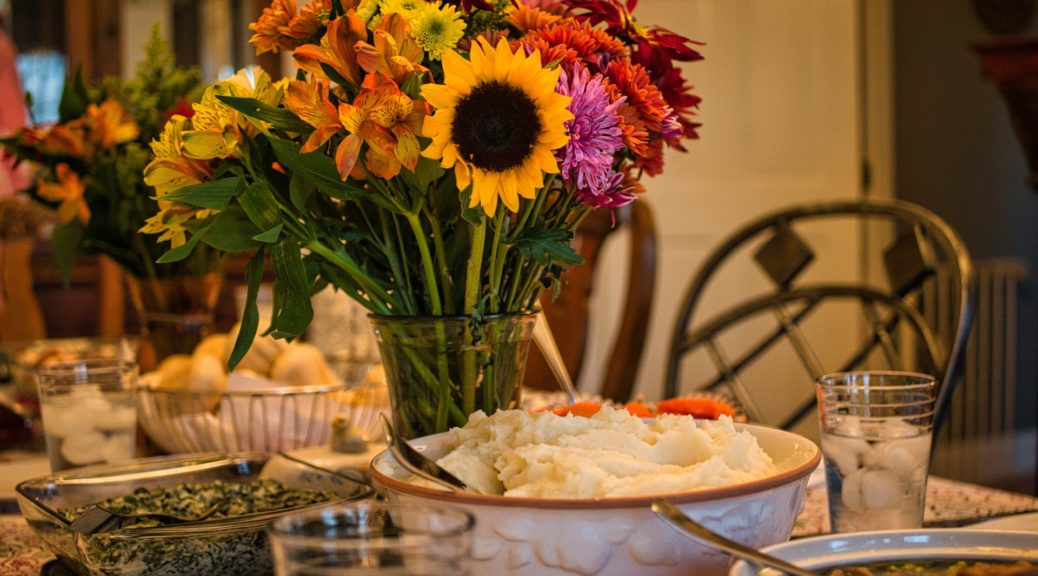
Holidays locked up are a mix of emotions – happy to be alive, sad to be here, indifferent to being surrounded by people you don’t know instead of loved ones. When I was free, holidays were usually spent celebrating with family, eating too much, drinking too much, and regretting it the next day, all with a smile on my face.
As a child, I loved Halloween. I’d dress up in my costume on October 30th and sleep in it just to be prepared. I loved candy, especially free candy, and I wanted to be ready to go. Those memories are engraved in my head.
October 31, 2018, changed my Halloween memories of free candy. People in the free world were dressing up in costumes that day, and I was in Dallas County Jail dressing up in a suit and tie for my final day of a capital murder trial. It was the day the jury would make the life or death decision. They could either send me to spend the rest of my life living in prison or sentence me to death by lethal injection. There I was in a courtroom on free candy day, dressed to impress and hoping for the best.
Death was their final decision – forever replacing my joyful memories of Halloween. October 31 is now just a dreadful anniversary…
ABOUT THE WRITER. Kristopher Love has never written for WITS before, but he submitted this piece to our last writing contest. I am not a judge, so I don’t look at the entries very closely, but as I was going through the returned material, this caught my eye. I hope Mr. Love continues to pursue writing. He can be contacted at:
Kristopher Love #999614 Polunsky Unit 3872 FM 350 South Livingston, TX 77351
I write to escape, To hide deep within Where I can be alone With my hidden thoughts And secret hopes. That secret place Is mine alone, I can hide my torment, Anguish and despair, Where it need not be on display For the world to see. I write to bury my pain, To cast it aside with pen and paper. With the stroke of a pen, I create my own illusion Of joy and happiness. But the illusion is a lie, And like all lies, It cannot stand up to the light of day. I write the words my mouth cannot speak, The words that lay trapped In the deepest depths of this well That is my heart. I cannot give voice to those words, For then they would become A part of my reality And no longer could I seek sanctuary In the illusion, In the lie that cannot stand up to the light of day. I write to stay alive inside, To keep from dying A little more with each passing day, To keep love at bay as she nips at my heart. Because for me, to love is to die, Not physically, but inside, A little more each day. So, write I must As love kicks and pounds At the door of my heart. That is why I write…
ABOUT THE WRITER. This is the first submission I’ve received from Mr. Enis, but I’m looking forward to reading more of his work. His piece is a direct reflection of why WITS exists. He beautifully expressed what we are all about and what so many of the writers here have in common. Toni Enis has been incarcerated for over thirty-three years, and maintains his innocence. He can be contacted at:
Something was off, I could sense it. It looked like Madear’s home, it just didn’t feel like her home. I could hear a familiar hymn being sung sotto voce towards the side of her home where her adjacent storage building was. She kept her washer and dryer there. She also had two extra freezers in there holding tons of assorted meats. Sodas were stacked to one side of the wall as high as five-feet, and gallons of assorted juices lined the floor. Madear loved buying in bulk because she loved to cook and feed others. There was an area opposite the beverages where all her holiday decorations were kept – including a unique white crystal four-foot holiday colored Christmas tree she proudly displayed in her window every year. To this day I’ve never seen anything like it. It was also the place I first kissed a girl, Carla Landry, and I liked it!
This area was not huge by any standard, but my little brother and some of my friends often used the wash-house, as we called it, as a club house. Madear would be there daily, putting loads of clothes in to wash, and once dried, she would fold and inspect to see if the whites were white enough or if the colored clothes were bright enough. She had no problem rewashing the clothes until they met her satisfaction.
So, it wasn’t odd to find her inside. I rushed through the door and saw her rocking away in her hand crafted wooden rocking chair that she used to find her Zen-moments in, relaxing or simply contemplating what she would do next. Madear didn’t speak much. I never heard her raise her voice, but she always evaluated any situation before acting, and when she did speak, her observations or opinions were always thought-out.
I could not see the features of her face, no eyes, mouth or lips – nothing. There was nothing but warm, blinding light. The rest of her body, from the neck down, was there. Even her favorite sundress graced the length of her body. She rocked away, faster than I recalled her doing. I tried to advance closer, but I could not move. It was as if I was stuck in cement that had long since dried, my feet buried.
“Don’t worry, Baby. Everything will be fine. You’ll see. You’ll be fine,” she repeated. Her voice sounded as if she was speaking to me from behind a waterfall… though soothing and comforting. I wanted to lay my head on her lap, allowing her to pat and massage me the way one would do a cat. Her voice brought about a sense of conviction to my soul. I could feel tears, hot tears, running down my cheeks. My heart started to beat more urgently. I blinked for a second and Madear and her rocking chair started fading away in the pasture behind her home. She faded the way a home run baseball floats away… and is gone.
“Chow time, maggots! Get your asses up if ya’ll wanta eats!” barked a guard.
‘Fuck!’ Steel gates crashed into more steel. ‘It was all a dream? A stupid, fucking dream!?!’ The mist of tears I had shed were still damp on my cheeks. My heart was still thumping. I turned over to see what time it was, fifteen minutes after three in the morning. I’m not a morning person and my weakness was affirmation of that as I turned on the cell’s light. I’m not a breakfast eater either, and I was going to refuse because it was too early to be eating, but the growling sounds coming from my empty stomach were the motivation I needed to eat something. I was hungry. No, I was starving, having eaten little to nothing my first few days on the famous Texas Death Row. Pancakes were served. They were not IHOP worthy, but I wasn’t going to be picky. I was also given an 8-ounce carton of milk, a 4-ounce carton of orange juice and four spoons of fruit cocktail. I ate everything before going back to sleep, hoping I wouldn’t dream again.
Around ten o-clock in the morning an officer opened the bean slot to the cell and threw a big commissary bag in, “Some of your fellow-condemned brothers put some things together for ya.”
I stared, my eyes fixed on him, wondering if he was joking. I don’t know if I expected a snake to crawl from the bag or a bomb to go off at any moment. Sure, I was paranoid. This wasn’t Kansas anymore. I didn’t know what ‘this’ was.
After some time, I got up, kicked the bag a little, and waited for a reaction. Nothing. I gently opened the bag to find a bunch of snacks, four writing tablets, envelopes, and over fifty bucks in stamps which, due to my naiveté, I used to tape photos of my children to the walls. I had no idea I was supposed to use stamps to write. No shit. I hadn’t written a letter to anyone at that point. I communicated through daily phone calls or visits. There were socks, a thermal top, and some much needed hygiene products, all of which I greatly appreciated. No note was given. No one shouted to get my attention. Nothing. The act of charity was empathetically done. Guys knew I was going through some things because they went through the same ‘new beginning’. It was an act of kindness I greatly appreciated even though I had no one to thank.
I walked to the front of the cell to look out. The place was teeming with sounds of existence, a farrago of inmate laughter, crashing steel, buzzing light fixtures that looked like something you’d expect to see in the beginning of the 20th century, as well as radios and multiple televisions that blared recklessly. This ‘new world’, was too much for me to embrace, so I returned and sat on my bunk. I grabbed photos of my children and their mothers, my mother and siblings, and I thought about what they were going through. I loved them all dearly, and the more I thought about them, the more I cried. I saw an unopened letter I had received the night before. It was from one of my children’s mothers. It started off like a Dear John letter. She was telling me she was getting married to a truck driver. A year earlier I shared a bed with her. I immediately thought, ‘Where the fuck did he come from?’ At that moment, I was certain. I was no longer dreaming.
ABOUT THE WRITER: Charles Mamou has been writing for WITS for quite some time and has always maintained his innocence. In the summer of 2019, it came to my attention Mr. Mamou had become very quiet. When I asked why, he explained he was out of appeals and awaiting an execution date. I asked to look at his documents. It didn’t take long to become very disturbed by what I saw. Some issues regarding Mr. Mamou’s case can be found here. Anyone with information regarding this case can contact me at contact@walkinthoseshoes.com.
There is also a facebook page dedicated to Charles Mamou’s troubling case.
The following is an excerpt from a poem written for his mother, a gift woven in words.
When I was but a little girl I made myself a promise, To rear my children with dignity, Teach them to be honest.
But first, I had to grow, Endure lots of pain, Survive the throes of ghetto woes Time and time again.
Things would not come easy, At times I felt like crying, Determined to gift-wrap the world Or willing to die trying.
Winter boots and Easter suits And summers filled with glee. Never mind if I was suffocating, As long as my kids could breathe.
So, I toiled by day and learned by night Lunched on rice and bread. Wore my children’s hand-me-downs Just to get ahead.
I cooked and cleaned and in between Encouraged my children to strive. I scraped and clawed but through it all, My eyes stayed on the prize.
Destiny for me was simply Duty without break. If asked to do it all over again, I would not hesitate.
See, all I ever wanted Was the life I never had Served to my babies In the absence of their dads.
I wanted to show them through persistence They could have it all, What matters most is how we rise, Not so much how we fall.
My kids are now grown with kids of their own, Some of those kids with child. Some day when my story is told, I hope I’ve made them proud.
All we have to offer the world, The legacy we leave behind. I pray all mothers love their children As much as I love mine.
ABOUT THE AUTHOR: Terry Robinson often writes under the pen name ‘Chanton’ and is a co-author of Crimson Letters, Voices From Death Row. The above is only an excerpt from a poem he wrote for his mother who has been his biggest supporter. Terry continues to work on his memoirs, as well as a book of fiction. He has always maintained his innocence, and hopes to one day prove that and walk free. Mr. Robinson can be contacted at: Terry Robinson #0349019 Central Prison 4285 Mail Service Center Raleigh, NC 27699-4285
A pandemic came, The world started falling. A few free phone calls, Family I went to calling. It was all I could do Not to go insane. Never in my life Have I felt so much pain. Dead, buried and forgotten, It seems they want me to be. A free phone call from me, They refused. Back in my cell, I pace. No one ever again Wanting to see my face. My heart, mind, Body and soul Fighting the treason. Alone, mother, Grandmother, father gone. Can’t numb the pain with a drink. Can’t inhale it, Stick it in a vein or in my nose. Just grows. What do you say To someone like me? I extend my lovely smile, Help them approach a new day, Take another step or even a mile.
ABOUT THE WRITER. Mr. Brown is the newest addition to our writing family. He enjoys writing, which is what we are all about, and he contacted us with no more than a brief note, so I don’t know much more about him. I’m curious to see where he goes from here. Mr. Brown can be contacted at: Michael Lamar Brown #137280 Graceville Correctional Facility 5168 Ezell Road Graceville, FL 32440
After being in this prison system more years than I have lived on the streets, I’m feeling things I’ve never felt before – like my life was a waste. The world is almost thirty years ahead of me. When I think of people, I think of what life was like outside this prison in 1994. I still see the people who were once my school mates as kids. I still feel like a kid. I was one when I came here. I don’t still think like a kid, but I still shoot basketball and exercise just like when I left the world. I am 44.
I’ve spent over half my life thinking about the events that led up to the night of January 11, 1994 – the day before my eighteenth birthday. Mobile is different now. If I lived there now, it never would have happened. There is a Coalition Against Bullying now. They have Anti-Bullying Awareness Weeks. There is something called a ‘Bullyblocker’. You text a number if you are being bullied – your text goes straight to the District Attorney’s office. I guess it’s too late for me to text that. I did contact the right people at that time though. I went to my parents, the school, and the police. It’s all on record. I just didn’t have that Bullyblocker number. I would have used it if I had – and I wouldn’t be here.
What makes me different than a kid that lives in Mobile today? I was bullied by men that didn’t even go to my high school. There is no doubt the things that were done to me would have gotten a response if I had texted a hotline. It exceeded bullying. I was pushed around, chased, stalked – I was in high school and shot at on more than one occasion. If none of that had happened, what happened on January 11, 1994, wouldn’t have happened. People make excuses for themselves all the time. That’s not what this is. That’s just reality. If the people who were supposed to had resolved the issue like they were supposed to, I, Louis Singleton, Jr., would never have done what I did. I wasn’t raised to hurt anyone. That’s not who I was or am.
I’m smarter though. I refuse to give into the criminal life. I get on to young brothers who can’t seem to give up the drug life – until I break it down for them. They have big dreams of being Big Time Drug Dealers. They call me Unk. I try to encourage them to get out and do better for themselves. The at-home training my late mother gave me is embedded heavily in me. Knowing the difference between right and wrong will always be in me, no matter where they send me.
I’m living in the Alabama prison system, one of, if not the, worst prison system in America. Respect is at an all time low, but I never disrespect anyone, never have, never will. My mom taught me better. I hope those that were affected by my actions forgive me. I don’t expect them to understand because, truly, you’d have to walk in my shoes. You’d have to be the seventeen year old kid who was getting shot at. I don’t want that for anybody.
They see me as a ‘violent offender’. I’m not violent. That label doesn’t make me violent. I was seventeen, and it was a violent crime that never would have happened if I had been able to text that magic number and get help. I’m not even allowed to talk at my own parole hearing. They don’t see me. They see ‘violent offender’.
My first coach told me to never give up, no matter how badly you are losing the game. I haven’t forgotten that to this day. It’s the fourth quarter, the score is 44-10, the other team has the ball with 3:54 left on the clock. Play hard until the clock says 0:00. One time I was in a game playing defensive back, and a guy beat me on a broken coverage. He was running to the end zone, and I was chasing him. He got so far in front of me, I stopped pursuing him. He scored. I got chewed out heavily for that. Anything could have happened. He could have dropped the ball. From that day on, I’ve never given up.
ABOUT THE WRITER: Mr. Singleton’s story can be found here. WITS is grateful for his honest and heartfelt writing, and I hope he continues to write about his life in the Alabama Department of Corrections. Louis Singleton can be contacted at: Louis Singleton #179665 Fountain Correctional Center 9677 Highway 21 North Atmore, AL 36503
Growing up, it seemed every Christmas my imagination would expand more than the year before. I would hope for everything I ever wanted, but in reality my hopes were diminished. At times I only got the Goodfellow’s box and a few other items underneath the Christmas tree. It was tight for us back then, the only means of income in our household, like many others, was the public assistance check known as ADC or Welfare every two weeks. Man, those were some embarrassing times as a youngster. I would go to some of my friends’ houses and see all kinds of toys in their front rooms under huge trees. I don’t think my young heart could form any envy toward them because most all my friends would share their many toys with me. They’d let me ride their new bikes, and play with their electric trains, race car sets, and even their Rockem Sockem Robots.
Although we didn’t have much in the form of material riches, we had a kind of wealth in our hearts which was demonstrated by the love and appreciation we had for each other. I recall my mother and I decorating our tree with Christmas lights, an assortment of bulbs, candy canes, artificial icicles, and ornaments to make our tree look its very best. I was happy to crawl under everyday and pour water into the stand to keep it fresh. We usually waited until Christmas Eve to go down to the Eastern Market and buy us a tree because the price would drop to only a dollar or two. It was an exciting time during the holiday season, and I enjoyed helping to select our tree every year.
On Christmas we would enjoy my mother’s deliciously cooked meal before heading over to visit with relatives, and I could always expect several Christmas presents waiting for me at my Aunt Mae ‘s house. She was what you call hood rich and lived ghetto fabulous. Her house was laid out with the best furniture from Margolis, an expensive furniture outlet where she bought mostly all Italian-style layouts. She was never stingy with her money or riches, and gladly gave us whatever we needed. So, we might have been borderline living way below the poverty level at our household, but it was a completely different story when I went over to my auntie’s house. My Christmas changed dramatically, and so did my attitude of not having much because at my aunt’s house on Seyburn in West Village, I had everything I wanted. That is how I could imagine something different every Christmas morning back when I was growing up, and even though I might be confined behind bars, I can still experience those same fond memories at Christmas time.
While the meals in here can’t compare to the ones my mother and Aunt Mae cooked, where the collard greens, sweet potatoes, baked turkey, deep fried chicken, chitlins, baked ham, potato salad, string beans, cranberry sauce, and butter milk cornbread would literally melt in your mouth, not to mention the best banana pudding you could ever taste, I’m still appreciative because there’s millions upon millions of people who go hungry every single day, many starving to death. I have no room to complain about a poorly prepared and cooked prison holiday meal. What I normally do is close my eyes and imagine those delicious meals I used to eat at a real dinner table. Believe it or not, a smile always comes across my face because I can still imagine tasting what I miss so much.
Today is Thanksgiving, and we’re on ‘quarantine status’ for at least fourteen days as a result of nearly 200 of us in this housing unit testing positive for COVID, which means we’ve been eating cold, poorly prepared meals three times a day out of styrofoam trays since this past Monday. The holiday meal of processed turkey, dressing, mash potatoes and gravy will be served the same way later, and the same meal will be served on Christmas Day, but I’ll do as I’ve done for nearly forty years in here, close my eyes and imagine something different.
ABOUT THE WRITER. Ricardo Ferrell is the winner of our final writing contest of 2020. I’m not one of the judges, but as I was posting this piece – I see why he won. It’s not just the writing – it’s the heart behind the writing. That heart, which he so easily expresses, is exactly why WITS exists. Ricado Ferrell has the ability to express the light that exists within himself and within prisons all over the country. Ricardo Ferrell can be contacted at:
Ricardo Ferrell #140701 Gus Harrison Correctional Facility 2727 E. Beecher Street Adrian, MI 49221
Winter holidays are associated with remembrance, love and ‘be with your family’ time. For many inmates, it’s more traditional to cry into their arms when the lights go out during this time of year. Holidays are one more day without mail. Mail is big in an atmosphere of systematic dehumanization. Mail is validation of a prisoner’s humanity rarely received, even in the mirror. Holidays are reminders of the inability to feel your wife smile against your chest, or bathe in the sparkle of your kids’ eyes as they unwrap presents, or even witness a normally grumpy family member catch a bit of Christmas spirit.
Agony.
This Christmas will likely be the worst in Texas penitentiary history because it’s already been seven months since we were allowed family visits, courtesy of COVID-19, and the restriction remains indefinite. Not that Texas allows family visits on Christmas anyway, but the preceding weekends usually fill the visitation room with women, children, laughter and tears, all of which are excruciatingly cherished by men starved for such light.
Thanks to a new prison policy this year, not only will we be deprived of visits, but now all holiday cards from our children and loved ones are forbidden as well. See what I mean about systematic dehumanization?
Holidays are generally unacknowledged by our captors or even ourselves. Decorations, parties, gift exchanging and now – greeting cards – are prohibited by the state, but amongst ourselves there are some exceptions. Beautiful exceptions.
A common penitentiary celebration is the birthday spread. When it’s someone’s birthday, his friends often pitch in with commissary purchased food and make a big meal, or even a cake made in a cage with cookies, oatmeal and maybe some candy – surprisingly delicious, and we’ll have a small get-together. The spread is a subtle expression of what we don’t communicate most of the year, ‘Hey, it doesn’t matter where we are or how tough we act, it’s your birthday, and I love you.’
I tend to dread the mail-less holidays but even after twenty-five years of prison, the dreamer in me still romanticizes Christmas. It’s crazy because as a child I never experienced sitting under a Christmas tree unwrapping presents, or sitting with a family through dinner. Maybe Hollywood movies made me idealize the image of family Christmases, or the rare glimpses I eventually saw myself. As a young adult, I accompanied various girlfriends to their family gatherings. Not enthusiastically or even willingly, but I’m easy to manipulate because I’m terrified of female tears. The problem was that I looked and dressed repellently. I wasn’t a boy that any family, particularly a father, wanted their daughter to drag home. But that’s the magic of Christmas. Those families were unfailingly polite, even warm to me. I witnessed the holiday spirit they showed each other, and it filled me with an almost unbearable longing, knowing I was doomed to always be a guest and never a true family member. All these years later and Christmas still stirs that lonesome longing I felt as a sixteen-year-old.
Believe it or not, even Texas prisons acknowledge the existence of Christmas. You won’t see any blinking lights or Santas, but they do give us an extra tray of food. More importantly, at least to me, they also give us an apple and an orange, which are basically the only fresh produce we’ll see all year. You don’t value the small things until they’re gone, and I torture myself over every piece of junk food I ever chose over an orange when I was privileged enough to choose my diet. Healthy food is merely a pimple on an elephant of regrets, but I’m hungry right now, so bear with me.
Christmas day in prison is not that horrible. The miasma lifts some, it’s quieter and there’s a more positive vibe. Some guards relax a little. Some men wish others a Merry Christmas, and others gather in pockets of fellowship. It could be worse, the whole purpose of prison is vindictive punishment, to inflict misery and demoralization, and it’s wildly effective. But there are moments, you know? And Christmas is as good a day as any to find them.
Merry Christmas.
ABOUT THE WRITER. I’m always excited to hear from a new writer. Mr. Adams entered our recent writing contest, and I’m glad he did. He is our second place winner. His writing is honest, open and a true pleasure to work with and share. It’s my hope he will submit more. John Adams has served twenty-five years of a life sentence and maintains his innocence. He can be contacted at:
John Adams #768543 810 FM 2821 Huntsville, TX 77349
Scene: Death Row – a Christmas tree, ornamented, tinseled, well-lit, complete with phony gifts beneath. It crowds one half of the hall as we shoulder on around en route from and to chow. Most guys walk on by – eyes ahead; but some press close to thump a tiny colored light bulb hard enough to darken it, pinch needles into zees, or brazenly slap the crap out of plastic dec- orations, as if to say, “I’m hurting you because you’re hurting me.” Still other men oohhh and aahhh, like little kids, eyeing mint-condition memories that are kept shelved except for special occasions. Never- theless, the Lord is my shepherd- I shall not want.
II.
The other day an officer stood there peering deep into its depth of plastic branches, then grabbed it roughly, angrily even, and shook-shook-shook the fuck out of it, rattling off a noisy mess of decorations. “Nope, Sarge, nothing!” he hollered up the hall, his voice rolling over scattered ornaments and turning a sharp corner to enter the office, from where a faint, unconcerned reply returned: “Okay.” The officer scanned the wreckage. Then looked at us and shrugged. He goosestepped back back to the office. We rebuilt our tree.
ABOUT THE AUTHOR. George Wilkerson lives on Death Row. He is a talented writer, always keeping us on our toes. He is an occasional contributor to WITS, a co-author of Crimson Letters, an eye-opening book released in 2020, sharing the voices of those living on North Carolina’s Death Row, and his writing can be found on several other platforms. I’m happy to say, he is also the third place winner in WITS’ final writing contest of 2020.
Mr. Wilkerson can be contacted at: George T. Wilkerson #0900281 4285 Mail Service Center Raleigh, NC 27699-4285
It’s been a crazy year, and with only 21 days left, I’m done chronicling it. I’m fortunate to see the end.
I was thirty-two years old when I came to prison. I wasn’t a fighter, wasn’t ready for the predatory violence associated with being locked up. I had to learn how to unlearn all the societal norms I grew up on.
In prison – up is down, right is wrong, and vice-versa. If you’re a male, you can’t show weakness of any type. If you do, you are lunch. You might as well don a neon green jumpsuit and carry a placard saying, ‘Take advantage of me. I’m new. I’m vulnerable.’
I navigated that. Not easily, mind you, but I survived.
It makes me wonder about how females manage. They aren’t just preyed upon by inmates, they also have to run the gamut of officers, more often male, who can be known to take advantage of their positions of power. It brings to mind a few women I’ve known. Three gems. I’ve changed their names to protect the innocent.
Tara. I was assigned to a hospital facility during my COVID experience. I was sent there because I couldn’t walk. I was brought low by an amputated toe and the long-haul effects of COVID-19. The facility was basically a female unit, but the hospital part was both male and female.
Females were assigned there, so they worked in the kitchen, the laundry, for maintenance, and also as utility workers. You never saw them or were permitted contact or to converse with them, and they were escorted through male areas to ensure this didn’t happen.
I first saw Tara while I was being escorted from my hospital room to a video appointment with a doctor about thirty miles away. Tara was locked in a holding tank, and she couldn’t communicate with anyone because she was deaf. I knew this because of the big yellow tag on her shirt, ‘HEARING IMPAIRED’.
A lifetime ago, I had a friend who lost her hearing and had to learn sign language to communicate. I’d had to learn how also. I wasn’t very good, but I understood the basics, and she was always patient with my underachiever status.
I took a chance with Tara. After all, the rules said I couldn’t talk to her, they didn’t say I couldn’t sign to her.
“How are you? Are you okay?”
She explained she was being punished for disobeying a direct order, not packing her property and refusing housing. There were tears in her eyes. She was young, had cropped hair and looked, in a word, vulnerable.
“Don’t give up. Look up, you’re not alone.”
She rolled her eyes. “I have two years left to do. I don’t think I’m going to make it.”
Diane. She was sentenced to forty-five years for being at the wrong place at the wrong time. I befriended her while she was incarcerated at a woman’s prison in the mid 90’s. Back then, inmates could write to each other in other units.
I encouraged her to take programs to show she wanted to change her life. She did, and she ended up getting her GED.
Then the ‘system’ shut down letter communication between inmates, supposedly to eliminate communication between gangs.
A dollar for the swear jar, please – bullshit.
I don’t know if Diane ever went home. All of my efforts to find out have been hindered by the system. You see, in Texas, the reality is, they don’t want inmates to be rehabilitated, and they don’t want inmates helping each other.
Melanie. The third side of the coin? Melanie was incarcerated in Kentucky and committed suicide after doing almost ten years. I had her home address, and after not hearing from her for a month, I wrote her mom. Melanie had given up. Many have before her, and many more will after if things don’t change.
Coins are meant to be protected, put in a bank, shown their worth. Priceless…
ABOUT THE AUTHOR. John is currently doing another one-year set off, after almost thirty years of incarceration. He is an insulin dependant diabetic, he’s lost a toe to his disease, he’s survived COVID-19, and he is still viewed as a threat to society apparently, since he just got turned down for parole once again. I visited him once in prison. When I left an officer stopped me. He wanted to tell me what a good and amazing guy John Green was. John Green has been a frequent contributor to WITS, and he is also author of Life Between The Bars, a unique and heartwarming memoir described by Terry LeClerc, “This book is so good because each chapter is short, has a point, doesn’t whine. It’s an excellent book.” John can be contacted at: John Green #671771 Jester III Unit 3 Jester Road Richmond, Texas 77466