All posts by kimberleyann

Testimony Worthy Of An Execution? THE MAMOU TRANSCRIPTS – PART I

Charles Mamou was sent to death row in 1999, based on a case with no eye witnesses, no DNA, and now weapon.  The state needed to present something though, and here is an excerpt from the testimony of the prosecution’s first witness in the case that sent Mamou to death row in Texas:

Q.  But at some point, you’re clear thinking; you’re able to tell the police what took place, right?

A.  Not as I can recall.

Q.  You recall –

A.  I could not talk.

Q.  That’s why you used the notes to write to the police?

A.  I guess.

Q.  Then you would know.  Were you aware of what you were writing when you wrote to the police?

A.  No.

Q.  So, you weren’t aware.   When is the first time you told them about the good samaritan story?

A.  I don’t remember saying that.

Q.  You don’t recall telling the police that some guys looked like they were broke down and ya’ll stopped to help them?

A.  No.

Q.  Are you saying you never told the police that?

A.  I’m not saying that either.

Q.  Now, was there a point in time when you decided that it was okay to tell the police what had happened once you realized you weren’t going to be prosecuted for anything, correct?

A.  Correct.

Q.  Is that what caused you to then come forward and say, Here’s how – what I was going to do.  Once some police detective shows you, tells you about how we’re not worried about you and this dope case; we’re interested in prosecuting this guy, and that’s the first time you’ve come forward with information, and you had basically explained what you testified to on direct examination?

A.  Right.

THE COURT:  Approach the bench for a second, please.

That was part of the testimony of the State’s very first witness, Kevin Walter.  According to his own testimony, which contradicts itself throughout, Kevin Walter was a participant in a drug deal in which he planned to take money from Charles Mamou and his associates by force if necessary.  

Many of the details of the drug deal gone wrong will vary throughout the trial, but everyone agrees that Kevin Walter was involved because he was selling drugs he didn’t have, and planned to take the money in a variety of ways – according to which part of his testimony you choose to believe.  Within his testimony, there are so many variations of that night it is hard to know exactly what he testified to. 

Ultimately, Kevin Walter got shot during the mutual attempted robbery.  None of the parties involved has been charged in that shooting.

As to how the ‘plan’ to rob Charles Mamou began, Kevin Walter testified about a conversation he had with Dion Holley, an associate of his:

Q.  How was it that you just came to just hook up with Mr. Holley in November of 1998?

A.  Well, when he was shooting basketball, I just asked him did he want to make some money.

Q.  Okay.   And I take it that Dion was not surprised that you came and asked him if he wanted to make some money?

A.  No.

Q.  And so, you presented to him what you referred to as the plan, correct?

A.  Yes.

So it was in November of 1998, the beginning of a plan was put into motion.  The details of the plan are very unclear during the testimony with the most consistency being in the contradictions themselves.

For example:

Q.  Tell me what you thought.  Did you think Mr. Mamou was a snitch right then?

A.  Yes.

Q.  Yes or no?

A.  Yes.

A few questions later:

Q.  You’ve already described why that didn’t happen because you thought he was a snitch, right?

A.  No, not really.

Regarding his intent, Mr. Walter stated:

 A.   Whether he was a snitch or not, I take this money.

Q.  So, even if he was working for the police department, you would be willing to take his money from him?

A.  Oh, no.

Q.  Whatever it takes?

A.  Oh, no.

Q.  If you knew he was a police officer, you wouldn’t take his money from him?

A.  No.

Q.  I thought you said even if he was a snitch, you would take his money from him?

A.  That don’t mean the police was there.

Q.  So if the police weren’t there, you would do whatever it takes to take the money?  Fair statement?  This is all about you getting twenty grand, right?

A.  Right.

Q.  How were you going to divide it between you and Holley and Gibson?

A.  I don’t know.  Once we took the money, we would divide it.

Q.  You worry about that later on; get the money first?

A.  The main thing was to see the money, count the money.

Q.  Take the money.  There was a third part to it, right?  Right?  See the money, count the money, take the money?

A.  Yeah.

Q.  I believe your testimony when Mr. McClellan was talking to you was the plan was to rob the defendant, Charles Mamou, correct?

A.  Correct.

Throughout his time on the stand Mr. Walter’s restates his plan to rob Mr. Mamou.  At one point he goes into more detail about the plan:

Q.  And when he asks to see the dope, it’s part of your plan to do what?  How do you respond?  What’s your plan?

A.  It’s down the street.

Q.  And that was not true, you had no dope, right?  

A.  Right.

Q.  You never had any intention of giving him any dope?

A.  Right.

Q.  From start to finish, your plan is to rip him off?

A.  Right.

Q.   At some point, when it’s obvious to you that twenty thousand is no longer an issue, according to your testimony, and it’s only forty-five hundred, you’re still wanting to rip him off even for the forty-five hundred?

A.  Yeah. 

At one point Mr. Martin seems a little off balance after the defense attorney refers to him, using the word ‘afraid’.

Q.  Now through this entire time, you indicated to the jury earlier that you were afraid that this man is going to rip you off, right?

A.  Right. 

Q.  That’s running through your mind the entire time?

A.  No.

Q.  What?

A.  I’m listening.

Q.  Is that true?

A.  Yes.

Q.  And would it be a fair statement that the places where the meetings were taking place up to that point were public locations, open to the public?  People could drive by, walk by, see what was going on?  Do you understand my question?

A.  No, but I was just listening to you say afraid.   I never said I was scared.

Q.   You weren’t afraid of Mr. Mamou?

A.  What you mean by afraid?

Q.  Well, what do you mean by afraid?

A.  I wasn’t really scared.

Q.  You were just going to rip him off?

A.  That’s what – yeah.

During the States’ questioning, Mr. Martin continued to contradict his testimony.  He had already testified that he never had a gun, but when describing an earlier part of the evening when it was just him and his friend Dion Holley, he testified:

Q.  Was part of the plan to rob Charles Mamou at gunpoint?

A.  No.

Q.  What was the plan?

A.  To take his money and—

Q.  How were you going to get him to give you the money?

A.  Once we count the money, then we take the money.

Q.  Just going to jump in the car and run?

A.  No.  It was at gunpoint, of course; but it wasn’t no plan.

Q.  Pardon?

A.  If it was going to be gunpoint, yes, of course, once we count the money.

Q.  But Terrence Gibson wasn’t there?

A.  No, no, he wasn’t.  I didn’t see him.

Q.  Did you have a gun?

A.  No.

Q.  Did Dion Holley have a gun?

A  No.

Q.  How are you going to do it at gunpoint?

A.  I don’t know.  I was going to see can I walk away with the money.

Upon recross examination, he was asked about that again.

Q.  Your testimony was that if it was necessary at some point to have a gunpoint to force the money, you said that was okay, isn’t it?

A.  Yes.

Again, later in the testimony:

Q.  And you knew that if it came to gunpoint, then so be it, in terms of getting the $20,000 from Chucky Mamou?

A.  Yes.

After the conclusion of Kevin Walter’s testimony, one is left knowing there is nothing certain about what Mr. Martin testified to regarding the night of the drug deal gone wrong.   And, the drug deal is all that he was questioned about, not the murder of Mary Carmouche. 

It appears that Kevin Martin was not charged for his involvement in any of the events that took place.

TO CONTACT CHARLES MAMOU:
Charles Mamou #999333
Polunsky Unit 12-CD-53
3872 South FM 350
Livingston, TX 77351

Related Articles:   What Does It Take To Get On Texas Death Row;
Texas Death Sentence Clouded By Irrefutable Doubt;
Awaiting Execution – “Have You Ever Felt Like You Can Taste The Future?”;
Because They Can – Execution In Texas;
Letter From Key Mamou Witness Contradicting Testimony

Writing By Charles Mamou

REFERENCES:
Harris County, Texas. Charles Mamou, Jr. Vs. The State Of Texas. Sept. 1999.

Loading

Letter From Key Mamou Witness – contradicting testimony?

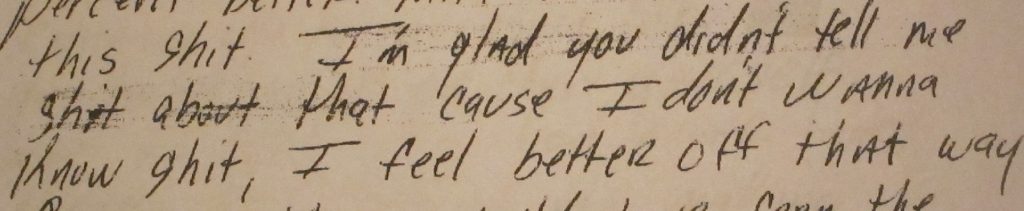
“I’m glad you didn’t tell me shit about that cause I don’t wanna know shit, I feel better off that way.”

Letter written by Terrence Dodson to Charles Mamou, postmarked January, 1999.

Those were the words of Terrence Dodson, the prosecution’s ‘key’ witness, in a letter written to Charles Mamou while Mamou was incarcerated – and before Dodson testified to Mamou’s ‘confession’.  The jury never saw that letter.   

Terrence Dodson – an admitted drug  dealer who was involved in the planning and execution of a drug deal gone wrong in December of 1998, could not be considered a strong witness in the best of circumstances.   He was a drug dealer involved in a drug deal linked to Mary Carmouche’s murder, although it appears he was never charged with any crimes related to the incident after he testified.

In spite of his questionable background or possible motive for testifying, Harris County, Texas, prosecutors presented a case that weighed heavily on the only witness that tied Charles Mamou to the scene of the crime –Terrence Dodson.

Yet, all the while the trial was taking place in 1999 – there was a letter.  A letter that was never presented by the court appointed defense during the trial and one the jury never saw.   In that letter the key witness wrote to his cousin, Charles Mamou, who was at the time incarcerated, “I’m glad you didn’t tell me shit about that cause I don’t wanna know shit.”  Those words were written not long after Charles Mamou had supposedly confessed to him.  

The testimony of Terrence Dodson was a key piece of a case built against Charles Mamou that is riddled with more questions than answers.  There was no weapon.  There was no eye witness testimony.  There was no DNA.  During the sentencing phase of Mamou’s trial, victim impact statements were allowed from crimes that Mamou was never even charged with.

This all took place in Harris County, Texas – a county with a big reputation for sentencing people to death.  In 1999 Texas averaged nearly three executions a month.   According to Charles Mamou, the letter written by Terrence Dodson was in the possession of his defense attorney during his trial but it was ‘misplaced’ and not located until after the trial was concluded.

The letter has since been unaccounted for but became available this week and has since been forwarded to Charles Mamou’s current defense. 

Related Articles:   What Does It Take To Get On Texas Death Row;
Texas Death Sentence Clouded By Irrefutable Doubt;
Awaiting Execution – “Have You Ever Felt Like You Can Taste The Future?”;
Because They Can – Execution In Texas;
Testimony Worthy Of An Execution? The Mamou Transcripts Part I

Writing By Charles Mamou

Loading

Because They Can – Execution In Texas

In 1999, the year Charles Mamou was sentenced to death, Texas performed 35 executions.  The following year, they performed 40.  The state was and is very practiced at executions – but has it become too easy to execute?

Tough on crime is one thing, execution quite another.  There is no do-over.  The system is not faultless.  Innocent people have been executed, and they will continue to be as long as there are executions.   Those mistakes are more likely in a state that gets too comfortable executing.  History has already proven that it sometimes doesn’t matter if the cases in question involve minorities or the poor or both.

As Charles Mamou’s execution inches closer, many who have looked closely at his case feel he won’t be executed because he is guilty of the crime for which he was sentenced.  Some feel he will be executed because – Texas can.

Charles Mamou was guilty of being a drug dealer.  But in the case of the murder he will die for – there were no eyewitnesses, no confessions, no DNA, and no physical evidence outside of a shell casing found near the body that cannot be definitively linked to anything – in spite of the prosecution’s arguments.

So, in a year in which Texas averaged about three executions a month, the testimony of a handful of drug dealers who had a lot to gain by pointing the finger away from themselves, sealed the fate of Charles Mamou.  They didn’t even have to testify to witnessing the crime.  They all had a lot to gain in a capital murder case with the death penalty on the table – and nothing to lose but their integrity.

The night of the drug deal that started it all, Kevin Walter, Dion Holley and Terrence Gibson had guns and planned to meet up with Charles Mamou and his friends to sell drugs – which actually were not drugs.  They had nothing to sell.  That is why they went to the meeting with guns.  Each of the men intended to come away with cash from a drug sale in which they did not have drugs to sell.  There is no doubt each of the three – Kevin Walter, Dion Holley and Terrence Gibson – intended to commit  crimes that night with loaded guns in tow.  They were willing to go to extreme lengths to commit their crimes.   They also knew Mary Carmouche was out of sight and in their backseat.  Mary would be found dead two days later.

The buyers were to be Terrence Dodson (not to be confused with Terrence Gibson), Samuel Johnson and Charles Mamou.   Those three men also traveled with loaded guns and had no cash to make their purchase.  It was a drug deal – a crime – in which all parties were planning to come out ahead, with little regard for the others involved.  They weren’t there for charitable purposes – and the actions of them all indicated that at that point in time – they were each willing to give up their integrity for personal gain.

Of the sellers that night, Terrence Gibson lost his life.  He had a loaded gun and no one was ever charged with his death, and if they had been, there would be a strong argument for self defense.

Dion Holley testified for the State at Charles Mamou’s trial, and it appears he was not charged with any crimes related to what happened that night.  The vehicle the sellers were driving belonged to Dion Holley’s mother, and of the scant amount of evidence in this case, Dion’s print was the only one later found in the vehicle.  And – it was Dion’s friend, Mary, who was hiding in the backseat of the car they arrived in.   Holley testified regarding hearing shots at the drug deal, running, getting shot in the arm, seeing Mamou get in his mom’s car and hearing both cars leaving the scene of the drug deal.

Kevin Walter also testified for the State.  It appears he was also not charged with any crimes related to what took place, although he testified regarding the plan he and his friends had to arrange a fake drug deal and rob Charles Mamou of $20,000.  Mr. Walter was clear about his understanding of the planned robbery and his participation in it.

Samual Johnson testified for the State.  It appears he was also not charged with any crimes related to what took place, although he testified regarding his own involvement in the plan to rob men of drugs and his connection to the crimes.  Samual Johnson was the driver of the car that Charles Mamou arrived at the scene in.  Charles Mamou was actually from Louisiana, and did not have a vehicle in Texas, nor was he as familiar with the area as the men he was working with.

Terrence Dodson testified for the State, although there was nothing he could testify to that would benefit the prosecution regarding what he had ‘seen’ that night, because he was not at the scene of the drug deal.  But, according to court documents, Terrence Dodson was very involved in the drug deal, and it appears he was not charged with any related crimes.  But, Terrence Dodson was instrumental in arranging the deal, and also intended to rob the dealers with a gun he had.  Terrence Dodson had good reason to be concerned about what he might be charged with for his involvement in the murder, although he was not in the car by the time the deal actually took place.  During the trial Dodson testified that Charles Mamou ‘confessed’ to him that he had committed the crime because the victim looked at him ‘funny’.  Mamou has steadfastly denied this confession took place.

That is what the State had.  That was the closest that they could get Charles Mamou to the actual murder through witness testimony – several young men who all had something to gain by working with the State, all involved in criminal activity, and all with questionable integrity going into the trial.  Even with their testimony, which Mamou’s current defense says is ‘riddled with inconsistency’, none of them witnessed anything connected to a murder.   Mamou has always maintained that after the drug deal gone wrong, he and Samual Johnson drove back to the apartment complex he was staying at.  He was distraught and several other people saw Mary and interacted with her.  That was the last night he ever saw her, and she was alive.

Some would say Charles Mamou doesn’t matter, because he was a drug dealer himself.  It is correct that Charles Mamou was a drug dealer twenty years ago.  Since that time he has spent all his days in a solitary cell on death row in the state of Texas.   He’s now in his forties.   The chance of him ever resuming a life of dealing drugs is near non-existent – and being a drug dealer is not a crime punishable with death in this country.  If it were, the State’s key witnesses would be in neighboring cells.

Logic alone would make one question why Charles Mamou would call up a drug dealer and tell him he murdered someone because they looked at him ‘funny’, when he has steadfastly maintained his innocence.

One might also wonder how Charles Mamou located a deserted home in which to murder a girl in a state he didn’t even live in.  The witnesses who testified against him would be more aware of the surrounding area and more capable of accomplishing that.

In the case of Charles Mamou an execution may allow Texas to close a chapter, but his death will not answer the question of who killed Mary Carmouche.  There isn’t enough evidence to prove who killed her, and Texas quit looking for the answers soon after the crime took place.

REFERENCE

IN THE UNITED STATES DISTRICT COURT FOR THE SOUTHERN DISTRICT OF TEXAS HOUSTON DIVISION. CHARLES MAMOU, JR., vs. WILLIAM STEPHENS, CASE No. 4:14-CV-00403, AMENDED PETITION FOR WRIT OF HABEAS CORPUS . 4 June 2015.

Related Articles:   What Does It Take To Get On Texas Death Row;
Texas Death Sentence Clouded By Irrefutable Doubt;
Awaiting Execution – “Have You Ever Felt Like You Can Taste The Future?”;
Letter From Key Mamou Witness Contradicting Testimony;
Testimony Worthy Of An Execution?  The Mamou Transcripts Part I

Writing By Charles Mamou

Loading

The Unlimited Potential Of Kindness Behind Bars

Art by Wilmer A. Portillo

“Acts of kindness come few and far  between for me, but I’ve adopted a point of view that dictates – when an act of kindness is bestowed upon you, the most meaningful thing you can do in return is pay it forward.  And, so I shall.  So, however big or small the gesture turns out to be, together we will contribute to what I suppose could be considered the Universal Good.” – Wilmer Portillo

I am so grateful for the chance I have every day to work with the most appreciative people I know.  It’s a gift.  Kindness and compassion and love – change people and the world.   Vengeance in the form of the death penalty, solitary confinement and overly harsh sentences in inhuman conditions – don’t make us better.

“You’ve taken up the fight to save my life like no other has done – and I never asked you to do it.  You did this on your own, and that warms my heart.” – anonymous

Happy Thanksgiving!

NOTE:  Wilmer A Portillo is a gifted writer and the author of A Dreamer’s Story.  He can be contacted at:

Wilmer Portillo #01356973
McConnell
3001 South Emily Drive
Beeville, TX 78102

Loading

Awaiting Execution – “Have You Ever Felt Like You Can Taste The Future?”

‘Have you ever felt like you can taste the future?  Like you know what’s about to happen?  That’s how I feel.   Back a few years ago, a friend here broke away from the officers who were escorting him and walked towards me in the dayroom.  On instinct, I reached out through the bars and grabbed him.  Tears stained his face from crying for hours during his last visit.  I gave him a huge hug, and he kissed my cheek and whispered in my ear, “Roaddawg.  You have the best chance to get free.  Don’t let them win.  Go back home to your family.  Get free.  Promise me?”’
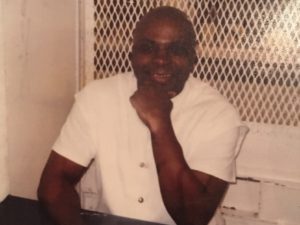
‘I did promise him at that moment before letting him go.  But – I failed.’

Facing the end of his appeals, which have been procedurally barred and left unheard, Charles Mamou’s future looks bleak.  Some would say he never had a chance – not a black man on trial for murder in Harris County, Texas, at that time in history.  It’s twenty years later, and with execution near, there are more questions than answers.  The only thing certain is that there can be no certainty of his guilt.  He has always maintained his innocence.

The most glaring problem with Mamou’s sentence came during the penalty phase of his trial, when victim impact statements were allowed in the Courtroom for crimes of which Mamou was never charged.   But the case itself was built on the testimony of a handful of people involved in a drug crime – who all stood to benefit from their testimony – and an unfired cartridge found near the victim’s body.

That cartridge – was the only physical evidence.   There wasn’t even DNA tying Mamou to the victim.

The prosecution brought in Robert Baldwin, an employee of the Houston Police Department, to testify that the unfired cartridge found near the victim’s body had been inside the magazine of a weapon used at a drug deal gone bad – where Charles Mamou had been involved.

So – what the jury heard, was unhindered ‘expert’ testimony from the prosecution. Mamou’s court appointed attorney did not bring in an expert to refute Robert Baldwin’ s testimony, in spite of its weakness, nor did he question the expertise, credentials, or methods of the ballistics ‘expert’ whose testimony was the basis for the prosecution’s case.

It was not pointed out to the jury that even in the best of circumstances the ‘science’ used to tie an unfired cartridge to a fired casing at a different location – is not a certainty.  Rather they listened to a lot of scientific jargon and were informed that Charles Mamou had been in possession of a gun that was at the same location as the victim.

It is not possible for that to be a certainty.

The prosecution’s expert had no weapon to test.

The prosecution’s expert did not produce any photos of his comparisons

The prosecution’s expert did not explain how many marks were compared in his study that was conducted without the ability to test a weapon.

The prosecution’s expert was vague in the details, but certain of the match.

In a case with the death penalty on the table, it is reasonable to think more should be expected as far as expert testimony, but again, Charles Mamou was a black man in Harris County, Texas, with a court appointed defense attorney who chose not to question those things.

Criminalist, Ronald Singer, later said in an affidavit regarding the Charles Mamou ballistics testimony:

“….The prosecutor also, in his final argument, presented to the jury his opinion that the match was a certainty.  Such opinions, however, are inherently probabilistic in nature.  The defense attorneys failed to address the flaw of ‘discernable uniqueness’ and allowed the prosecutor to present this to the jury.  Had they presented a competent ballistics expert at trial, that expert should have been able to inform the jury that such opinions are flawed as they ignore the inherently probabilistic nature of such comparisons.  This individualization fallacy was well known at the time of Mamou’s trial.”

Robert Baldwin also testified in the capital murder case of Nanon Williams where his testimony was the foundation for that prosecution’s case as well.  At one point Baldwin was asked, “Is there any way in the world based on your training, your expertise and the examinations that you made, that the bullet… was shot out of that Derringer?

Baldwin’s reply on the stand was, “No, sir.  It’s the wrong caliber.”

Baldwin testified with certainty that the bullet that took the victim’s life came from Nanon’s .25mm caliber handgun.

Not only did Robert Baldwin get it wrong in a case that sent Nanon to death row – the bullet taken from the victim actually did come from a .22 Derringer.  Baldwin never fired the Derringer during his ‘study’ of the evidence.  In other words – he did not test the only weapon available.  In the Nanon capital murder case – there was a gun to test.  Robert Baldwin, the ‘expert’ ballistics witness for the prosecution didn’t test the only available weapon and gave false testimony.

Charles Mamou’s defense counsel didn’t question Robert Baldwin’s credentials.  The defense did not ask for any data regarding the degree of similarity between the marks nor did they ask for any photos to show any microscopic comparisons.   Photos and data were not presented, and they were not asked for.

In closing statements, the prosecution used Baldwin’s testimony to falsely assure the jury,

“magazine mark…makes it identical to one of the casings that was in the magazine of the firearm that…was left at Lantern Point…;”

“what is important is…that this was placed in the same magazine that the fired bullets were placed in, and thus, fired through that same firearm…;”

“we know that the casing that has the magazine mark was fired in a weapon in the possession of this defendant, and that’s the same magazine that has this bullet in it that was found at the Lynchester address where Mary Carmouche was.”

We may never know why Mamou’s court appointed counsel did not bring in an expert to refute the ballistics testimony nor argue the testimony that was presented.  That counsel didn’t respond when I asked for his thoughts.

TO CONTACT CHARLES MAMOU:
Charles Mamou #999333
Polunsky Unit 12-CD-53
3872 South FM 350
Livingston, TX 77351

Related Articles:   What Does It Take To Get On Texas Death Row;
Texas Death Sentence Clouded By Irrefutable Doubt;
Letter From Key Mamou Witness Contradicting Testimony;
Testimony Worthy Of An Execution?  The Mamou Transcripts Part I

Writing By Charles Mamou

REFERENCE:  “Nanon Williams.” Houston Chronicle, Houston Chronicle, 1 Mar. 2005, www.chron.com/news/article/Nanon-Williams-1568704.php.

Loading

Texas Death Sentence Clouded By Irrefutable Doubt

Is Texas big enough to admit they got it wrong?

We want to have faith in the justice system.   We may not understand the processes or the terminology, but we like to think that those that do will see to it that things are done properly – and fairly.  To have faith – is to have belief beyond our own understanding.

But, can we?  No matter a person’s stance on the death penalty – the importance of getting it right – with that there is no question.  Too many times it appears our government doesn’t quite take that responsibility to heart.

That’s where a lot of those who oppose the death penalty get their argument – the courts don’t always get it right.  They have a history of making errors.  And – they have a history of not wanting to admit they have made an error when they clearly have.

Charles Mamou is a man on death row in Texas.  He has maintained his innocence, and anyone who looks closely at the lack of evidence would admit that he very well might be – innocent.   But, even more at issue is what actually happened during his sentencing.   There is no argument there.  What happened that day – goes without question.  It happened in front of a room full of people and is documented.

During the penalty phase of Mamou’s trial, victim impact testimony was allowed from victims of crimes for which he was never charged.

Charles Mamou has only ever been charged and tried for the murder of Mary Carmouche.  Regardless of how anyone wants to look at it or surmise or assume – Charles Mamou has never been on trial for any other murder.  That is a fact.

Yet – the prosecutor argued, “And when he pulled the gun and he fired and killed Terrence and Anthony, he ripped those families apart.  He devastated and destroyed.  And that’s all he’s ever done, with his drugs, with his guns.   And every time he pulled the trigger, he answered that first special issue yes, yes, yes, yes, yes.  Seven times he answered it yes.”

It didn’t stop there.  Not only was Charles Mamou given the guilt of those crimes without a trial – he was also given the blame for the hurt it caused those peoples’ families.  As the prosecution described two other ‘victims’ – “Terrence Gibson.  Anthony Williams. They were brothers. They were sons.  They were dads.”

It wasn’t just the words of the prosecutor that the jury heard.  According to court documents , during victim impact statements a family member of Anthony Williams’ testified regarding the “description of the hospital death of Mr. Williams; his sister’s identification of the body; the effect it had on his mother; heart-wrenching cemetery visits by Williams’ son; his crying as a result of the death of his father; and the health problems Williams’ death caused for his mother.”

Testimony regarding Terrence Gibson’s death included a family member “looking at baby pictures the day of his death.”  The testimony was “so compelling that Hill himself had to give Gibson time to compose herself and ‘a chance to adjust’.”

When handing out the ultimate punishment – that of a person’s life – how can we have faith in any courtroom that would allow that to happen?  More importantly – can Texas be big enough to admit its error before it’s too late?  Or will Charles Mamou’s name go into the history books as one more death penalty case with so many lingering questions?

TO CONTACT CHARLES MAMOU:
Charles Mamou #999333
Polunsky Unit 12-CD-53
3872 South FM 350
Livingston, TX 77351

Related Article:  What Does It Take To Get On Texas Death Row;
Awaiting Execution – “Have You Ever Felt Like You Can Taste The Future?”;
Because They Can – Execution In Texas;
Letter From Key Mamou Witness Contradicting Testimony;
Testimony Worthy Of An Execution?  The Mamou Transcripts Part I

Writing By Charles Mamou

Loading

What Does It Take To Get On Texas’ Death Row?

Some might say – not much.

No eyewitness to the crime. 

No weapon. 

No DNA. 

No record of violence.   

No confession.   On the contrary – Charles Mamou has never wavered regarding his innocence.  That’s why he didn’t take a deal when he was offered one.  He put his faith in the truth and Texas justice nearly two decades ago.   That turned out to be a deadly mistake.  His fate was left in the hands of Harris County, Texas – a community with a long and well documented history of condemning people to death.

And so Mamou’s trial began.  The O.J. Simpson trial was still fairly fresh on peoples’ minds – and Charles was a black man in Texas.  The words of the Judge set the tone from the beginning, as he referred to O.J.’s trial that ended in an acquittal, stating that was, “not going to happen here.   This is the real world.  It is not California.”  The Judge also compared being a juror to, “being a pallbearer at a funeral.”  This was followed up with, “the State is going to seek the appropriate punishment in this case; that is, their claim that it will be the appropriate punishment, punishment of death.”
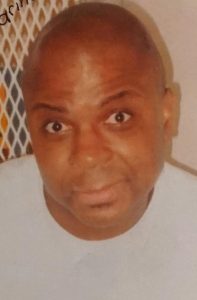
The case against Charles Mamou revolved around the hearsay testimony of individuals who were all involved in criminal activity, and some very questionable ballistics testimony regarding a never recovered gun.

But, everyone agreed on where everything began.  Five men met on Lantern Point Drive, near the Astrodome, for a drug deal that went terribly wrong.  Charles Mamou and Sam Johnson arrived in one car.  They were met by Deion Holly, Terrance Gibson, and Kevin Walter, who arrived in another vehicle.  Unbeknownst to Mamou and Johnson – Mary Carmouche was in the backseat of the second car.   Deion, Terrance and Kevin brought a seventeen year old girl to a drug deal they approached with loaded guns.

Things went wrong quickly, and the shooting began in both directions.  Terrance Gibson was killed holding a loaded gun – a clear indication his death was the result of self-defense, in which no one was ever charged.   The other two men with Gibson, Deion Holly and Kevin Walter were also shot, but survived.

At some point during the shooting, it appears Sam Johnson hopped in the car that he and Mamou arrived in, and drove down the street.  Mamou thought his friend had left, although Sam was actually turning around and coming back for him.  In that moment, Mamou made a life changing decision.  Alone in that alley, he got in the other men’s car and drove away – with Mary in the backseat.

According to Mamou’s testimony, when he realized Mary was in the car – he stopped and asked her to get out, but she refused.  He then met up with Sam Johnson and they drove to Howard Scott’s apartment.

There, Mamou got out of the car, asking Mary to get out as well.  He was then met by Sam Johnson and Shawn England, another acquaintance.  Mamou was crying and upset, and Shawn pulled him aside to say, “those guys got what they deserved.”  Shawn and Mamou then went inside, leaving Sam Johnson and Mary outside.

Once inside, Mamou was provided with clean clothes, and Shawn England and Howard Scott went outside to search the car that Mamou had arrived in and wipe it down.   Mary was still outside and talking to Sam.  Eventually, another friend arrived on a bike – Kevin.  They all talked for a little while longer before Sam Johnson, Kevin, and Mary left together.

Mamou left the apartment complex to make a call, and when he returned, he saw Kevin and Sam Johnson come back.  Johnson went inside briefly before leaving again with Kevin.

Later that night, Sam Johnson and Kevin returned, and Kevin got on his bike and left.  A cab came for Shawn England, who also left.  Mamou spent the night in Howard Scott’s apartment.

According to Mamou, Shawn England had taken the gun from Mamou while at the apartment.

Mary Carmouch was later found dead with a gunshot wound to her chest.

The prosecution disagreed with Mamou’s version of events and centered a good portion of its case on an unfired cartridge that was found near Mary’s body.  They claimed the unfired cartridge matched the fired casings at the scene of the drug deal gone bad.  It was their theory that those casings had travelled through the same gun barrel.  The science used to support such a theory is arguable even in the best of circumstances, but in this case – there was no weapon to test the theory out on.  The weapon used in the drug deal shooting has never been recovered.  So, there was ballistics evidence that is not a certainty in the best of circumstances, but in this situation there was even less certainty, as it was comparing used and unused casings from a weapon that couldn’t even be tested.

The prosecutor falsely argued the match was a certainty.  He actually used the word ‘identical’ when comparing casings, and also stated as fact, “this was placed in the same magazine that the fired bullets were placed in, thus, fired through the same firearm.”  He lied.  The prosecutor simply lied to the jury.

The other ‘evidence’ the prosecutor had was the testimony of five men who were all involved in criminal activity and willing to testify and point their fingers at Charles Mamou.  It was never investigated or made clear just how those men might have benefited from their testimony, although it is reasonable to assume they did benefit as they were incriminating themselves with their testimony. In addition to the very real possibility that they received personal benefit for their testimony, three of them were inconsistent and admitted lying and being untruthful with police.  None of the men ever claimed they saw Charles murder Mary.

A good deal of the prosecution’s time was spent trying to paint a picture of Charles Mamou as a killer who had killed before, but the reality is – Charles Mamou was never tried for any other killing.

Charles Mamou’s defense attorney didn’t strongly defend his client, but rather seemed to flounder.  At one point during the crucial ballistics testimony he stated, “not sure if I understand what that means.”  In reference to magazine marks he said, “what is the word I’m looking for to describe what a magazine mark is?”

The total amount of time the defense spent ‘investigating’ Charles Mamou’s death penalty case was under ten hours.  The total amount of time Mamou’s counsel spent meeting with ‘the investigator’ was 2.5 hours.

Although all of the testimony available to the defense during the sentencing phase of the trial wasn’t used, the words of those people who could have spoken describe Charles Mamou as kind, generous and respectful.

The thoughts of Claudia Milton, who knew Charles Mamou and his family, were never shared with the jury.  “When Chucky was older he would often talk to my son about his problems.  My son was on drugs and Chucky would try advise him to do better things with his life.  I wanted my son to be more like Chucky.  There was times when I went shopping and Chucky was in the grocery store, he would buy my groceries and never wanted any money back.   There were many other people in town that Chucky would help buy groceries, pay rent or their electric bill.  Chucky helped people.”

The defense also did not share the thoughts of Mark Benolt, who has said in an Affidavit, “To me, Chucky does not have a ‘rough bone’ in his body.  I have witnessed him paying bills for friends, family members and other people in the community.  Charles Jr. is a friend that everyone wishes to have once in their life.”

Oddly enough, even though all of the testimony that could have portrayed Charles Mamou in a positive light was not pursued by defense counsel, the prosecution was permitted to bring in victims of crimes Mamou was never even tried for, along with referencing these other deaths throughout the trial with misleading references to, “evidence that Mamou had killed two other people.”  And in describing those deaths that Mamou has never been tried for, it was stated, “Terrence Gibson.  Anthony Williams.  They were brothers.  They were sons.  They were dads.”

Charles Mamou was never on trial for any other murders, yet victim impact statements were allowed from relatives of Terrence Gibson and Anthony Williams.  Emotion filled testimony was given detailing how the loss of those men impacted their families.  This was followed up by the prosecution, “And when he pulled the gun and he fired and killed Terrence and Anthony, he ripped those families apart.  He devastated and destroyed.  And that’s all he’s ever done, with his drugs, with his guns.”

During the penalty phase of the trial, the Judge also stated, “it’s no more different than it is when we’re raising kids.  It’s just no more different.  If we ever told a child not to do something once and the child does it again, we’re going to react one way.  If we have told a child ten times in the last thirty minutes not to do something and they have done it for the tenth time, we’re going to react a different way.”

The U.S. Fifth Circuit Court of Appeals has denied Charles Mamou’s last appeal, and he is currently awaiting an execution date.

Regarding the denial of his final appeal and the knowledge that he will soon  be executed by the state of Texas, Mamou recently expressed his frustration, “Nobody believes in me!  I love me.  America isn’t the land of equality.  Never has been.  Let’s not pretend.  Let’s admit what it is.  And before I take my last breath, the whole world will know they fucked me over.  That will be the symbol of why I lived.”

If only we didn’t need a dead body to know that the trial of Charles Mamou wasn’t just.

TO CONTACT CHARLES MAMOU:
Charles Mamou #999333
Polunsky Unit 12-CD-53
3872 South FM 350
Livingston, TX 77351

Related Articles:  Texas Death Sentence Clouded By Irrefutable Doubt;
Awaiting Execution – “Have You Ever Felt Like You Can Taste The Future?”;
Because They Can – Execution In Texas;
Letter From Key Mamou Witness Contradicting Testimony;
Testimony Worthy Of An Execution?  The Mamou Transcripts Part I;
The Mamou Transcripts – Part II;
The Mamou Transcripts Part III – Death Sentence Built On The Testimony Of Dealers

Writing By Charles Mamou

Loading

High School Students Working With People On The Inside

People sometimes look at you funny when they hear you are an advocate for the incarcerated.  Less often, some begin a debate about the need for fire and brimstone.

Advocates don’t have time to get caught up in a debate.  Nobody will ever convince us caring about people is a mistake.  Those who stick with it – use the debates, the occasional ugly comments, the injustice we see – as inspiration.

Marianne Teresa Ruud is an English teacher in Norway and someone who cares.   This is why she does what she does…

A week before Christmas, 2013, one of my female students lost her fifteen year old brother to suicide. He had been bullied through elementary and middle school and decided he didn’t want to live anymore. My student, along with her family, found him dead in his bed – no note, no explanation.  Just gone.

She was devastated and didn’t know how she was going to get through the rest of the school year. Other teachers kept telling me not to bring up her loss, not to talk about it.  On the contrary, I knew this was what we had to do. It had to be addressed, not quietly hidden away.

That’s when we came across the documentary, Young Kids Hard Time, by Calamari Productions.  The students expressed a great desire to write to the two individuals in the movie, Colt Lundy and Miles Folsom.  The letters the students received in return not only contained the prisoners’ stories, but also poems they had composed, reflections on books they had read and some very beautiful artwork. The letter writing developed on its own over time, giving us knowledge and insight.

We are now in touch with many intelligent and talented young people on the inside. It has motivated students to reflect and ponder on their own lives, as the people on the inside have helped them put into words the emotions and burdens they carry. The project has been most successful with at risk students, those with special needs and our advanced students who seek more knowledge and opportunities to obtain it.

For the past five years my students at Nannestad videregående skole (upper secondary school) in Norway, have continued to write and receive letters from incarcerated individuals, all juveniles sentenced to life and life without the possibility of parole from all over the United States of America.  Their ages differ as some of them who were sentenced as thirteen and fourteen years old are now in their thirties. The youngest individual we worked with was sentenced when he was twelve. Others have only been in prison for seven to ten years. A few of them are intellectually disabled and others were sentenced not knowing how to read or write. Their crimes vary from parricide, to robbery and felony murder. Most of them are victims of abuse, poverty, neglect, social violence and drug use. For the moment we are only writing to males, however, we will be expanding our project to include females.

Over the years we produced a full album of music, composed to selected poems we received. This was done by our media and communication students. There is also an extensive project looking at food waste and food corruption that was carried out in cooperation with some of the individuals, as prison food is of a very low standard and private companies supplying food to prisons are not serving proper portions and nourishing diets. We have also researched various topics together, especially with those individuals getting their high school diplomas and those pursuing a higher education.

Greetings from Norway,
Marianne Ruud, English Teacher

In October of 2017, Part I and Part II of a report were aired in South Bend, Indiana, sharing how Marianne Ruud and her students began their interaction with Colt Lundy.

Marianne said something in that report that I liked.  She expressed that Colt Lundy needed to have people in his life with his best interests at heart.

If we all had each other’s best interests at heart the world be a much different place.

Loading

Virginia Prison Bans Tampon Use By Visitors

I saw a letter from a Warden at a Virginia prison today…

“As a result of recent inquiries in regards to feminine hygiene products being an ideal way to conceal contraband, effective October 6, 2018, the use of tampons and or menstrual cup are no longer to be worn during visitation.  The use of tampons and or menstrual cup hygiene products during visitation are prohibited.”

“Offender visitors who have been recognized by the body scanner machine having a foreign object that could possibly be a tampon and has failed to remove such item prior to being screened, will have their visitation terminated for the day, and will have their visitation privileges reviewed.”

I don’t like to get upset over nonsense – I don’t have time for it.   This – isn’t nonsense.

Unfortunately, a good number of us who have been on prison visits know most prisons don’t encourage and welcome visitors.  To be fair – I know that is not all facilities.

But, my visits have too often been degrading.  A visitor is made to feel as if staff REALLY doesn’t want you coming back, sometimes going out of their way to express their control of the situation and making a visitor feel as unwelcome as possible.  In the visitor waiting area, we would share horror stories about our visits gone wrong due to staff, but most people would recommend not reporting it as it would be taken out on our loved ones.  So – the ugly behavior goes unchecked.

The visitors I got to know learned to approach staff meekly.  You were at their mercy, and we all knew it.

Now this – a tampon ban.

Every woman and their body chemistry is unique.  Some are blessed with 48 hour light flows and panty liners.  Some – not so lucky.  For anyone unaware – some require a ‘nighttime’ pad as well as a ‘super plus’ tampon, replaced every two to three hours to get discreetly through a couple days a month.  Not to mention discomfort – we won’t even discuss that.

To tell one of those ‘unlucky’ souls that they can’t go somewhere armed with their arsenal of sanitary supplies in place as well as having stand bys on deck – is to tell them to stay home.  Period.

Do I wish there were a way to sustain life on earth without females experiencing menstrual cycles?  Yes.  We don’t choose this. Do I wish there was no need for tampons?  Yes.

So – with Nottoway’s new rule – should an ‘unlucky’ one be able to schedule a visit with a loved on the first day of their period, it will now be a brief and uncomfortable visit.

With that said – if female visitors smuggling contraband disguised as tampons through their vaginas into prison has become such an issue, I would assume that all females with access to the facilities will be banned from tampon and cup use?   It’s no secret that staff bring in items from the outside, so a rule of this nature would have to include female officers, lieutenants, majors, wardens, counselors, clergy, vendors, etc, in order to be effective.

Furthermore – pads.  Are they next?  Certainly, if a tampon or cup could carry something into the facility that could outsmart the scanning machine, a pad could as well.  What about an adult diaper?  Or child’s for that matter?  What ‘personal’ hygiene items are more capable of hiding contraband through the scanning process than others?   Or is it only when something is physically inserted into an orifice that it is of concern?  And – if that is the case – couldn’t someone just stick their contraband into an oraface without using a tampon or cup?  Or – into a different orifice?  Does a tampon not look like a tampon on the scan?  Does a pad not look like a pad?  If a smuggler is going to smuggle items in through their body parts disguised as sanitary items – aren’t they the type of individual that will find another way?  Just sayin’…

Interesting policy – one that will make visitors feel welcome, encouraged to come back and possibly – umm… controlled.

Visiting a prison isn’t something anyone wants to do.  Nobody wants their friend or loved one to be in such a place, no matter what the reason.  Ideally, for all of us – inmates will maintain relationships during their incarceration.  Ideally, they will have the support of loved ones, recognize what they have done to be there and reevaluate how they are going to move on with their lives after prison.

Success for a prisoner – isn’t that in everybody’s best interests?

There is one thing we know.  People – visitors and staff – are going to continue to smuggle things into prison.  We are doing something seriously wrong if we can’t figure out how female visitors can be allowed to wear tampons on visits.  Way too much energy is being spent determining how to control and degrade a female visitor and not enough energy being spent on trying to find ways to encourage positive relationships that help people succeed and grow past their mistakes.

Loading

Human Cost Of The Death Penalty

The number of innocent individuals who have lost their lives to the death penalty is unknown.

  ******

People are executed every single year in cases where reasonable questions exist as to their innocence.

  ******

There are individuals whose job it is to house the condemned, feed them their last meal, strap them to a table, take their life, and remove their bodies from the room.

  ******

Vengeance is not mine.

The price is too high.

There are currently two back to back executions scheduled in the state of Texas for the month of September.   Those will be followed by more in October.

Troy Clark #999351 is on the calendar to lose his live on September 26, 2018.

The following day, on September 27, the same facility will take the life of Daniel Acker #999381.

I have sent the following letter to the Texas Board Of Pardons and Paroles for each of these individuals.  Please feel free to copy, paste,  and revise in any way you like and send to bpp-pio@tdcj.state.tx.us.

Dear Members of The Texas Board Of Pardons and Paroles,

I sincerely request that you recommend to Governor Greg Abbott a lesser sentence than death in the case of Troy Clark #999351, who is scheduled for execution on September 26, 2018.

The Death Penalty doesn’t just take one individual’s life.  It also inflicts irreparable damage to everyone who loves and cares for that person. Their parents, siblings, friends and loved ones.  It can’t be undone.

Just as importantly – it is a burden that every single person in the process of enacting the execution should not be made to bear.

The events that took place to get an individual on death row are inarguable.  They exist.  Guilt or innocence may be arguable, but the events – happened.

The reality of enforcing a Death Penalty for those who must have a hand in taking a life share the same guilt as those – whoever they are – that created the original hurt.  It’s a contradiction of everything it stands for.

If it is a question of faith in a country that is founded on Christianity – there is no question.  Vengeance is not ours.  Please, stand for what is right, and recommend mercy.

Thank you for your time,

You can also call the Governor Abbott Information and Referral and Opinion Hotline at: 512-463-1782; and The Office of the Governor Main Switchboard can be reached at 512-463-2000.

Words from the real people on Death Row in the United States – who I believe include some that are innocent:

“’You know, in my day your kind would’ve never gotten so much generous attention. We simply would’ve brought you out yonder, found a good ole tree to hang ya from. Just one less…’ he was saying just before he cut himself off” Charles ‘Chucky’ Mamou, Death Row

 “It’s baffling that people can actually believe justice is being served by watching a man being strapped to a table and having an IV inserted into his arm to be filled with poison until it kills him.  Justice…”
Travis Runnels, Death Row

I just heard on the radio they put him to death,
And his last words were, “I can finally rest.”
I feel ya bro, no more pain and misery,
Rest in peace my friend, you’re finally free. Troy Clark, Death Row

I’d been labeled a murderer by all those that mattered. There’d be no more tedious claims of innocence for doubters to discredit.  There’d be no salvation for people like me as long as there are people like them.  And there’d be no hope of a better tomorrow when my tomorrow was upon me today. Chanton, Death Row

I seen Lil Jack get in that van.
I seen Big Buck get in that van.
I seen Thread get in that van.
I seen Smoke get in that van.
I seen Chester get in that van.
I seen Ross get in that van.
I seen Tick get in that van.
I seen Savage get in that van.
I seen Bones get in that van.
I seen Diaz get in that van.
They won’t get me, ‘cause I have a plan.
I don’t want to kill myself,
I don’t want to kill myself.  Pete Russell, Death Row


Loading