All posts by Chanton ©

First -Timer

Suicides, assaults, perpetuated acts of nonsense, exonerations, relationships severed and put back together – I thought I’d experienced all there was on Death Row.   I’ve seen mild, treatable medical conditions fester and decline, often turning fatal due to inadequate healthcare.  And I’ve seen the dismal look in a man’s eyes, helpless and void, moments away from being executed – yet even after twenty years, nothing could’ve prepared me for today.

For over six months now, due to global restrictions imposed to prevent the spread of COVID-19, all weekly in-person Death Row visitation has been suspended.  As an alternative, online video visitation was implemented, which was a welcome remedy to the growing concerns of our loved ones for our well-being.  For men decades removed from society, video visits ignited Death Row with an ever burning anticipation to view our family in the comforts of their homes as opposed to a concrete booth with reinforced glass and steel bars.  Appointments were made faster than a sweepstakes giveaway and everyone that returned from a visit had a tale to tell, some recounted with exuberant smiles, some with heavy hearts.

In the following weeks, as per safety regulations, the site for Death Row video visits was moved to another area in the prison.  Many of us know the new location as the ‘Death Watch’.  It’s where capital punishment is performed.  Few men here have suffered the Death Watch prior to having their scheduled executions vacated, one in particular describing the most dreadful night ever with a broken voice to match.  More often, the men who’d been hauled off to the Death Watch would not return.  It was a wasteland that was now being assigned familial merit and a path on which I would walk.

Friday, September 18, 2020, at 9:03 a.m., a call blared over the P/A system, one that came expectedly as I had awaited the sound since the night before.  It would be my first video visit with my family, whom I hadn’t seen in months.  The anticipation of it all elevated my mood beyond the reach of my daily struggles.  I hopped into the standard Death Row uniform, one meant to evoke guilt – a hot red jumper that draws heavy around the shoulders in a color scheme that clashes with one’s dignity.  With nothing left to do but settle my eagerness, I strapped on my face mask and headed on my way. 

I joined the company of two other inmates, also with scheduled visits, as they shuffled slightly on their heels, anxious to be off.  One guy, like myself, was a first-timer; I surmised he was equally as nervous. The other inmate had attended video visits prior and schooled me on what was to come.

With the arrival of the escorting officer, we set out on our trip from the Death Row facility down to an area usually reserved for visitation, nothing to heighten the excitement along the way, yet nothing to diminish it.  We then discontinued the familiar route and veered down a flight of stairs, a control station identical to the one above at the bottom.  We crossed the lobby to a sliding glass door that held beyond its threshold something menacing – the very path condemned men had journeyed before as they faced a despicable end.

The door cranked open with a woeful whine, like a symphony of restless souls.  I followed the group as they seemingly proceeded with no ills for our whereabouts.  What looked to be a short distance to the other end of the hallway became a faraway stretch of land, my steps laden with the realization that, for some, this was their final walk.

Rows of windows, made murky and distorted to deny one last peaceful look at nature, lined the passageway.  Here, nothing would be offered to soothe the spirit of the wretched, though in a failed act of humanity, sedatives would be used to ease their pain.  At the midway point was a sally port with its inner workings obscured as it sprang into view like a childhood boogeyman, chasing away my sense of security.  I needn’t inquire of anyone to know this was the Death Watch.  It appeared nothing like the horror I’d dreamed of, yet it incited the same despair.  I was standing in the final resting place of a friend of mine named Joe who was executed in ’03 by lethal injection.  Longing for his company, I whispered to myself and hoped he could hear me.

We made our way to a waiting area, each taking up a station as the first of us was ushered away to begin his scheduled visit. It would be some twenty minutes later before he returned, talkative and rather giddy as the next guy hurried off in his place.  I sat and thought of all the laws passed over the years that would’ve prevented some executions, like the Mental Retardation bill that would’ve saved a man named Perry, or the Racial Justice act for another guy, Insane.  One law that was enacted excluded defendants under eighteen years of age from being eligible to receive the death penalty, an amendment that would’ve kept two other men, Hassan and J-Rock, alive today.

The second inmate emerged with a smile so bright I soaked up a bit of his joy.  I was sure that I’d seen the worst of the Death Watch.  I couldn’t have been more wrong.

I stepped around the corner to what I thought would be a cozy, makeshift cubicle with a monitor on which the faces of my loved ones awaited.  Instead, I happened onto an arching hallway with blinding lights at the far-end and a metal tank made obvious by the gear-wheel bolted to the door.  I was told it was the crank that released the gasses into the chamber during executions. Beside the Death Tank was the viewing area, where the deaths have actually been watched by those who would champion vengeance while holding others to a different standard.  I cringed at the thought of such an immoral practice and the historical transgressions.  I’ve often wondered if my friends felt alone when they were executed – part of me now prays that they did.

After visitation, I passed by the infamous Death Chamber once more and peered into the darkened sarcophagus.  I had hoped to get a feel for my friend, Joe, but all I got was a question of fate. 
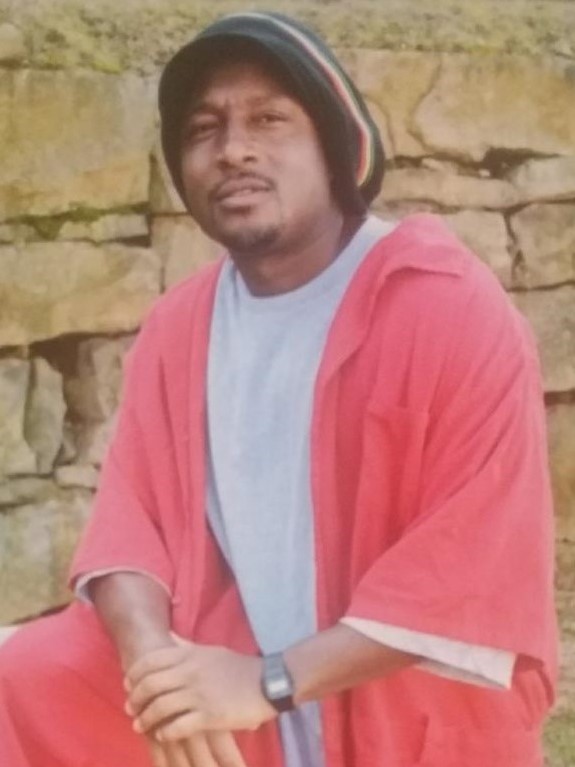
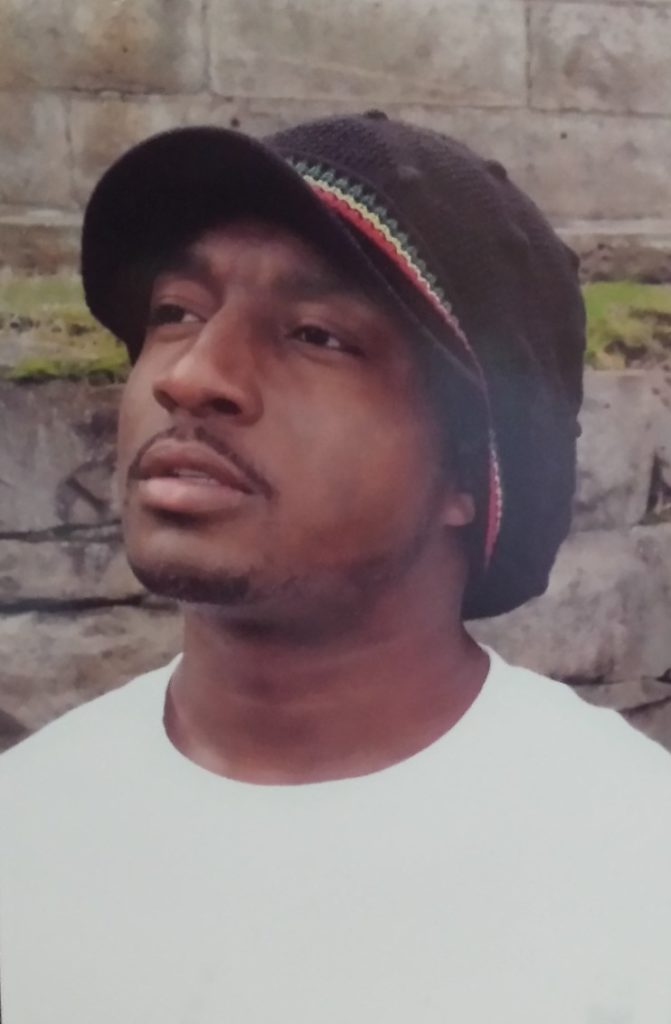
ABOUT THE AUTHOR:  Terry Robinson often writes under the pen name ‘Chanton’, and this year he and others co-authored Crimson Letters, Voices From Death Row. He continues to work on his memoirs, as well as a book of fiction. Terry Robinson has always maintained his innocence, and hopes to one day prove that and walk free. Mr. Robinson can be contacted at:
Terry Robinson #0349019
Central Prison
4285 Mail Service Center
Raleigh, NC 27699-4285

Loading

“I Regret Even Knowin’ ‘Em”

I am change in progress, striving not so much to be rid of my adverse circumstances, but to die a better person than I lived, and the last twenty years have taught me a lot.  It wasn’t long ago I faced my greatest fear and stepped onto the set of a live production of Reginald Rose’s ‘Twelve Angry Men’ to perform before a swell of doubtful prison administrators.  Just this year, I made a goal to start a college fund for grandchildren I’ve yet to meet.  And probably the most life-changing thing I’ve done is fully accept myself and taken accountability for the wrongs I’ve done in my life.   

My wrongs aren’t what landed me on Death Row though.  A verdict doesn’t change the truth.  I wasn’t in the Pizza Inn the night its manager got shot and killed, and for over two decades I’ve wondered why my cousin would testify I told him I did.  I knew he must have a good reason.  Fear, maybe, is one thing I came up with, fear of what the system might do to him if he told the truth, whatever that might be.   Since my trial, I have learned his dreadlocks were at the scene of the crime.  The jury never heard that.  Maybe I wouldn’t be here if they had.  Maybe he thought we’d have to trade places if he told whatever he really knows.  At least that’s what I told myself for twenty years. 

That was before I saw what he told an investigator who sought him out in an attempt to help me.  Jesse Hill made it clear he was only interested in keeping me right here. 

Far from helping me, my cousin implicated another member of my family as a possible accomplice to the crime, and time and again brought my mother into the conversation, “His momma know he did it.  She know how that boy is.”  “My aunt did this.”  “My aunt should have gave it to you,” when asked his middle name.  “Why does my aunt keep doing this shit.”  “She need to talk to her son.  He done what he did and bragged about it.”

Hill blamed the bad blood between us on me choosing to confess to him – but the truth is, I never did that, because the truth is – I had nothing to confess.  I never saw Jesse Hill that night, and I never confessed to him that night.  Jesse Hill and Ronald Bullock both know that.  Truth doesn’t change. 

For all Hill’s fierce condemnation of me, it was a bizarre contradiction when he wanted it on record that his feelings had been hurt.  “That’s my family, it hurt me even to go in there.  I ain’t see you wrote that down.” I guess he didn’t see the irony in what he was saying.

As much as my cousin wanted to be portrayed as hurt by our familial bonds and clamored for sympathy, his defamation of my character was limitless, his agenda clear.  “I know he did it.” 

When I was a kid, I looked up to my cousin.  I looked up to him when I was a man too, and for over twenty years, I wondered ‘why?’   I still don’t know ‘why’, but it cleared up a lot when my cousin told the interviewer, “I regret even knowin’ ‘em.”

It used to be that the most meaningful word I knew was ‘family’.  The term denoted loyalty, safety, honor and trust.  It was the highest respect one could pay another.  But when a person you once admired says they regret knowing you… what’s left to say?  We aren’t family – just people who share an insignificant past.  Jesse Hill contends his version of the events on May 16, 1999, are true.  I maintain he is a liar.  Those who really know who I am – know the truth.  And my truth says a lot more about Jesse Hill than he could ever say about me.

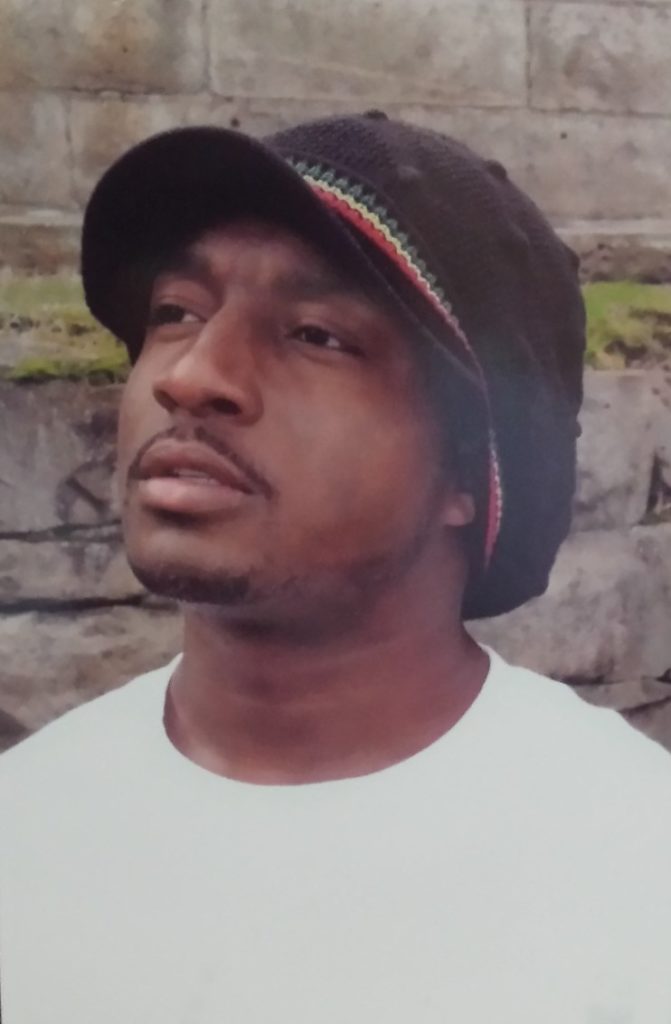
ABOUT THE AUTHOR:  Terry Robinson often writes under the pen name ‘Chanton’, and this year he co-authored Crimson Letters, Voices From Death Row. He continues to work on his memoirs, as well as a book of fiction. Terry Robinson has always maintained his innocence, and hopes to one day prove that and walk free. Mr. Robinson can be contacted at:
Terry Robinson #0349019
Central Prison
4285 Mail Service Center
Raleigh, NC 27699-4285
NOTE TO READER. Please contact kimberleycarter@verizon.net if you saw Terry Robinson in Wilson, NC, any time of the day or night on May 16, 1999 – or his accusers, who claimed Robinson was with them for most of the day and night. What may seem irrelevant – is often the most helpful.
Details of this case will be shared at https://walkinthoseshoes.com/category/terry-robinson/

Loading

Small Wonder

He was called Little Tee – befitting since he stood no taller than the BMX bicycle he struggled to mount, eager to tag along with the older kids to the mall.  His cheeks flushed, absorbing the praise, while my friends boasted over his skill for thieving.  I knew they were manipulating him, but I didn’t speak up – being equally manipulative in my silence.  I hoped he would grow tired on our trail and turn back, but he didn’t, determination cascading from his forehead with each trickle of sweat.  We arrived at the mall and did wheelies in the parking lot as Little Tee vanished inside.  By the time we later headed for home, we all sported new gold chains.

That was the first day I met Little Tee, a burgeoning menace with an unwavering desire to prove himself.  He stole anything that wasn’t nailed down, his confidence like silk in his veins.  Thievery was only a fragment of his willingness to fit in; one simply had to dare Little Tee.  He hung out all hours of the night, putting doubts to rest with a fearlessness inspiring to watch.

Nights at my house were sometimes spent with Little Tee sprawled out on the sofa or scoffing cold-cuts and gawking at video vixens.  I wondered about his family and whether his whereabouts were anyone’s concern.  He was no more than eight or nine, and yet no one ever came looking for him.  I didn’t mind that he showed up unexpectedly and seemed to never want to leave; I liked having him around.   He had a timely sense of humor and dreams of the future big enough to lend me some.  He gave unsparingly and never asked for anything in return.  To him, charity was synonymous to wealth. Little Tee was a joy, but he did have a mean-streak and fought with other kids all over town like it was the latest craze.  The bane of his freedom, it would earn him some stints in juvenile detention where he ultimately grew more devious.

A few years later, Little Tee transitioned from thieving to dope dealing.  He hopped into cars haggling crack rocks and turned profits with the best of ‘em.  He smoked cigarettes and weed, drank beers and cussed.  No one seemed bothered by his youthfulness, instead they encouraged him.  The more his behavior worsened, the more popular he became.  By twelve years old, he had as much clientele as dealers twice his age.  He was always the smallest guy on the block, but nobody had more heart.

One night Little Tee was at a local hangout when a scuffle broke out between two men with their pride at sake, one of whom had a shotgun.  Scorching iron-pellets ruptured Little Tee’s flesh as he was inadvertently shot in the face.  It would be months before he healed from his physical injuries, but his psyche hardly recovered. Suddenly, he was torn between upholding his image and breaking free from his notoriety.  He had grown weary of his terrible ways, yet he couldn’t break character. The truth was, the shooting ordeal changed Little Tee and heightened his conscience in a way others could never understand.  He wanted so much to be done with the streets… but the streets don’t always let go.

On Christmas day, December 25, 1997, I was posted up on the block when Little Tee strolled through.  We greeted one another and shared some laughs before his eyes took on a piercing glare.  He then let on about his dissension with rival dealers in a nearby neighborhood and asked for my help.  By then, Little Tee was like a brother to me – it was all the answer he needed. Apparently, he had rented a car and parked it on Gay Street.  He said he would swing by and pick me up later.  Little Tee disappeared up the street.  Some minutes later, gunshots devoured the joyous holiday evening. Gossip raced along the streets on the lips of hearsayers – Little Tee was just killed by the police!

I bolted heedlessly for Gay Street while at the same time down a road in my head that had no end. I kept thinking that if I got there quick enough, maybe I could save him.  I prayed the whispers were wrong but the look of despair on the faces of the spectators confirmed my worst realty. Someone was dead.  “Please, God, don’t let it be Little Tee.”

The shooting had taken place in the backyard which obscured my view of the body.  Rumors of what happened ran rampant among those gathered, igniting a bon-fire of tempers.  The ambulance arrived and carted out a body partially covered under a blood soaked sheet.  I recognized the sneakers and fell to the ground wailing…  Little Tee really was gone.

All Posts By Chanton

ABOUT THE AUTHOR:  Terry Robinson often writes under the pen name ‘Chanton’, and this year he co-authored Crimson Letters, Voices From Death Row. He continues to work on his memoirs, as well as a book of fiction. Terry Robinson has always maintained his innocence, and hopes to one day prove that and walk free. Mr. Robinson can be contacted at:
Terry Robinson #0349019
Central Prison
4285 Mail Service Center
Raleigh, NC 27699-4285

NOTE TO READER. Please contact kimberleycarter@verizon.net if you saw Terry Robinson in Wilson, NC, any time of the day or night on May 16, 1999 – or his accusers, who claimed Robinson was with them for most of the day. What may seem irrelevant – is often the most helpful.
Details of this case will be shared at https://walkinthoseshoes.com/category/terry-robinson/

Loading

Small World

A boundless void, daunting and ever present, a place where even the pleasure of a night’s dream is wrecked by the reality of the waking day – that’s where I live.  It’s a domain that spans a mere 6×10 feet, made of menacing concrete and steel, and offers the barest resources within an atmosphere that effects only sorrow.   That’s life on Death Row, rankled daily by restrictions… told what to do, how to dress and when and where to go with little choice but to comply, dutifully denied the simplest liberties many folks take for granted and yet the real punishment seldom comes by day, rearing its head most often at night.

IU240 are the numbers of my prison cell, a crypt of sorts, where memories are elicited and misery reserved.  With twenty years of digital sequences like IU240 to mark my identity, I am a nameless statistic with nothing left in the world to call my own.  The days here are but a tireless effort to distract from Death Row – tabletops, TV, books and gossip, anything to cope with the pain.  Yet ‘Lock Down’ call begins an agony anew, one from which there are no delusions or escape.

IU24O, a paltry wasteland of fussy dust mites that gather in hard to reach places.  Lonely, except for the crowd of tender thoughts that threaten to devour my complacency.  “Stand clear!” the warning blares as the mechanical gears churn and the vaulted door slams shut while I struggle to regard IU240 as a sanctuary rather than something worse than death.

The nights number 7300 that I’ve spent in isolation.  My voice yearns for companionship, but the solitude is stifling, the air bland and smells nothing of freedom, more of apathy.  As the brightness in the room plummets, I cling to a reason to steady the light within.   I am afraid in the dark I may lose my way.  Trivial items that lie dormant by day are now crawling reminders of the oppression, making rest and peace of mind laborious and evasive.

There is a column of tissue rolls stacked in the corner that serves as a coffee table and a desk constructed from Maruchan soup boxes and shoddy adhesive.  Bed sheets suspended from paper clips along the walls are all there is for privacy, yet in a world of trash where there is hardly treasure, one must improvise.  There’s a stainless steel mirror that erredly reflects the stains of my past transgressions, a toilet that ticks tauntingly and faucet water that tastes like lead.   The concrete and steel with an eerie affinity to that of the blood and spirit of the many who have perished already and those who await their fate.

It is likely I will die in prison, a truth that is written on the age lines of my face.  Already twenty years of my life’s essence etched into the fabric of these walls, and yet, IU240 isn’t some infamous badland where hope doesn’t exist.  It doesn’t stand in the way of accepting responsibility and the effort to amend wrongs.

On the contrary, it’s a place where accountability offers temperance and renewal… a place where I have emerged from chaos a better person than when I arrived.

ABOUT THE AUTHOR:  Terry Robinson writes under the pen name ‘Chanton’, and this year he has seen the release of Crimson Letters, Voices From Death Row, in which he was a contributor. He continues to work on his memoirs, as well as a book of fiction. Terry Robinson has always maintained his innocence, and hopes to one day prove that and walk free. Mr. Robinson can be contacted at:
Terry Robinson #0349019
Central Prison
4285 Mail Service Center
Raleigh, NC 27699-4285

All Posts By Chanton

NOTE TO READER. Please contact me at kimberleycarter@verizon.net if you saw Terry Robinson at any time of the day or night on May 16, 1999 – or his accusers, who claimed Robinson was with them for most of the day. Thank you to those who have come forward already. It is not easy for someone falsely accused to ever leave death row – no detail is too small. What may seem irrelevant – is often the most helpful.
Details of this case will be shared at https://walkinthoseshoes.com/category/terry-robinson/

Loading

Question Of Innocence

I am innocent. I did not rob the Pizza Inn restaurant, nor did I shoot and kill its manager, John Rushton.  Ronald Bullock and Jesse Hill testified I did – their testimony the nucleus of the returned guilty verdict.  I didn’t spend the day planning the robbery with them, nor meet them after it was over – as they told the jury.  I didn’t organize their plan. I didn’t participate in it. I wasn’t in the Pizza Inn that night.

None of that happened.  But, what does my innocence matter?  Where did it get me but a bus ride to prison while shackled both by ankles and spirit to a dread that becomes so unbearable – death is a welcome resolve.  How relevant is innocence to time long gone and opportunities forever missed, when your dignity is in a shambles, you’ve been stripped of your identity and you have nothing left to call your own but an Opus number.  With no pride left for which to hide behind, to admit wrongdoing would not be so difficult – the hardest thing to do is continue proclaiming my innocence.

For two decades, I have lived the same as those who are guilty. I’ve stomached the same foods, donned the same disgraceful attire and been governed by the same rules.  I’ve looked into the eyes of men as they were moments away from being unrighteously done in, while inside my innocence has become a little less significant each day.  Capital punishment is not meant to penalize the guilty, but rather to exterminate the worthless while attempting to restore solace to grieving hearts.

Aristotle once said, “We are what we repeatedly do,” and in just a few short years, I will have been a Death Row inmate for longer than I’ve been anything else.  So, what then is my innocence but a conscientious self-declaration to get me through the day? 

My innocence is a reminder of who I used to be – so that I am not lost to who I have become…

ABOUT THE AUTHOR:  Terry Robinson writes under the pen name ‘Chanton’, and this year he has seen the release of Crimson Letters, Voices From Death Row, in which he was a contributor. He continues to work on his memoirs, as well as a book of fiction. Terry Robinson has always maintained his innocence, and hopes to one day prove that and walk free. Mr. Robinson can be contacted at:
Terry Robinson #0349019
Central Prison
4285 Mail Service Center
Raleigh, NC 27699-4285
All Posts By Chanton

Loading

Depravity

Felicia was a ‘round-the-way girl, someone everyone knew. She was constantly on the go and always in the mix of making moves that were typically illegitimate.  The younger sister of a local tough who was known for his street brawling during the 80’s, Felecia did not command the ruggedness and knack for violence her brother had. Instead, she was an enigmatic young woman, rather timid and reserved, with striking natural beauty.

I first met her in September ’97 after my release from prison, where I was introduced to radical concepts about Blacks and Whites, many of which I refuted. Still, I was inspired by the talk of Black Empowerment.  At that time, I needed to believe in something, but having spent 31 months wrongfully convicted, I was too bitter for decent living.

Felicia came through the block, headed toward the school yard, her steps seasoned with haste. She was on her way to cop some dope. Felicia was addicted to crack cocaine, still in the early stages from the looks of her. Clean fingernails.  Stylish hair.  Yet her name had reached the lips of every hoodlum with the lowdown as they wove her sordid reputation. 

Rejection is a common occurrence ‘round-the-way.  Everything from character flaws to unpopular choices may result in one being devalued and mistreated.  Felicia was different. She was salvageable and brimming with potential. Why no one seemed to be trying to help her, I couldn’t figure. Surely she had a family somewhere with tear-soaked pillows and calloused knees who prayed for her sobriety.  To the dealers and other addicts though, Felicia was a lost cause, good only for her prettiness to squelch their own insecurities and quench their broken desires. Well, not me.  I resolved to make a difference in her life. The only problem was, I, too, was broken.

The more prominent I became in the dope game, the more I saw Felicia, zipping here and there while on a mission.  Her taught lips in a forever smile were the mark of someone special.  Here eyes sparkled with hope.  I spoke to her often, expecting to be ignored, though I found that she reciprocated. I challenged her choices and she revealed to me the letdowns that had driven her to dark places. Erroneously, I gave her some crack cocaine because I wanted to help. I vowed never to accept her money.  But was I really helping Felicia, or was I quieting my own conscience?

As the weeks and months wore on Felicia, she looked tawdry and unclean. The sparkling hue in her eyes extinguished by an unrelenting pain. She held up in abandoned corners too dark for shadows and took refuge in a glass stem while the johns sought after her day and night, devouring what dignity she had left.

After my joy of being out of prison ran its course, all that remained for me was resentment.  Consumed by the feeling of self-worthlessnes, I mirrored how I felt.  I woke up angry, dressed in vengefulness and headed out in the world to detonate. I dismissed Felicia’s sickness and potential for hope, and I accepted her money for drugs.

One night I was cooped up in my apartment alone, when someone rapped on the door. It was Felicia, glancing over her shoulders with her eyes weary and strained. She jabbed at her ponytail with one finger, scratching away at her scalp as she clutched onto a fistful of bills and said, “Lemme git a dime.”

I took a twenty-dollar piece of crack rock, split it in two and dropped half in her hand.

I’ve got eight dollars,” she revealed after handing over the money and eyeballing her purchase.

Expecting the funds to be short, I didn’t bother to fuss. I put the money away and closed the screen door, but Felicia didn’t leave.  She stood there and plopped the crack rock in her moth, taste-testing the product. “You got something bigger?” she asked.

“What!  Man, go on somewhere, Felicia,” I chided, frustrated with her antics.  “I’ve already given you more than what you paid.”

“I know, but that’s my last eight dollars. You can’t gimme another piece?”

I refused. She persisted. Suddenly, we argued, the tension growing with every second.   

“Just gimme back my money,” she demanded. “If not, I’ll call the police.”

I should’ve just given her the money and cut ties. What was only eight dollars to me – was worth so much more to her.  Yet, I was insulted and spurred by anger.  I hocked saliva and spat in her face.  “Bitch!  Git the fuck off my porch before I come out there and beat yo ass!”

Gone was her moment’s sense of defiance, replaced by hurt and shame. She looked on me until I looked within myself, and all I saw was guilt.  Unable to bear the sight of my depravity, I slammed the door shut while peering out the window as she wiped away the froth and vanished.

I sat at the kitchen table in the dark of night in the company of self-reproach, wondering how much Felicia suffered at the disdain of heartless men. Men like myself who objectified women and perpetuated machoism, men who willfully victimized the weak and defenseless.  A man who would spit in a woman’s face and hide behind the door – though I couldn’t hide from my own disgrace, and I am still ashamed today. 

ABOUT THE AUTHOR:  Terry Robinson writes under the pen name ‘Chanton’, and this year he has seen the release of Crimson Letters, Voices From Death Row, in which he was a contributor. He continues to work on his memoirs, as well as a book of fiction. Terry Robinson has always maintained his innocence, and hopes to one day prove that and walk free. Mr. Robinson can be contacted at:
Terry Robinson #0349019
Central Prison
4285 Mail Service Center
Raleigh, NC 27699-4285

All Posts By Chanton

Loading

Needful Drama

In 2012, at the recommendation of a chief psychologist tasked with addressing the declining mental health and cognitive deficiency on Death Row, prison administrators implemented a pilot program. The first of its kind, the project proved to be a success, stanching the oozing misery of decades of meaningless activities while igniting an air of motivation throughout Death Row that would not be extinguished by tabletop turnabouts and legal letdowns.  Finally, there was a glimmer of behavior both rehabilitative and restorative from men eager to not only divest but defy the stereotypical personas indicative of our status.  Further programs were in order, and over the next few years several classes were offered that would challenge our decision making while enhancing our social skills by affording us merit in the Death Row community.

One such class was Drama, a weekly therapy group in which we convened over play scripts and films while educing our various perspectives. Though some viewed the course unfavorably in the prison setting, others were undeterred as we embraced the colloquial demands of Drama, where we first met Ms. Dee, a psychologist in the prison’s mental health department.  Ms. Dee was passionate about helping others and answered the call for volunteers. She was well-spoken and witty, often engaging us in prison jargon and disarming our leeriness by showing off her ability to adapt. It was through her willingness to surround herself with convicted murderers without reservation, many of us were reminded what it felt like to be trustworthy again.

Ms. Dee had come from an artistic background, and in college she minored in Drama, therefore she signed on to teach two programs.  The Art class was thought to be an hour long period of doodling or guys making off with supplies to barter for other desirables. However, Ms. Dee wasn’t having it – she expected more. She assigned us projects, lent her assistance and held us to such high standards that we found ourselves working diligently for her affirmation. Soon we were delving into visual graphics, dimensions and the terminology of Art. Ms. Dee even invited her mother, a working class artist, to join us and impart her wisdom on the subject. What an honorable gesture and show of trust and respect. It made her more to us than just some quirky prison staffer whose goodness was infectious, Ms. Dee was like family. 

The Drama program, however, didn’t start out as promising because of the stigma of weakness in the penal system. Many were unwilling to compromise their image, so instead they shunned the idea.  But then there were those who leapt at the opportunity to add another layer of refinement and reform, and although it wasn’t the most popular choice, still we were committed to Ms. Dee.

We covered plays like Antigone, the Crucible and Shakespeare’s Hamlet with elaborate group discussions to follow, sometimes peeling the words off the very pages and attaching them to our own personal experiences.  Then we watched televised renditions of each play and absorbed the onscreen nuances, while all along Ms. Dee had a vision of her own to host a Death Row play.

At the mention of performing a play, I thought not only was this woman bold and overly optimistic but also a bit nutty.  Who in their right mind would put their reputation on the line for a bunch of condemned souls? Who had that amount of confidence and trust in men so untrustworthy?   Apparently, Ms. Dee did, and as it turned out, her confidence would not waiver.

We did what’s called a dry read.  Then she assigned roles.  Afterwards, we began rehearsals. We transitioned from on-script reading to off-script memorization until our roles became as much a part of our identity as the red jumpsuits we wore. Ms. Dee also gave us pointers to hone our acting chops.  “Do not break the plane of the invisible wall,” she’d say, or, “Always… always face the audience.”

Most days she could be seen seated atop a steel dayroom table in casual clothes and slides with her hair pulled back in a ponytail and a steady glare behind her fitted fames as she yelled, “Enunciate!  Enunciate!!!” which was quite frustrating since most of us didn’t know what the word meant.  Yet Ms. Dee was relentless, tapping into our potential and pushing us to the brink as she often stayed late after work and scheduled rehearsals on her days off.

On the day of the performance, we actors were still experiencing miscues.  I begged Ms. Dee to postpone the production.

“But whyyy?” she chimed, her accent flush with reassurance as she added, “You guys are so ready. You just don’t know how good you all are.  Trust me.  You’ll do great.” 

And as the crowds rolled in and the seats filled, still she was unfazed, believing so much in our capabilities that soon we believed in ourselves. 

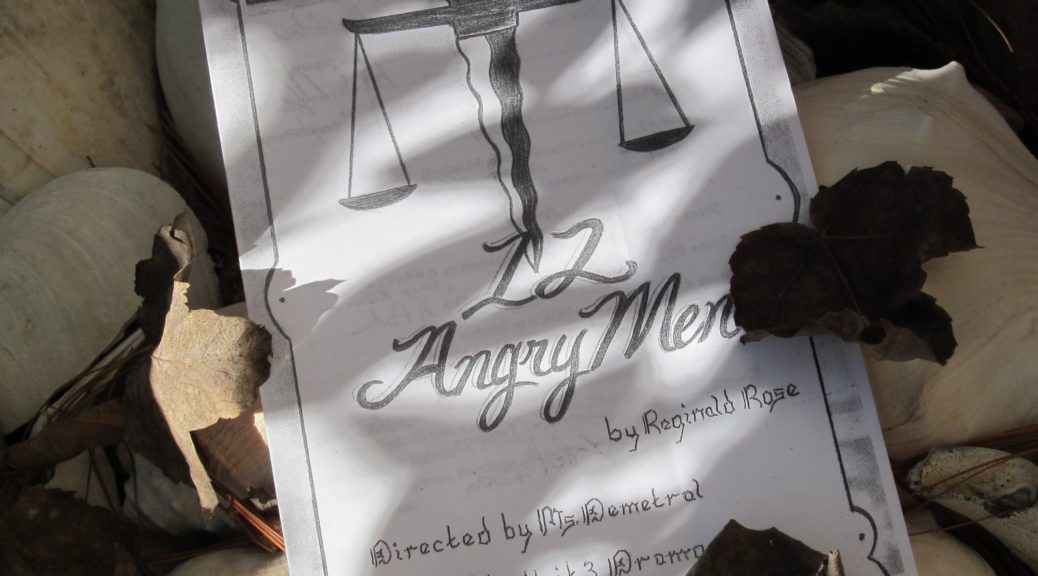
For forty-five minutes we performed Reginald Rose’s Twelve Angry Men, a play about the woeful indifference and tangled injustice of jury deliberation. Audience members sat transfixed as they soaked in our exchange.  Fellow inmates nodded with admiration.  And when the play was over and the last actor exited the stage, the room erupted in applause. What a tremendous feeling of validation to have others acknowledge our worth.  What a sense of accomplishment to face our fears and prevail.  But the ultimate reward was seeing Ms. Dee teary-eyed with pride.  She never stopped believing in us.

Unfortunately, Ms. Dee experienced some challenges in the work-place and was later relieved of her position. Shortly after, all Death Row programs, including Drama, were discontinued.  It seems that in the great scheme of things, Death Row inmates are undeserving of redemption and any who should dare to restore in us dignity and value shall meet removal. Ms. Dee was impacted by a disease that seeks to morally corrupt, a tainted prison structure that rejects good will and blatantly lends itself to recidivism. She was inadequately cared for by those who failed to nourish her efforts, casting votes instead for candidates who offer nothing to effect policies on prison reform. 

Ms. Dee once said, ‘Everybody needs somebody to believe in them’.  In believing in us, Ms. Dee did what most never have, making true reform a reality for a short time, and for that, we will forever believe in Ms. Dee. 

ABOUT THE AUTHOR:  Terry Robinson writes under the pen name ‘Chanton’, and this year he has seen the release of Crimson Letters, Voices From Death Row, in which he was a contributor. He continues to work on his memoirs, as well as a book of fiction. Terry Robinson has always maintained his innocence, and hopes to one day prove that and walk free. Mr. Robinson can be contacted at:
Terry Robinson #0349019
Central Prison
4285 Mail Service Center
Raleigh, NC 27699-4285
All Posts By Chanton

Loading

Four Dollars And Eighty-Something Cents

Home is not where we lie our heads, but where our hearts lie, places we’ve made such fond memories that they become ‘home’.  One such place for me was the Pizza Inn of Wilson, North Carolina, a popular eatery with a rustic theme from an era that marked the century. The Pizza Inn was a throwback to the Old West, and although that was a time of great social inequity, this place attracted customers of all shades with deep roots to the area and shallow pockets.  Some bathed in the ambiance of the dining décor, others dipped by for drive-thru.   More than a community staple where kids made memories, the Pizza Inn was a sanctuary.

Growing up in low income housing on the outskirts of town, my friends and I loved to explore.  If there was one thing we learned by not having much, it was that it didn’t take much to have fun.  Our callow imaginations were like tokens of passage to adventure, turning local woodlands into perilous jungles and rooftops to frigid mountains.

On Saturdays we’d pretend our bikes were exotic cars as we raced across town through traffic.  Nothing could quell our enthusiasm but the air of hometown pizzas.  All week long we’d stashed away coins, some of us receiving allowances, in anticipation of the Pizza Inn’s All-You-Can-Eat buffet, a utopia of sauces and molten cheeses all for ‘four dollars and eighty-something cents’.  If one of us came up short, we all dug deep for donations.

Sighting the overhead logo through the trees, our legs pumped even faster before arriving at the wooden guardrail out front where our tires screeched to a halt.  We tethered our bikes under lock and key then poured through the corridors, dusting off our soles and gritty misfortunes on a tatty welcome mat.

Once inside we were greeted by the hostess whose smile dazzled with delight – not the smile we were used to, one half-cocked with suspicion.  In fact, that was the magic of the Pizza Inn – its fair and equal treatment.   At twelve years old, we’d long ago learned of the racial imbalance that plagued American history, a sordid reality that we wore like armor, making us wary of mistreatment yet defiant.  But inside those doors there was no distinguishing whites and blacks.  No disserving the lower class.  No greeting more hospitable for one patron than the next.  Everyone was V.I.P.   There were no contemptuous glares or scowls of rejection that condemned us for living in the projects, just hungry families creating lasting memories in a place that was affordable and safe.

We strolled through a dining gallery of linen clothed tables surrounded by dimly lit booths with tapestries and other Western memorabilia fastened to the walls.  Gentle melodies trickled in the background, blended with the thrum of chatter, while the featured attraction – the extravagant pizza display – elicited good cheer. Sausages.  Hamburgers.  Pepperonis.  Cheeses.  There were thin-crust pizzas topped with garlic.   Onions, anchovies, mushrooms… and more, as we stood thinking, ‘there must be a god’.

After selecting our dining stations, the hostess scribbled down our orders and bustled off to gather beverages while we filed around the buffet cart, goaded by our appetites, stacking slice after slice on our plates.

We tossed around banter over warm bites of pizza until seconds and thirds were in order, like members of an elite club enjoying a round of laughs at a banquet that was held in our honor. We chomped away until our work was done and our tummies round and laden as we made our way to the cashier’s stand where we proudly settled our bill.

Those were the moments in which the Pizza Inn felt like ‘home’, where a crew of adventurous kids with no more than a few scraps jingling in our pockets could receive quality service and respect.  Just thirteen years later – all of that changed.  Those memories became a distant blur after robbers targeted the pizzeria and left their shift manager dead.  One of the perpetrators, a close friend and neighbor, alleged I was his accomplice and actual triggerman.  With a number of corroborating witness accounts and shoddy legal representation, my innocence never stood a chance.

Unfortunately, it didn’t matter that critical lies were told, DNA tests were negative and much of the testimony conflicted.  Am I naïve enough to think that after twenty years on Death Row being innocent  even matters?  Maybe it does, but only to a handful of hopeful humanitarians.  To others any claim of innocence on my part will be deemed both airy and insulting.

So why did I write this piece if not some callous design to soften minds and recruit supporters by clinging on to meager contradictions?  Set minds are hardly ever swayed, and it is not an attempt to evoke pity – that belongs to the families who’ve had to endure the tragic end of a loved one.  

I wrote this merely to restore something that was lost, something that was no one’s to take.  Of course, no amount of loss could ever equate to the loss of life.  In no way am I making a comparison.  Simply put, I am stating that due to my un-involvement, I’ve been made a victim too – as much as it will grind the teeth of the naysayers to hear.  Vengeful mobs will revel at my extermination at the words of one seeking to escape accountability in a system that offers leniency to criminals for their role in a crime in order to secure a conviction.  It’s because of this I even became dissociated with the Pizza Inn and consequentially suppressed memories, safeguarding my thoughts until I had almost forgotten what the place meant to me.

I am writing this to salvage a piece of my childhood that was swallowed up in the debacle, memories of pleasure and independence, a time when those grounds were sacred.  I’m writing to reclaim memories that bear the truth and don’t dispute my innocence, memories of adventure, growth and pride… and lots of love for pizzas.

The Pizza Inn was a sanctuary, and its doors swung unbiasedly open.  The cost of a memory was just ‘four dollars and eighty-something cents’. It was a place where no one should ever have been murdered and no one falsely accused – and for now, I let that be the one thing on which my innocence stands.

ABOUT THE AUTHOR:  Terry Robinson writes under the pen name ‘Chanton’. Terry is a gifted and thoughtful writer who is currently working on two novels. He lives on Death Row but has always maintained his innocence. Mr. Robinson can be contacted at:
Terry Robinson #0349019
Central Prison
4285 Mail Service Center
Raleigh, NC 27699-4285

All Posts By Chanton

Loading

Name Drop

For several months when I was a kid, we lived on Powell Street, a lowly urban neighborhood rich with crime.  Daylight brought a liveliness for drugs and alcohol, while nighttime a thirst for violence.  Powell Street was a cautious city block where pilfers and opportunists inhabited the shadows, and a street hustler, Slim Rodgers, stood at the heart of its workings.

Slim was ghetto royalty, a middle aged, bald headed, ebony prince, whose influence pressed on the locals. He was exceptionally introverted with keen observation, often lounging on the porch in his Lazyboy recliner while overseeing the day’s take.  Occasionally, he doled out coins to the neighborhood kids for sweets at the corner bodega. We didn’t dare to steal.  If we were caught stealing, it was said that Slim would ‘get us’.  I thought it meant he would get us in our sleep.

Once, after spending all our coins at the arcade, we headed over to the liquor store to bum for spare change.  Slim found out.  He corralled us together with a heated glare, then marched us up the street to his apartment. After disappearing inside, Slim returned holding a yard rake, trash bags and a velvety purple pouch.  He said that begging was disgraceful, and if we wanted something, we should work for it.  At seven, I had no idea what the word ‘disgraceful’ meant, but I still swore off begging.  Slim handed over the items and tasked us to rake leaves; the pouch was filled with coins.

One summer day in 1981, while Powell Street happened outside, tragedy nearly struck my family.  We were gathered in the rear bedroom of our apartment, my mother tending to the diaper change of her newborn daughter.  My brother, Ray, was making weird faces to distract Sophia, whose bawling was unsettling the quiet evening, while I snickered away in the corner. For my untimely humor, I received the worst detail of all.

“Here…” my mother said as she bundled up the stinky diaper, “…go put that in the trash.”

I clamped the diaper with two fingers and hurried toward the kitchen, my scrunched nose grateful for the midday breeze.  Once there, I chucked the waste into the trash bin, then lustily eyed the fridge as I figured on some stolen sips of Kool-Aid. I peeped down the hallway, cracked the icebox, and guzzled the sweetened beverage.  My mischief was suddenly shattered by an eerie, watchful presence. I turned to the door, and there stood a stranger.

He was tall and beefy with a matted afro, his beard tuft and nappy.  His light colored tee was darkened with stains and drooped over narrow shoulders, and his hulking fist was wrapped around a brown paper bag as he tarried on the porch and peered into the kitchen. Uncertainty fixed our gazes on one another, while the awkwardness of the moment rendered us still.  He then glanced over his shoulder, tugged on the handle and said, “Hey!  Open this door!”

I sat the pitcher aside and headed over to the door, where the strange man dithered noticeably. Stretched upward on my tiptoes, I fumbled at the latch when I heard my mother shout disapproval. 

“Duck, what chu’ doing, boy!  You better git away from that door!” 

I jumped back, confused by the stranger’s face, which twisted in defiance.  A violent pop announced his intrusion, as the door blasted open.

My mother rushed over and pulled me close behind, while I struggled to see around her sturdy frame. The man moved into the kitchen with his eyes wild and his hand fastened to a gun. It had chrome cylinders, much like a cap gun, except heavier and more menacing. Immediately, I thought, ‘I want one’, as the urgency in his voice grabbed my attention.

“Where Slim at?”

“Who?” my mother responded, her own voice standoffish.

“Slim!” he repeated.

“Slim don’t stay here. He lives next door.”

There was an unexpectedness in the air that filled the awful silence, as protector and intruder faced off. Finally, he muttered, somewhat apologetically, “Uh… can I go out the front door?”

A profound sense of relief poured through the room, dousing any signs of trouble. It seemed as though discord had no place wherever Slim was mentioned.  With a nod, my mother permitted the man’s exit, as he tucked the gun away. He then dashed across the living room, peeked through the window and vanished out the door.

Within moments, my mother’s anger turned my way.  “Don’t cha know that man could’ve killed us!” 

Unsure if I was being questioned or warned, I decide to keep quiet. She hauled me to the bedroom where my siblings remained, then she went about securing the house.  When she returned, my mother sat with me and disclosed a terrible truth.

“Everyone who shows up at your doorstep aren’t always good people,” she explained.  “Some may try to hurt you, or worse.”  She counseled me to never open the door for a stranger, and I promised that I wouldn’t.

It would be many years later before I realized the dire possibilities of that day.  I watched as my mother jumped into action to protect her children with little regard for her own safety.  Her devotion was the mark of a great parent and something I hoped to inherit someday.  It was discovered that the man had robbed a liquor store, and he was desperate to hide out.  His intrusion gave me a glimpse into the hostile capabilities of wrongdoers in their efforts to avoid penalty.

However, the thing that impacted me the most that day was the measure of one’s power and influence, how some circumstances are dictated by the promise of retribution. I witnessed as Slim’s reputation alone tamed potential tragedy. I wanted that same power and reputation someday, if only to protect my family. I wanted conflict and disorder to be a fleeting notion in the face of my influence. It would shape my perspective in a way that was flawed, affecting poor choices.

Slim, too, was flawed by certain legal standards, but he wasn’t without decency. He was not the ideal role model for kids, but neither was he unworthy to inspire.  My childhood hero was not some great man honored throughout the pages of history, but I will forever be inspired by the day our lives were secured at the very mention of the name Slim.

ABOUT THE AUTHOR:  Terry Robinson writes under the pen name ‘Chanton’. Terry is a gifted and thoughtful writer who is currently working on two novels. He lives on Death Row but maintains his innocence. Mr. Robinson can be contacted at:
Terry Robinson #0349019
Central Prison
4285 Mail Service Center
Raleigh, NC 27699-4285
All Posts By Chanton

Loading

“Oh, That’s Chad”

In June, 1993, I came home after serving 27 months in prison.   While I was gone my mother had relocated from the projects where I grew up to an upscale community on the outskirts of town.  I arrived home to a section of seemly brick homes, spacious yards and lush greenery in a neighborhood that was relatively safe – but boring.

The morning after I arrived, I checked the mailbox at the end of our driveway and later strolled to the neighborhood store, noticing each time I left that I drew the attention of a young boy across the street.  He had sunbaked hair, hazel eyes and skin the color of butterscotch, with a slender frame under clothes that were marked by rough play.  In the yard were toys and other objects to which he showed no interest, seemingly content to sit and stare all day.  When my mother  returned from work, I inquired about the strange boy across the street.

She succinctly replied, “Oh, that’s Chad.”

In the following days Chad proved to be as normal as the other kids as they boisterously played throughout the day.  Oftentimes he tussled with his dog or shot hoops in the backyard, other times he simply observed.  He was around eight years old with two older siblings and a kid sister. Their mother worked two jobs, and their father frequently came and went. Their house wasn’t the most adult supervised one on the strip, but it was a crime-free neighborhood so there was little concern.

One day I set out to walk our dog and saw Chad headed my way at a determined pace, his head held sharp and unwavering.  He stepped to me and asked if he could walk my dog.  I didn’t have the heart to tell him no. Before I knew it, I was strolling around the neighborhood with the most inquisitive kid ever. Many of his questions had simple answers, though Chad posed them in a difficult way.  He had a budding curiosity that was pleasant company and reminded me of myself at his age.

Soon Chad found an excuse to come over almost every day, whether to help with yard work or to show me something he had found.  His attentiveness gave me such a feeling of relevance that I looked forward to having him around. One time a friend of mine spent the night.  She went outside early for the morning newspaper, and when she returned, she asked, “Who dat lil’ boy sittin’ on ya’ll doorstep?”

I guessed safely and answered, “Oh, that’s Chad.”

Chad and I often fished at the local pond or practiced target-shooting with pellet guns. We washed cars, mowed lawns and played video games all for the sake of filling the days.  He was so willing to learn and committed to work that he never once complained.  And although he could be incredibly annoying at times, he was still the best part of waking up to a new day.

Two years would pass before trouble pierced our rural haven, and I wound up handcuffed in the back of a squad car.  Chad looked on from the curb with confusion etched on his face.  I sat in prison for 31 months for a crime I didn’t commit, and by the time of my release, I was a fragment of myself with little good to offer.

Chad was like a one-man welcoming party, exhilarated by my return. Just seeing him helped me to shuck some of the bitterness and appreciate the warmth of home.  I would peep outside some days and see Chad sitting idly on his porch waiting for our front door to open.  When it did, he would rush over just to say, “Hi.”  He was the reason I stayed home many a day, though my vengeful heart kept me gone most nights. 

I turned to drug dealing and petty crimes to validate my sense of self-worthlessness, carrying on destructively to mirror how I felt inside. I was caught between being a hooligan by night and a mentor to Chad by day, as I appropriated stories of my nighttime endeavors to preserve a wholesome image. Occasionally, Chad would ask if he could go with me to town, and I would come up with an excuse.  Then I discovered that not only was he a curious bug, he was also quite persistent.

One night I arrived home around 2 a.m. to reup on drugs, not the least bit surprised when Chad wondered over.

“What’s up, Duck?  Are you staying home?” he asked.

“Nope,” I answered while in a mad dash inside to grab the dope supply and head back to the block.

When I returned, Chad was still there waiting in the chill of night, determined to get a word.  “Lemme go wit’ chu, Duck.  I’ve got money.”

“I’ve got sumpthin’ to do tonight, Chad.”

It was the scene that had played out countless times before except this time the outcome was different as his shoulders collapsed and his smile faded.  He turned and started for home.

“Hey, Chad….” I called out to him without giving it much thought because at that moment all that mattered was his happiness,  “…C’mon, get in the car.”

Ecstatically, Chad bound over and jumped in the backseat as I dipped inside the house, removed all the illegals, and joined him in the taxi.

We were dropped off in the filthiest, most crime-infested area in the heart of the city’s drug market, where the unlikeliest shadows gave rise to dope fiends jonesing for a fix.  Cars cruised surreptitiously along narrow side streets as dealers kept an eye out for trouble, and while many residents’ doors were closed and bolted for the night, others were just beginning to open.

The first spot we headed to was the bodega for knickknacks and arcades. We then took in a spectacle of rambunctious trash-talkers over an intense game of craps. With loads of money scattered on the ground and vulgarities stirring, I thought it best that we split, and Chad didn’t have to be told twice to move – he stayed close behind. 

Next we walked a few blocks to the poolroom for chili cheese fries and chicken wings, then we settled in a vacant park and scoffed down our meals.  While there, Chad delved up tons of questions, some even provoking thought, and I could tell that he was having the time of his life because I was too. 

We finished off the night with a fast-food breakfast and caught a taxi home at the cusp of dawn. Once there, Chad hopped out with a yawn and said, “Thanks, Duck. I’ll see ya later, a-ight.”

I watched as he shuffled to his house across the street and disappeared behind the door, not knowing that it was the last time I would ever see Chad.

Days later I was charged with murder and within a year I was sentenced to death.  I prayed that Chad would get used to me not being around anymore. 

Four years later, I learned through a visit with my mom that Chad had been killed. It happened during a skirmish that he was fatally injured and his body was recovered in the woods.  I couldn’t believe it – Chad was gone and he was only sixteen.  I sat with the news gnawing at my conscience, feeling crushed beneath a swell of guilt while imagining the inquisitive kid I first met – not understanding why someone would want to take his life. I blamed myself for not being there for Chad and prayed to take his stead.  He was a much better person and deserving of life than I could ever be.

I have lived with the guilt of Chad’s death for over sixteen years with tomorrows still to come, wondering how our lives would’ve been had I not gone away.  I try not to remember how Chad was taken – I remember how he lived, and I’ll forever keep the fond memory of our night on the town together.

ABOUT THE AUTHOR:  Terry Robinson writes under the pen name ‘Chanton’ and lives on death row. He has always maintained his innocence for the crime he is incarcerated for, but often uses his writing to honestly confront the mistakes he’s made in his life. His honest revelations are an inspiration and a testament to who he is.

Mr. Robinson can be contacted at:
Terry Robinson #0349019
Central Prison
4285 Mail Service Center
Raleigh, NC 27699-4285

All Posts By Chanton

Loading