You can cast me in the darkest pit And turn from it while seething. And erase me from this very world, But baby, I’m still breathing. Does it really make me worthless And deserving of no love? ‘Cause the strength to overcome your madness Courses through my blood. Just like town halls and chow calls Your antics are meant to weaken. Just like fish under mountains of troubled waters, Still, I’m breathing. Did you think that I would take it Now you want to unleash your wrath, ‘Cause I’m angry, black, and dysfunctional The product of your bloodbath. Do you really mean to demean My legacy to a lie? ‘Cause I take your punches in the gut While holding my head high. You can dub me a gangster, thug, or crook A hoodlum, or a heathen And strip from me everything I love But still, like wine, I’m breathing. Do you really think that I deserved The lashings on my back. ‘Cause I made it through your troubled storm With my soul still intact. Til the ashes of Mother Earth yields up the voices of my people, I’m breathing. Til the day when materialism no longer determines my equal, I’m breathing. Til chains, chairs, and chambers are no longer justices’ end and my fellow American can call me brother, regardless of my skin, I’m still breathing. When my past sins reinvent themselves as my present day regrets, I’m breathing. When the weight of the entire world is riding on my chest, I’m breathing. When reason enough for the war to be won Is just knowing that I’m somebody’s son And I’m breathing, I’m breathing, I’m still breathing.
*This poem was written as an homage to Maya Angelou’s – “Still I Rise”
ABOUT THE AUTHOR: Terry Robinson writes under the pen name ‘Chanton’, and this year he has seen the release of Crimson Letters, Voices From Death Row, in which he was a contributor. He continues to work on his memoirs, as well as a book of fiction. Terry Robinson has always maintained his innocence, and hopes to one day prove that and walk free. Mr. Robinson can be contacted at: Terry Robinson #0349019 Central Prison 4285 Mail Service Center Raleigh, NC 27699-4285
This week while I was driving my kids home from swim practice, a man lost his fight to live. He didn’t struggle during his execution, but he chanted, trying to make his voice heard and be a part of this place till his last breath.
Most of us are wired to try to save lives, I hope. Preserve it. People get paid to keep us safe, heal our bodies and minds, improve the length and quality of our lives. That makes it hard for me to come to terms with a state strapping a person down and employing people to take their life – while they are immobile – while invited guests watch. Some people call that justice – I call it barbaric. I call it the ultimate irony. I call it a lot of things, but justice isn’t one of them.
Some firmly believe Robert Pruett was innocent of the crime he was put to death for. They were fighting and calling and praying until the end. Texas can’t argue some of the reasons they believe that.
Robert grew up knowing what struggle was. His dad wasn’t always around and was incarcerated for some of his childhood, while his mother tried to numb herself with drugs and moved from trailer park to trailer park. There weren’t family meals shared around a dinner table, hugs when you needed them, and displays of unconditional love. He never knew that life.
Stock Photo
When his father wasn’t in jail, the man was running from trouble with his family in tow. He also taught his little boy how to get high when he was seven years old. Robert was raised rough, and it was all he knew. And when he was fifteen years old, he got into a fight with Raymond Yarbrough, a 29-year old man who lived in the same trailer park. Things got out of hand when Robert’s father and brother got involved. According to the prosecution and the state and everyone – Robert’s father stabbed Yarbrough to death, while Robert held the man down. That has never been in question.
At sixteen years of age, Robert Pruett was essentially sentenced to life in prison, receiving 99 years for his participation in Yarbrough’s death. A boy, who never received any guidance in his life and only knew abuse of all kinds, held down his neighbor while the authority figure in his life, his father, his role model, his guardian, violently killed the man. Robert wasn’t wired to do anything less. He needed intervention way before that day, he needed an advocate, a hero, somebody to rescue him – but he never got that. Instead, Texas felt justice would be served by putting him in prison until he died of old age.
So the sentence began. The story didn’t end there though. When Pruett was twenty he was accused of killing a corrections officer. Daniel Nagle was found stabbed, and the cause of his death was actually reported to be a heart attack. Two years later, a jury found Robert Pruett guilty of murder, and he was sentenced to death.
It’s not that cut and dry. Texas doesn’t know beyond a shadow of a doubt that Robert Pruett killed that officer. Even if the cause of his death was bleeding from the stab wounds, which it wasn’t, there is doubt that the man Texas put to death this week even committed the stabbing.
Eighteen years after the officer’s death, Robert Pruett maintained his innocence. What’s more, some of the inmates whose testimony was used to convict Robert received rewards for the cooperation. Often times, in the world of prison, inmates testimony is excluded as ‘untrustworthy’ if it doesn’t benefit the institution, but if it can further their cause – an inmate’s testimony can send someone to the death chamber. The jury didn’t know that the witnesses benefited from their testimony.
Outside of the inmates, there was no physical or DNA evidence to put Robert Pruitt at the scene of the crime. In a crime that takes place in such close quarters, it seems logical to think Robert’s DNA would be found on something – the weapon, the torn up disciplinary paper next to the body, the body itself. There was none. There was nothing found on Robert’s body either. Nothing.
I wasn’t on the jury. I don’t know what they were thinking, but I’ve seen aggressive lawyers paint pictures. The truth gets blurry – it can actually sometimes get obscured from view. In a world of smoke and mirrors, should there be a death sentence? Should death be decided based on ‘beyond a reasonable doubt’?
Corruption takes place in prisons all the time. There is story after story of officers going rogue. They lose perspective. According to one report, the officer that was killed had some enemies at the prison because he was trying to shed light on some corruption at the facility.
Everything I read about Robert Pruett leads me to believe he was a smart man. In addition to the many questions raised in his case, I find myself questioning a man murdering someone who wrote him up and then tossing the torn up report next to the dead body. It defies logic to try and stay so tidy that you don’t leave any DNA behind, but you leave a torn up note with your name on it. Again – Robert’s DNA was not found on the note or the weapon. And the victim’s blood was not found on Robert.
It’s pointless now to argue whether Robert Pruett murdered anyone. People will continue to question it without me. But, there is one thing there is no question about. The state of Texas buckled Robert Pruett down and calmly injected enough poison into his system to end his life, with witnesses watching every moment of the process. That we know. We also know that Texas will continue to do that as long as the laws allow.
REFERENCES
Baptiste, Nathalie. “Junk Science? Unreliable Witnesses? No Matter, Texas Plans to Execute Robert Pruett Anyway Mother Jones – 2017-10-10T10:00:11.000Z.” Junk Science? Unreliable Witnesses? No Matter, Texas Plans to Execute Robert Pruett Anyway, Mother Jones, 10 Oct. 2017, dailyreadlist.com/article/junk-science-unreliable-witnesses-no-matter-tex-71.
Randall, Kate. “Robert Pruett, First Imprisoned at Age 16, Executed in Texas despite Questions about Evidence.” Dolphnsix Intelligent News Agency, www.dolphnsix.com/news/5430477/robert-pruett-first-imprisoned-executed-texas.
Robinson, Nathan J. “Texas Should Not Execute Robert Pruett Tonight.” The New York Times, The New York Times, 12 Oct. 2017, www.nytimes.com/2017/10/12/opinion/texas-robert-pruett-execution.html.
“Texas Inmate Executed for Prison Guard’s Death.” Fox News, FOX News Network, www.foxnews.com/us/2017/10/12/texas-inmate-executed-for-prison-guards-death.html.
I never thought much about old people growing up. I mean, I never really noticed the daily things that go into being elderly. I used to hear my grandfather or my grandmother talk about their rheumatism or arthritis or the famous ‘creaking old bones’ or how their knees hurt before it rains, but when you’re twelve years old, you’re more concerned with riding your bike to town or buying comic books at the drug store. When you’re twelve years old you’re immortal, full of ‘piss and vinegar’ like my dad used to say.
That being said, I’m starting to see the light at the nursing home entrance. I’m surrounded by walkers, canes and crutches (oh, my). It’s like a geriatric Wizard of Oz, without the magic slippers. I live in a minimum security unit in the Southeast corner of Texas, south of Houston. There are around 1,500 inmates here, 450-500 of which are medically unassigned – pardon the expression, ‘the broke dicks’.
We don’t work in the kitchen, the laundry or the unit cannery. We don’t clean dorms or floors or anything. Most of us are over the age of fifty. Most have done the required amout of ‘flat time’ to be eligible for parole. Most have little or no disciplinary problems or records. Some have families to parole home to.
Some have everything an incarcerated individual could dream of, three meals a day, a hot shower, a bed to sleep in, a phone available to call their loved ones, and $95 every two weeks to spend at the unit commissary, where they can buy things like stamps, paper, envelopes, soft drinks, snacks, coffee and tea, or hygiene products like soap, toothpaste, shampoo, etc.
But you can’t by time. You can’t buy a visit from your family or friends. In most of our cases, time is the enemy now.
I’m not a soap box kind of guy. I’m not a crusader or an advocate, however, I’m a very emotionally connected person. When I watch the television or listen to NPR and I hear of a tragedy or see human suffering, I’m deeply affected. When I see a man in his 70’s and 80’s being set off for parole after twenty years or more of being a model prisoner, I ask myself two questions.
Why? and How much longer?
I’m starting to ask those two questions in reference to myself. I was 32 years young when I arrived here. Now I’m 57, and I came up for parole ten years ago. I have less than a dozen minor disciplinary cases over the last twenty-five years, most of these are directly related to my being a diabetic. I’ve been a Type I diabetic since I was eleven years old.
I’ve never been in a fight.
I’ve never tested positive for any drugs.
I’ve never extorted anyone for anything.
I’ve never disobeyed a direct order or had any problems with staff or guards.
I’ve done every possible thing these folks have asked of me to go home.
Yet, I’m still here, and I’m not alone. And I’m getting older, and so are my brothers and sisters.
It is stated that it takes $30,000 to feed, house, clothe and guard me, plus medical expenses. That’s over $750,000 for the time I’ve been here, plus two visits to the hospital – close to a million dollars.
How many books could that buy for students?
How may hospital wings could that build?
How many roads and bridges could that repair?
How many homeless could that feed?
I want to make one thing clear – I’m not saying that prisons should be abolished. They are, as my dad used to say, a ‘necessary evil’. There are a group of people who should be incarcerated for what they’ve done. But everyone deserves a chance to redeem himself, because everyone, incarcerated or not, makes mistakes. Everyone has momentary lapses of reason. Everyone is human.
No one is above the law and no one deserves to be abandoned by it.
I’ve met some truly amazing individuals in the last 25 years, people who would give anything for a second chance.
My dad used to say, ‘We live life forwards, but we learn from it in reverse’. Those who learn should be rewarded. Those who do not should continue to be guarded. I’ve seen inmates leave here only to return two or three times because they were uneducated, unprepared, and overwhelmed, but there are some of us here who are not.
I consider myself lucky. I had a father who was my best friend, who loved and trusted me, and who, in his 56 years on this planet, never let me down. And I cry every day, not because I’m behind these walls, but because I miss him and I let him down. And because my time on this earth is growing short, and I might not get the opportunity to right what I did wrong.
I can’t undo what I’ve done, I can’t change the past. But I can undo some of the damage and I can change the future, and I will if given the chance…
ABOUT THE AUTHOR ‘Shipwrecked, Abandoned, Misunderstood’, but he still has the things his father instilled in him – humility, respect and love. In spite of 25 years behind bars, he continues to wake up every day holding on to his humanity and on a mission to change the world for the better.
John Green #671771
C.T. Terrell Unit A346
1300 FM655
Rosharon, TX 77583
In April of 2012 a twenty four year old man lost his life while in the care of the Department of Corrections. His name was Ricky D. Martin. Some might say he was still a boy, although he was the father of two.
According to Julie Brown with the Miami Harold, Martin had a rough start in the world. His parents were murdered when he was two years old, and he and his sister were sent to live with their grandparents in another state – Florida.
Ricky was a bit on the small side all his life and had a hard time fitting in. He was an easy target for the neighborhood bullies, and he turned to the wrong crowd looking for protection and got involved in gangs. According to the Harold, he was in special education, and his academic performance was three years below his age. He couldn’t compete in the job market when it came time for him to start earning an income, and he sometimes turned to stealing and reckless behavior to pay the rent.
The chips were stacked against him from the very beginning. Having your parents murdered would be devastating, living with a learning disability is a struggle, being the victim of bullying is life changing – Ricky had all those things to contend with.
He was arrested nine times as a juvenile, mostly for burglary, grand theft and larceny, and also was charged with assault on a juvenile probation officer three times, according to the Harold. His final arrest was for grand theft and armed burglary. He broke into a home when no one was there and stole guns. He later sold them. In Florida, ‘stealing a weapon’ is classified as armed robbery.
While incarcerated Mr. Martin received 32 disciplinary reports, the majority of which involved cutting and tattooing himself and disorderly conduct. There was also an incident with a fight and spoken threats. Early in his incarceration, he gravitated towards gang members as a means of survival and for protection, but when he later tried to distance himself from that life, he became a target. He also felt he was the target of staff members after reporting that officers were running a fight club.
According to the Harold, he would do what he could to stay in trouble after that in order to keep himself in segregation, which often meant cutting himself. He even wrote to the administration, telling them he feared for his life. As written in Ricky’s slightly shaky handwriting in a grievance to the Department of Corrections, dated November 18, 2011:
I’m filing this grievance cause I feel that my life is in Jeopardy. In May 2010 I was transferred in middle of the night from North West Florida Reception Center on account of me telling on Officer Sittenberry about having a fight club in food services. Well now I’m being housed at Holmes C.I. and there are several officers here that came from North West Florida Reception Center, such as Mrs. Rock, Sgt. Newberry, Mr. Meeks, Mrs. Jackson and the Warden. They told me that I was a snitch and told inmates about the incedent. Now I have inmates and officers after me. I can’t check in cause officer will play with my food. I’m in confinement at this time cause a officer set me up with a knife and the officers play with my mail, food, and religious material. I’m trying to catch more Dr’s while I’m in confinement cause I’m safer in here. I’m asking for help. Please take this matter seriously cause my life is on the line. I was transferred here to protect myself but this camp is to close to NWFRC. So please look in to this, and handle it wisingly. Thank you.
On December 11, 2011, this response was issued:
Your request for administrative appeal is in non-compliance with the Rules of the Department of Corrections, Chapter 11-103, Inmate Grievance Procedure. The rule requires that you first submit your appeal to the appropriate level at the institution. You have not done so or you have not provided this office with a copy of that appeal, nor have you provided a valid or acceptable reason for not following the rules.
Furthermore, if you fear staff, you need to file an informal grievance to the Colonel. The Colonel should have the opportunity to address these issues regarding staff at the institution. If you fear another inmate, contact the shift officer in charge for immediate action.
Upon receipt of this response, if you are within the allowable time frames of processing a grievance, you may resubmit your grievance at your current location in compliance with Chapter 11-103, Inmate Grievance Procedure.
Based on the foregoing information, your grievance is returned without action.
G. Wellhausen.
A little over three months later, Ricky Martin was admitted to Santa Rosa Correctional Institution.
There was an inmate at Santa Rosa that had been there before Ricky, by the name of Shawn Rogers. As anyone in corrections knows, officers and staff get to know the inmates they house and have a feel for their demeanor and how dangerous they are. Shawn Rogers made it quite easy for staff though, as he was very vocal about his level of violence and never attempted to hide it. As the department of corrections knew, he had an extensive record behind bars.
Mr. Rogers was serving a life sentence. During his incarceration he often threatened staff. His record as of December 17, 2014 included 107 disciplinary actions while in custody, including Disrespect to Officials, Disobeying Orders, Spoken Threats, Lying to Staff, Assaults or Attempt, Failure to Comply, Lewd or Lascivious, Unarmed Assault, Disorderly Conduct, Inciting Riots, Destruction of Property, Aggravated Assault Against an Inmate, Battery Against an Inmate. I have not included all of the charges, and there were multiple incidents of the charges that I listed.
Rogers was 6’4” and weighed 260 pounds, in comparison to Ricky, who stood 5’4” and weighed 140 pounds. That, in itself, is significant, as Rogers was nearly a foot taller and weighed nearly twice as much as Ricky.
The staff at a Florida prison placed Ricky Martin in a cell with Rogers, locked the door and walked away. According to the Miami Harold, a witness in the neighboring cell said that he heard Martin ask an officer to move him. The witness also said that Martin was told by the officer to, “Fight or f….” Other inmates testified to hearing the same response from the officer.
There was racial tension at the time Ricky was placed in Rogers’ cell, and witnesses reported that earlier, Rogers had loudly said he wanted to kill a white inmate.
The Harold reported that 53 inmates provided testimony relevant to what happened to Ricky in that cell after he was locked in. When officers finally went in to check on him, he was unconscious. He was in a pool of his own blood with his hands and feet tied. He had bloody shorts on his head and fabric around his neck. As reported by Julie Brown, there were bloody handprints smeared onto the wall. His shorts were around his ankles. The 5’4” twenty four year old suffered. He endured a brutal death.
While Ricky was screaming for help, along with the inmates in the surrounding cells, there was no response. In a prison, a place that is designed for surveillance and to supervise individuals, the screaming, torture and murder took place without interference.
At 7:01 p.m. prison cameras show an officer looking inside the window to the cell shared by Ricky and Rogers. The officer kept walking. There is then a shadow of another officer walking the second floor. Then – at 7:09 a different officer looks into the cell and sees blood and Ricky’s body under a blanket. Rogers told the officer his cellmate had been cutting himself.
Upon entering the cell, Ricky Martin, who was unconscious and never woke up again, was handcuffed by staff and had leg restraints put on before he was carried to the infirmary. It was reported he was so badly beaten he was unrecognizable.
After the death of Ricky Martin, Rogers wrote a lengthy letter to the judge in the case. In it he said:
…it has been no military secret that I have been one of the most vicious and violent prisoners in the entire state of Florida. My disciplinary history reflects numerous assaults, stabbings, slashings, fights and a blatant disregard for authority of any kind.
He continued to say:
Your honor I’m pretty sure that you’ve been dealing with the department of corrections long enough to know what goes on and what type of games get played. On the day of the incident in question, I was moved out of a cell with a good cellmate that I was getting along with perfectly fine and put into a cell with Ricky D. Martin. The people in charge knew that me and Mr. Martin was going to have a serious problem. The last time I was at this institution in February, 2005, I had a similar kind of incident with an inmate named Noah Stancil. They moved him in my cell and I didn’t like him. So I knocked him out, tied him up and almost beat him to death.
He then goes on to describe the crime and asks to be put to death, expressing he felt no remorse and he would do it again if he is allowed to live.
A slight, young man with a sad youth and a learning disability was in prison for burglary, with two years to go and two children and a wife to come home to. He was locked into a cell with a man twice his size, who had stated he wanted to kill a white man, who had pages of violent behavior documented by the department of corrections. Ricky Martin died screaming and pleading for help, joining the voices of the surrounding inmates. No one in the tax funded Department of Corrections was held responsible for allowing this to happen.
Comments like that are why all comments require approval on this site. In this little chunk of the internet – that’s not allowed.
I read those words today after I read an article about a man who was killed by his cellmate. The victim was incarcerated for burglary. He was not violent. Yet, he was placed in a cell with a man that was 6’4” tall and known to be violent with inmates. He was murdered, as the other inmates watched and called for help from their cells. It was a tragedy, and it should have never happened. The judgment of the guards was not questioned, no one was found at fault.
I could go on for hours about how heartbreaking, cold-blooded, tragic, pathetic, immoral, and disgusting what happened was. Not today though. This is about the commenter. This is about the mindset that makes change so hard. A mind that can read that story, and all they have to say is, “If someone doesn’t break the law, then they won’t be incarcerated.”
For all have sinned and fall short of the glory of God (Romans 3:23). When I have no words, the Bible is where I go. And – I simply don’t have the words to combat such a coldhearted lack of compassion. A man was killed. He was murdered in a cage by another human being. A man lost his life, screaming for help, surrounded by men screaming for help from their cages, all begging someone to stop the killing of another human being, a man – a man just as human and fallible and vulnerable and imperfect as me and as that commenter.
We – not one of us – is without fault. Not one. Not even close. The comment itself is a testament to just how imperfect we are. The lack of regard, the callousness of a comment that suggests that another individual who has made a mistake should expect to lose their life at the hands of another for making a mistake – that is sin. Love your neighbor as yourself.
I sin every single day I breath. I forget God. I forget what’s important. I follow my own desires, without always regarding others. So does that commenter. So did that dead inmate. So does that man who killed him.
The corrections officers who allowed that situation to even be possible, all of them, everyone reading this, not one of us – not one – has a right to say, ‘you deserved that horror, you shouldn’t have been there’. How dare he? I want to scream with the fury I feel right now, that not only was this comment made – but I read comments just like this all the time.
Is a woman responsible for a rape because she was in a bar in a dress? Is a child responsible for his or her abuse for being born? Is someone who dies in a car accident responsible because they entered a vehicle? Since when is someone who is hurt guilty because of their presence?
The prison system in this country is a sorry mess, and I pray for mercy for all those caught up in it. Some of them aren’t even guilty. Some can’t afford the bail to get out. Some are drug addicts. Some have been victims their entire lives – who was there for them? Would the commenter also think it was their fault for being abused at the age of three or four or five. Some grew up in foster care, some grew up in the streets. Some were just ignorant and immature and made stupid mistakes. Not all, but for many, that is the situation. Once they get in the system, their chances of succeeding in the future aren’t that great.
In my heart of hearts, I know that God is closer to those without power, those broken and fragile. Those hurt. In my heart of hearts, I know that God cannot want us to throw stones at these powerless, broken people. I know that, in my soul.
I pray that this fury I feel over that comment doesn’t ruin me. As I sit here, I think of a friend of mine that shared a story with me. He’s in prison, and he’s going to be put to death some day for his crimes. I asked him about his earliest memories. He told me what they were. I promised not to share them without his permission, and I won’t. What I will say is that his earliest memories are what nightmares are made of. He was four years old. He was just a fragile, vulnerable little boy. Things happened to him that I can’t even think about without my heart breaking. Things happened to him that no little boy should ever, ever endure. He didn’t get help though. His life didn’t get better. He had no heroes. Not one. The world is at fault for what happened to that little boy and the consequences of how that formed his reactions to events in his life.
Until that commenter and every single commenter like him wants to live through what that little boy lived through – don’t say that any one of us deserves to be murdered or victimized or dehumanized for our location.
RESOURCES
“LETTER TO THE EDITOR: The Death of Ricky Martin.” Northwest Florida Daily News, Northwest Florida Daily News, 3 Sept. 2017, www.nwfdailynews.com/opinion/20170903/letter-to-editor-death-of-ricky-martin.
It happens. All lawyers aren’t motivated by what the public likes to believe they are – justice. There are a good number who are motivated by money. For others, their motivation may be career advancement. Some are motivated by fear of losing their position.
There are all sorts of reasons why some lawyers have no interest in revealing the truth so justice can be served. Unfortunately, in the world of our justice system, things are rarely what they seem, and if an advantage can be gained by twisting the truth, or making it up altogether – truth be damned. If truth isn’t a factor, lots of things can be done to make the pieces fit.
For someone facing the death penalty – this flaw in our system takes on an entirely new meaning. It becomes ‘life or death’ if a defendant is appointed an attorney without the proper experience or determination required for their case. Combine that with being prosecuted by someone who is not motivated by seeking the truth, but rather by winning a conviction. It’s the perfect recipe for a case to be molded to fit the desired outcome.
Did that happen in the case of Ralph Trent Stokes? And, if it did, isn’t his story the only story we need to abolish the death penalty? If there are questions or doubts, to any degree, in any single case of a person sentenced to death – isn’t that enough argument to not reserve death as a means of punishment?
In July of 1983 Ralph Trent Stokes was sentenced to death for the murders of Mary Louise Figueroa, Eugene Jefferson, and Peter Santangelo, a crime that took place in Smokin’ Joe’s Corner in Philadelphia, Pennsylvania.
Roger King was the prosecutor. He had a reputation, experience, and actually held the record for most death sentences achieved in the state of Pennsylvania when he retired. I suppose we’ll never know Mr. King’s motivation, but his results speak for themselves. He wasn’t just known for death penalty sentences, he also had charges of misconduct against him in death penalty cases. One would hope that when sentences involve death, a prosecutor would pursue that course going by the book. One would hope that death penalty cases wouldn’t be thought of as notches in one’s belt. One would hope. That’s simply not always the case. A law degree is not a badge of honor. A law degree does not guarantee the one who earned it has any interest in justice.
Malcolm H. Waldron, Ralph Stokes’s defense attorney, came late to the case, after Ralph’s first lawyer was permitted to withdraw. Waldron was appointed on April 19, only three months before the conviction. He had three months to prepare for a trial involving murder and the death penalty. From Ralph Stokes’ account, his attorney lacked the experience and the conviction needed to make the case evenly heard. That’s just the way our system works. It simply isn’t a reality that the guilty get convicted and the innocent walk. It has a lot more to do with how determined, or not determined, your lawyer is. That is reality. Ralph’s defense attorney did not even use an investigator in his effort to put together a legal defense.
In a petition filed by Ralph Stokes it says that during the trial the prosecutor made a lot out of sneaker prints left in barbecue sauce at the scene of the murders that night. There were items taken as evidence from Ralph’s home, including a pair of sneakers. It was argued and implied in court that there were stains on the items that were a combination of blood and barbecue sauce. In reality, and left out of the trial, was the fact that the prosecutor was in possession of lab reports that revealed no blood or barbecue sauce was found on the sneakers or any of the items. So, the prosecutor not only linked Ralph to the scene through those sneakers, but he was also aware while he was doing it that there was no scientific link between Ralph’s sneakers and the crime scene.
So, the jury was led to believe there was physical evidence placing Ralph at the location of the crime – that didn’t exist.
Apparently, in 2004, when attorneys for Ralph were trying to locate the homicide file from the police department, it was ‘missing’. I am unaware if it has ever been found, but, again, this is an issue that involves taking the life of Ralph Trent Stokes as a form of punishment, so I would think every stone should be turned, every bit of information at hand. This isn’t a tea party. There shouldn’t be time limits on new evidence, nor should there be missing evidence. The prosecutor, King, was also linked to other cases where homicide files went ‘missing’. Isn’t that, in itself, a red flag?
Donald Jackson, one of the witnesses against Ralph, was supposed to have been his partner in the crime. Let’s face it – it was in Donald’s best interests to say whatever he had to say to save his own neck. It has already been determined that the prosecutor wasn’t as interested in the truth as he was a conviction, and Donald had previous crimes he had to deal with. Donald Jackson was a witness that was motivated by self preservation.
Another witness against Ralph, Eric Burley, was a friend of Donald Jackson’s. He also had charges against him in unrelated crimes at the time of his testimony. For him, he was facing an attempted murder charge in a case where he shot a man. Oddly enough his charges were downgraded to aggravated assault at the same time he was being interviewed by police in Ralph’s charges. Some would argue that a man who can point a gun and shoot someone, isn’t someone who would be adverse to saying whatever he needed to say in order to make his own day in court a little more comfortable.
Leonard Wells, Eric Burley’s brother, was yet another witness. It was in everyone’s best interest to point fingers at Ralph.
Even Renard Mills had a reason to point his finger at Ralph. He was an employee at the restaurant that knew Ralph and testified that he recognized Ralph’s eyes through the ski mask. He was the only eyewitness and his testimony was crucial. But – the prosecutor withheld the fact that Renard was actually being investigated for the crime and was a person of interest. Again, another witness whose best interests were served by Ralph being found guilty.
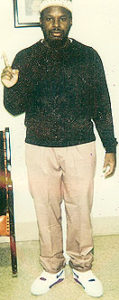
Ralph has proclaimed his innocence from day one and has never wavered. He is a man sentenced to lose his life for three murders.
He was prosecuted by a man who valued the number of death penalty convictions he could accumulate, a man who has been accused of misconduct in other cases, and a man who was willing to not share some of the truth that he knew at Ralph’s trial in order to better his odds.
Several witnesses who were key components of the case had criminal backgrounds and something to personally gain by pointing to Ralph as the murderer.
The only eyewitness, who claimed to recognize Ralph from the holes in a ski mask, was also under suspicion for the same murders.
In 1983 Ralph Trent Stokes was nineteen years old. He has been in prison for thirty-four years. He has been facing the death penalty for over three decades. Was the case against Ralph molded to fit the crime, truth be damned?
The author, Rev. Cari Rush Willis, ministers to men on Death Row in Virginia and North Carolina.
Isaiah 53:5: “He was wounded for our transgressions and bruised for our iniquities.” (NIV)
Over the last six months or so, I have become friends with a Franciscan friar, Fr. Steve Patti, O.F.M., who also visits with people on death row. I read an op-ed essay that he had written, and I noticed that he used a lot of the same terminology that I use when I talk about my visits with my friends on the row. Right away, I wanted to get to know him. Over these months, he has become a confidant like no other person because he has been there – he gets it – he understands what I have seen, heard, and felt.
During our last visit, I shared the horrific details, insane nuances, and bits of grace when walking with my beloved friend before, during, and after his execution. I gave him dribs and drabs, not being able to connect any of the dots as I usually do. This time it was a dot here – a dot there – a dot way out yonder. At the end of it all he said, “It sounds like everyone involved in the execution was wounded.” I have to say that one of my favorite things about hanging out with him is his uncanny ability to name things. He identifies things so succinctly, but also profoundly deep, that it lingers on my lips and in my heart. “Wow. Wounded. Yes. I will have to think about that. I think there is something there. Wow. Wounded.”
The Scripture that kept coming back to me again and again was the text in Isaiah that foretells of the Messiah: “He was wounded for our transgressions and bruised for our iniquities.” I had to look up the Hebrew to see what the term “wounded” meant. I found out that it means “pierced or bore through” as well as “to profane oneself, defile oneself, and pollute oneself.” What struck me the most about those definitions is that woundedness includes profaning, defiling, and polluting oneself. I had never heard, and actually never expected, those definitions.
As the state officials and correctional officers were each taking part in my beloved friend’s execution, they were indeed profaning, defiling, and polluting themselves as they slyly looked on at all that was happening. No one was staring at the proceedings. Every one of them was looking down, looking away, and then peeking over to see what was going on with my beloved friend.
Those of us who were watching from the observation room were indeed profaning, defiling, and polluting ourselves. A sign over the two large windows in front of us said “Stay Seated. Stay Silent.” We were to show no emotion, and we were to sit in our seat and act as well behaved participants in a sweltering room in order to watch this dreadful drama unfold before us.
Even those who were standing outside the prison, whether they were standing in support of the death penalty or were standing against the death penalty, were being profaned, defiled, and polluted. They could not escape the horror of the evening as they waited and waited and waited for some word from anyone as to what was happening inside the prison. Some of them stood in a circle praying for a Holy God to be ever present to everyone who was being caught up in this appalling evening. Some just stood by themselves and stared at the prison in the distance.
And finally, my friend certainly was being defiled and polluted as he was pumped full of drugs that were never meant to kill someone. He was wounded in the worst possible way. As a society, we want to forget how Jesus totally reframed an “eye for an eye” when he said, “Here’s another old saying that deserves a second look: ‘Eye for eye, tooth for tooth.’ Is that going to get us anywhere? No more tit-for-tat stuff.” (Matthew 5:38, 42, The Message Bible)
No one cared to get to know the man that they were killing in this macabre process. The judges and governor had made up their mind on who he was based upon the media headlines. No one saw any need to sit with the man that was on that execution table to find out if his life had changed and whether or not he was having a positive influence on those around him. They defined him by his crime that he committed years ago. And yet, my beloved friend was not his crime. None of us are defined by our worst acts. My friend was one of the most loving people I had ever met. He was also my theological partner who opened my eyes to see God’s irrational and unbounded love and mercy towards us all. He showed me facets of God that I would have never seen without his unique set of eyes. He loved me with a big love – a really Big Love! He lived his life based upon Jesus’ words to love God and to love one’s enemy as well (Matthew 5:44). It was love that he spoke of at the very end of his life – grateful for the overwhelming love that he had received and telling all of us who were around him that he loved us with an enormous love.
I have thought often of Mary under the cross. I simply cannot understand the weight of her grief. Part of her soul must have died as she watched her beloved son being killed by those bent on hate screaming, “Crucify him! Crucify him!” In seminary, we were taught to “listen” to Scripture both for what is written there, but also what isn’t written. In other words, we were taught to listen to the muteness – the silence – of the text. We never hear a single word from Mary or any of the women who were under the cross with her. There is a voicelessness – a muteness – to grief. How do you put the enormity of that kind of grief, pain, and trauma into words?
And Jesus was mostly silent while he hung from the cross that held him. One of the few words that he spoke was a question that he screamed at the top of his lungs, “Why!?!?!” The scream happened as the darkness descended on the land. And yet, when Jesus bellowed out, “Why?!?!” from the cross, he surely looked down and saw Mary, John, and the other women. Their presence reminded him that God had not left him, God was with him.
As I sat there looking on to see a man I greatly loved being killed by the state, I was not only told to be silent by the same system that was killing him, but I also lost any voice because there simply are no words for such a barbaric act. As I exited the prison and made my way to my clergy friends, family members, and others, all I had were hugs and tears. All I could do was speak of our beloved friend’s overwhelming love for each of us. But even those words were quick statements, “He loved you so… he loved you so!” I didn’t have any great words of comfort. I just had my presence.
As my beloved friend was brought into the execution chamber, he strained to see those of us who were there to just pour out all of our love on him. By our presence, he knew that God had not abandoned him during this most difficult hour of his life. God’s love was present because we were present. I even took my shoes off because, even if I was the only person who knew it, I knew that I was walking on holy ground even if the state was using the space for evil intent. Those of us who loved our friend were willing to be wounded by the prison system in order to “be Christ” in the midst of the horrific and the profane.
On the day that I first met my beloved friend almost two years ago, I wrote in my journal the following: “I still don’t understand why people don’t get that we become people who kill when we say the death penalty is okay. We are all murderers. We all should get life behind bars.” Each of us took part in a premeditated murder. None of us are exempt. All of us are profaned, defiled, and polluted because we executed another human being.
And just like Christ, I will forever be known by the wounds I carry in my heart.
Not so long ago, I posted an article written by a Rev. Cari Willis, detailing the day she had to say goodbye to her friend on death row. Her words changed me.
I didn’t want to think about ‘Death Row’ before that post. It was distant and removed from my reality, the least of my worries – until she described what it was like for her to accompany her friend on the day of his death and being separated by glass as she watched him lose his life surrounded by men doing their job – killing him. She made it real.
So – I contacted someone on death row. One handwritten letter later, I knew I would keep moving forward with my penpal. And – I’m scared, honestly. I’m scared, because after one letter I felt his humanity, let him into my heart, and now consider him a friend. A friend I will have to say goodbye to when his day comes to be surrounded by men whose job it is to take his life.
I didn’t have a solid plan when I wrote that first letter. I wanted to, in some way, try and share death row through my blog. I wanted to possibly get to know someone on the ‘row’, as he calls it, sharing that experience – so people would no longer feel that it was far removed from their lives. I wanted to impress on people the gravity of this country’s practice of taking life as a form of punishment. I didn’t necessarily want to ever talk about the law, or crime, or even a name. I had no plan. Still don’t.
What I know for certain is – after holding one handwritten letter in my hands – I will never turn back. I heard someone say this week, “When you see injustice, you can’t turn away,” and I can’t.
It turns out my new friend isn’t very keen on the idea of me getting to know him in a public forum. And, I won’t share his thoughts or feelings or details of our friendship without his permission, so you may not hear much more about him, or you may hear a lot. We’ll see.
What I do want to share about him is this. In spite of the actions that got him where he is, he has a heart that beats. He has a mind that remembers a life he will never be a part of again. He is as human and flawed and vulnerable as I am. He doesn’t like to call it ‘death’ row, because he doesn’t like to keep saying the word death. It is the ‘row’. And I also know my heart hurts for him, knowing he wakes up every day to the knowledge he will one day be executed. Some people would call that justice, to try and justify it for the pain he caused others. That is excusing the horrible act of murder. There is no excuse for murder.
I could go on and on about how prison society is and the many rules broken on a daily basis, not with malicious intent but as a necessity to survive, be comfortable and feel as much normalcy as possible. I’ve been told it’s selfish that I risk phone calls and visits to have an extra piece of chicken or survive in comfort, and I don’t care. It has nothing to do with selfishness and not caring.
I am serving LWOP in prison in a very, very harsh, restrictive and oppressive environment. I take full responsibility for my own actions, and it’s no one else’s fault but my own that I am in prison, regardless of the facts and circumstances of my case. I don’t live in prison, I survive in prison. I must go through the pain, the torture, the dehumanizing, the mistreatment, the restrictions, the oppression, the chaos, the violence, the disrespect, the boredom, the monotony, the loneliness, the confusion, the scariness, the coldness, the darkness, the hopelessness, the loss and the constant unstable unpredictability of prison life. I don’t function in my daily life of ‘prison survival’ not caring about family, friends, loved ones and connections on the outside.
Mail is a right in prison that the prison cannot deny; phone calls and visits are a “privilege” that can be taken away at any time, whether I do something wrong or not! I love being able to call people on the phone, but phone calls in prison are expensive, and not everyone accepts collect calls or sets up phone accounts for us to call them. The times we are able to actually use the phone is not always a convenient time for those on the outside. They are either at work or unavailable to answer the phone. So, for me, I don’t get my hopes up, nor depend on phone calls.
Visits – what person in prison would not love to receive a visit either contact or noncontact? It’s a wonderful thing. Someone actually is thinking of you and wants to see you and spend time with you in person, that is a very wonderful feeling indeed. They drive, fly and subject themselves to searches etc., to spend quality time with you and make the effort to share comfort and a sense of normalcy with you. But not everyone receives a visit. Many people, even your own flesh and blood, do not think of you, do not have time to visit, do not try, do not want to visit or whatever the reason may be. Visits are a luxury many, many, many prisoners do not get or have. It’s just a privilege that is not guaranteed and can be taken away at any time.
Visits and phone calls are great, but I do not expect them. Yes, I may hope, wish and yearn to share in these things, but in our reality, they probably won’t happen, so I don’t survive in my everyday life thinking about a privilege I may or may not get. It doesn’t mean I am selfish or do not care, I just survive this life realistically in the moment from day to day because even tomorrow is “not guaranteed”.
People in the free world live their lives as comfortable as possible and that’s all we do as well. I’m not talking about breaking the rules with malicious intent or doing wrong because we are reckless and do not care. There are so many petty, restrictive and oppressive rules in prison that make our lives harder than they have to be, which is not right at all! I survive LWOP in a manner that is as comfortable as possible, even if it means breaking rules, for it is worth the risk.
Many prisoners do not want to lose privileges nor have to break rules, even the most petty, but it’s a fact of life behind these bars and walls. When I got locked down, I asked someone I was cool with if they could give me a pen, some paper and an envelope so I could write my loved ones and let them know my situation, since IDOC violated their own rules, policies and procedures and did not give me any of my personal property, not even sheets or a blanket to sleep with at night, so I broke the rules. It was a necessity, not selfishness or not caring about what privileges I may lose, but a necessity for me. Maybe people will understand and maybe they won’t, but to truly grasp it, someone must put themselves in our shoes and understand most of it is not with malicious intent nor because we are selfish and do not care. It’s all part of the many different ways that we survive in such an unpredictable dirty, cold, lonely, boring, monotonous, chaotic, restrictive, mean, harsh, inhumane, sad, confusing, dark, bleak, unforgiving and oppressive environment.
I just wanted to give some clarification and understanding on that, especially for those who do not understand or think it’s selfish and carelessness when it’s not. Any questions, comments, etc., post them or you can get at me directly always. Take care.
Gerard G. Schultz Jr. R55165
Pontiac C.C.
P.O. Box 99
Pontiac, Illinois 61764
U.S.A.


 This week while I was driving my kids home from swim practice, a man lost his fight to live. He didn’t struggle during his execution, but he chanted, trying to make his voice heard and be a part of this place till his last breath.
 That being said, I’m starting to see the light at the nursing home entrance. I’m surrounded by walkers, canes and crutches (oh, my). It’s like a geriatric Wizard of Oz, without the magic slippers. I live in a minimum security unit in the Southeast corner of Texas, south of Houston. There are around 1,500 inmates here, 450-500 of which are medically unassigned – pardon the expression, ‘the broke dicks’.
 If I could touch your hand
 I pray that this fury I feel over that comment doesn’t ruin me. As I sit here, I think of a friend of mine that shared a story with me. He’s in prison, and he’s going to be put to death some day for his crimes. I asked him about his earliest memories. He told me what they were. I promised not to share them without his permission, and I won’t. What I will say is that his earliest memories are what nightmares are made of. He was four years old. He was just a fragile, vulnerable little boy. Things happened to him that I can’t even think about without my heart breaking. Things happened to him that no little boy should ever, ever endure. He didn’t get help though. His life didn’t get better. He had no heroes. Not one. The world is at fault for what happened to that little boy and the consequences of how that formed his reactions to events in his life.
 It happens. All lawyers aren’t motivated by what the public likes to believe they are – justice. There are a good number who are motivated by money. For others, their motivation may be career advancement. Some are motivated by fear of losing their position.
 Ralph has proclaimed his innocence from day one and has never wavered. He is a man sentenced to lose his life for three murders.
 The Scripture that kept coming back to me again and again was the text in Isaiah that foretells of the Messiah: “He was wounded for our transgressions and bruised for our iniquities.” I had to look up the Hebrew to see what the term “wounded” meant. I found out that it means “pierced or bore through” as well as “to profane oneself, defile oneself, and pollute oneself.” What struck me the most about those definitions is that woundedness includes profaning, defiling, and polluting oneself. I had never heard, and actually never expected, those definitions.
 I didn’t want to think about ‘Death Row’ before that post. It was distant and removed from my reality, the least of my worries – until she described what it was like for her to accompany her friend on the day of his death and being separated by glass as she watched him lose his life surrounded by men doing their job – killing him. She made it real.
 I am serving LWOP in prison in a very, very harsh, restrictive and oppressive environment. I take full responsibility for my own actions, and it’s no one else’s fault but my own that I am in prison, regardless of the facts and circumstances of my case. I don’t live in prison, I survive in prison. I must go through the pain, the torture, the dehumanizing, the mistreatment, the restrictions, the oppression, the chaos, the violence, the disrespect, the boredom, the monotony, the loneliness, the confusion, the scariness, the coldness, the darkness, the hopelessness, the loss and the constant unstable unpredictability of prison life. I don’t function in my daily life of ‘prison survival’ not caring about family, friends, loved ones and connections on the outside.