Originally published by www.uncaptivevoices.wordpress.com.
 My best friend, my protector, my teacher, and my inspiration in anything I ever accomplished or failed at was my father. His name was Bob. If I had known I would only have him in my life for twenty-seven years, I would have crammed more time into each and every day. But none of us know exactly when we’re going to leave or how much time is allotted us.
I’m not a deeply religious person. That being said, it’s not as if I’m not a spiritual man. After all, someone has to be in charge of all this chaos. My dad used to say things. Sometimes they were deeply profound, sometimes they were funny, and they always had some meaning. I wish I had been paying more attention to him; more than likely I wouldn’t be writing this from a prison if I had. However, I feel everyone should know about ‘The Book Of Bob’. You won’t find it in the library or at a bookstore or on a newsstand. It’s not available in fine print or large. It’s embedded in my life and written on my heart.
My dad, born Robert Norris Green, was brought into this world on December 1, 1932. He left too soon, on June 13, 1988. He was only 56 years old, but he looked like he was in his early 40’s. He passed a yearly physical and stress test a month before a blood clot formed in his leg. It broke loose and traveled to his heart. He died instantly. There were no anti-clotting agents back then. Otherwise, I wouldn’t be here now, and he would be sitting somewhere, drinking coffee, and telling me a joke or adding to ‘the book’.
He used to tell me things like, “Some people see the glass as half-full and some half-empty.” My dad thought the glass was too big.
Or, “The world is a small place, but I wouldn’t want to have to paint it.”
My favorite, “Life is like a crap sandwich, the more bread you have, the less crap you have to eat.”
I developed my sense of humor based on my dad’s little sayings, but he never taught me how to cope with difficult people. Or maybe he did, in his own way. The man would give the shirt off his back if he thought someone needed it. He used to help complete strangers, the homeless, stray dogs and cats. There wasn’t a moment in my life that I felt I couldn’t tell my dad what I’d done or hadn’t done – never a second I felt I couldn’t depend on him. It is through my dad that I was taught to love and express my feelings.
If everyone had such a figure in their lives, the world would be a better place. That is why I get frustrated in this place. It separates and divides families for years at a time and does nothing to try and mend or heal broken fences or relationships. Since I’ve been incarcerated, I have never been closer than 300 miles from my adopted home in East Texas (I was born in Columbus, Ohio).
I see inmates struggle because they have lost what is essential to being human: relationships, hope, faith and yes – love. Many, more than likely, never had a father or ‘Dad’, and it saddens me to know that the next generation will likely repeat the process of being locked away from family and friends.
Bob used to tell me that there is a part of each of us that is good. Sometimes you have to look harder in some to find it, but it’s there. I’ve seen hardened men break down and cry when they finally realize what is important and what they’ve lost. We need to look for that, grow it, and accept it as the normal – not the impossible. We need more of the type I was graced to have as my dad – my best friend. We need each other, and we need more Bob.
 It’s funny how that happens. You live life forward, but you learn from it backward…
ABOUT THE AUTHOR Beginning to feel a little less ‘Shipwrecked, Abandoned, and Misunderstood’. In spite of 25 years behind bars, John Green continues to wake up every day holding on to his humanity and on a mission to change the world for the better.
John Green #671771
C.T. Terrell Unit A150
1300 FM655
Rosharon, TX 77583

 Every Sunday when I was a kid my grandmother would get up at 5:00 a.m. to make Sunday dinner. We would all go to church, and before we left, dinner would be fixed and on the stove. And, she always made cornbread. She could make it all sorts of ways – jalapeno, cheese, pork – and she would bake it in all types of pans.
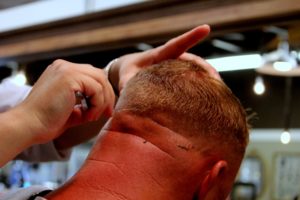 At this barber you are shaved, once again much like a sheep, and given a comb (which you won’t need for a few months). From there, you are escorted to a row (cells). After that, it’s a new experience every day. You are taken to medical where your needs are evaluated and you are given medication to keep you alive if deemed necessary.
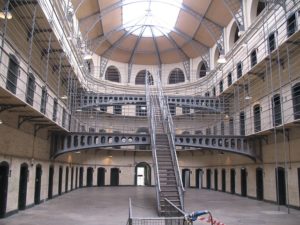 We arrived after a ten hour bus ride. That’s when the fun began. That’s where dog eat dog starts. A good number of the inmates sent to French Robertson are, to sum it up in one word, predators. The guards were there for two reasons – to keep anyone from escaping and to keep the weaker inmates from being eaten. All the education in the world can’t help you. You either give up or you fight.

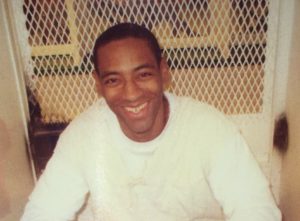 ABOUT THE WRITER. Travis Runnels, is a published author, and is currently working on his second novel. He lives on Death Row.
 While watching Charlotte play with her web in search for Wilbur
 My dad took me to the family doctor, and he tested my urine and called the children’s hospital in Columbus, Ohio, to get me admitted. Once there, my blood tested at 901 – I was on the edge of a coma. I was in the ICU for a week before they moved me to a regular room, where my diabetic training commenced.
 However, if mom discovered my transgressions, she’d beat me silly, yell, scream and ground me for weeks on end. I didn’t get caught often, but when I did, there was hell to pay. When I turned sixteen, she took me to a church counselor to see, “What the @?!#!,” was wrong with me.
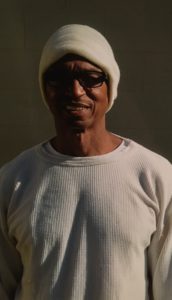 This is Ernest Parker, proud father and grandfather. His warmth runs deeper than the smile. His friends speak of him fondly, and I recently had the privilege of reading a letter he wrote, in which he described a fellow inmate. Of his friend, he said, “His smile is like a beacon of light shining in the valley of despair.” While speaking so highly of his friend, Ernest Parker also described his home as the ‘valley of despair’. His home of nearly three decades has been a federal prison.
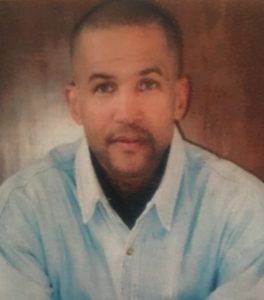 ABOUT THE AUTHOR. Darrell has contributed several pieces to this site and continues to write. He wrote this piece not long ago, shortly after a friend of his lost his life inside his cell.