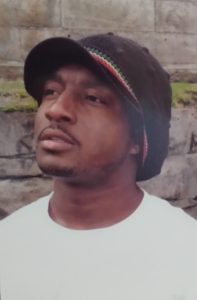
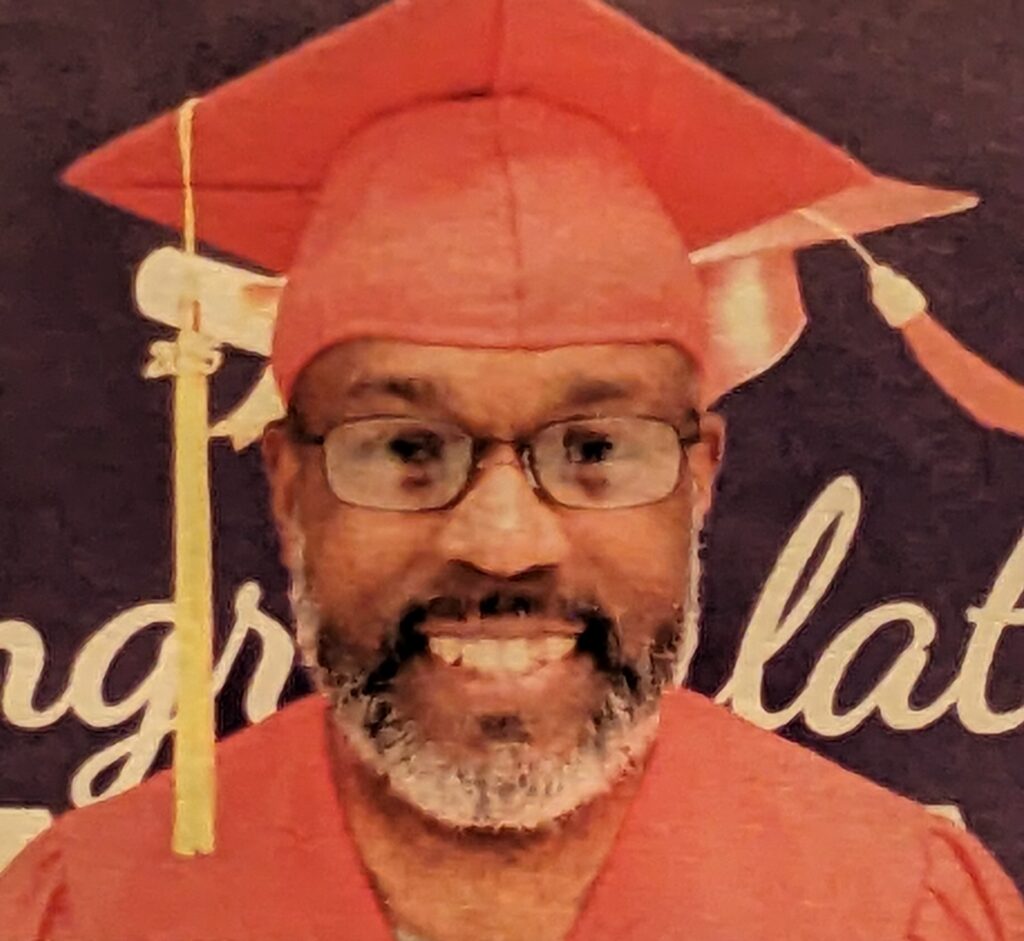
I grew up being the oddball, labeled a “black sheep.” I used to think the term was racist until I realized there are black sheep of all colors. But any way you color it, all I could come to terms with was that I rarely fit in. Anywhere.
So, I made a decision. Instead of trying to trim my edges to fit everyone else’s box, I became an all around do-what-I-want, nobody-tells-me type. Box the world, don’t box me. On the outside I made it look good, continued to walk like I talked, but on the inside it all felt wrong.
Fast forward a few years, ‘cause that’s really how time flies, I found my way to a place where it was easy to be that way… you know the rest. The state penitentiary was merciless and very unkind to me, a vicious cycle at best. Yet this is the one place that openly received me, though I rightfully earned my ten years in captivity. I made a commitment though – I was not leaving the way I came in.
Time settled as it does, and then the day arrived. My eyes saw the heavens open up, and in my pain and tears, I asked God to help me change. In that moment, I felt relief. As I spoke the name of Jesus that day, comfort filled my heart.
I sensed my brand new start in that moment. As I prayed and smiled, I was reminded that God sent someone before me who was rejected, someone who could help me learn how to live. He set me apart long ago, and only now do I realize I am who and where I’ve always belonged, in the loving arms of the biggest one ever rejected.
ABOUT THE WRITER. Talena Banks is new to the WITS family, and fairly new to creative writing, but you wouldn’t know it. Faith is often overlooked in writing spaces, though it is a source of strength for so many. I hope this writer shares more with us.
Talena Banks can be contacted at: Talena Banks #1177254 4370 Smiley Road Las Vegas, NV 89115
The Fast Break Book Club of NC Death Row ended 2025 reading Colleen Hoover’s Too Late. It was a story of domestic violence, forbidden romance, and impunity for those in power. Too Late was selected by this writer, because after reading Hoover’s Verity, I wanted to see what else she could do.
Gathered around a prison day room table, the Fast Break members discussed their thoughts…
“I liked Too Late. It was an easy read, but the story wasn’t done all that well. Some parts were not that believable and some, the characters lacked common sense. I did like the romance between Sloane and Luke – it was intense. Overall the book was alright; not great.” – Rodney Taylor
“This novel was different than Hoover’s normal writing style. I appreciated her for taking a chance. My favorite character was Luke’s partner, Dalton, because homeboys should have each other’s backs like that. I was disappointed the crux of the story hinged on a simple lie because Sloane seemed too smart to be so easily fooled.” – Resolute
“I started out thinking Too Late might be just as good as Hoover’s Verity, but ultimately it fell short. It was a page turner, but too typical a love story; not a book I would recommend.” – Marcus Mitchell
“Too Late was a good book to read, good enough that I would read something else Collen Hoover. The highlight for me was there weren’t that many characters to keep up with, but I would’ve liked to see the bad guy live. I didn’t get to read Verity but I hear you guys talk about it a lot. Do any of y’all still got that book?” – Darrell Maness
“After Verity, I thought I couldn’t go wrong selecting another Colleen Hoover book… but nope, I guess you can’t judge a book by its author. In Too Late, it set a steady pace and it was intense at moments, but it didn’t deliver the gut wrenching story as advertised. The antagonist, Asa, was not all that believable as a prominent dope dealer who didn’t make one sale throughout the book. And the budding romance between the Sloane and Luke characters was predictable in the end. Still, I admired the finished project that Hoover was able to accomplish as a product of writer’s block. So the book wasn’t a failure, maybe that was my own expectation. Maybe Verity was one of a kind.” – Chanton (Terry Robinson)
“Too Late was an interesting read, and the anticipation was well put together. The build up was consistent; I was just disappointed in the results. No one died until the end. And every time something was about to happen, I just knew Carter was going to save Sloane. It left a lot to be desired and… oh yeah, my favorite character was Asa, don’t ask me why.” – Jeremy Murrell
There it is – the Fast Break Book Club review on Colleen Hoover’s Too Late. The author is still quite the remarkable writer and has had some of her works adapted into movies. Next up for the Fast Break readers is Jeanine Cummins American Dirt. We’ll convene again in February, 2026, with more feedback to come.
“Look to the Lord and his strength; seek his face always.”
Psalm 105:4 (NIV)
Everyone knows small children rely on their parents for necessities, things like food, water, clothes, shelter. But as an adult, I’d forgotten how much needier kids really are until I spent a day with my friend Kevin and his four-year-old son, KJ. When KJ couldn’t open his soda, he brought it to Kevin. After KJ brushed his teeth, he got right in Kevin’s face and grinned for inspection. When we took KJ to the park, I noticed that whether he climbed on the monkey bars, slid down the slide or swayed on a swing, KJ constantly sought Kevin’s gaze – as if for approval. Even when Kevin and I were lost in conversation, KJ would shamelessly run over, get between us, grab Kevin’s face and say, “Daddy! Stop talking to Uncle George and look at me!” Instead of getting irritated, Kevin seemed to actually delight in his son’s incessant need for attention.
Reflecting on that time all these years later, I believe KJ’s dependency on his dad can model how we adults should depend on God, our heavenly Father. Perhaps it’s partly what Jesus meant when he counseled us to ‘become as little children’ (Matthew 18:3). When weak, seek God’s strength. Before making decisions, seek God’s guidance, wisdom and approval. When hurt, anxious, or lonely, we should seek God’s comfort, healing, reassurance. No matter how advanced our age, we should never outgrow our reliance on God – for we will always be his beloved children.
Amen.
ABOUT THE AUTHOR. George Wilkerson is an accomplished writer, poet and artist. He is the author of Interface and Bone Orchard, as well as co-author of Inside: Voices from Death Row and Beneath Our Numbers. He is editor of Compassion and has had speaking engagements on multiple platforms, adding to discussions on the death penalty, faith, the justice system, and various other topics.
George’s writing has been included in The Upper Room, a daily devotional guide, PEN America and various other publications. More recently, George partnered with Kat Brodie, authoring Digging Deep, a book of writing prompts intended to guide readers to self-reflection and growth. Much of George’s work can be found at katbrodie.com/georgewilkerson/.
George Wilkerson can be contacted at:
George T. Wilkerson #0900281 Central Prison P.O. Box 247 Phoenix, MD 21131
He can also be contacted via textbehind.com and gettingout.com
Note: This is seventh in a series. We often see innocent individuals get out of prison after decades – but we can never fully appreciate what they go through. And, sadly, not everyone who is innocent gets out. This is a small attempt to touch on the surface of what it is like to be innocent and on death row. How did Terry Robinson end up on death row? Two people physically connected to the crime scene accused Robinson of murder. This most recent entry was not actually obtained from Terry’s journal, but is a brief clip from a conversation that took place In The Cellar.
ABOUT THE AUTHOR: Terry Robinson writes under the pen name ‘Chanton’, is a member of the Board of Directors of WITS, and heads up a book club on NC’s Death Row. He is currently working on a work of fiction, his memoir and co-authoring a project with his In The Cellar co-host, Mumin. Terry is co-author of Beneath Our Numbers: A Collaborative Memoir From Inside Mass Incarceration. He has always maintained his innocence, and WITS will continue to share that innocence.
Terry can be contacted at: Terry Robinson #0349019 Central Prison P.O. Box 247 Phoenix, MD 21131 OR textbehind.com
There is also a Facebook page that is not maintained by Terry, but does share all his work, Terry ‘Duck’ Robinson. Any messages left there for Terry will be forwarded to him.
My ten-year-old hands gripped the bottom of the old wooden window and hoisted it open as far as I could. The pane had long been busted out, sharp edges of glass still protruding out of its frame. As usual, the crisp 2 a.m. air stung the back of my head as I lay in a fetal position with my back to the opening, wrapped in my piss saturated sheet. The moisture and the unyielding night air contributed to my fierce grip, securing the thin fabric around my body. My grip wasn’t only meant to shield me from the chilling night air, there was something much colder about. I suppose one could have mistaken me for a mummy or perhaps a body wrapped for burial before being lowered into the Abyss.
Colder than ice itself, is the heart of a mother that would abuse their own child.
Boom! My bedroom door slammed into the wall. Fear paralyzed me, even though I’d endured these night attacks for years. I don’t know how, but I had drifted off to sleep, missing all the warning signs that ‘colder than ice’ was near. I also missed my opportunity for a hasty escape into the prickly arms of the 2 a.m. night air outside my window. Oh, how I wished I was a mummy!
Mummified.
Standing in the doorway, the look in my mother’s eyes chilled me to the bone, as it did every time. To my young eyes, she appeared to levitate a couple of inches off the floor and glide closer to my bed, the odor of alcohol seeping from her pores and into my nostrils.
* * * * *
I was awakened by the birds chirping outside my window and smiled. Surviving yet another wintery night storm gave me hope. How do the birds endure the bitter cold each night and show up every morning singing and dancing? I wished I could be like the birds outside my window.
Then I heard the knob of my bedroom door. This was rare, leaving me unsure how to proceed, as I stared at the doorway and my mother appeared. Filled with alarm, my mind raced to figure out what was about to happen since I rarely saw my mother in my room during the day. I knew it was vital to assess quickly and accurately. Then her voice cut through the air, sounding different, less hostile, less angry. “Go take a bath, and put these on,” she said, throwing me a new t-shirt and pair of jeans. “Be ready to leave in twenty minutes.”
Without hesitation, I complied, tears forming in the uncertainty of it all.
Let’s go, Larry!
Not heeding my mother’s command meant pain, plain and simple. As I walked out the front door after my mother I noticed the broken door jam hindering our front door from closing and locking properly. Scenes from the violent attack my mother unleashed on her new boyfriend the night before crashed back to my mind, tightening my chest. My mother’s bloodcurdling screams came to mind as my eyes landed on the blood stains on the floor, wall and sofa. Hell, it was everywhere. Things ended badly for the man after he dared to kick in my mom’s front door.
I was about four or five steps behind my mother as we raced up the street, going to only God knew where, when she broke her stride and I nearly ran into her. Then it happened. She turned and reached for my hand, telling me to ‘come on’. With our hands firmly gripped together, she all but dragged me to the bus stop.
She grabbed my hand!
I wasn’t sure what phenomena blew my mind more, my mother’s hand gripping mine, or the fact that I was about to board the bus for the first time. I had ridden, hanging onto the back, several times, but never actually boarded. What a delight! In that moment, I felt safe; important even! It was new, and I dared not fight it because whatever it was, I liked it. Smiling, I looked out the bus window, watching my neighborhood disappear. My eyes were again drawn to my hand cuddled inside my mother’s. How were those same hands that soft and tender?
Is this Love?
My mother pulled the chord that ran the length of the bus before gathering her purse and me as the bus slowed down and pulled over. Walking through the folding doors, I was caught off guard by everything I saw. This was a world I never knew existed. Cars were whizzing by, people were everywhere and there were more restaurants and stores than I could ever count. We made our way across the highway and right up to the Golden Corral.
Once inside, my mother pulled out a wad of money and handed it to the pretty white woman behind the register. I liked the way the lady spoke to us, “You two enjoy your meal, eat all you want!” I smiled in kind, and as we walked farther into the restaurant the sweet smell of food – fish, bread, chocolate, fried chicken and more – caused me to salivate. My heart began to race as my mother handed me a tray with various empty dishes, napkins and a set of shiny silverware. I could literally see my reflection in the face of the spoon, and I remember looking happy.
I smiled.
My mother and I got situated at a table, and she again reached for my hand. I was sure I was experiencing the thing called ‘love’. Her face was different than what I was used to, beautiful. I had never remembered seeing her teeth so plainly. As interesting as the thought of eating was, I was captivated by her smile.
Then Mama let my hand go and told me to go get whatever I wanted. That was the day I fell in love with barbequed pork chops! I gorged myself on porkchops, long fish (Mama called it trout), and sliced ham. Mama made me also eat some green beans and a bit of mashed potatoes, but I was not mad or upset at all. I took notice of how lightly my mother ate that day. The few times I remember looking up, I felt she was happy to be looking at me. Maybe she was feeling it too, that thing called love.
Then it happened! No doubt also having the best day of his life, a kid walked by licking the hell out of a triple stacked ice-cream cone. My head spun in all directions searching for where he may have gotten it. And there it was on the other side of the buffet line, a two sided ice cream machine, offering chocolate and vanilla. Alongside the machine were several side options for topping off the ice cream. My mother, still eyeing me, handed me a bowl. Love escaped her lips yet again as she told me to go get what I wanted.
Happy birthday, Larry.
While eating my ice cream, my mother came around to sit beside me. She leaned closer to ask, “Do you know what today is?”
When I didn’t respond she told me – “Larry, today is your tenth birthday!”
I took in what she was saying without asking any questions. It didn’t really matter what she was saying. Whatever was happening, which I fully believe was that thing called love, just seeing the smile it put on my mother’s face demanded that I be all in for whatever it was. And I certainly was.
I didn’t think things could get any better, yet they did. I generally knew that gifts were often given to people on their birthdays. They were given to kids at Christmas time for being good all year. I remember seeing other kids with new bikes, Big Wheels, BB guns, remote control cars, new shoes and other things. It always felt bad in my chest, and I had learned never to expect those things. Mama told me quite often that I was no good and she wished she never had me. So when my mother asked me if I was ready for my gift, my throat got dry and tears threatened to fall.
Shining bright!
My mother ushered me into a huge building, the letters on top reading, ‘Movie Theater’. Again, she pulled out a wad of money, passing some through a little trap window, before guiding me into the middle of what looked to be a million chairs in front of the biggest TV I had ever seen. Again I thought, was love here too? My mother laid her coat and purse in my lap before telling me to sit still, she’d be right back.
After she left, the already dim lights ceased to shine at all before the brightest lights I had ever seen blasted onto the giant screen, along with a thunderous roar that accompanied the action on the screen. Wide-eyed, heart pounding, I knew this was truly the best day of my life. It only got better when Mama returned with two buckets of butter smothered popcorn, Coca Cola and jelly beans. We watched Howard The Duck that day, and I have never forgotten it, but what shines the brightest in my heart from that day is the laughter I heard from my mother. Her smile is forever etched on my heart and in my mind. Maybe, just maybe, we could remain in that moment, surrounded by that thing I think is called love.
ABOUT THE WRITER. Larry Thompson, Jr. is a well respected and talented WITS writer. He is also a man of strong faith, whose positive energy has an impact on those around him. He is a delight to work with.
We’re born with ambition to live, unbeleaguered by time.
Years tick by, counted in birthdays and anniversaries, the years lived before we die.
I waited for the school bell to signal the end of the day; at work, the clock to tell of time to go home.
There was elation at the end of a span of time, confined by school or work, rewarded with time away before going back.
At the age of 63, I’m 26 years in on a life sentence, Death by Incarceration. I serve perpetual time with no anticipation of end.
Time is my life.
No chance to start anew, seasons tick by as staff measure time in shifts and promotions, short-timers make parole, sometimes repeatedly returning.
I could not have imagined how foolishly I would spend precious time, until life would be lost to it.
Now, it is imperative I mentally venture out to spend time beyond this enclosed space, to live vicariously through 15-minute phone calls. Television is a gateway to new information, gadgets or tragedy.
A world I am no longer a part of ebbs and flows through a time that is different than mine, a world where there is no scent of a flower or the sound of bell when walking into a department store.
Memories now sustain life through time gone by. Life finds meaning through giving back, that honor may be bestowed on those hurt over time by the life I lived.
Don’t waste the time you’ve been given, make the life you have worth your time.
ABOUT THE WRITER. Jeffery Shockley has been a contributor to the WITS newsletter and his writing can also be found at Prison JournalismProject, Prison Writers, and Muck Rack. Common themes of his writing reflect what Jeffery shared here, encouraging people to find purpose and making the most of the time one has. If you would like to contact Mr. Shockley, you can do so at:
Jeffery A. Shockley #ES4796 SMART COMMUNICATIONS/PADOC (SCI MERCER) P.O. Box 330298 St. Petersburg, FL 33733
The craziest thing happened to me on Thursday. As God as my witness, this is exactly how it went down. At around 11:30 a.m. I was working on a water main break that happened over the weekend, nearly shutting down and evacuating the prison. I’m in the Maintenance Shop, the phone rings, and my officer answers it. He says a few words into the phone as he looks at me smiling. After he hangs up, he walks to the desk where I am eating lunch and says, “I don’t know what exactly is going on Steve, but that was the Administrator and the Center Lieutenant. Go back to your unit and get your things together. You are going home today! I think the clemency you applied for might’ve came through. I double checked, and they are saying it is definitely you. They have your release paperwork with your photo on it and your SBI#. You are walking out the door at 1:00 p.m. today.“
No sooner had he told me, I felt the blood leave my face. A Sergeant I’ve worked with almost everyday over the last eight years and a few other officers came into the shop, one saying, “Holy shit, Steve, we just heard. You are going home, dude!”
At this point, I was in utter shock, tearing up and shaking a bit. Inmates were hugging me, cops were openly shaking my hand, and I was walking back to my unit to get my things before heading to intake for release. It is a huge no-no for officers to shake hands with inmates, it does not happen, and I had sergeants, lieutenants, civilian staff and about 25 officers shake my hand, saying things like, “If anybody deserves to get out early, it’s you Steve.” “You’ve kept this shit hole open with all the work you’ve done.”
I was beside myself with emotion. When I got to my unit, the officers were blown away, having gotten calls that I was getting released. They double checked and were told, “It’s him, stop calling here, tell him to get to intake with his shit.”
I asked if I could make a phone call to tell somebody I was getting out. “Absolutely, get on the phone and call.” I called my friend Alan, and he was overwhelmed with happiness and emotion. I told him I needed a ride. I tried to call my sister Linda, and she didn’t answer. I tried to call my friend Ammie, and she didn’t answer. I have nobody else to call, and as I’m on the phone, I realize how alone I am in this world.
It was getting close to 1:00 p.m. and my time to walk out the door when the phone rang in my unit. My officer looked over at me, and I heard him say, “I’m NOT telling him that, you better send somebody here to tell him that, I’m not.” And a few minutes later I was told it was all a huge mistake made in Classification. There was a guy with the same last name as me. His name was David Goff, and he was getting released. How my SBI# and face sheet photo ended up on all his release paperwork was a sincere, unintentional, massive f#$@-up.
People were amazed how calm I remained, more upset than I was. The Administration and some officers were screaming at the people who made the mistake. I heard things like, “I just told this guy he was going home, and now I’m supposed to tell him …oops my bad.” I had people in suits apologizing to me all day long.
Inmates have been getting clemency releases by the dozens. The closer Governor Murphy gets to the end of his term, the more frequent they are happening. He needs bed space within the prisons and he doesn’t have it. I thought it was my day, that my lottery ticket had come in.
I came within minutes of walking out the door, and if I had, multiple people would’ve lost their jobs. I felt so bad for the lady who made the mistake. They told me she was so upset for putting me through that, she took off work the next day. I don’t want her to be upset over me. I’m fine. Can you imagine if I had walked out of here, and the next day a SWAT team showed up? They would’ve come in heavy to take me back, all because of a clerical error.
That Thursday was the most emotional rollercoaster I’ve been on since the day I walked into that police station and confessed to a twenty-three-year-old unsolved murder. I was shaking for hours afterwards, went to bed that night at 7:30 p.m. and slept till 6:00 a.m. I was out cold… didn’t even get up to pee in the middle of the night. The thing I thought about before I fell asleep was not how sad and disappointed I was about not going home or being angry about the colossal mistake. I thought about how alone I felt making the calls to tell somebody – anybody – I was coming home. I need to get some more people in my life – that was my final thought before falling asleep. That day had the possibility of being the most monumental day of the rest of my life, and I had hardly anybody to share my joy with.
ABOUT THE WRITER. Steven Goff is a first time WITS contributor. Steven takes solace in writing, which is one of the many reasons why WITS exists. The writer is also a self-described veracious reader, interested in learning and also allowing his mind to travel outside of the prison walls. Mr. Goff can be contacted at:
Steve Goff #640012B Bayside State Prison – 1403 P.O. Box 96777 Las Vegas, NV 89193
“No way.” That’s what I thought of moving in with a youngster dealing with a fifty-year sentence. He’s going to yell at the CO’s and listen to rap music all day long. He was from Elkhart, Indiana, and I was from Merrillville. Anytime you try to explain the rules of prison to a youngster, they automatically think you’re trying to be their father. The reality is, as someone ten years older, you’re just trying to share the tools needed to navigate this life.
But this young man was receptive, and he became my cellie for five years, from the age of 19 to 24. He also became my little brother. We did everything together, expressed our thoughts toward each other on our birthdays, played basketball, and shared meals. On lockdown, we played chess and cards, and I gave him advice on how to deal with baby mama drama. I talked to his mother to assure her that I would try my best to keep her son out of trouble.
When my little brother transferred, his sister made it possible for us to stay in touch. We’d arrange a time to link up, he’d call his sister and then she would add me to the call. We’d laugh like we were still in the same cell.
Living in prison can be lonely and depressing, but when you form a bond with someone, a total stranger can become like a blood brother, someone who would fight next to you and cry in front of you. Those are the relationships that keep going. Me and my little brother, we made a pact. Whichever of us gets out first will give the mother of the other a thousand dollars.
Luv you Bro.
ABOUT THE WRITER. Ronnie Rice is new to WITS, but we couldn’t pass up this piece, it’s meaning powerful in its brevity. In very few words, Ronnie expressed the value of social support in the carceral setting and how that can impact well-being. We hope to hear more from him in the future.
Ronnie Rice can be contacted at: Ronnie Rice #221051 N-224 Wabash Valley Correctional Facility 6908 S. Old US Hwy 41 Carlisle, IN 47838
It was May 7, 2025, but between the sound and smell of the popcorn machine, the double-door entrance, and the floor-to-ceiling movie screen, it felt like my brother and I were carefree kids entering our rural hometown theater. We were far from home though, and after 21 years in prison, Tim and I were entering the gym at Nash Correctional Institution.
We grabbed our popcorn and weaved through dim lighting to the sound of excited chatter, though no one was more excited than me. I was about to see my hero, my brother, finally make it to the big screen. I always looked up to Tim, in every way imaginable. If he did something wrong, then I had to try it too, regardless of the consequences. If he went somewhere, I was going too. When Tim started elementary school, I was miserable. I waited for him like a labrador until he made it home. On this day, the crowd in the gymnasium around me was waiting to see him too.
We made our way to two center seats on the third row of the metal, pullout bleachers. The event was a celebration of sorts for the Correctional Enterprises Print Plant workers and the NC Prison News Today (NCPNT) team. NCPNT was a new statewide prison publication produced by the incarcerated for the incarcerated. We were all invested in watching an episode of Tar Heel Traveler, a WRAL news segment hosted by Scott Mason that highlights unique stories from across the Tar Heel State. This unique story was about us.
The episode, The Prison News, was going to feature the story of creating the first issue of NCPNT. Each of us had contributed to the process. The NCPNT team wrote articles, designed layouts and graphics, and polished the issue with several rounds of editing. Print plant workers provided skilled labor, printing, cutting and binding the finished magazine. NCPNT connects every person incarcerated in the North Carolina prison system. Individuals at both men’s and women’s facilities can submit articles for possible publication. Upon completion, a digital magazine can be accessed through the Edovo education app, available to everyone for free on individual tablets. A goal of the publication is to create community through shared experiences and information. The inaugural issue featured articles about frustration over the TextBehind mail-relay policy, effects of mass incarceration on children, and the potential of a new reentry council.
Tim has always been talented and intelligent, but he didn’t always apply his abilities in the positive way he does now. Despite having a LWOP sentence, he lives every day with purpose. That is what led him to become the acting editor of NCPNT, which is just one of his many achievements. He graduated from the NC Field Minister Program in 2021 and now teaches academic writing. He also co-authored a bill that would give state lifers an avenue to qualify for release through their rehabilitative efforts.
Education and writing are not Tim’s end game. They are tools he wields to inspire, teach and mentor other incarcerated men, and his dedication to live a transformed life has positively influenced countless lives. Tim has always been my hero, but now he is shining for all to see.
As the episode began, The Prison News included a sneak peak inside the NCPNT newsroom where Tim and NCPNT’s graphic designer were interviewed. The segment also gave viewers a behind-the-scenes look at the print plant and interviews with three key workers. I smiled through the entire thing, but my smile was biggest each time Tim flashed across the big screen. I’ve never been prouder than when my hero delivered the show’s most important line. “I don’t believe that I can ever deserve the opportunity to get out [of prison], because I took two lives. But I try to live in a way that I’ll be a person who will bring restoration and healing wherever I go.”
ABOUT THE WRITER. This is the first time Tony Johnson has contributed to WITS, though his hero and brother Timothy Johnson has contributed on several occasions. Tony has lived in prison for 21 years. He was the sports reporter of The Nash News, a prison newspaper, and a contributor to NC Prison News Today, a new statewide prison publication. He was also the featured poet at an event hosted by the Brothas United, a nonprofit. In addition to his writing, Tony is a freshman in the Second Chance Initiative program, where he intends to earn his Associates and Bachelor degrees from Campbell University.
The segment of the Tar Heel Traveler that Tony wrote about can be seen here.
Mr. Johnson can be contacted at: Tony Johnson #0868310 Sampson Correctional Institution P.O. Box 247 Phoenix, MD 21131
Tony Johnson can also be contacted via GettingOut.com.
Describe a time when you chose to be your authentic self when it took courage to do so.
ENTRY DETAILS: Only those who live in prison are eligible to participate & we don’t accept anything that has been previously published. Submission is also permission to edit & post in future WITS projects. Submission is free. Entries should be 1,000 words or less. Poetry is considered if it is inspired by the prompt. Submissions can be handwritten.
PRIZES: First Place: $75 | Second Place: $50 | Third Place: $25
DEADLINE: September 30, 2025. Decisions will be posted to the WITS website by approximately November 30, 2025.
MAILING ADDRESS: Walk In Those Shoes, Writing Contest Entry, P.O. Box 70092, Henrico, Virginia 23255
Please share with any writers you know who live in prison. The details are also shared on Page 3 of the Summer 2025 Newsletter which has a sampling of the writing WITS accepts.