 This week while I was driving my kids home from swim practice, a man lost his fight to live. He didn’t struggle during his execution, but he chanted, trying to make his voice heard and be a part of this place till his last breath.
Most of us are wired to try to save lives, I hope. Preserve it. People get paid to keep us safe, heal our bodies and minds, improve the length and quality of our lives. That makes it hard for me to come to terms with a state strapping a person down and employing people to take their life – while they are immobile – while invited guests watch. Some people call that justice – I call it barbaric. I call it the ultimate irony. I call it a lot of things, but justice isn’t one of them.
Some firmly believe Robert Pruett was innocent of the crime he was put to death for. They were fighting and calling and praying until the end. Texas can’t argue some of the reasons they believe that.
Robert grew up knowing what struggle was. His dad wasn’t always around and was incarcerated for some of his childhood, while his mother tried to numb herself with drugs and moved from trailer park to trailer park. There weren’t family meals shared around a dinner table, hugs when you needed them, and displays of unconditional love. He never knew that life.

When his father wasn’t in jail, the man was running from trouble with his family in tow. He also taught his little boy how to get high when he was seven years old. Robert was raised rough, and it was all he knew. And when he was fifteen years old, he got into a fight with Raymond Yarbrough, a 29-year old man who lived in the same trailer park. Things got out of hand when Robert’s father and brother got involved. According to the prosecution and the state and everyone – Robert’s father stabbed Yarbrough to death, while Robert held the man down. That has never been in question.
At sixteen years of age, Robert Pruett was essentially sentenced to life in prison, receiving 99 years for his participation in Yarbrough’s death. A boy, who never received any guidance in his life and only knew abuse of all kinds, held down his neighbor while the authority figure in his life, his father, his role model, his guardian, violently killed the man. Robert wasn’t wired to do anything less. He needed intervention way before that day, he needed an advocate, a hero, somebody to rescue him – but he never got that. Instead, Texas felt justice would be served by putting him in prison until he died of old age.
So the sentence began. The story didn’t end there though. When Pruett was twenty he was accused of killing a corrections officer. Daniel Nagle was found stabbed, and the cause of his death was actually reported to be a heart attack. Two years later, a jury found Robert Pruett guilty of murder, and he was sentenced to death.
It’s not that cut and dry. Texas doesn’t know beyond a shadow of a doubt that Robert Pruett killed that officer. Even if the cause of his death was bleeding from the stab wounds, which it wasn’t, there is doubt that the man Texas put to death this week even committed the stabbing.
Eighteen years after the officer’s death, Robert Pruett maintained his innocence. What’s more, some of the inmates whose testimony was used to convict Robert received rewards for the cooperation. Often times, in the world of prison, inmates testimony is excluded as ‘untrustworthy’ if it doesn’t benefit the institution, but if it can further their cause – an inmate’s testimony can send someone to the death chamber. The jury didn’t know that the witnesses benefited from their testimony.
Outside of the inmates, there was no physical or DNA evidence to put Robert Pruitt at the scene of the crime. In a crime that takes place in such close quarters, it seems logical to think Robert’s DNA would be found on something – the weapon, the torn up disciplinary paper next to the body, the body itself. There was none. There was nothing found on Robert’s body either. Nothing.
I wasn’t on the jury. I don’t know what they were thinking, but I’ve seen aggressive lawyers paint pictures. The truth gets blurry – it can actually sometimes get obscured from view. In a world of smoke and mirrors, should there be a death sentence? Should death be decided based on ‘beyond a reasonable doubt’?
Corruption takes place in prisons all the time. There is story after story of officers going rogue. They lose perspective. According to one report, the officer that was killed had some enemies at the prison because he was trying to shed light on some corruption at the facility.
Everything I read about Robert Pruett leads me to believe he was a smart man. In addition to the many questions raised in his case, I find myself questioning a man murdering someone who wrote him up and then tossing the torn up report next to the dead body. It defies logic to try and stay so tidy that you don’t leave any DNA behind, but you leave a torn up note with your name on it. Again – Robert’s DNA was not found on the note or the weapon. And the victim’s blood was not found on Robert.
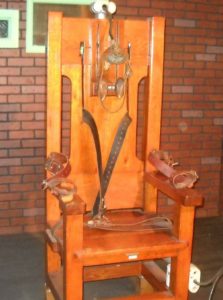
It’s pointless now to argue whether Robert Pruett murdered anyone. People will continue to question it without me. But, there is one thing there is no question about. The state of Texas buckled Robert Pruett down and calmly injected enough poison into his system to end his life, with witnesses watching every moment of the process. That we know. We also know that Texas will continue to do that as long as the laws allow.
REFERENCES
Baptiste, Nathalie. “Junk Science? Unreliable Witnesses? No Matter, Texas Plans to Execute Robert Pruett Anyway Mother Jones – 2017-10-10T10:00:11.000Z.” Junk Science? Unreliable Witnesses? No Matter, Texas Plans to Execute Robert Pruett Anyway, Mother Jones, 10 Oct. 2017, dailyreadlist.com/article/junk-science-unreliable-witnesses-no-matter-tex-71.
Randall, Kate. “Robert Pruett, First Imprisoned at Age 16, Executed in Texas despite Questions about Evidence.” Dolphnsix Intelligent News Agency, www.dolphnsix.com/news/5430477/robert-pruett-first-imprisoned-executed-texas.
Robinson, Nathan J. “Texas Should Not Execute Robert Pruett Tonight.” The New York Times, The New York Times, 12 Oct. 2017, www.nytimes.com/2017/10/12/opinion/texas-robert-pruett-execution.html.
“Texas Inmate Executed for Prison Guard’s Death.” Fox News, FOX News Network, www.foxnews.com/us/2017/10/12/texas-inmate-executed-for-prison-guards-death.html.

 If I could touch your hand
 It happens. All lawyers aren’t motivated by what the public likes to believe they are – justice. There are a good number who are motivated by money. For others, their motivation may be career advancement. Some are motivated by fear of losing their position.
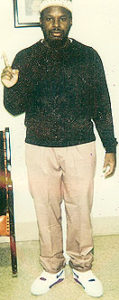 Ralph has proclaimed his innocence from day one and has never wavered. He is a man sentenced to lose his life for three murders.
 The Scripture that kept coming back to me again and again was the text in Isaiah that foretells of the Messiah: “He was wounded for our transgressions and bruised for our iniquities.” I had to look up the Hebrew to see what the term “wounded” meant. I found out that it means “pierced or bore through” as well as “to profane oneself, defile oneself, and pollute oneself.” What struck me the most about those definitions is that woundedness includes profaning, defiling, and polluting oneself. I had never heard, and actually never expected, those definitions.
 I didn’t want to think about ‘Death Row’ before that post. It was distant and removed from my reality, the least of my worries – until she described what it was like for her to accompany her friend on the day of his death and being separated by glass as she watched him lose his life surrounded by men doing their job – killing him. She made it real.
 On the 18th of January this year, I watched as my beloved friend of two years handed himself over to the squad of correctional officers in order that he might be executed. Before the officers came to get my friend, we celebrated Holy Communion together. He was grateful to celebrate communion one more time and hear the words that he was God’s beloved.
 I was repeating, in my mind, “Go in God’s love. Go in God’s love. Go in God’s love.” And yet in my heart, I felt like all of us were being tortured and wounded as we looked on at this killing of another human being.
 I believe there have been people who were sent to live for decades on death row, and they were later cleared. I believe there have also been people ‘railroaded’ on to death row when prosecutors needed to find a ‘killer’. So – that makes me ask, what about those who were innocent, and never cleared? Or those who were ‘railroaded’ and unable to afford a good defense? Are they just collateral damage?