 My neighbors and I have one very large thing in common. In the name of security, prison officials have stripped us of every ounce of our dignity. In spite of that bond – we all know better than to get too close to one another. Each one of is here to be executed. We may not have execution dates – yet – but the possibility looms large with every court ruling, every denied appeal and every date set for one of our neighbors.
To remain emotionally separated from our fellow condemned prisoners may be what we want – but it’s not always possible. In reality it’s sometimes unavoidable while living in such close proximity, sharing our losses, talking, and being around each other, even if only in an emotional sense. Sometimes you find yourself compatible with someone, maybe because of their attitude, or maybe it’s just the way they carry themselves. There are also those you dislike for whatever reason.
Here on Death Row, you don’t ask a person what kind of charge they have or what they are here for. Everyone knows that – to live here – there had to be someone who was killed and you are either charged with it or involved. Despite that, there is an amount of curiosity, and it’s hard to accept some crimes. It’s an internal battle to be against the death penalty regardless of the nature of the crime. On one hand being opposed to the harshest of punishments, but on the other being judgmental of certain offenses.
It’s quite easy to be against execution when you are facing it. For me the struggle is not to be biased when someone’s crime involved a kid. This is a challenge for me, and even though I don’t ask guys what they are here for, I still try to be in the know with who did what.
Just the other day a guy was executed – Erick – it was April 25, 2018. He was a guy I had become close to and considered a friend. When I first met him, I saw me almost 20 years ago when I first came to prison – young, wild, knew it all and just didn’t give a f*#@. I could relate. I was at that same point in my life many years ago when I was that age. As the years passed I watched him grow and mature a bit, yet maintain that wildness that made him who he was. Yes, he still had a ways to go in his growth, but I accepted him for who he was. Then I found out through a friend why he was here. There was a five-year-old child killed in his case.
It hurt me to find this out, but I concealed the pain because I had come to like this guy and accepted him for who he was with me. But I was confused. It’s hard to ‘unknow’ someone once you’ve spent hours, days and years socializing with them. It was a learning experience for me about not judging someone – a lesson about offering a person the same forgiveness that I seek from those who come into my life.
I reflected upon this for a long time, as a battle went on inside me to come to my own understanding. It wasn’t about Erick anymore, it wasn’t about the crime. It was about me. Could I find it within myself to forgive and still accept the man I knew as a friend? Would the bond I found with him and the way I embraced him as a little brother remain strong? Yes. I forgave him and accepted him for who he was and the person he was trying to become, the man who was trying to better himself even though it wasn’t easy. The man who was open to learning and believing that it was possible to grow despite the nature of his incarceration. That’s why April 25, 2018, was a difficult day. It was the day Erick was executed by the state of Texas.
I was reading a book recently in which a man’s son was killed, and a police detective came to the home to talk with him. The detective said he wanted to get justice for his son. The man looked him in the eye and said, “There ain’t no justice, its only revenge, could you please leave.” Those few words said a lot.
What truly is justice? It’s sure not what the politicians tell us. It’s sure not what goes on in this country. Justice is a word used to convince people the right things is being done for them, making them feel they are getting what is due them for the wrong done toward them or their family. Executing a person is not justice. Taking the life of another human is not justice. It’s revenge in its purest form, cloaked in the robe of justice. It’s baffling that people can actually believe justice is being served by watching a man being strapped to a table and having an IV inserted into his arm to be filled with poison until it kills him. Justice… This has to be the most primitive view of ‘justice’ imaginable. How is this considered justice in any form? And yet politicians continue to stand firm that this is the way…
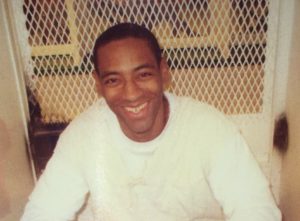 ABOUT THE WRITER. Travis Runnels, is a published author, and is currently working on his second novel. He lives on Death Row.
Travis Runnels #999505
3872 FM 350
Livingston, TX 77351

 Last night I dreamed I was dying. Not from illness or old age – I was going to be executed by lethal injection. It all happened so fast. One moment I was living my miserable, yet consistent seventeen years of incarceration. The next thing I knew, my number was up.
 While watching Charlotte play with her web in search for Wilbur
 Once she returns, I step in the yard and the door is closed behind me. I stoop once again to place my hands through the slot so the handcuffs can be removed. My clothes are then passed to me through the slot. I quickly begin putting them on and trying to get warm.
 Angry for all the years I’ve lost,
 When you first arrive off the transport van, you are interviewed by the ‘Death Row Classification Committee’, handed a rule book and told that you are expected to follow the rules and policies. Just a few days before, you were condemned to die by lethal injection because they believe you can’t be rehabilitated and are incapable of following any rules.
 I read the letter from Sara first. Even though our relationship was on the rocks, I missed her terribly. Just holding her letter brought me comfort – the softness of the paper she handled and the scent she left on it. I soaked in her words like a dry sponge touching water for the very first time. Her loving words made me ache for her even more. I did not realize she was experiencing as much pain and suffering from being apart, as I was. I read her letter so fast, I had to read it again, a bit slower, to make sure I didn’t miss anything. I read it a third time, slower still, because I needed the reprieve from the darkness that had plagued me since my arrival on Death Row nearly a month earlier. I clung to her words like a drowning man clings to a life preserver in the middle of the ocean.