All posts by George Wilkerson

the dead man’s zone

a hairy bear-of-a-man, my dad knew
only how to love and fight death
matches.  unless knocked unconscious
or it was broken up, somebody was doomed
to die.  simple as that.
to beg my mom not to leave, my dad
shoved a pistol into her lipsticked mouth.
she left him anyway, daring
to live – and, if possible,
he adored her even more for it.  Sometimes
violence is the only love one gets.  my dad

used to brag
                 about getting his top four front teeth
knocked out.  they’d been surgically replaced, twice –
courtesy of the U.S. Army.  first time, a boxing match.
second time was the story
he told, retold, and retold.  he’d tilt back his head, yawning
open his mouth to display the gunmetal rears
of those perfectly machined Army teeth.  “See?
I was arguing with my ex-wife and called her a bitch.
That damned fool shot up and kicked my teeth
down my throat.  I never called her a bitch again.
Not to her face,” he’d chuckle.  he’d show photos
of my mom’s brother, a taekwondo master.  in one
a three-foot-high stack of red bricks parted
left and right in neat waves, frozen mid-air
by the camera, my uncle’s brutal chop caught
cracking through the bottom brick.
sometimes love needs violence like that.  a heart attack

killed my dad during my murder trial.
i was relieved because he had sworn to God
to get us both shot to pieces by the police
right there in the courtroom if I got convicted –
and I wasn’t quite as eager to die
while attempting to escape my death
sentences, my two failed suicides aside.

ten years later my tiny Korean mom came to visit me
on death row.  i had to ask, “Mom, why
did you even marry my dad to begin with?
You two were so different, I just can’t understand it.”
she dropped her wrinkled gaze, as if weary or
embarrassed, then looked up with eyes ablaze.  i flinched
as she launched into a story.  “You father was so handsome!
Not like after he got fat.”  ((she pronounced “after”
as apter and “fat” as pat)) she bloated out her cheeks
to show “fat face” then slowly exhaled, making a scraping,
bubbling, throaty growl
to indicate visceral disgust.  it summarized her
feelings following their divorce.  then she went back
to being dreamy-eyed and tender.

“He came into bar with friend.  Me and my sister there. 
They so handsome in uniform.  You father was better looking.”
she lowered her voice at the end as if revealing her secret.
“It was disco bar.  He ask me to dance – Oh, my God,
he such bad dancer!  But cute.  You father, he dance
like this.  No matter song, he dance like this.”  she sprang up
in the cramped visitation booth to demonstrate
a big man, a big moment.  i ducked

to study her
through the six-inch-tall, two-foot-wide, waist-level window –
through the black iron bars and double-paned, grimy plexiglas
as graffiti-scratched as a nasty gas station bathroom stall,
through greasy handprints holding hands through the glass,
through crusty bodily fluids, through all this history
of lust, pain, anger and disgust, loneliness and madness and
beauty, all of which tried to distract me
from my origins, my heritage, my parents.  but I was, finally,
ready to see them as real people, not just symbols
of dysfunction.  and so I watched

my mom raise her delicate fists, spin them one-over-the-other
like Ali hitting a speed bag at heart-level, while two-stepping
back-and-forth, twisting slightly at the hip
on the back-step to toss a take-a-hike thumb over
her shoulder.  “You see?  Like this…  Like this…
All the song, like this…” she said giggling
and panting like she did forty years earlier
at nineteen.  she was breathless with adrenaline.
i had never seen her like this.  so animated. 
so alive.
i laughed too, because I saw how it must’ve been.

in the midst of all her teasing about my dad’s bad dancing
i spotted the operative phrase:  “all the songs.”
translation:  she stayed on the dance floor with him,
laughed and joked with him, tripped and fell head-first
in love with him.  it was simple, it was pure, it was even
atavistic, drawing on a primitive period when a violent
amount of eye-contact, body grinding, pantomime
and empathy’s grunting communicated everything.  when
each had to give the other their absolute undivided
attention or they’d miss something.  neither spoke
the other’s native language, but the tongue of raw humanity
transcended their cultural barriers.  they were smitten.

it was only twelve years, seven pregnancies, and five kids
later, once my dad’s schizophrenia began to speak, that
his violence turned divisive.  till then, my mom said,
“A lot of Korean, they hate American soldier.  Every time
we go out people cuss us, spit at me.  We fight
together.  But you father, he very proud,
very strong.  Always he want fight for me.   A lot
of people go hospital.”  she was virtually swooning
and had to sit back down.  i did not know this woman.

within weeks my parents married, having a traditional
Korean wedding, yet their honeymoon attitude was ruined
when the Army wouldn’t acknowledge it as binding:  it was time
for my dad to return to America but the Army stiff-armed
my mother.  when he tried to go AWOL she urged him
to just come back.  he promised and she promised
to wait for him.

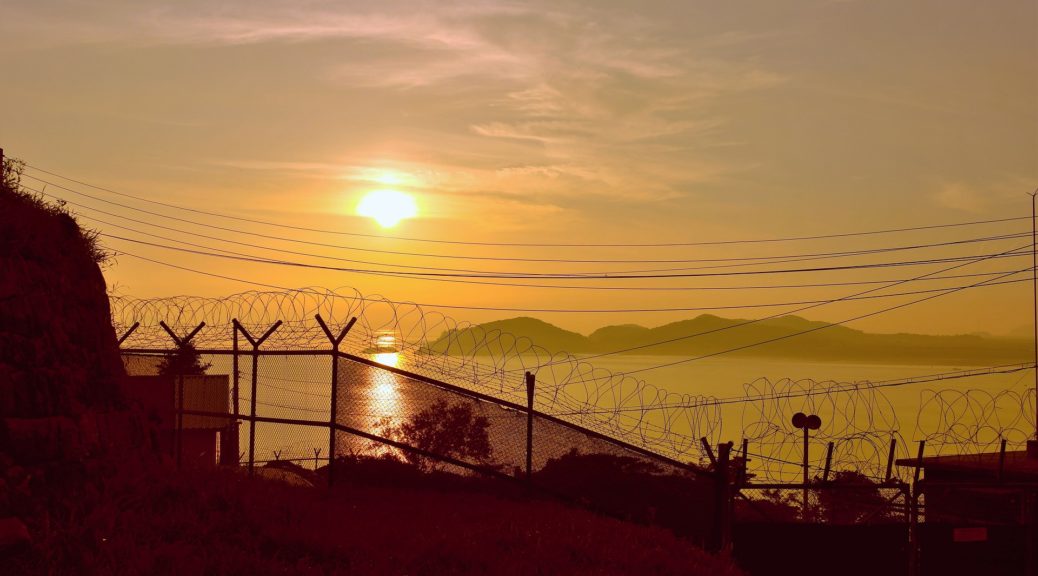
the Demilitarized Zone was a strip of land that ran
like a ribbon the entire east-to-west length between
North and South Korea.  it represented the fragile
nature of peace between enemies who used to be family.
it was off-limits.                                           if either side
spotted anyone within that tense ribbon of land, they
might shoot without warning.  sometimes the North
took pot-shots at American soldiers, who helped the South
patrol it, on foot.  the terrain was jungle like, riddled
with landmines.  ((it described my parents’ post-divorce
dynamic exactly)) the DMZ was aptly nicknamed
the Dead Man’s Zone.  the only way to reach my mom
was for my dad to get re-assigned to the DMZ.
it took a year.

“He came back for me.  You father.  He came back for me. My family
say he wouldn’t.  Everybody say he wouldn’t, say he only want
one thing.  They make me give up
baby.  They say they kill baby if I don’t
give him up.  But you father come back.
He so upset when no baby there.  So upset.  But
he understand.”  she started to cry.  i didn’t know
what to say
so I said nothing.

ABOUT THE AUTHOR.  George Wilkerson lives on Death Row. He is a talented writer with a unique style, and a solid commitment to his craft. He is an occasional contributor to WITS, a co-author of Crimson Letters, an eye-opening book released in 2020, and his writing can be found on several other platforms. We always enjoy hearing from him – simply put, I look forward to every submission he sends in, knowing he will never disappoint.

Mr. Wilkerson can be contacted at:
George T. Wilkerson #0900281
4285 Mail Service Center
Raleigh, NC 27699-4285

Loading

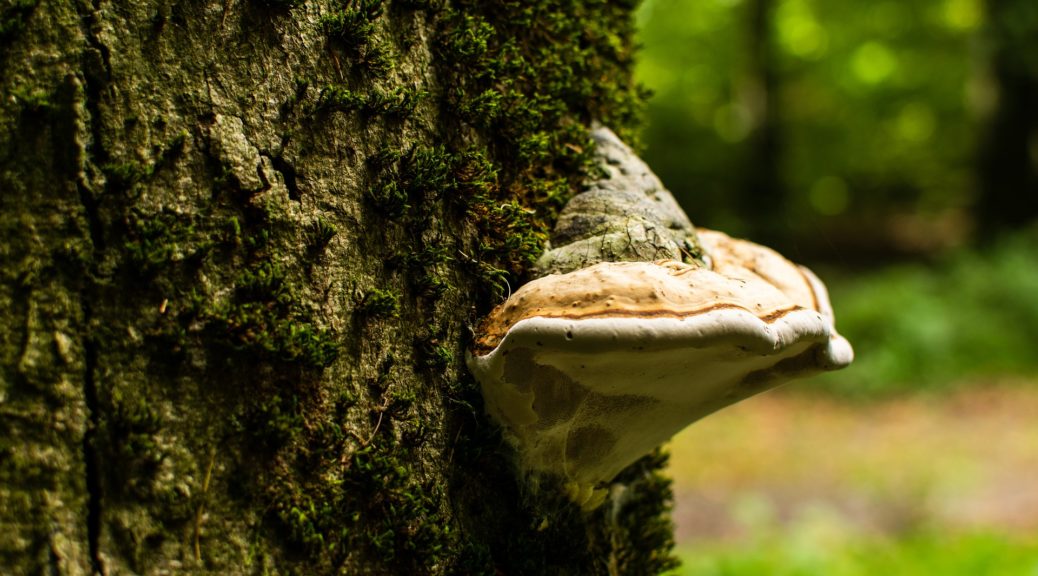
The Mushroom

His features typically dour, Peter
seemed transfigured today when
he returned from wherever. 
He was giddy, like  a person after

sex, “I just came
from visiting the orthopedist at
an outside hospital.  She said
my herniated discs are squeeze-

ing against my sciatic nerve.  It’s
excruciating, and I need surgery.
But guess what?”  I shrugged.
“On the way back, they opened

the window a little.
I pressed my face into the gap
the whole time.”  I noticed red
parallel welts tracked up his chin,

lips, and cheeks – two inches
apart. Even a transport car’s air
is restrictive.  As an extension of
prison, it’s a portable cell with

an incarcerated atmosphere:
A death row prisoner cramped in
back, bound in full-restraints –
handcuffs, ankle-shackles; waist

chains connecting them – behind
a stab-proof stainless steel cage
protecting armed guards up front.
Evidently, the line dividing freedom

from imprisonment is thinner than
a thought.  Even now his face is
pressed against that two-inch gap,
                        mushrooming out,

tongue flapping happily in wind. 

ABOUT THE AUTHOR.  George Wilkerson lives on Death Row. He is a talented writer with a unique style, and a solid commitment to his craft. He is an occasional contributor to WITS, a co-author of Crimson Letters, an eye-opening book released in 2020, sharing the voices of those living on North Carolina’s Death Row, and his writing can be found on several other platforms. We always enjoy hearing from him.

Mr. Wilkerson can be contacted at:
George T. Wilkerson #0900281
4285 Mail Service Center
Raleigh, NC 27699-4285


Loading

The Knowledge Of Good And Evil

I.

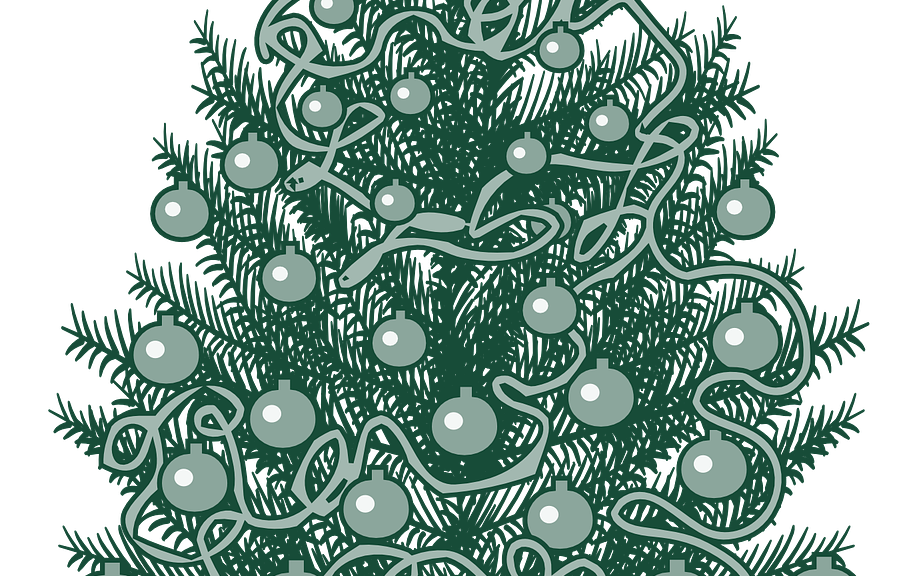
Scene:  Death Row – a Christmas
tree, ornamented, tinseled, well-lit,
complete with phony gifts beneath. 
It crowds one
half of the hall as we shoulder on
around en route from and to chow.
Most guys walk on by – eyes ahead;
but some press
close to thump a tiny colored light
bulb hard enough to
                                                darken it,
pinch needles into zees, or brazenly
slap the crap out of plastic dec-
orations, as if to say, “I’m hurting
you because you’re hurting me.”
Still other men oohhh and aahhh,
like little kids, eyeing mint-condition
memories that are kept shelved
except for special occasions.  Never-
theless, the Lord is my shepherd-
                                                I shall not want.

II.

The other day an officer stood
there peering deep
into its depth of plastic branches,
then grabbed it roughly, angrily
even, and shook-shook-shook
the fuck out of it, rattling off a
noisy mess of decorations.  “Nope,
Sarge, nothing!” he hollered up
the hall, his voice rolling over
scattered ornaments and turning
a sharp corner to enter the office,
from where a faint, unconcerned
reply returned:  “Okay.”  The officer
                                                scanned
the wreckage.  Then looked at us
and shrugged.  He goosestepped back
back to the office.  We rebuilt our tree.

ABOUT THE AUTHOR.  George Wilkerson lives on Death Row. He is a talented writer, always keeping us on our toes. He is an occasional contributor to WITS, a co-author of Crimson Letters, an eye-opening book released in 2020, sharing the voices of those living on North Carolina’s Death Row, and his writing can be found on several other platforms. I’m happy to say, he is also the third place winner in WITS’ final writing contest of 2020.

Mr. Wilkerson can be contacted at:
George T. Wilkerson #0900281
4285 Mail Service Center
Raleigh, NC 27699-4285

Loading

Breaking News

I.
My block housed only 18 to 24-year-olds.
For my one hour of recreation on my first
day there, weighted with full-restraints (hand-
cuffs, ankle-shackles, waist-chains connect-
ing them) I clank-paced the tier.  Each
cell door had an eight-inch square of
window, some framing faces that peered
at me.  Marko, a feral-looking latino who
had come from home to hole as a pretrial
detainee, flagged me as I passed.  He was
breathless with excitement and blinking
rapidly as he testified:  “God speaks to me.”
He’d tried but failed to pluck out
                                                his eyes,
so, to receive divine enlightenment,
he instead had committed to hand-
copying the Bible’s one thousand
three hundred and eighty-nine
chapters, every jot and tittle
using crayon-sized floppy-
rubber pens that were
approved (suicide-proof)
for segregated inmates.
He’d been at it two
years, during which
his hair and beard
grew like Jesus’.
His eyes widened,
crackling with
supernatural
energy as he
showed me a
waist-high
tower of
babbling
pages.

II.
Skyler, freckled and well-muscled
from toting hay bales, had never
traveled past city limits until he
got arrested.  An accent is not an
accent in one’s hometown – it’s
invisible – but Skyler’s tobacco
bent even further into ‘baccer.
At first.  Six months in, we were
friends.  I called his name from
behind my door, since it’d been
several days since we’d spoken.
I pressed my ear to my door’s
steel crack to catch his answer.
That’s not my name.  My name
is Fahbo (Fabulous, in short)
from New York.  I’m an ahtist.
 
I could feel his tongue wrang-
ling his identity, twisting
it’s straight but tilted
spine into a kind of
personal scoliosis,
figuring nobody
would care to
remove his
corselet.
He was
right.

III.
This one guy loved the hole.  He’s been in
and out of many holes since age fifteen.
This manimal fancied himself a hunter.
He’d cover his cell’s light fixture, and his
rear-wall’s strip of window; so, to see in,
an officer was forced to shade her eyes
from the tier’s glare while leaning
face against the eight-inch
door window.  They’d hear a faint
but steady friction:  ch-ch-ch-ch-ch-
and suddenly a milky roar would
splat into the Plexiglas at mouth-
                                    level,
followed by a weaponized penis
thudding and rubbing it in.  The
guard would scream a variation of, “Oh,
you nasty muthafucka!  Get your sick
ass down from there!”  He’d built
a ‘deer stand’ he bragged, by
stacking books on either side
of his door so he could
get a clear head shot.
He seemed shocked
when I admitted
I didn’t do it
too, as if I
were some
strange
beast.

IV.
Evidently, prison administrators
have figured out how to remove
evolution’s rev-limiter
                                    and take off
its restrictor plate.
Its transformative
mutations now take
place in as little as six months using
Therapeutic Seclusion – also known
as THE HOLE, in prison lingo.  No
one who passes through ever leaves
the same person if he entered a year
ago.  The hole is a tool designed to break
man down to his quintessence.  It hyper-
bolizes by creating a parody of one’s character.
I’ve seen it strip away the masks and games of faith –
no time for masquerades when insanity is
gaining – forcing a sort of apotheosis.  I
have watched it petrify pretense
into cement, making men fake
forever.  I’ve even witnessed
it dissolve humanity in
atavistic acid:  acting
like an animal now
comes naturally
to him.

ABOUT THE AUTHOR.  George Wilkerson lives on Death Row. He is a talented writer, always keeping us on our toes, and an occasional contributor to WITS. Mr. Wilkerson is a co-author of Crimson Letters, an eye-opening book released in 2020, sharing the voices of those living on North Carolina’s Death Row.

Mr. Wilkerson can be contacted at:
George T. Wilkerson #0900281
4285 Mail Service Center
Raleigh, NC 27699-4285

Loading

Six Cubic Feet

As a Boy Scout grasping the basics of wilderness survival and hiking through buzzing, mosquito-infested forests while life as I knew it faded behind, I first had to grapple with transience and the pain and fear interwoven with impermanence.   Everything I carried served a practical function, and after being rolled up, tucked, folded, stacked and packed, it altogether occupied six cubic feet, or so my canvas rucksack advertised.

An object’s value was the sum of its utility minus its volume and mass, measured in cubic inches and ounces.  The less I had, the freer I felt.  My sense of liberty kindled when I was limited to basic necessities, my creativity sparked to life by the demands of simple survival.  One of my handiest items was twine, a fat spool of the sturdy kind for starting fires, building snares, catching fish, dangling food from a tree branch, wrapping tourniquets, and generally for binding.  Many things find a higher purpose when bound.

Now I camp in a cell with the square footage of a tent.  According to prison policy, I should be able to fold tuck, roll, stack and pack all my belongings into three boxy, flimsy, white plastic shopping bags about the size of brown paper grocery bags, all amounting to a total of six cubic feet.

Books qualify as personal property, no more than ten.  It takes ten books to adequately study my faith, but it also takes ten law books to adequately work on my legal appeals and get my body off death row. That’s 2.5 cubic feet of mental and spiritual acuity for me.

I own one cubic foot of hygiene items, luxuries to prevent odors, rashes and to preserve dignity, to soothe my itchy need to feel neat and clean. Two more cubic feet are crammed with my creativity – paper, pens, poetry, essays, drawings, notebooks full of ideas.

That leaves half a cubic foot for commissary food and sentimentality.  I own a large brown envelope packed with tattered pages scrawled on by my dad before he died and crappy-but-cute kindergarten drawings by my nieces who swear I’m the world’s best uncle even though I was already here when they were born.  I also have a two-inch stack of photos of my brothers and me when we were little boys, of our parents prior to their divorce, of people I’ve never met and places I’ve never been but that are important to my friends or family and therefore important to me.

That’s how I fill and maintain my six feet of cubic space, carved from a hard place.  Technically, then, my commissary food is actually considered contraband and could be confiscated.  To keep anything new is to discard something old. 

I keep my life packed up in bags that tear easily, which is fine by me.  In the end my real treasures – my faith, my memory, my love and my creativity – they all inhabit the infinite space inside my soul, incorruptible, ethereal, eternal… and free to bloom.

ABOUT THE AUTHOR. George Wilkerson lives on Death Row. He is a talented writer and occasional contributor to WITS. Mr. Wilkerson is also a co-author of Crimson Letters, an eye-opening book released in 2020, sharing the voices of those living on North Carolina’s Death Row.

Mr. Wilkerson can be contacted at:
George T. Wilkerson #0900281
4285 Mail Service Center
Raleigh, NC 27699-4285
Loading

Transience

A few years ago here on Death Row, a handful of men were summoned to our unit manager’s office. They didn’t return for weeks.   Prison administrators accused the men of plotting… something that was never explained.  All we knew was that the guys, our friends, were put in segregation while being ‘investigated’.  They returned a couple weeks later after nothing turned up, a few pounds lighter physically and also in terms of their property.

Putting a prisoner ‘under investigation’ is the prison’s way of segregating him without charging him,  without writing him up for an infraction, without due process.  It’s a way to punish in advance while searching for a legitimate reason to justify a formal write-up.  It’s a discretionary tool administered in response to rumors or suspicion of a rule violation, vengeance, say, for pissing off a duty lieutenant.

Prisons are highly structured, highly controlled environments, governed by routine, every day much the same as the food – bland, monotonous, repetitive.   You’d think being permanently imprisoned would mean where a person lays their head would be set in stone, right?  Despite control mechanisms shaping nearly every facet of daily life, being incarcerated means shit can happen at any second.  No one can be sure where they will sleep at night – their current cell, bandaged on a hospital bed, shivering in a psyche ward, handcuffed in a holding tank, waiting for a cell assignment in solitary.  And anytime someone is forced to move off the unit, their personal  property is searched and held to the strictest standard.  Extra anything equals contraband. 

Every time we get sent to the hole, we lose our personal property.  Our jailers, tasked with packing our belongings for these moves, say much of our property is ‘contraband’ because it ‘exceeds space limitations’.

Right before I came here in ’06, someone wrote an anonymous note on one of the guys already here.  The staff despised him, and he was accused of bullying the men on his pod.  Though no one ever came forward with evidence or testimony to substantiate this claim, he was placed ‘under investigation’ and didn’t return for years. 

Once you are in solitary confinement, if you violate even the most trivial policy – having an extra pair of socks, things that typically go ignored or at worst elicit a verbal warning – you earn additional write-ups.  Fifteen days.  Thirty days.  Forty-five days.  Days pile onto your stay.  Receiving a series of write-ups in quick succession can get you recommended for long-term isolation, a minimum of six months but usually at least a year.

Another time, while awaiting my trial, officers raided the cell next to mine. Through an interconnected air vent, I heard the officers informing the irate and disbelieving occupant that they had to take all of his property, including the clothes he had on, because he was being put on suicide watch.  I never found out whom he’d offended, but somebody – a prisoner or staff member – had filled out a sick-call in his name, posing as him and threatening to kill himself.  He was forcefully stripped naked and dragged to an observation cell on the psych ward, where he spent the next two weeks.

Incarcerated people accumulate a ton of attachments, possessions, sentiments, activities, etc. We latch onto them, make them a part of us, become dependent on them.  They make us heavy.  For that reason, many guys in here walk around high-strung and hyper vigilant about their interaction with staff, “Man, I won’t even speak to that officer.  He’s too spiteful.  I don’t want him searching my cell – I’ve got too many books.”  Or photos.  Or art supplies.  Or food.   Any time I’m called to the office for an appointment or to pick up legal mail, my heart races.  I question whether I’ve pissed off anyone, I wonder if I’ll return.

Before officers enter our area to search cells or arrest someone, they stop in the hall at the guard booth and start putting on blue latex gloves like nurses wear.  We watch through the Plexiglas wall. Someone will holler, “MAN DOWN!” and during the fifteen seconds prior to the guards’ entrance, we ask ourselves, “Who are they coming to get?  Did they glance up at my cell?”

Several toilets will flush, swallowing…. whatever.  Most of us prop ourselves in doorways,  or continue what we were doing in the dayroom, watching but not watching TV, playing but not playing chess, stiff but nonchalant, not wanting to draw attention to ourselves in case the guards are undecided about who they are coming for.

Some guys are sentimental hoarders, their cells thick with excesses of everything.   Others keep nothing.  Other than a cup, toothbrush, toothpaste, bar of soap, and neatly made bunk, their cells hardly look occupied.  They give the guards nothing to hurt them with, no leverage.  They’re nearly invisible and are impervious to prison life.    

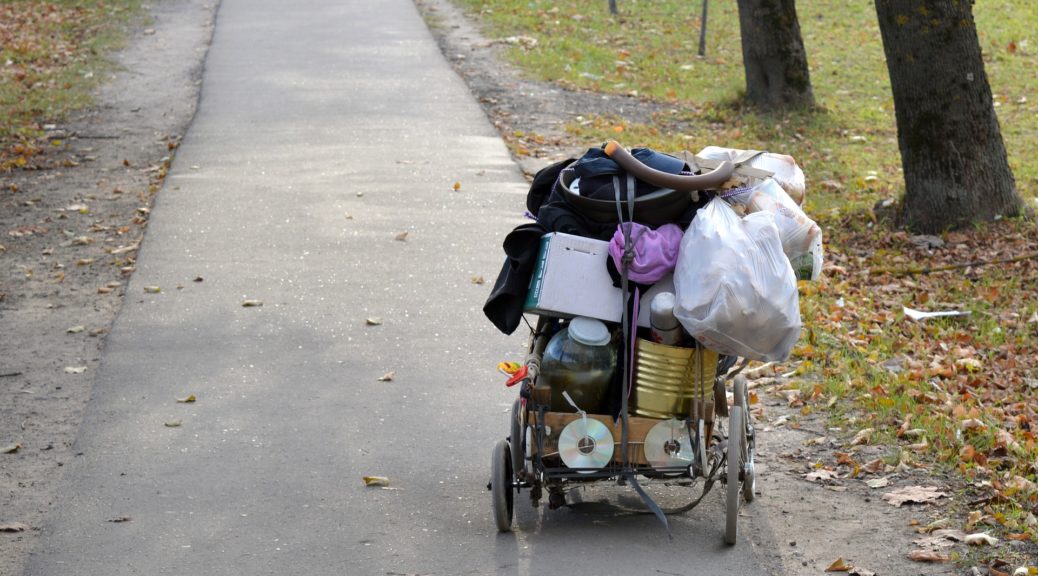
Incarceration has a transient quality, akin to homelessness, forcing us to continually determine which of our possessions are extra baggage.  And, how do I avoid the unavoidable and unpredictable?   I don’t.  I simply prepare for it. 

ABOUT THE AUTHOR. George Wilkerson lives on Death Row. He has been writing for some time, and is undeniably talented. Not only does Mr. Wilkerson sometimes share his writing with us, he was also a contributor to Crimson Letters, an eye-opening book released in 2020, sharing the voices of those living on North Carolina’s Death Row.

Mr. Wilkerson can be contacted at:
George T. Wilkerson #0900281
4285 Mail Service Center
Raleigh, NC 27699-4285

Loading

Coleridge’s Middle Finger

Sharing the name of the apartment complex around it, at perhaps a quarter mile long, Coleridge Road rammed straight through the projects.   It was the crossbar between two semi-parallel streets that offered alternate routes to similar destinations, though their side roads led to completely different ends.  The front one was the busy mainstream people took when speeding to Asheboro’s white or blue collar districts.  People motoring on it clearly had somewhere to be, somewhere to go, something to do.  It was also a geographical cordon and dangerous to cross – nobody wanted to slow or stop.  That intersection saw a lot of accidents.  One car attempting to cross it from Coleridge got chopped in half by an SUV.

The rear street was lazier, more meandering and accommodating, but presented dangers of its own.  It veined into Asheboro’s darker areas where gunshots and crack pipes left blooming but distinctive scents in the air.  Like many of its occupants, even the projects back there went only by a nickname, ‘Low Rent’, which spoke to a key feature of their character.  Life itself got cheaper the deeper one went.

Like a giant middle finger flipping up from Coleridge Road into the heart of the complex, Kemp Boulevard looped about 100 yards uphill, past my apartment, where two friends and I stood sweating on a corner sidewalk. We shared a cigarette and peered downhill toward one of the other parking lots to pinpoint the tinny music that had pulled us outside to the curb – a rarely seen ice cream truck.  From this distance, the kids resembled roaches as they scampered toward the sugar.  Heatwaves shimmered above the asphalt, creating what appeared to be a mirage – an oasis or the birth of a metaphor for hope. Or both.

We wondered how many times it’d visit before somebody robbed it.  Then we wondered whether we could trick the vendor into handing us one orange sherbet, one rainbow push-pop, and one Mickey Mouse as we pretended to dig in our pockets for money.   It was 1993, hot as hell, and we were twelve and broke.

“They’d probably hand it to you… but not us,” J, the shortest but fastest of us said, meaning – ‘You’re not black’.  Puff nodded his agreement, and they both grinned.  I knew the look.  It teased that I looked soft, innocent – untested.

“Oh, hell, nah!  I’ve done more stuff than both of ya’ll!”  I cited the fights, the stealing, the broken windows and sliced car tires.  I was the most prolific.

“Well, you the one ain’t been to training school,” said Puff, the strongest fighter in our age bracket.  He hit the dwindling cigarette.

“Only ‘cause I ain’t got caught like y’all.”  The yet was implicit.  I felt uneasy.   We all knew prison was our inevitable destination.  It was a fact of life in the projects, the only life we knew how to live. Around Coleridge, people didn’t dream of being doctors or lawyers or firemen… if they dreamed at all.

We all got quiet.  I stubbed the cigarette butt. The ice cream truck turned onto Kemp, getting louder as it chugged up the hill and horseshoed around the bend.  It became a big, boxy, yellowish riot of glittery stickers and calliopean music as it stopped in front of us.  Suddenly we were jostled by a dozen excited children waving crumpled dollar bills or punching a fistful of loose change at the vendor.

My friends and I glanced at each other; they silently boosted me to attempt a free ice cream, but when I looked up, the vendor locked eyes with me and smiled.  After a second he scowled and shook his head hard, as if to warn me, ‘Don’t you fuckin’ try it kid’.   So I didn’t.

When he finally slammed and locked the serving window and pulled away from the curb, my friends and I gave chase and hopped onto the rear bumper. We clung to the panel-door seams and jumped up and down to bounce the truck, letting the driver know we were there, letting him feel our presence. Being seen and felt is its own sort of ice cream.  It wasn’t slowing before turning back onto Coleridge, so rather than be slung off, we hopped off and hit the ground running. We scooped up rocks and thunked them off the truck’s back, laughing as it squealed its tires to gather speed toward the front street.

Though it soon disappeared, we still heard its discomfiting moon music a few moments more, until even that was gone, leaving a sticky residue in our hearts. Ice cream dreams never lasted long in Coleridge.

ABOUT THE AUTHOR. George Wilkerson lives on Death Row. He has been writing for some time, and it is a privilege to share his voice. Not only does Mr. Wilkerson share his writing here, he was also a contributor to Crimson Letters, an eye-opening book released in 2020, sharing the voices of those living on North Carolina’s Death Row.

Mr. Wilkerson can be contacted at:
George T. Wilkerson #0900281
4285 Mail Service Center
Raleigh, NC 27699-4285

Loading

Kenny, A Mosaic

“…to remain tight
in a bud
was more painful
than… to blossom.” –
Anais Nin

To many, Kenny’s a nobody – which is why he wanted to shine, to prove them wrong. 

Would that I could share my light with Kenny, give him another chance

To fit in, to be normal.  Since I can’t, I will share Kenny’s light with you,

Break it into wafers.

Death Row, Death Throws…

We slam, we scream, we fling ourselves against prison’s cosmic ennui.

We remember life from before, our memories another spectrum of light.

The texture of some memories never change; these lights refuse to go

Quietly into that goodnight.

Sometimes a soul’s meat-vehicle remains behind long after the light

Has gone.  Kenny remembers the moment his light divorced his body,

Remembers when it tore itself free – remembers it half as action sequence,

Half as background requiem for a dream.  His bodily

Memory knit together with eye-witness testimony, here tells

You his story, sings you a history, a chorus of blood sung

With words twinkling in air like asterisks.  It was preceded

By a blinding flash of light, an insight that had sounded green,
As in the moment is ripe, as in… GO.

We all pass with varying degrees of light.

Blossom…

Perhaps the idea began as a flower – it felt like one

At the time. One of those pretty, yellow-faced ones

With white petals.  Aster.  Or perhaps it started as a small star-

Like flame, a sad blue torch of forked flower in the brain.

A risky idea one might symbolize in writing:  *.  An asterisk

Indicated omission ((of common sense?)), redaction, doubtful matters.

Portents…

aster:  a pejorative suffix denoting something that imperfectly mimics

The true thing – a bootlegged or knock-off version, for example.

aster is also a combining form meaning ‘star’, which implies

Anyone can be a star – anyone can shine like the popular guys

Simply by stamping aster onto their chest, by declaring, “Let me

Be light!” like in Genesis.

“dis” is a prefix meaning asunder, part, away or having a negative

Reversing force
, as in disability.  As in disaster, which is an unfavorable

Aspect of a star, emblazoned red, as in:  Kenny, the stars do not fucking

Align.  As in:  Kenny, this will rip your asunder, break you apart, and

Your ‘you’ will go away… but Kenny refused to see this light.

Men were slamming bone-yellow dominoes into stainless steel 4-way tables,

Hollering multiples of five and clattering their bones into position.  Like built-in

Bleachers, three blocky 18-inch deep steps cut into the rim of the day-

Room’s brownish-gray concrete floor, leading down to the lower cells.

Playing follow-the-leader exercises, acrobatic men would balance

On the top-step’s ledge, lean out with upsweeping arms – then leap

To grab the tier’s floor, to do pull-ups or show-off by monkeying

Up, once their bodies stopped wobbling.  Kenny used to watch them,

Wishing upon those stars…

In Carnations, A Cautionary Tale…

Slow, fleshy red haloes spread

And overlap like Venn diagrams laid on cement,

Petaling around Kenny’s blank comatose face

As a silken illustration of the relationship

Between grace and ground.

Soundgarden…

Light is such a fickle thing.  Kenny had tried to swing for it with a tottering

Leap.                       There was a split-second grace period. *****:

In linguistics, asterisks mark an utterance that would be censored

By native speakers of the language.  Generally a fall

From grace is blackhole – interesting, especially when it’s a superstar.

We anticipate a comeback…                     but

With us mundane asters, there is no coming back.  There

Is just a discordant **          *          ***

                     ***     **               *

       **           **    burst of asterisks that flap in the air

Like Kenny’s arms, or a flood of cusswords at startled bus stop pigeons.

Then silence.

The very air becomes electric with prayer, or JESUS… the name

Itself a form          of intercession.  Then a meaty thud

And a terrible revelation

Of Kenny’s horror obscurus, his brain a pinkish-gray

Light leaking from Kenny, after aster in brain, after Kenny-aster

On air, after air on bone, after bone on stone.  Thunk, crack,

The genesis of a ravaged lack of all it means to be human.  A shadow

Grows from a length of gauze wrapped round and round

A star.                                      That was in ’97.

My dawg, his dog…

Every few minutes Kenny’s dementia seems to chase down his recent

History and tear chunks from its ass.  I call Kenny my ninja, since

I’m Asian.  His cane we call the Cadillac to convert limpin’ to

Pimpin; his wheelchair the Escalade for which I made a cardboard

Vanity plate that dangles from its back – to infuse his disability

With style, luxury, richness.  With privilege, with ease.  Nowadays

He chuckles and calls himself stuntman stumbles (in his garbled drawl)

Or Stag Lee, a fitting confusion of Bruce Lee, “staggering,” and Stan

Lee the Marvel creator.  Shit’s funny, but shit ain’t funny funny. 

Dark Matter…

The brain is a self-contained universe made up mostly of star-shaped

Cells:  astrocytes, billions and billions of them, crackle with magic energy.

Hidden in blackness, the brain explodes with asterisks of thought.

It is the seat of language, music, motion… personality.  A lump

Of grace that will shine until we die, but… sometimes

Stars flicker and wink out, entire galaxies have power outages,

And the wrinkled surface of the deep becomes void:  dementia

Steals the self.  It would be simpler if one just vanished

The sun – not this gradual decay into the sightless realm where darkness is

                awake upon the dark.

ABOUT THE AUTHOR. George Wilkerson lives on Death Row. He has been writing for some time, and it is a privilege to share his voice here. He has incredible insight and actually advised WITS in certain aspects of our organization, for which we are very grateful. Mr. Wilkerson can be contacted at:
George T. Wilkerson #0900281
4285 Mail Service Center
Raleigh, NC 27699-4285

Loading