All posts by Chanton ©

Church Bound

When my family and I moved to E. B. Jordan Homes in 1980, it was like a ghost town in the woods – rural, secluded, somewhat lawless and all the perks of country living.  There were ditches to scour, trees to climb, fields to rove; and also the not-so-friendly white people to consider.  It was the early period of gentrification in Wilson, when underprivileged families were uprooted from the inner city and relocated to areas where we were less welcome.  

E.B. Jordan Homes was a project housing community on the outskirts of town between a predominantly white neighborhood and a motorcycle club.  We had the n-word flung at us from some few cars passing by, but other than that, it was a  great place to live, and my mischief began when I was young.  At seven I cussed, bullied and vandalized.  I stole candy almost everyday from the old service station across the street.  I wasn’t afraid of getting caught, nor was I bothered by the obscenities of some whites, but no matter how tough I acted, I was always scared of one thing… London Church.

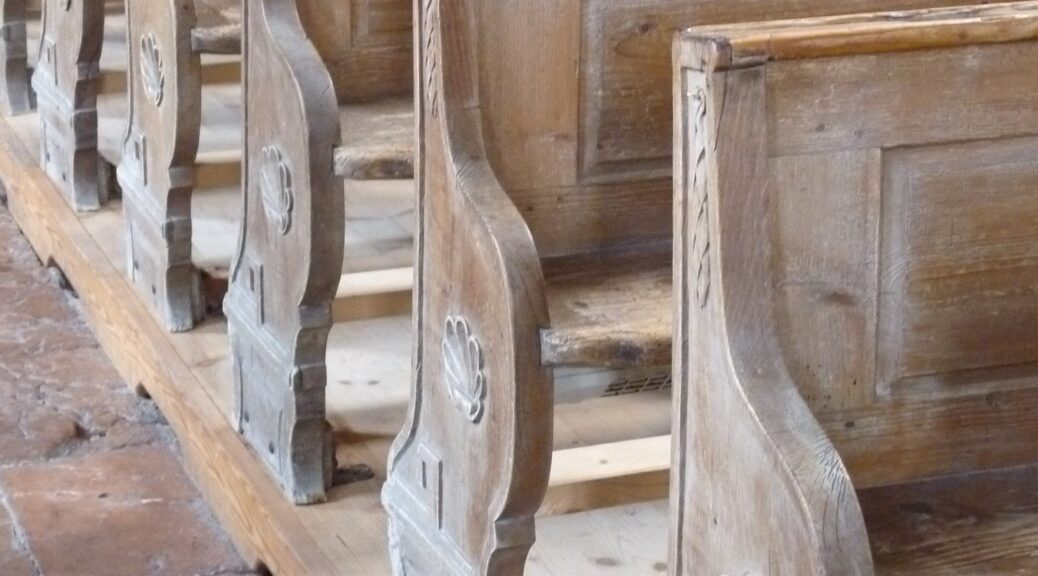
That was all I knew about the old creepy church that sat several yards from our front door. It was called London Church.  It was faded white with chipped paint and shutters on the windows and guarded by towering oak trees. The older kids told stories about London Church being built atop a cemetery and the funerals for those graves were held inside London Church; that alone kept me up many a night staring over at the church grounds waiting for something to move.  I spent the first few years trying to forget all the scary stories I’d heard, but often enough I would pass by London Church and wonder – yet throw a pretty girl in the mix and just like that, I was ready to confront my fears. 

It began one day with some silly notion that was caught on the wind. We were hoping to impress some neighborhood girls when  someone said, “Let’s break into London Church.”  At the time, I associated the name London with England, and I thought of him as some ancient white man, one whose spirit would not take kindly to a bunch of Black kids running around in his church. But then the thunder crackled and the lightning flashed, and the break-in seemed like the perfect thing to do, as though God himself was saying, “I’mma lookout for y’all little bad asses this time, but you owe me one.”

So we headed over to London Church, one foot-step coaxing the other with the acoustics of thunder to incite our false courage. We told tall tales of ghosts and demons and old white slave masters, who would shackle not our bodies but our spirits. When we got there, all the wide-eyed looks turned my way, and unanimously I was elected the scapegoat… so I shimmied open the window and with a boost I climbed inside, in effect breaking into London Church.  What happened next is spotty and irrelevant as the events of that day are now but a haze in my distant past, but what I did was dishonorable and has left me with lingering regret as I would come to learn more about the man called London.  

On Valentine’s day, 1970, three years before I was born, the Wilson Daily Times published a full-page article on London Woodard, a man who was born a slave, yet died as a pivotal figure in Black history.  London was born in 1792, the whip-cracking era when black bodies were deemed no more than chattel in an economy driven by cruelty.  A time when Black heritage and Black identities, like the names of London’s parents, were snuffed out of existence and did not survive the passage of time.  Much of London’s young life was unknown, but at 24, he was recorded in the estate of Asa Woodard, and later at 34 with Julan Woodard, indicating the familial passing down of his enslavement.  On March 22, 1827, just one year later, London would be sold again. He was bought at an auction by Administrator James B. Woodard for $500.  London would spend the majority of his adult life on the Woodard plantation as the slaves in those days seldom strayed far from the “good master”.  London was 35 when he met another Woodard slave, a woman named Venus, and the two found marital bliss and would remain a union for 18 years, until Venus died in 1845.  

London was recognized as a distiller in fine fruit brandies, providing a euphoria to the other slaves to best deal with the day’s long heat and the lash of the master’s tongue.  He was baptized on August 24, 1828, as a member of the Tosneot Baptist Church, a site located some few miles from the E.B. Jordan projects where I grew up and established as the oldest church in Wilson. From there London was promoted to the Overseer, tending to the slaves for the master, a discovery to which I felt indifferent to old London, but unfair since I don’t know what it’s like to be a slave.

It was, in fact, as the Overseer that London caught the eye of Penelope Lassiter, a woman born free in 1814.  When she was 29, Penelope was hired as the housekeeper and surrogate mother to the children of James B. Woodard after the death of his second wife.  Woodard would again marry 4 years later, but by then Penelope had become vital to the rearing of the children, and so she was kept on as she would come to be known as Aunt Penny.  It was while working on the plantation that Penelope’s admiration for London grew, and in 1845, the same year his wife Venus died and London was left with 9 children, he and Penelope married.  London was 58.  He and Penelope had 6 kids together. 

Penelope was born the daughter of Hardy Lassiter, a mulatto who owned a farm south of Wilson. Penny, herself, would prove to be business minded, and at 39, she bought 106 acres (five miles east of Wilson on Tarboro Road) for $242.  It was then 1853 and she and London had been married 9 years.  The next year, she paid $150 to James B. Woodard and bought London’s freedom. 

But freedom would come at a far greater price when enslavement was all that one knew, and London would stay on at the Woodard plantation for another 11 years until he was officially emancipated.  He did, however, continue to thrive, and on December 11, 1866, just one year after his emancipation, London bought 200 acres of his own.  He also continued in his devout membership at Tosneot Baptist Church until after the Civil War, and on April 22, 1866, he was granted permission to preach amongst his “acquaintances only”.

Elizabeth Farmer, who was also a member of the Tosneot Baptist Church, donated one acre  of land for $1 for the purpose of building a Black church. The stipulation was as recorded, “…in the event that said premises be used for secular affairs, either by concord or trustees, then deed was null and void.”  London went on to preach in Black homes and other circles of his peers for 4 years, until he was officially licensed to preach and saw the construction of the Black church completed.

London Primitive Baptist Church was opened for service on Saturday, October 22, 1870.  It was regarded as the first Black church in Wilson County.  London was 78 and unfortunately he would preach at the church for only 3 weeks.  His last sermon was on November 13, 1870.  The next day he suffered a stroke and fell into an open fireplace.  Burned beyond recovery, London lived long enough to dictate a will, leaving his wife Penelope much of his furnishings and equipment, and to his children, his beehives and a tenth of the residue each, valued at $7 a share.  He dictated the will before the Woodard brothers (William, James Simms, and Calvin) as witnesses, though London was too weak to sign the will himself.  He died the next day, November 15, 1870. His will was attested and probated one week later. 

And that was the story of old London Woodard, who was best known as Uncle London. But it  was only the beginning of his lasting legacy as his church would stand more than 100 years later. 

The history of London Church was declared murky for the next 25 years until it was rebuilt in 1895.  It’s new location was on Herring Avenue, some 50 yards from the original site on London Church Road and even less than that from my childhood home.  It was recognized under the umbrella of the Turner Swamp Primitive Baptist Church in 1897, and it is still in use today, making it a prestigious landmark for Black spiritual practice.

So that day when I broke into London Church, I broke the seal on something sacred – a place where Black ancestors far and wide once congregated in holy union. I’d passed under the threshold and stood in the halls of an ex-slave and survivor, whose name would now defy the passing of time. And though I’d trodden on the floors of Black excellence, desecrated by my youthful ignorance but made whole I would hope by my earnest accountability, I pray that my egregious offense to Black history and my blundering childhood ways are  pardoned by the spirit of Uncle London.
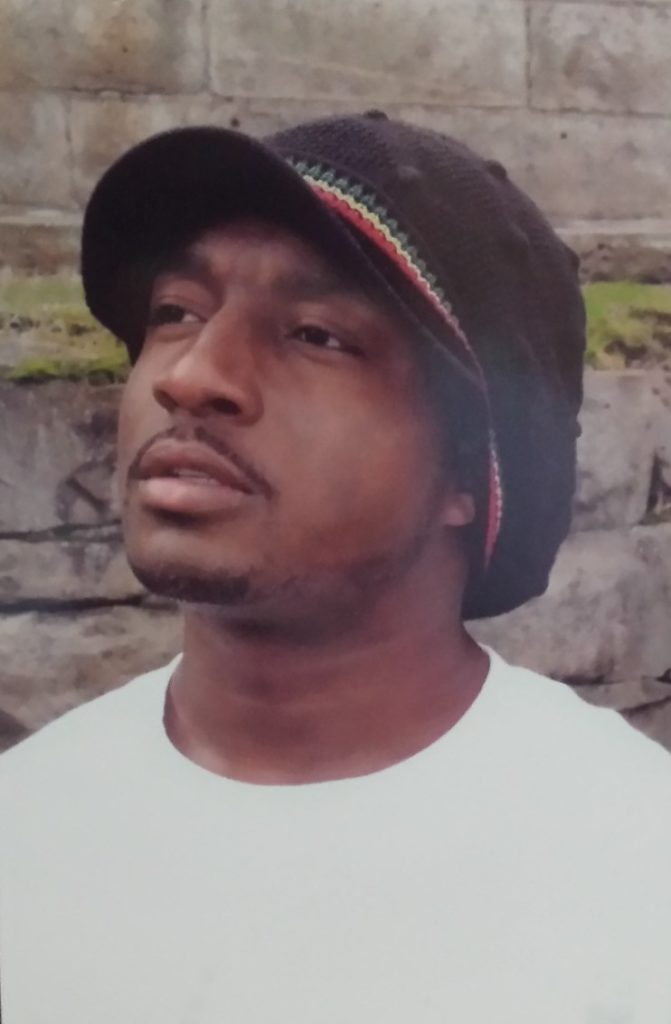
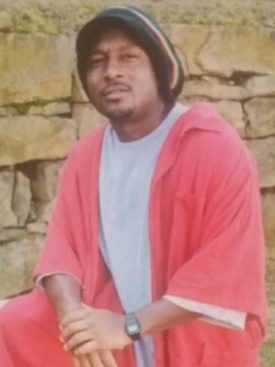
ABOUT THE AUTHOR:  Terry Robinson writes under the pen name ‘Chanton’, is a member of the Board of Directors of WITS, and heads up a book club on NC’s Death Row. He is currently working on a work of fiction as well as his memoir, and he is co-author of Beneath Our Numbers: A Collaborative Memoir From Inside Mass Incarceration. He has always maintained his innocence, and WITS will continue to share his story and his case.

Terry can be contacted at:
Terry Robinson #0349019
Central Prison
P.O. Box 247
Phoenix, MD 21131
OR
textbehind.com

There is also a Facebook page that is not maintained by Terry, but does share all his work, Terry ‘Duck’ Robinson. Any messages left there for Terry will be forwarded to him.


Loading

Entries From My Journal #6

Note: This is sixth in a series. We often see innocent individuals get out of prison after decades – but we can never fully appreciate what they go through. This is a small attempt to touch on the surface of what it is like to be innocent and on death row. How did Terry Robinson end up on death row? Two people physically connected to the crime scene accused Robinson of murder. That’s it. These entries are not edited, but shared in their original format.

January 29, 2023

[Typically, these journal entries are sent in written form. Terry called me on January 29, 2023, wanting to share something that he wrote, impacted by seeing the mother of Tyre Nichols on the news. We started recording shortly after he called.]

Entries From My Journal #1

Entries From My Journal #2

Entries From My Journal #3

Entries From My Journal #4

Entries From My Journal #5


ABOUT THE AUTHOR:  Terry Robinson writes under the pen name ‘Chanton’, is a member of the Board of Directors of WITS, and heads up a book club on NC’s Death Row. He is currently working on a work of fiction as well as his memoir, and he is co-author of Beneath Our Numbers: A Collaborative Memoir From Inside Mass Incarceration. He has always maintained his innocence, and WITS will continue to share his story and his case.

Terry can be contacted at:
Terry Robinson #0349019
Central Prison
P.O. Box 247
Phoenix, MD 21131
OR
textbehind.com

There is also a Facebook page that is not maintained by Terry, but does share all his work, Terry ‘Duck’ Robinson. Any messages left there for Terry will be forwarded to him.
Loading

Entries From My Journal #5

Note: This is fifth in a series. We often see innocent individuals get out of prison after decades – but we can never fully appreciate what they go through. This is a small attempt to touch on the surface of what it is like to be innocent and on death row. How did Terry Robinson end up on death row? Two people physically connected to the crime scene accused Robinson of murder. That’s it. These entries are not edited, but shared in their original format.

Listen as Terry reflects on this particular journal entry.

April 17, 2016 (4:02 am)

It’s been 4 months since I wrote in this journal, but tonight I’m having trouble sleeping and I didn’t have anywhere else to turn. I keep having these dreams of getting off Death Row, but I can’t stay long. For some reason I’ve gotta come right back. I’m going around visiting people I haven’t seen in years but it’s just to say goodbye. I don’t know if it’s meaning I belong on Death Row or this place is so far removed from the world that once you’re here, you’re lost forever. I wonder what happened to that little kid that used to be me, the one who wouldn’t be caught dead on Death Row. I used to dream of white picket fences and gardens around a trailer, now all I can dream of is the chance to see people before I die. Sometimes I don’t know what’s worse, being woke to face all the bullshit that happens on Death Row, or going to sleep and realizing I’m still in this bitch.

Entries From My Journal #1

Entries From My Journal #2

Entries From My Journal #3

Entries From My Journal #4


ABOUT THE AUTHOR:  Terry Robinson writes under the pen name ‘Chanton’, is a member of the Board of Directors of WITS, and heads up a book club on NC’s Death Row. He is currently working on a work of fiction as well as his memoir, and he is co-author of Beneath Our Numbers: A Collaborative Memoir From Inside Mass Incarceration. He has always maintained his innocence, and WITS will continue to share his story and his case.

Terry can be contacted at:
Terry Robinson #0349019
Central Prison
P.O. Box 247
Phoenix, MD 21131
OR
textbehind.com

There is also a Facebook page that is not maintained by Terry, but does share all his work, Terry ‘Duck’ Robinson. Any messages left there for Terry will be forwarded to him.
Loading

Epitaph of a Wild Man

[As shared by Terry Robinson]

My father was a wild man who lived
with his feet off the ground
an eagle soaring on the wings of errant
pride
he was love on fire
scorching heart
beat on the move
swaying
to the groove of a
guitar and a mended spirit
a cue-pid ball gliding across the
evergreen way chasing all the pretty
numbers in the school yard
he was brick pile wild
the allure of promise
jive talk over corn stalks and
hawk bills in hip pockets
perched on high a rooftop throne of
rock tiles and sometimes regrets
the king of tickled bellies
shot gun shells and
shattered windows of
proven love crazy with that
“I wish you would…” courage
My daddy was cold Budweisers and
‘son, bet wiser
fitted caps and
waist tucked tees and
greeted death with a smile on his face
he was hard work
potential
and good old memories
and 2 o’clock gatherings over
hymns and hyperboles
the greatest dad ever
salute Wild Man Steve

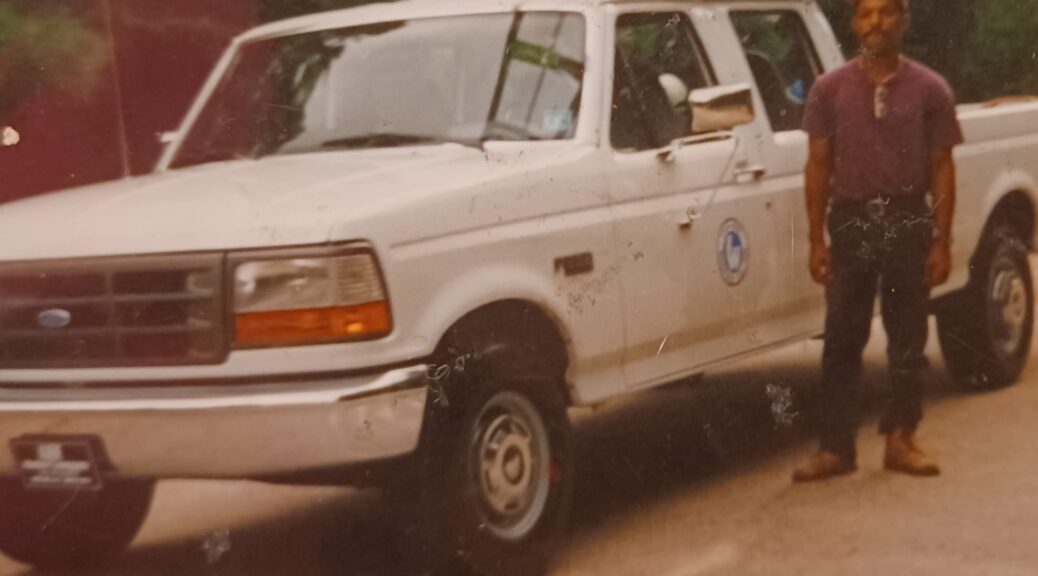
“God called my daddy, Steve Robinson, home on November 6, but he left us with a lifetime of memories and three generations to carry on his name.
Hug your family while they’re still here.”

Steve Harris Robinson
July 27, 1948 – November 6, 2022

Terry Robinson he can be contacted at:
Terry Robinson #0349019
Central Prison
P.O. Box 247
Phoenix, MD 21131
OR
textbehind.com
OR
you can follow the writer, Terry ‘Duck’ Robinson, on Facebook, all messages left there will be forwarded to him.

Loading

Entries From My Journal #4

Note: This is fourth in a series. We often see innocent individuals get out of prison after decades – but we can never fully appreciate what they go through. This is a small attempt to touch on the surface of what it is like to be innocent and on death row. How did Terry Robinson end up on death row? Two people physically connected to the crime scene accused Robinson of murder. That’s it. These entries are not edited, but shared in their original format.

February 3, 2015 (Tuesday, 11:14 pm)

I’m praying, God. I heard it said that you know our hearts. Don’t do me like everybody else has done.

Entries From My Journal #1

Entries From My Journal #2

Entries From My Journal #3


ABOUT THE AUTHOR:  Terry Robinson writes under the pen name ‘Chanton’, is a member of the Board of Directors of WITS, and heads up a book club on NC’s Death Row. He has always maintained his innocence, and WITS will continue to share his story and his case.

Terry continues to work on his memoirs, as well as a book of fiction, and he can be contacted at:
Terry Robinson #0349019
Central Prison
P.O. Box 247
Phoenix, MD 21131
OR
textbehind.com

Loading

Dance Muse

Over the 22 years I’ve been on Death Row, the days have become progressively more difficult.  The physical toll it exacts is unabating; the mental toll, too strenuous to bare.  Incarceration is like starting off every morning at the bottom and laboriously scaling up the ladder to morale.  Nobody wakes up in prison feeling good about themselves, and feeling worthy comes with effort.  For many, being incarcerated will be our greatest challenge in life, shaping us in the best or worst way.  It’s adversity come to declare war on our peace of mind and the price of defeat is our mental wellness.  It should come as no surprise, the drawbacks of this system that devalues human rights, which is why it takes a special kind of resilience to get through the day.

Over the years, I have relied on several mechanics to stave off the despondence of daily restrictions.  I’ve put in long hours at the poker table.  I’ve watched enough TV to go blind.  I’ve swapped war stories, read tons of books, and even meditated to fill the void.  I’ve sang and written and turned to prayer when singing and writing didn’t work.  But the one thing that has been a constant relief for me is dance.  Yep, you read that right… dance.  Dancing has gotten me through the toughest moments, not just on Death Row but throughout my life.

I came up in a time when family and friends frequently expressed their love for one another through dance.  Drunks slow grinding.  Church folks stomping.  And those non-dancing head boppers who just couldn’t help themselves.  I started dancing myself when I was around four, merely twisting and shaking to the music while the grown-ups chuckled and pitched me coins, showering me with a feeling of acceptance.  By thirteen, I was plagued with insecurities and too ashamed to dance.  I envied the other teens during Friday night dance battles at the community center as they performed, seemingly without fear or reservations.  Envy gave way to passion, and I began practicing dance in private, choreographing routines with the help of my kid sister.  Then one day I danced before a crowd, and all my insecurities slipped away.  I knew right then I would never stop dancing again.

I didn’t set out in life to be a great dancer, just one who wasn’t ashamed.  It didn’t seem right to quit doing something I loved for the sake of others’ opinions.  Too often we buy into the narrative of dance with words like rhythm, grace, and beauty.  Yet we lose sight of the most important attribute of dance – its potential for healing.  I dance whenever the C/O’s piss me off.  I dance when I’m locked in the cell.  I dance to prevent shit talking inmates from provoking me to fight.  I dance around the dayroom, the rec yard and throughout the hallways – wherever I’m in the mood; and what’s validating is when the other inmates not only encourage me – but are themselves inspired to dance.

Dancing isn’t meant to be taken too seriously, unless you’re a serious dancer.  It’s okay to clown around if it helps us to feel better about ourselves.  I, myself, am a fan of crumping, a dance style that consists of hard-hitting, chest popping versatility, except I’m forty-eight with bad knees, self-taught, and mediocre at best.  But do I let that stop me from reaching my happy place… hell no.  I man up and go for mine.  And when the dance ends and the euphoria fades away, I find that prison is a little more bearable.

Dance doesn’t belong to the rhythmic and the graceful – it’s a force that’s driven by emotions, the therapeutic resolve of our inner conflict when words otherwise fail.  Dance has been not only a confidence builder for me, but also my source of inspiration allowing me the spontaneity to express myself in a place where emotional expression is generally discouraged.  It is a spiritual catalyst that transcends incarceration and brings me closer to peace of mind, therefore I dance to get through the days in prison because dancing sets me free. 

ABOUT THE AUTHOR:  Terry Robinson writes under the pen name ‘Chanton’, is a member of the Board of Directors of WITS, and heads up a book club on NC’s Death Row. He has always maintained his innocence, and WITS will continue to share his story and his case.

Terry continues to work on his memoirs, as well as a book of fiction, and he can be contacted at:
Terry Robinson #0349019
Central Prison
P.O. Box 247
Phoenix, MD 21131
OR
textbehind.com

Loading

Entries From My Journal #3

Note: This is third in a series. I’ve asked Terry Robinson to share entries from his journal. We often see innocent individuals get out of prison after decades – but we can never fully appreciate what they go through. This is a small attempt to touch on the surface of what it is like to be innocent and on death row. How did Terry Robinson end up on death row? Two people physically connected to the crime scene accused Robinson of murder. That’s it. These entries are not edited, but shared in their original format.

September 2, 2014 (Tuesday, 7:46 pm)

Man, what a wonderful day – not necessarily for me and especially not for all hating-ass envious dudes who don’t wanna see nobody get ahead, but for Big Hen and the McCollum family. Dude went home today – wow, man, how great is that. I was speechless when I saw the news, but happy nonetheless. I guess it does pay to have hope. I lost my hope a long time ago and didn’t even know it. I held on for as long as I could, then I just stopped believing in justice. I’ve gotta get my hope back – sometimes things do get better.

My man, Big Hen. Good luck out there bruh, and I’m gonna miss you.

Entries From My Journal #1

Entries From My Journal #2


ABOUT THE AUTHOR:  Terry Robinson writes under the pen name ‘Chanton’, is a member of the Board of Directors of WITS, and heads up a book club on NC’s Death Row. He has always maintained his innocence, and WITS will continue to share his story and his case.

Terry continues to work on his memoirs, as well as a book of fiction, and he can be contacted at:
Terry Robinson #0349019
Central Prison
P.O. Box 247
Phoenix, MD 21131
OR
textbehind.com

Loading

Denounced

My life was over.  I could tell from the looks on their faces.  No more was I Duck, Dreadz or EyeGod – brother or son.  When I stepped into the courtroom, I was nothing.  Blank, a clean slate, yet covered in the dirt of my past, so much so that the me I knew disappeared under the grime.  And now I was just a stage show, a star villain in a real-life tragedy that left a man dead and others calling for my execution. There was no going back after that.  It was as sure as that prickly feeling nagging me for the first time ever – whether good or bad – my old life was gone.

I was dressed in a flannel button-up and beige dockies – the first clothes I’d worn in eleven months besides jailhouse jumpsuits and prison browns.  I was supposed to look civilized, already mitigating before the judgment began.  My black and white Airforce sneakers and outfit didn’t match, but neither did the stories match that were told about me, so my clashing wardrobe was keeping with the theme.  Still, I wanted to explain away my uncoordinated attire and tell the jury that I had better clothes to die in, but silence was the etiquette when trying to elicit sympathy.  So, I didn’t speak.  I didn’t tell them that they had the wrong man.  I hoped my sober face, mismatched clothes and nappy Afro said it all – I didn’t kill John Rushton.

I was escorted by a sheriff who held my elbow in a grip that was bolt-resistant.  I didn’t blame him for thinking I would run.  I’d done so twice before. Seated at the table were my defense attorneys, looking busy as they shuffled through a mess of papers, cutthroat attorneys whose aim was all wrong since they kept trying their tactics on me.

“One juror is your mother’s coworker?  …that could work in our favor.”  “Oh, you weren’t supposed to pass the IQ test,” and, “Have a look at the victim’s body and tell me… does it make you wanna sign a plea?”

They were persistent at trying to invoke a sense of guilt and responsibility in me – now if they could just be as committed to defending me.  My eyes swept over the room in search of my mother.  I didn’t want to lose her face in the crowd.  I was comforted by thoughts of my mother during those cold dark nights in solitary confinement when I took myself to trial.  I found her amongst the section of the pews reserved for those in sorrow, the woman who nursed me when I had a cold or scraped my knee was now watching a capital boo-boo unfold that her Band-Aids couldn’t fix.  Her face looked unendurably strained, like commercial glass pelted by a storm’s debris.  A face that had long ago shattered, but one she put back together for my sake.  She was trying to be strong for me.  But who was going to be strong for her?  I picked my head up and acted like it all meant nothing.

The jurors were seated side-by-side in a wooden box, their arms and legs shielded from view allowing them to fidget anxiously in private.  I was told that they were a panel of my peers, but I’d never seen any of them on the corner selling dope, so to me they were strangers, there to judge my life without repercussions to their conscience.  They were decent-looking folks who all claimed to be Christians but said they could come back with a penalty of death.  I figured they were reading from the Bible with a typo that read, “Thou shalt not kill, unless…”  They appeared like the heads of a mythical creature, inhabiting their wooden box as they waited to lay waste with their pens and perspective.  I made the mistake of looking over at them and many glared back, but only one of us turned to stone.

The door swung open and in walked the judge with a blond comb-over hardened with gel.  He was a small man sporting a giant personality, his shoulders raised and eyes steady as he flowed across the room draped in black, a good place under which to hide his personality.  He took to the stand and seized hold of his gavel, the same one from the day before when he struck down my attorney’s motions.  I sucked in a deep breath of air and held it there bracing myself for the impact.

The judge spoke fancy gibberish that made some eyes narrow with wonder, lawyer talk for ‘now’s the time to tell me what this boy has done’.  The prosecutor lead off by saying he could prove I carried out the murder.  I was immediately concerned, more than I already was – his accusation sounded like a fact.  Mild mannered and with an affinity for neatness, he straightened his tie and said he would ask the jury to kill me.  I could tell they were thinking about it – they hardly looked my way again.

My attorneys continued their paper shuffling while pitching whispers at one another.  Every so often they gave me a reassuring grin – somewhere in those papers was proof of my innocence.  They, in turn, gave a compelling opening argument to rival the prosecution, and for a moment I was proud to have such prestigious white men speak adamantly on my behalf.  The judge banged his gavel signaling the end of the preliminary warmups as the real fight was about to begin.

The prosecution called on several law enforcement officers to take the stand, each laying out the credibility of his case.  It was a professional exchange that grew more intense the longer the inquiry lasted.  For the most part I was able to follow along, but I kept getting tripped up in the terminology so I paid attention only when they mentioned my name.  By the time it was over, my word was already shot.  These were men and women with guns and integrity for the law, and all I had was a story full of holes.

During the cross-examination, my attorneys recovered, though they didn’t fill in any holes but rather created some of their own by asking questions that warranted answers scientifically in my favor.  But I didn’t care much about the DNA, as I knew it wouldn’t point to me.  I was waiting on the testimony of the two people I knew – Jed and Udy.

Udy was a neighbor whom I’d known since we were kids.  We were in-laws since we were born.  He was an impressionable teen with a propensity for trouble – but hell, so was I.  I’d been to prison twice before and talked with Udy about what it was like.  I tried to steer him on a different path because he was like a brother to me.  I’d made whole-hearted attempts on several occasions to keep him out of prison, so it was not only shocking for him to say I encouraged him to do a robbery – it was insulting.

Jed was a different matter – he was trouble personified yet a charmer masquerading as civil.  He was a  master manipulator which didn’t bother me before because we were blood relatives, and I looked up to him.  But now he was claiming I confessed murder to him and that he reported me because it was the right thing to do.  Bullshit!  Jed was up to something, and I needed to look into his eyes to figure out what.

Udy took the stand wearing a dress shirt and tie with a fresh buzz cut and a youthful face, the kind of look that made it hard to discredit him.  He testified to the same story he’d made previously in a statement to the police, except now the details were extensive.  He sounded so believable that I wanted to puke.  His lies were so sickening that they made me regret our friendship, yet strangely enough my anger wouldn’t keep me from feeling sorry for him.

Then Jed, who was kept sequestered to preserve his grand entrance, burst through the door, all mad and determined.  Part of me was hoping that, as family, he would be bound by a code of ethics to tell the truth.  But swearing on the Bible was like swearing on a matchbook to Jed because his story was even crazier than Udy’s.  It was all the same I guessed to a Christian jury who believed God would support their vote for death.  He gave such a heartfelt testimony of how much it hurt him to have to turn his cousin in, claiming he did it because it was the right thing to do.  It was then his motives became obviously clear.  Jed had no allegiance to any higher power – his God was self-preservation.

I could hardly wait to take the stand on my own behalf and tell the jury what really happened.  There were corroborating witnesses to vouch for my whereabouts – I was off selling drugs that night.  I didn’t own a gun.  I wasn’t hard up for cash.  I didn’t make any robbery plans. I’ve never killed anyone in my life, and I certainly didn’t confess to doing so.  Still, the jury would want to know why my cousin and friend said I did those things, and for that – I had no answers.  But the burden of proof wasn’t on me, right?  Right?

Turns out, I wouldn’t get the chance to testify.  At the last minute my attorneys advised me not to, assuring me that putting on evidence would ruin any chance of a favorable verdict.  “The DA has the burden of proof.  You heard them, Terry – they didn’t prove a thing.  If we start throwing crackheads on the stand, it’s gonna look like we’re grasping for straws and they’ll find you guilty for sure.  Besides, our putting on evidence would mean we’d have closing arguments first, and I want to argue last.”

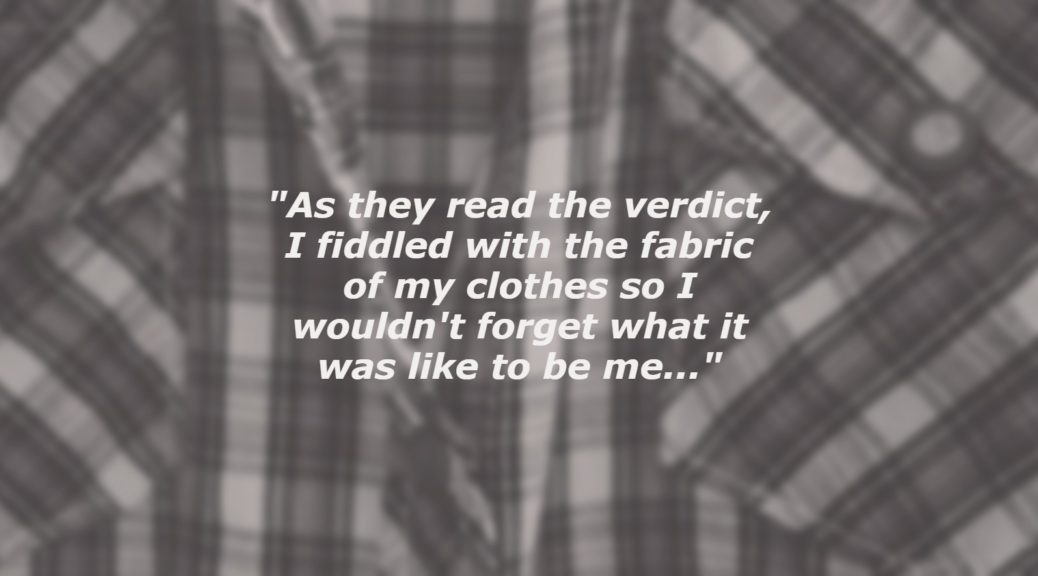
I didn’t give a damn about straws and arguing strategies.  I wanted to fight for my life.  But I also couldn’t afford to piss off the only two men assigned to defend me and I was unfit to deal with their tantrums, so I stood up in open court and waived my right to present evidence.  It felt like I killed myself.  It took the jury a few hours to decide that any man who won’t confront his accusers is likely guilty.  As they read the verdict I fiddled with the fabric of my clothes, so I wouldn’t forget what it was like to be me.

The rest of the trial was a haze of legal formalities that grew limbs and sprouted into the death penalty.  While all the mitigating, paper shuffling and scrounging was going on, I was still trying to figure out how I got there.  A man was dead.  I was accused.  I didn’t say shit to the jury – and just like that, my life was over.  The numbness softened the blow, the sentence not affecting me like I thought it would – that’s what happens when you judge a stone.  I was afraid that at the mention of the word ‘death sentence’, I would keel over and die.  Nope.  They were saving me for the lethal injection.  I wondered about the jurors, when their lives were done and their day of judgment came, what would they do when they learned that they were wrong?

As I headed to Death Row in a prison van, my wrists and ankles bound by a chain, I took in the sights around my hometown for the last time.  I cried not because I’d lost my life to injustice.  I cried because they took my name.  

ABOUT THE AUTHOR:  Terry Robinson writes under the pen name ‘Chanton’, is a member of the Board of Directors of WITS, and heads up a book club on NC’s Death Row.


He has always maintained his innocence, and WITS will continue to share his story and his case. Terry continues to work on his memoirs, as well as a book of fiction, and he can be contacted at:

Terry Robinson #0349019
Central Prison
P.O. Box 247
Phoenix, MD 21131
OR
textbehind.com

Loading

Entries From My Journal #2

Note: This year, I’ve asked Terry Robinson to share entries from his journal. We often see innocent individuals get out of prison after decades – but we can never fully appreciate what they went through. This is a small attempt to touch on the surface of what it is like to be innocent and on death row. How did Terry Robinson end up on death row? Two people physically connected to the crime scene accused Robinson of murder. That’s it. These entries are not edited, but shared in their original format.

July 9, 2014 (Wednesday, 1:05 p.m.)

Aw, man – I just got to meet Mr. Eugene Brown.  What an experience.  I’ve talked about the movie, ‘Life Of A King’, so much, and now I’ve met the man that inspired the movie.  I was really surprised by his aura of normality – I was expecting much different.  Now I realize it was his normalcy that gave such realness to his words.  Dude is truly a powerful man, and I think his philosophy can potentially change the world.  I am a King, and I do control the pieces of my life… definitely.  I’ve gotta start making better decisions for myself if I want to finish with a strong and relevant end game.  It was cool that Mr. Brown came out to see us – I’ll carry the things he said to us forever.  A true blessing to have experienced that today.  I wish I could talk to my brother right now, I would pay it forward.  We are all our own Kings.  Wow – what a day.

ABOUT THE AUTHOR:  Terry Robinson writes under the pen name ‘Chanton’, is a member of the Board of Directors of WITS, and heads up a book club on NC’s Death Row.
He has always maintained his innocence, and WITS will continue to share his story and his case. I have asked Terry to share some of his journal entries with us.

Terry continues to work on his memoirs, as well as a book of fiction, and he can be contacted at:

Terry Robinson #0349019
Central Prison
P.O. Box 247
Phoenix, MD 21131
OR
textbehind.com

Loading

The Freest Spirit

Dear Bear,

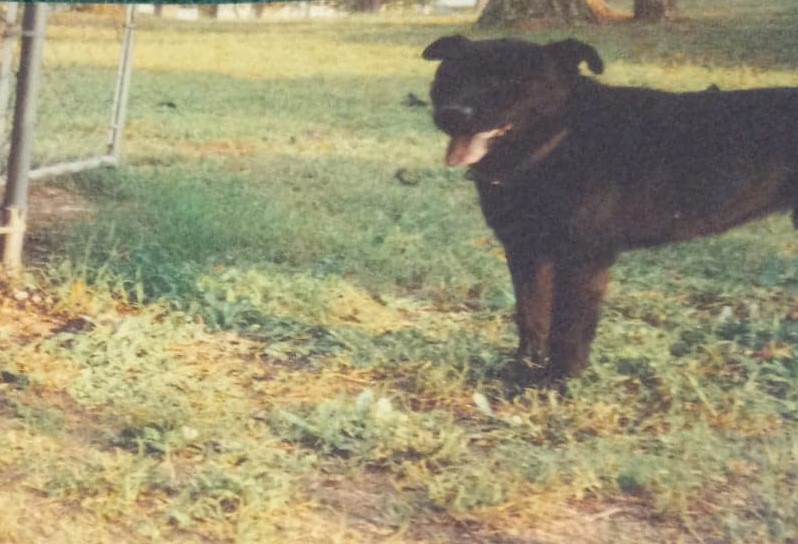
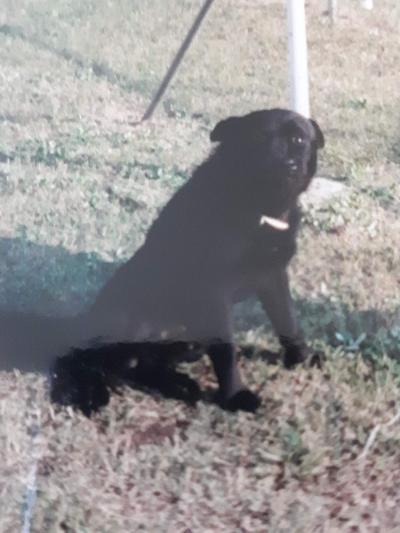
Writing this letter is harder than I thought, but for you – it is worth trying.  I’ve never known anyone to write a dog before.  Maybe that’s because no dog has ever meant so much to someone.  It’s crazy to think where we both ended up – you buried somewhere in an unmarked grave and me worse off than dead.  That’s what Death Row is, Bear – a place between life and death.  It’s where people are deliberately kept alive long enough to anguish over the fear of being executed, tormented until all peace of mind is used up.  Only then are we ripe for slaughter.  How I got here on Death Row is too long a story and too depressing for the details – but, do you remember the guy next door whom I was cool with? …turns out he wasn’t so cool.  I may never know why, but he accused me of taking another man’s life during a robbery.  Can you believe that?  That’s why I couldn’t get home.

Anyway, getting back to the purpose of this letter.  Bear, I had a dream about you just now.  Hold on!  Before you start bouncing around with those lofty cartwheels of yours, you should know it wasn’t a good dream.  In fact, it was probably the saddest thing I’ve ever dreamt, even though part of me wishes I could’ve stayed under.  I woke feeling unfulfilled, like when waiting your whole life for something to happen, then realizing five seconds too late that it’s gone.  But I believe the dream was necessary, it put things in perspective.  I now realize that in life, I left a lot of people behind.

So, the dream – it started out with me finally being released from Death Row.  I was given some clothes and a severance package, but when I got outside, no one was at the gate.  No family.  No friends.  No news cameras covering the story.  It was as though any relevance I had owned had succumbed to my absence, and the world had moved on without me.  I headed home, but when I got there, it wasn’t the same house I remembered. The place was trashy and run-down with neglect, nothing left of the garden but wilted stems.  The barn where we held so many of our family outings was now a crumbling derelict, trying to weather the times.  All the holiday memories we made in that barn, and now it was no more than a safety hazard.  Then I noticed a strange-looking structure.  It looked like an igloo made of wood. And who do I see hobbling out from this dog house…  yep.  Bear – it was you.

You looked so mangy, worn-out and pitiful.  Your eyes drooped with the age of years past.  You looked like a dog that had been to hell and back with one foot still on the other side. The chain around your neck whined and creaked with the rust of twenty years.  Your semblance, I hardly recognized.  Then you looked at me and wagged your tail, and something in it spoke of you.  I wouldn’t have guessed that any feeling could amount to walking off Death Row after twenty years, but seeing you was an unspeakable joy.  And to think you’d waited for me all that time. The gratefulness brought me to my knees.  You then bound into my arms with your incessant tongue laps and tail thrashing. No homecoming reception was ever more welcoming.

I was struck with the fact that you had been tethered on a chain for more than two decades. Blame set in on me like a scolding tongue for my leaving you to suffer so.  Then I remembered… we never kept you on a chain.  My eyes stung with the indecency.  It seemed you were also unjustly serving time. I stormed off towards the house, ready to spit fire at the new tenants and demand the key to let my dog loose, but when I burst through the door, spraying glass shards and splinters, I unintentionally shattered the dream.

There is no ache like waking up to the longing of a friend who has never let me down.  I kept trying to get back to sleep to rescue you and discovered that the most meaningful things in life are the most elusive. So, you see – it wasn’t a good dream at all, except for the joy of seeing you again.  It made me realize what my sudden absence must’ve been like for you, how you must’ve felt abandoned by me.

Did you know the first time I saw you waiting inside the fence, I was reluctant and afraid. I was just dropped off by a parole officer, fresh out of prison that day.  I wasn’t aware we even had a dog.  I guess my fears stemmed from learning of the era when White supremacists set upon Black people with their dogs. I mistook your panting, pouncing, and acting so unafraid of me as a clear sign of your aggression. But then you settled down and let me pet you, and I realized that all you wanted to do was play. My first impression of you was so unfair.  Maybe that is the real source of my guilt.

Needless to say, I was wrong about you, Bear.  You just didn’t have it in you to hurt anyone.  Well – there was that time when you snagged ahold the pants of that sheriff, but hell, you were only trying to get him off top of me.  I remember thinking, ‘this crazy dog gonna get hisself killed’.  Nobody had ever risked their life for me like that.  I was so freaking proud of you.

I guess I should talk a little more about whatever since this will probably be the last time.  It’s not really considered normal behavior for people to write to their deceased pets. I don’t mind coming off as weird; that’s just another word for unique, and sometimes it’s the most abnormal approach that is the only path to closure.

Often enough, there are times when I felt that you were the only one I could talk to, when I could do without anyone’s judgment or advice – I just needed somebody to listen. So many late nights I came home with my pockets heavy from all the dirt I’d done and my conscience weighing on my shoulders.  I thought I had to wrong people to survive in the streets, when really I was just trying to be seen. My coming home to you was the only time when I felt normal. With you I could be my ugly self.  I would unload all the day’s baggage at the doorstep while you lay curled at my feet, listening as my silent resolve.  Bear – I can’t tell you how much having your ear meant to me.  Hell, I’ve told you shit I ain’t told no one else.  And on those rare nights when I didn’t drop by to unlatch your kennel and chat… well, on those nights my shame was a bit too heavy.

I’m sorry I couldn’t make it back to you, Bear, in both the dream and reality.  I just didn’t know that my doing so much dirt would get other people’s dirt on me.  I know you waited for me, and that must’ve sucked – wondering why all the late night walks around the neighborhood ended without reason, why all our fun just stopped.  I want you to know that it wasn’t because I abandoned you, Bear – not intentionally.  No.  I didn’t come back because I, myself, am tethered by a red jumpsuit and Death Row has a really short reach.  I keep on seeing that chain around your neck.  I hope that wherever you are – somebody there will take it off. If not, I don’t know how the spirit world works, but I promise to take care of it when I get there.

So long, old friend, and thanks for all the times when your company gave me solace. There is no loyalty like a dog’s love.  And, yep… I learned that from you.

Always, your trusted friend and spirit brother,

Chanton

ABOUT THE AUTHOR: ‘Chanton’, is a member of the Board of Directors of WITS, and heads up a book club on NC’s Death Row.
He has always maintained his innocence, and WITS will continue to share his story and his case. On our Facebook page, we regularly share stories of wrongful convictions, they are real, frequent, and Terry has been living one for over two decades.

Terry continues to work on his memoirs, as well as a book of fiction, and he can be contacted at (Please Note, this is a change of address, as NC has revised the way those in prison receive mail):
Terry Robinson #0349019
Central Prison
P.O. Box 247
Phoenix, MD 21131
OR
textbehind.com

Loading